Physical Address
304 North Cardinal St.
Dorchester Center, MA 02124
Physical Address
304 North Cardinal St.
Dorchester Center, MA 02124

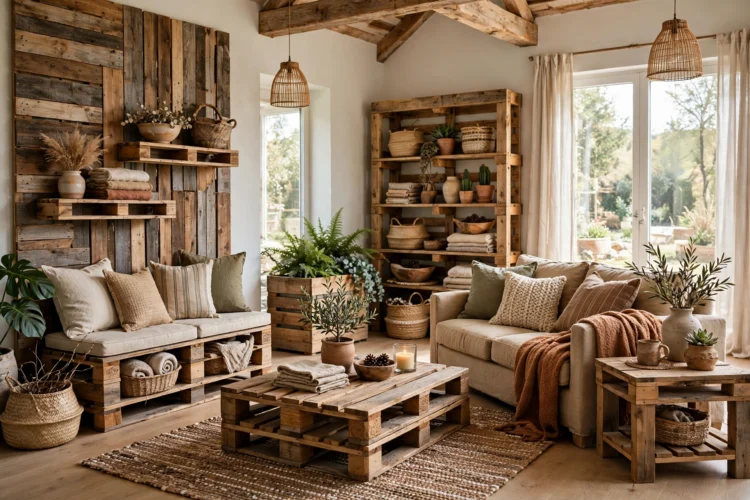
Rough pallet wood looks best where rough texture is the point. These nine projects start with safe sourcing and proper prep, then put that weathered grain to work around the house.
Reclaimed pallet wood is free, full of character, and easy to get wrong. The boards are rough, the nails are hidden, and some pallets were treated with chemicals you do not want in your home. These pallet wood projects start with the boring part first: finding safe pallets and prepping them properly. Once that is done, the weathered grain and nail holes become the whole point, and the projects below use that rough texture instead of fighting it. Work through the safety steps, then pick a build.
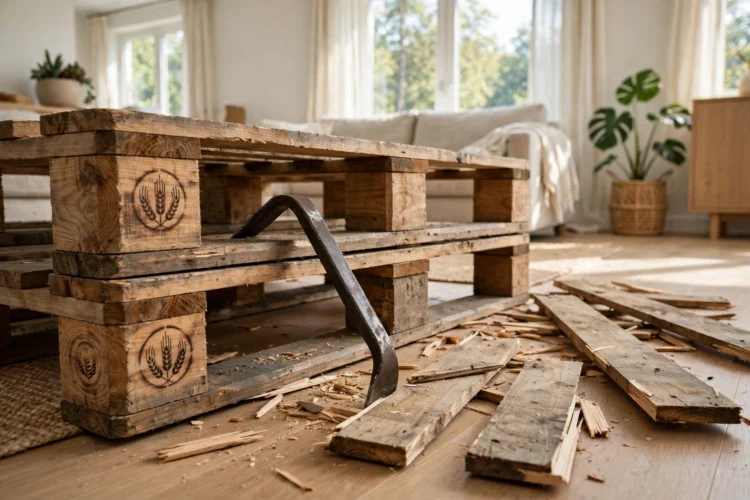
Safe pallets carry a stamp. Look for the IPPC mark on the side, and choose pallets marked HT, which means heat treated, never MB, which means treated with methyl bromide. Skip pallets that smell of chemicals, show oil stains, or carried unknown cargo, and avoid any with spills or rot. Take the pallet apart with a pry bar and a reciprocating saw, then pull every nail with pliers and check the boards with a metal detector or a strong magnet before they touch a saw blade. Sand with 80 grit, then 120, and seal indoor pieces with wax or a clear coat so splinters stay down. This prep takes an hour per pallet, and it is the difference between a safe project and a problem.
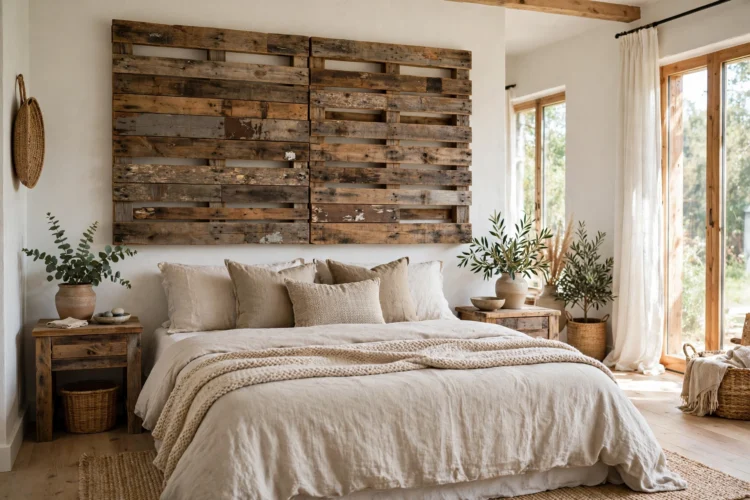
A headboard is the kindest first pallet project because it hangs on the wall and never has to hold weight. Lay five or six cleaned boards side by side, join them on the back with two horizontal battens screwed across the grain, and trim the top edge straight. Sand the front smooth enough that bedding never snags, but leave the saw marks and nail holes visible, since that texture is what makes it look rustic instead of plain. Stain it a warm walnut or leave it raw with a clear wax finish, then mount it with a French cleat so it sits flat and level. A headboard uses about one and a half pallets, so it is a good test of whether you enjoy working with the material.
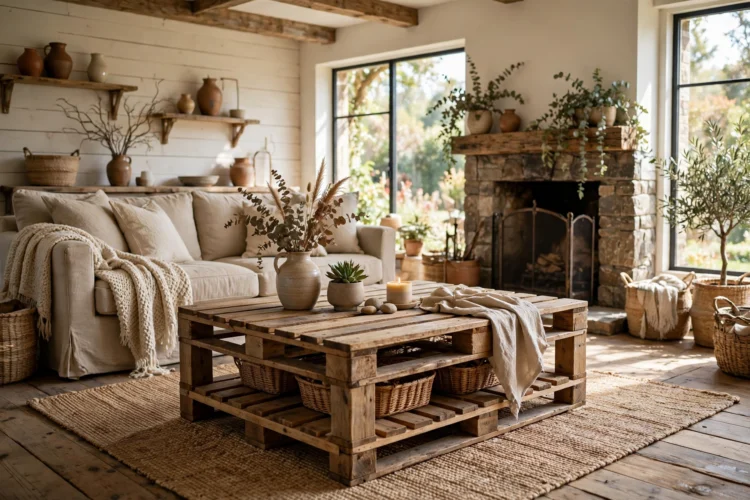
Among pallet furniture ideas, a coffee table works when the top is flat and the legs are square. Build the top from boards laid edge to edge and joined with battens underneath, then add four chunky legs cut from pallet stringers, which are the thick blocks the pallet sits on. A lower shelf made from a second set of boards gives the table a place for books and a basket, and it stiffens the whole frame. Keep the height around 18 inches so it matches a standard sofa seat, and put felt pads under the legs to protect the floor. The coffee table styling ideas here show how to dress a rustic table without hiding the wood that makes it interesting.
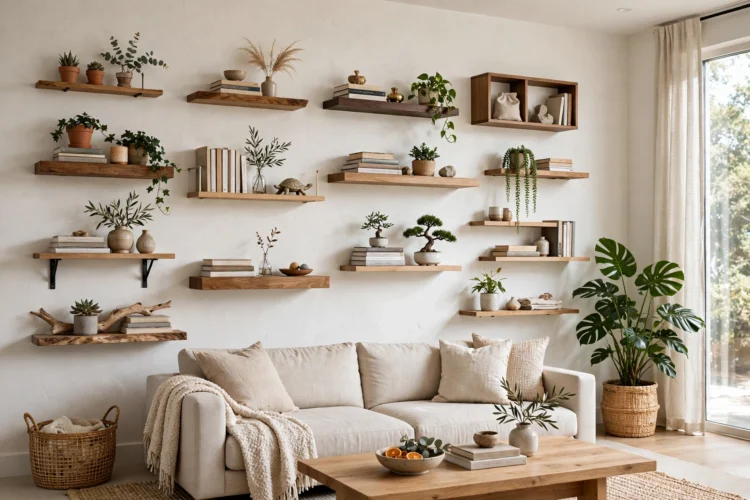
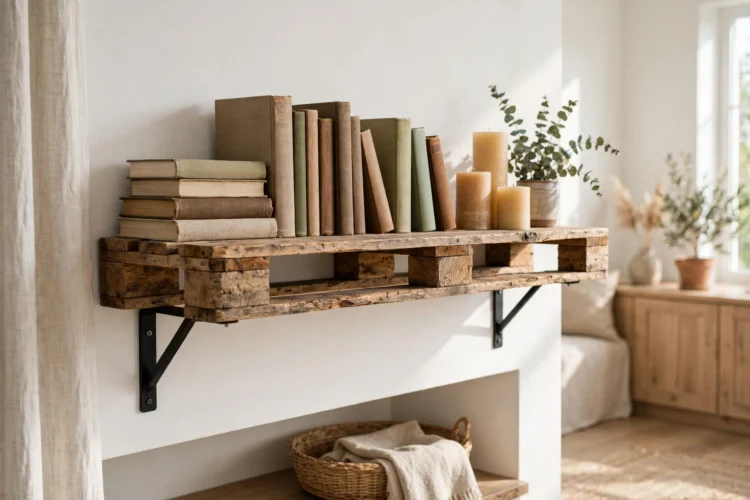
A wall shelf is the fastest way to use up short pallet boards, and the rough edge becomes a feature when the shelf is small. Cut two boards to the same length, join them with a simple bracket or a pair of metal pipe fittings, and mount the shelf into studs so it holds real weight. A shelf about 24 inches long fits books, a candle, and a small plant, and a row of two or three at different heights fills a blank wall. Sand the top face well and leave the front edge rough, which reads as intentional when the rest of the room is tidy. The wood panel accent wall ideas use the same reclaimed look at a larger scale, and a pallet shelf in matching tone ties the two together.
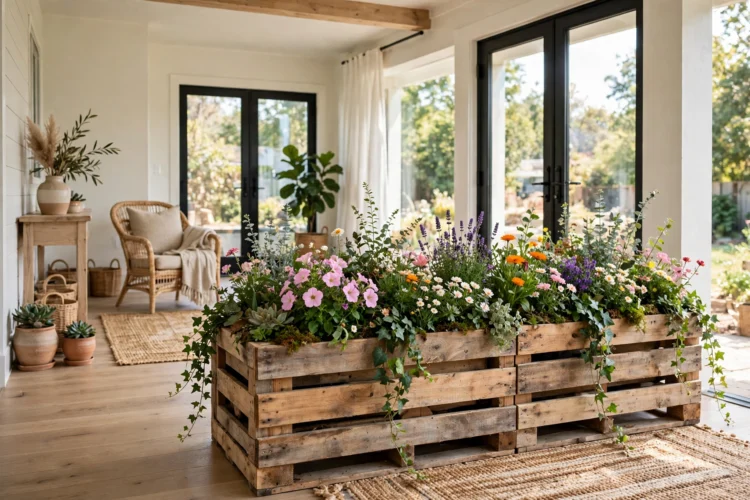
Outdoor projects forgive pallet wood fastest, because weather and plants hide every imperfection. Build a simple box from pallet boards with small gaps between them, line it with landscape fabric, and fill it with soil and flowers or herbs. Cedar pallets are rare, so expect plain pine or oak, and coat the outside with exterior oil so the box lasts more than one season. Drill drainage holes in the bottom and set the box on small feet so water escapes instead of pooling underneath. A planter is also the right place to use boards with more wear, since the soil and plants cover most of the surface.
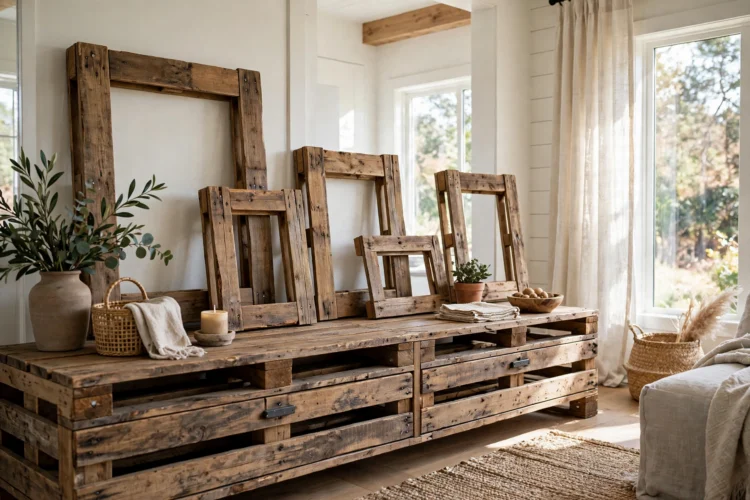
Small pallet offcuts make picture frames that look far more expensive than they are. Cut four boards with 45 degree miters, join them with glue and corner brads, and back the frame with a thin plywood panel. The nail holes and saw marks show up at this small scale, which is exactly why the frames suit rustic pallet decor and black-and-white prints. Make a set of three in matching sizes for a console table or a hallway wall, and keep the finish to clear wax so the grain stays visible. Frames are also a good use for boards too short for furniture, so almost nothing goes to waste.
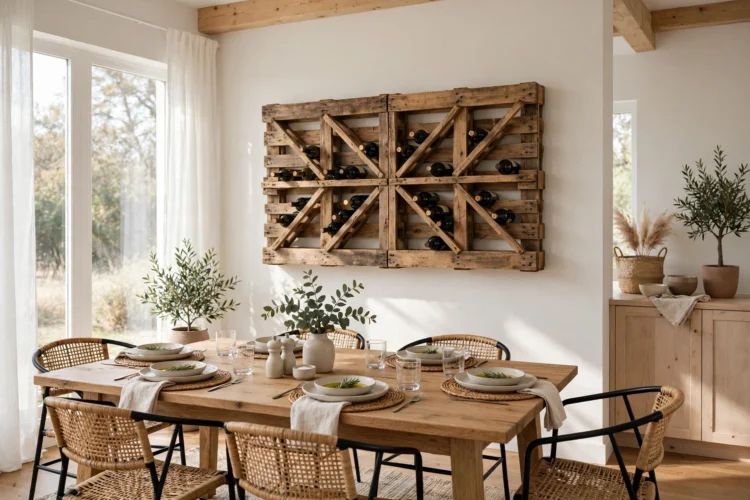
A wall-mounted wine rack uses two pallet boards and a row of holes, and it turns a blank dining room wall into a feature. Cut one board as the back panel and a second as the front rail, drill holes sized to a wine bottle neck, and space them about 4 inches apart so bottles hang without touching. Mount the rack into studs with long screws, since a full rack gets heavy, and test it with empty bottles before you load it. The rustic dining room lighting ideas pair well with a rack like this, since warm metal and rough wood share the same relaxed mood.
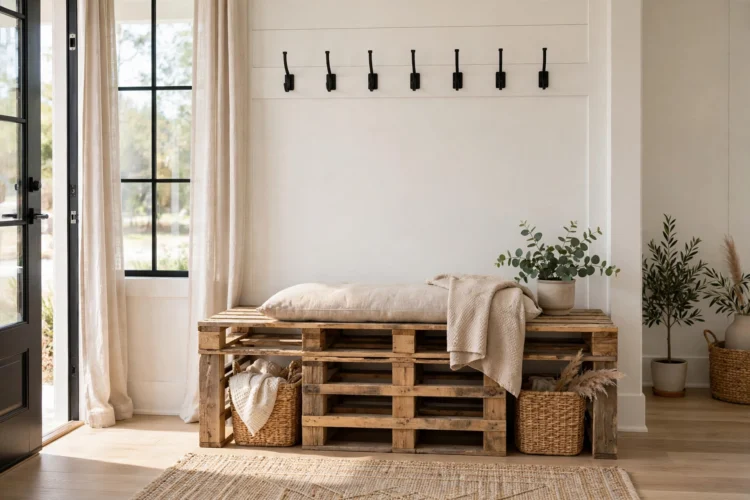
An entryway bench built from pallet boards gives muddy shoes a home and gives the rough wood a job it suits. Build a simple box frame from stringers, top it with boards laid edge to edge, and mount a row of hooks on a back board above it. The bench should sit about 18 inches high, and the hooks should sit high enough that coats clear the seat. Sand the seat smooth and leave the legs rough, which keeps the piece looking rustic without snagging clothes. This is the biggest build on the list, so save the straightest boards for the seat and use the rougher ones for the frame.
A pallet shelf in the bathroom works if you seal it properly, since steam and splashes will find unsealed wood fast. Build a two-tier shelf from short boards, finish it with two coats of clear polyurethane, and mount it above the toilet or beside the vanity. Rolled towels, a jar of cotton balls, and a small plant fit easily, and the warm wood softens a room full of tile and porcelain. Check the finish every year and recoat when water stops beading on the surface. Keep the shelf away from direct shower spray, and it will hold up as well as any store-bought shelf.
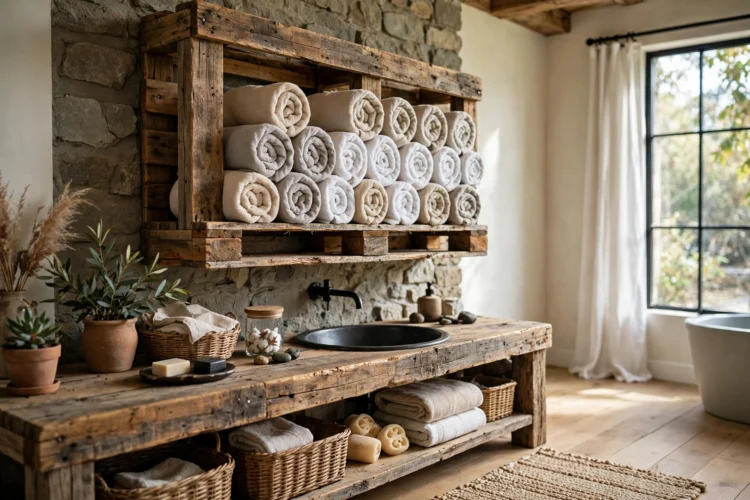
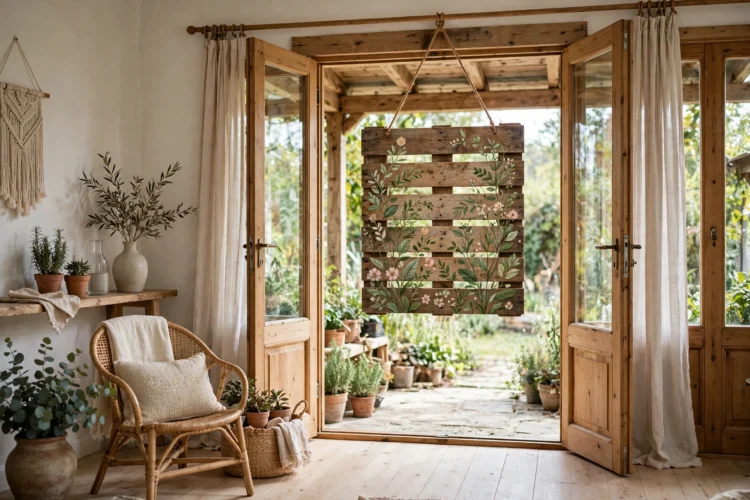
A garden sign is the simplest pallet project and the best way to use a single good board. Sand one wide board smooth, paint a base coat if you want the lettering to read clearly, and hand-letter a word or a short phrase with exterior paint and a steady brush. Drill two holes at the top, thread rope through them, and hang the sign by the gate or on the porch. The sign takes an hour, costs almost nothing, and teaches you how pallet wood takes paint, which helps with every bigger project later. The slatted wood divider ideas show how the same vertical plank rhythm works indoors when you want a cleaner version of the look.
Pallet wood rewards patience more than skill. Check the stamp, pull the nails, sand the faces you touch, and let the rough texture do the decorating. The wood is free, the projects are simple, and the result looks like it has been in the house for years.