Physical Address
304 North Cardinal St.
Dorchester Center, MA 02124
Physical Address
304 North Cardinal St.
Dorchester Center, MA 02124

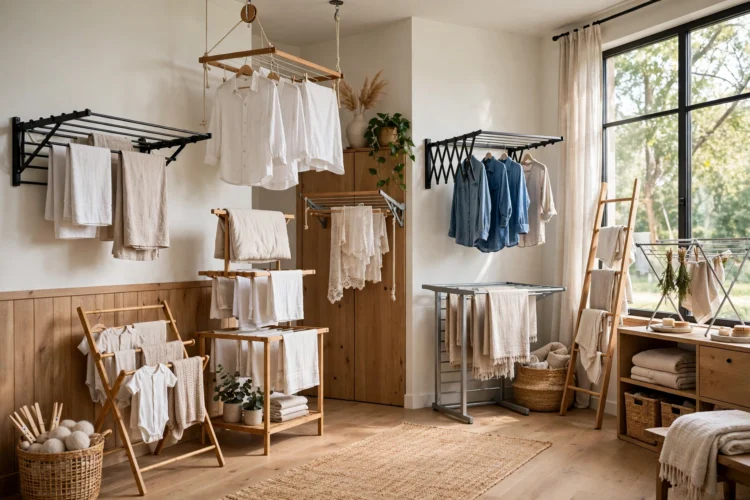
Air-drying saves clothes from dryer heat, but a sagging line in the yard is not the only option. These ten rack ideas fit laundry rooms, bathrooms, balconies, and small flats.
These laundry drying rack ideas cover the gap between a backyard clothesline and a tumble dryer. Many clothes last longer when they air-dry: knitwear keeps its shape, elastic stays springy, and printed shirts fade more slowly. The problem is space. A good rack gives wet clothes room to breathe without taking over the room for a full day.
The ten ideas below use walls, ceilings, doors, and fold-away frames. Some suit a dedicated laundry room, others fit a bathroom, balcony, or small flat. Pick the system that matches how much you wash, how fast your home dries clothes, and how much floor space you can spare while a load hangs.
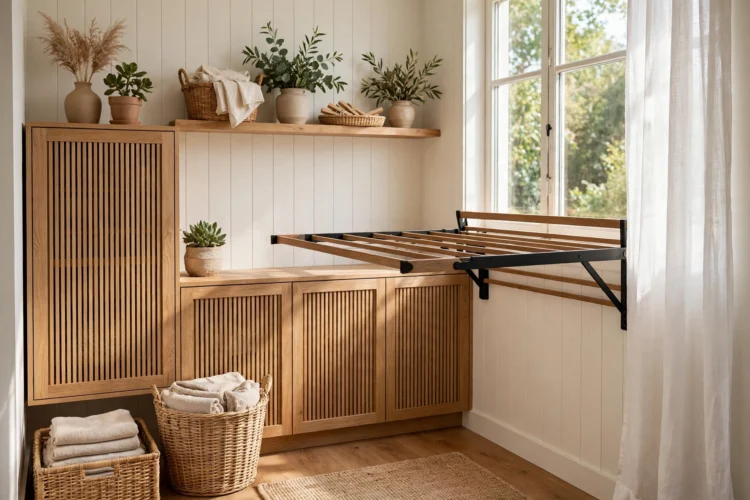
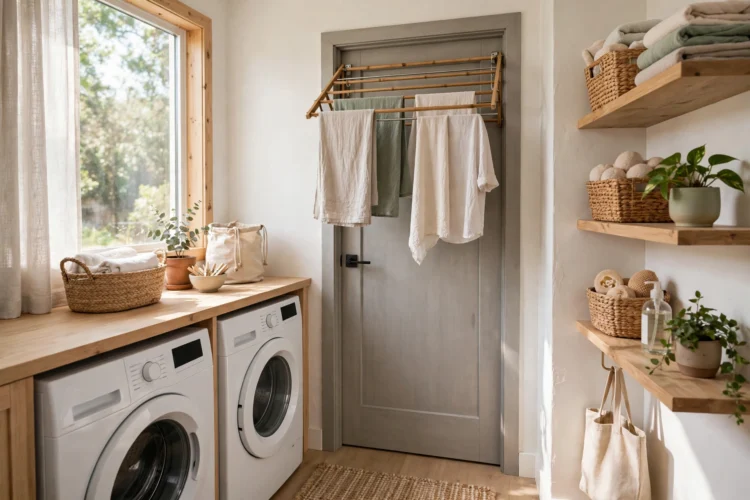
A wall-mounted drying rack folds flat against the wall when you do not need it and opens into several bars when a load comes out of the washer. Mount it at chest height in a laundry room or bathroom so you can hang shirts without bending. The bars hold hangers as well as clothes draped straight over them, which makes it useful for shirts that crease easily.
Pick a spot with air moving past it, such as near a window or a vent, and leave a gap between the rack and the wall so air reaches both sides of each garment. Screw the rack into studs or solid wall anchors, since a full load of wet towels weighs far more than the empty rack suggests. A wall-mounted drying rack like this frees the floor completely, which matters in a small laundry room where a folding frame would block the washer door.
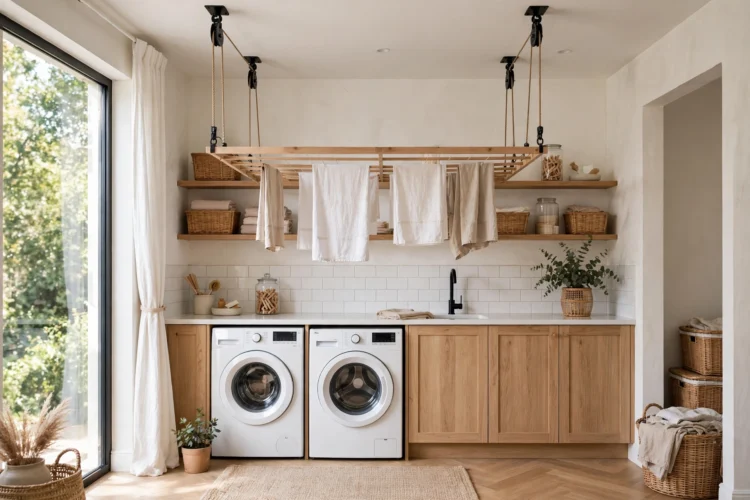
A ceiling drying rack hangs from pulleys and lowers to chest height for loading, then rises toward the ceiling where warm air gathers. This old laundry room design still works because it uses space no one else needs. It suits a laundry room with a high ceiling or a covered balcony where a floor rack would block the walkway.
Load the rack evenly so one side does not dip lower than the other, and keep heavy items such as jeans and towels near the center bars. Pull the rack up after loading and let the warm air near the ceiling do the drying. Check the pulley cords and hooks once a season, since frayed cord is the most common failure on this type of rack. A ceiling drying rack keeps a full load out of the way for a full day, which is hard to beat in a busy household.
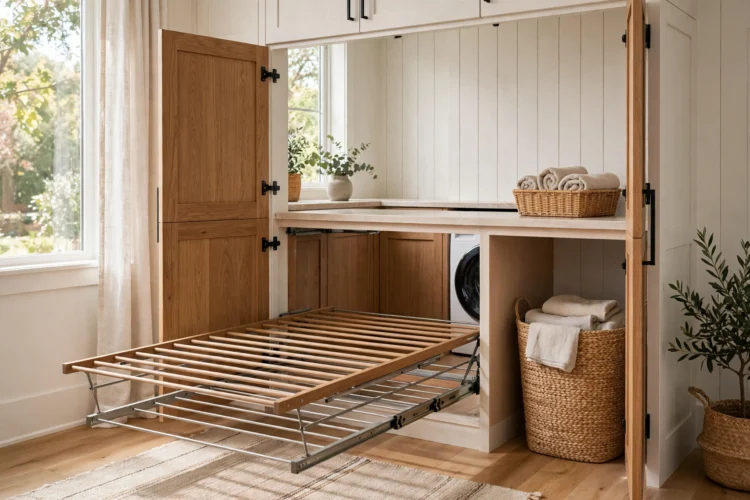
A pull-out drying rack slides out from under a counter or out of a tall cabinet and disappears again when the clothes are dry. It looks like a drawer front when closed, so the laundry room keeps a clean, built-in look. Inside, the rack usually holds two or three mesh shelves or a set of bars for hanging delicates flat.
This system suits delicates that need to dry flat, such as knit sweaters and swimwear. Lay each piece flat on the mesh so it keeps its shape, and slide the rack back in partway if you need the counter above it. Air still reaches the clothes through the open sides of the cabinet. Keep the mesh clean and dry between uses, since a damp rack left closed can smell musty within a day or two.
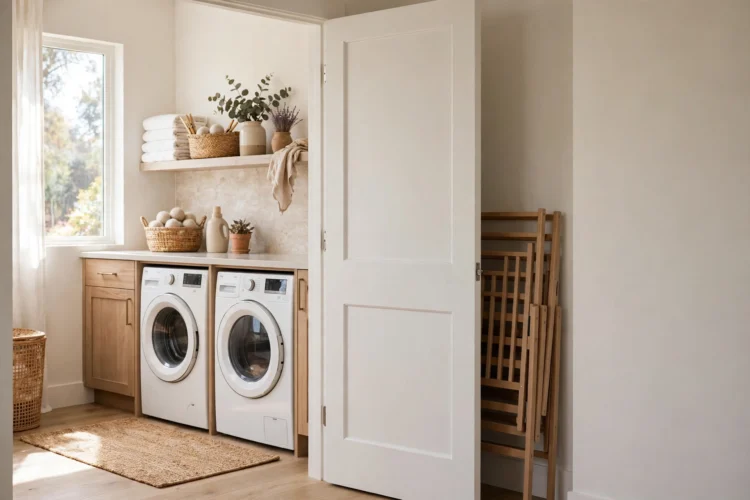
A folding drying rack is the simplest option, and it works better when you store it well. Choose a slim frame that folds flat enough to slide behind a door or between the washer and the wall. Open it only while a load dries, then fold it away so the room returns to normal.
Look for a frame with bars spaced far enough apart that wet clothes do not touch each other. Clothes that touch dry slowly and can smell damp. Hang shirts on hangers hooked over the top bars to save space and reduce creases. A folding drying rack costs little and needs no fitting, which makes it a good first rack for a renter or anyone testing how much they will air-dry.
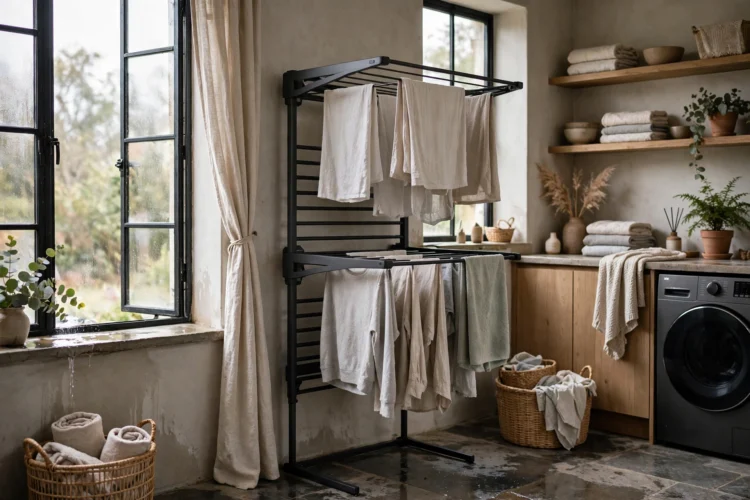
A heated drying rack adds gentle warmth to the bars, which helps clothes dry in a cold or damp room where air-drying takes too long. It suits a basement laundry room, a flat without a balcony, or a winter season when outdoor drying stops. The heat is low and spread across the bars, so it dries without the harsh tumble of a dryer.
Use it for everyday clothes, towels, and bedding, but keep delicates such as wool on a flat mesh section away from direct heat if the rack has one. Place the rack near a socket and keep the cord off the floor where wet feet walk. Open a window a crack or run the room vent while it works, since the moisture still needs somewhere to go. A heated rack dries a load faster than a plain frame in the same room.
A wooden ladder rack leans against the wall and gives you several rungs for hanging clothes, towels, and blankets. It takes almost no floor space, it needs no screws, and it doubles as a towel rail in a bathroom between wash days. Choose a ladder with wide, flat rungs so clothes drape without folding over a sharp edge.
Hang the heaviest items on the lowest rungs to keep the ladder stable, and keep the feet on a non-slip mat if the floor is tile. A ladder rack works well in a bathroom, where steam from a shower adds a little warmth, but give clothes a few extra hours there since the air stays humid. When guests come, fold a dry towel over the top rung and the rack looks like part of the room.

A retractable clothesline pulls out across a bathroom or balcony when you need it and winds back into a small housing when you do not. It gives you one or two long lines for sheets and large items that do not fit on a rack. Mount the housing on one wall and the hook on the opposite wall, keeping the line level so wet clothes do not slide to the middle.
Use it for sheets, duvet covers, and long dresses that need a straight hang. Wipe the line before each use, since dust on the line marks clean clothes. Retract the line after the clothes come down so no one walks into it. This system pairs well with a small rack for socks and underwear, since the line handles the big pieces and the rack handles the small ones.

An over-door drying rack hooks over the top of a door and needs no screws, which makes it the easiest option for a renter. The rack usually has several bars on one side and a few hooks on the other, so it holds shirts, towels, and small items at once. Hang it on a laundry room door or a bedroom door that stays open while clothes dry.
Check that the door still closes and the rack does not swing when the door moves. Keep the load light, since a heavy rack can mark the door top over time. Hang a folded towel over the hooks to protect the door paint. An over-door rack will not hold a full family load, but it handles a daily load of shirts and delicates well, and it moves to a new home in minutes.
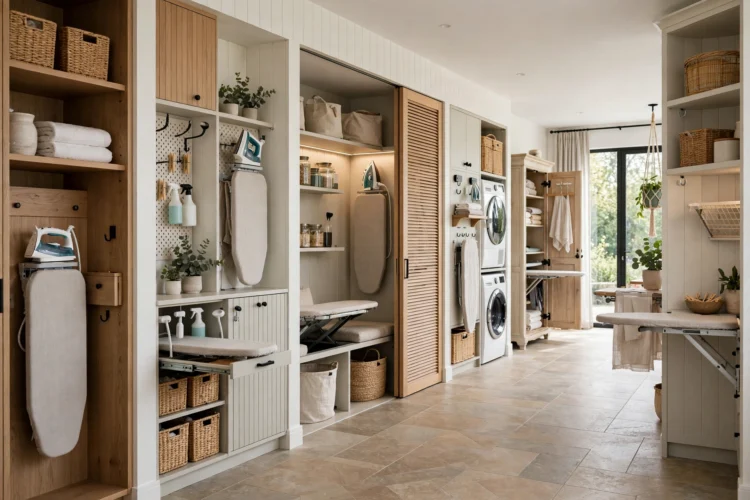
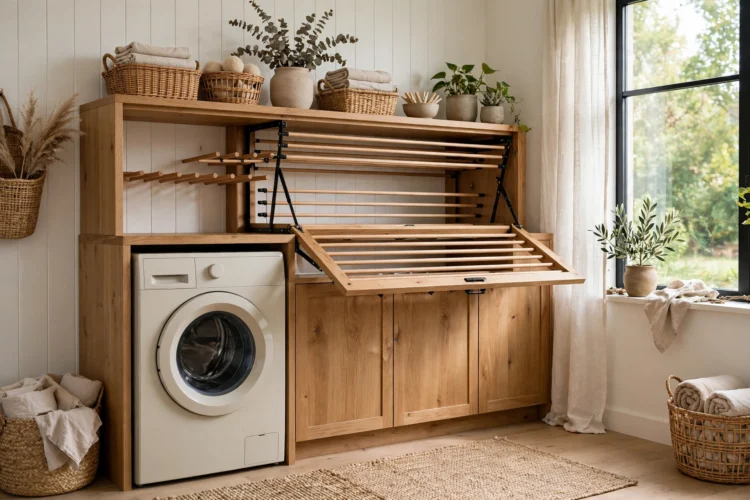
A drying rack built into a laundry shelf turns dead space into a drying zone. The shelf holds detergent and baskets on top, while a set of bars or a mesh panel underneath holds clothes that need to dry flat or hang. This suits a laundry room with a counter over the washer and dryer, where the shelf already spans the wall.
Hang the bars low enough to reach and high enough that clothes clear the counter below. Leave a gap at each end so air flows along the bars. This idea borrows the same space-saving logic as kitchen storage ideas for small spaces, which also stack a second job into a spot that already exists. For the same reason, the wall-mounted storage thinking in wall-mounted kitchen storage ideas applies here too: lift the drying off the floor and the room stays usable while clothes dry.
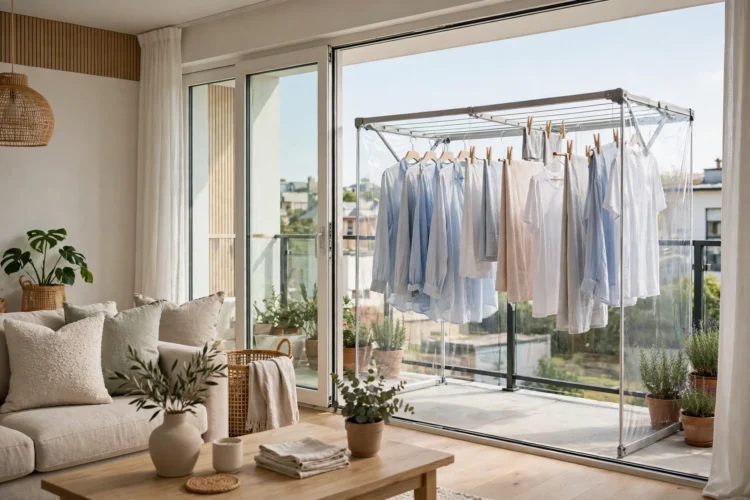
A balcony drying rack works well when the balcony gets sun and wind, but a sudden gust can send light clothes over the edge. A rack with a wind guard, a low rail, or a clip rail keeps clothes in place. Use pegs on every light item, even on a calm day, since wind picks up without warning on a high balcony.
Place the rack where sun hits it for most of the day and keep it away from the railing edge. Hang sheets on the inner bars and smaller items on the outer bars so the big pieces block some wind. Bring the rack inside during a storm rather than leaving it to rattle against the rail. For storing the folded dry clothes afterward, the same tidy thinking behind small closet organization ideas helps: give each pile a fixed spot so the clean laundry lands somewhere instead of piling on a chair. The same applies to spare linen, and bathroom linen storage ideas show how to keep towels close to where they get used.
Start with the rack that fits the room you have, not the one you wish you had. A wall rack suits a small laundry room, a ceiling rack suits a tall one, and a folding rack suits a renter who needs to pack it away. Whichever you pick, give clothes space between them, keep air moving, and the load will dry faster than it did on a crowded line.