Physical Address
304 North Cardinal St.
Dorchester Center, MA 02124
Physical Address
304 North Cardinal St.
Dorchester Center, MA 02124

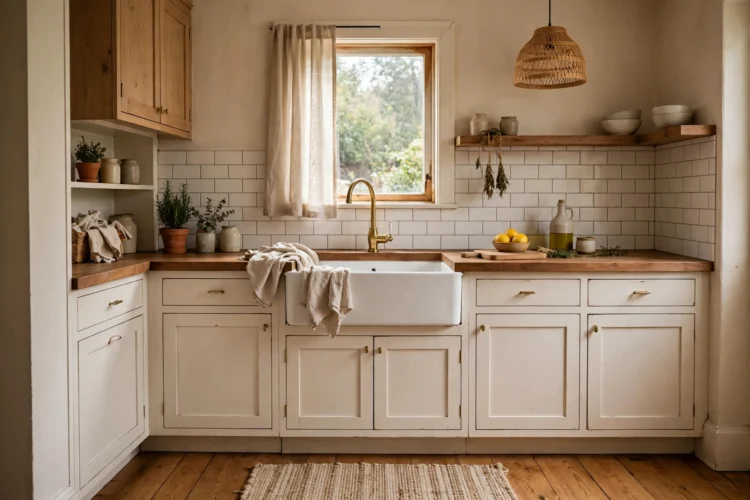
You do not need a big kitchen for a farmhouse sink. These eight apron front ideas fit tight spaces, with cabinet notes for every pick.
An apron front sink small kitchen owners can actually fit does exist. The trick is sizing down without losing the farmhouse character. Compact apron sinks run 24 inches wide and fit a 27-inch base cabinet, which opens the look to galley kitchens, apartments, and cottages. The eight ideas below cover materials, layouts, and cabinet fit, so you can get the apron look in a kitchen where every inch counts.
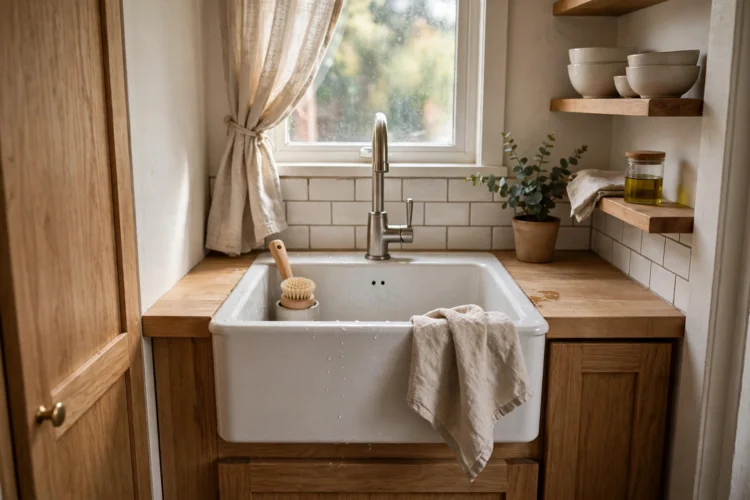
A 24 inch farmhouse sink in white fireclay is the classic move for a tight kitchen. You get the glossy apron front and a deep single bowl that still swallows a stockpot. The single bowl matters in a small kitchen because it wastes no width on a divider.
This size fits a 27-inch apron sink base cabinet, which is three inches narrower than the standard 30-inch sink base. Fireclay is heavy, so have your installer add support blocking inside the cabinet. Pair it with a compact pull-down faucet so the proportions stay balanced. Our farmhouse sink ideas cover full-size versions if you ever move to a bigger kitchen.
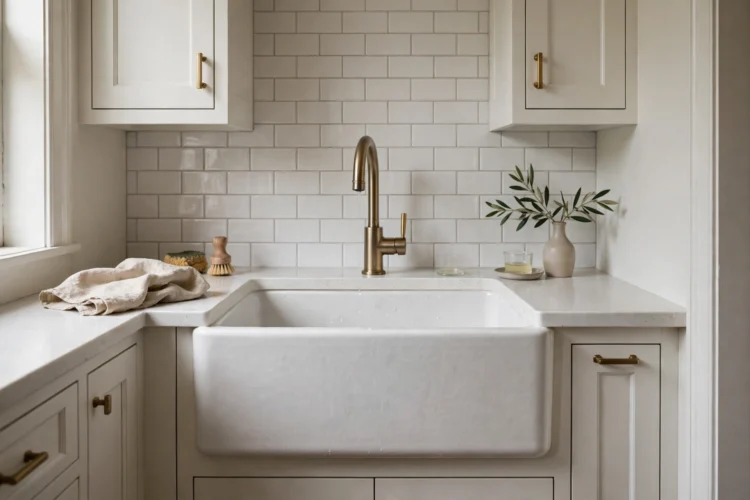
Stainless steel makes the most practical small apron sink. It is lighter than fireclay, which eases installation in a narrow cabinet, and 16-gauge steel resists the dents that busy small kitchens dish out. A short apron front keeps the visible height modest so the sink does not overwhelm a petite cabinet run.
The brushed finish hides the scratches that show fast in a hardworking compact kitchen sink. Pair it with a butcher block or light laminate counter to keep the small space feeling open. A rear-set drain also helps, since it leaves the front of the cabinet clear for a small pull-out tray. Stainless also matches apartment-grade appliances, so the whole kitchen reads as one intentional design.
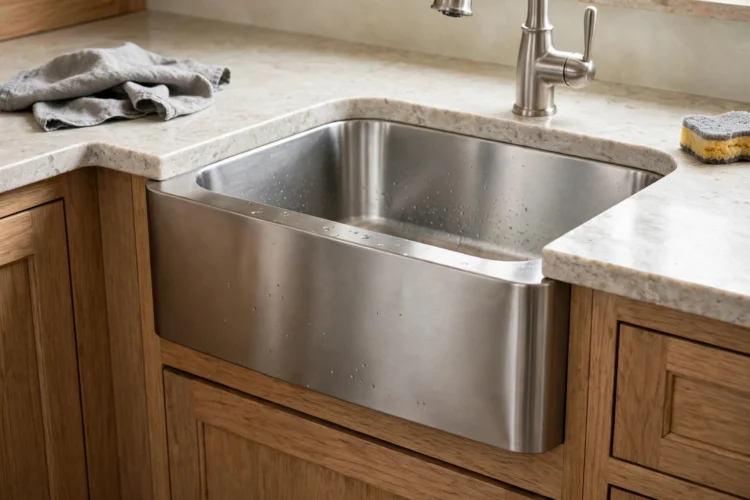
Corner sinks get a bad reputation, but in a small L-shaped kitchen the corner is often the only wall long enough for a proper sink base. A curved or angled apron front designed for corners turns dead space into the hardest-working spot in the room.
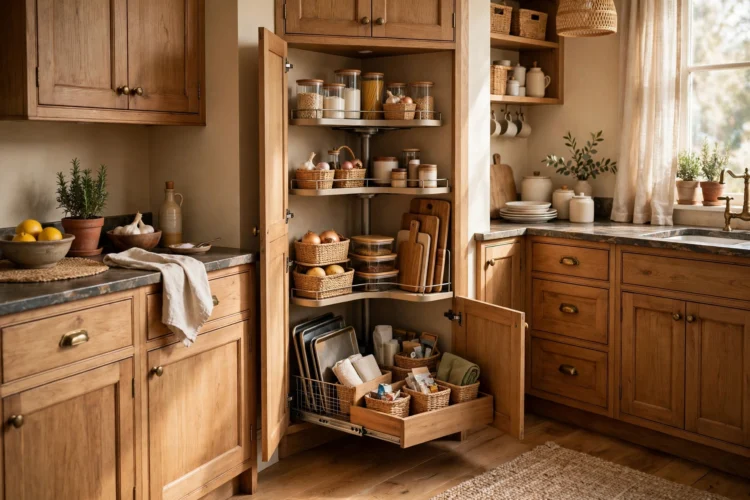
Corner apron sinks need a custom or corner-specific base cabinet, so plan this during a remodel rather than as a swap. The curved front softens the kitchen visually, which helps tight layouts feel less boxy. Keep the faucet compact and centered so it does not fight the angled walls. For more ways to use tricky corners, see our corner cabinet storage ideas.
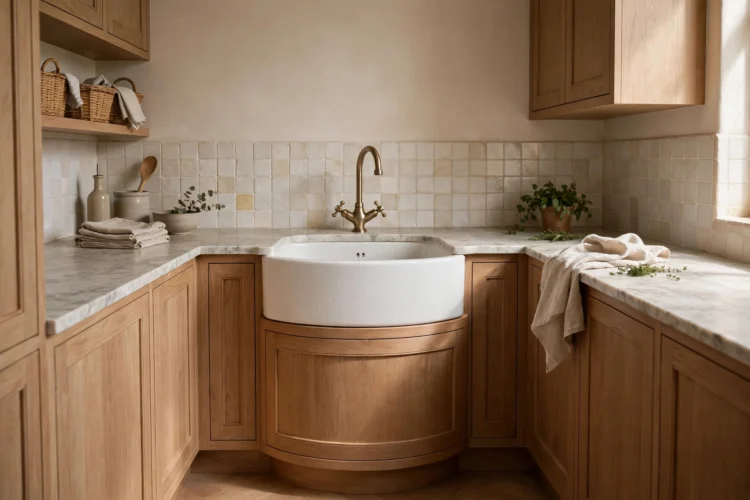
Bar sinks run 15 to 18 inches wide, and in a truly tiny kitchen one can serve as the main sink. You lose basin space, but you gain counter on both sides, which a small kitchen needs more. The apron front keeps it from looking like a compromise.
This works best for cooks who run the dishwasher for the heavy load and hand-wash little. Choose a deep model, at least 8 inches, so the small footprint still holds a pasta pot. If you bake, keep one large mixing bowl on hand and let the dishwasher handle the rest. A compact gooseneck faucet gives you the height without overwhelming the scale. It is an honest tradeoff, and in a studio or cottage kitchen it is often the right one.
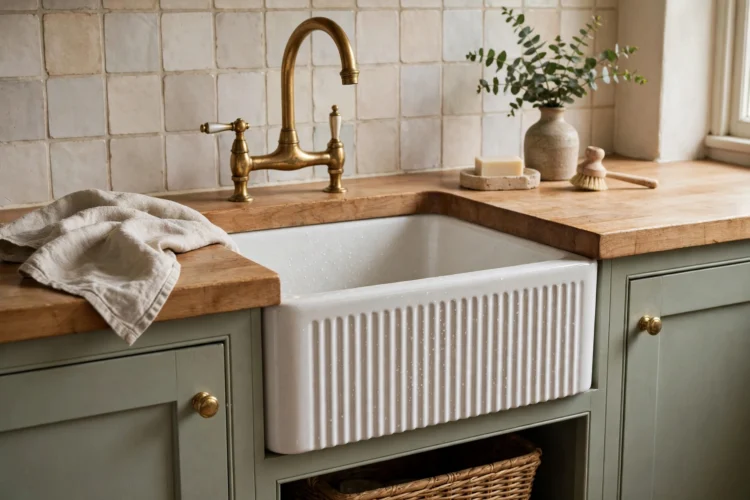
Some compact fireclay sinks offer the reversible trick: fluted apron on one face, smooth on the other. In a small kitchen this is gold, because you choose the style at install and never second-guess a big purchase. The fluted side adds the furniture detail that makes a small kitchen feel designed rather than cramped.
Fluting needs a little more cleaning attention in the grooves, so keep a soft brush under the sink. The smooth side suits a cleaner modern look if your taste changes later. Decide before the countertop goes on, since flipping afterward means a full removal.
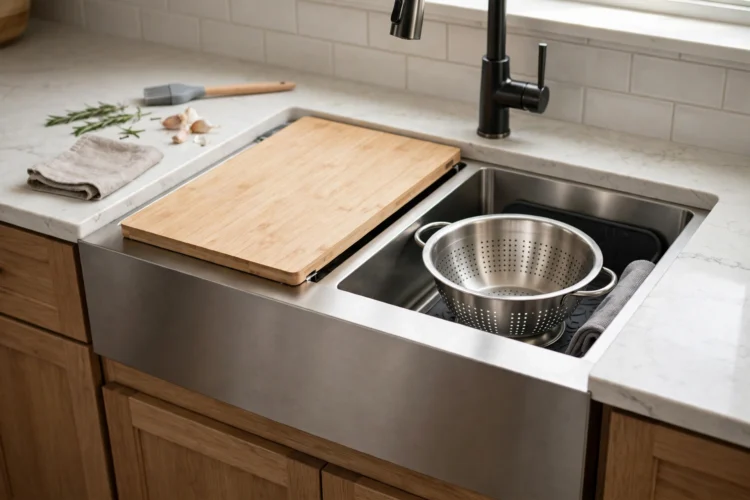
A workstation sink has a ledge inside the rim where cutting boards, colanders, and drying racks slide. In a small kitchen, that ledge is like adding a foot of counter. You prep over the sink instead of beside it, which changes how a galley kitchen functions.
Look for 24-inch workstation models with at least two included accessories. The accessories must fit the ledge exactly, so buy the sink and the kit together rather than mixing brands. Stainless is the common material here, and it pairs well with the industrial edge of the sliding accessories. When the boards are in use, the sink still drains around them.
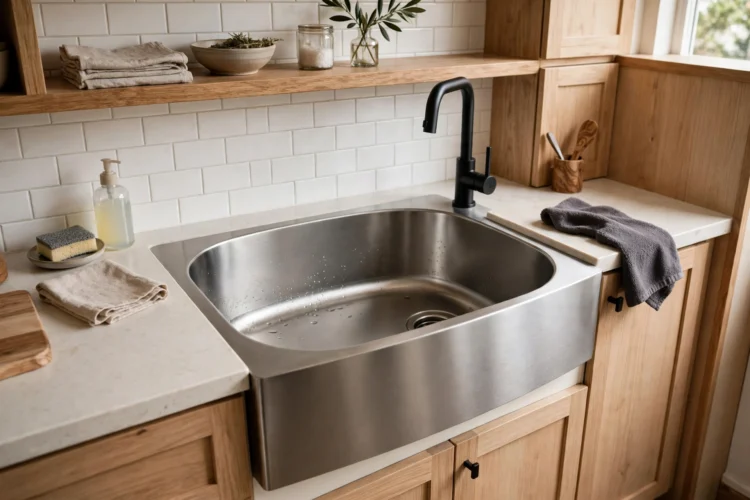
Some stainless apron sinks use thinner walls and tighter corner radii to maximize the interior bowl within a 24-inch frame. You can gain an inch or more of usable basin width versus a thick-walled fireclay model of the same outer size. In a small kitchen, that inch is the difference between fitting a sheet pan and not.
Tight-radius corners look modern and clean easier than fully square ones, which trap grime. The tradeoff is a slightly more industrial feel, so warm it up with wood counters or brass hardware. Check the gauge. Thin walls should still be 16-gauge steel to avoid a tinny feel.
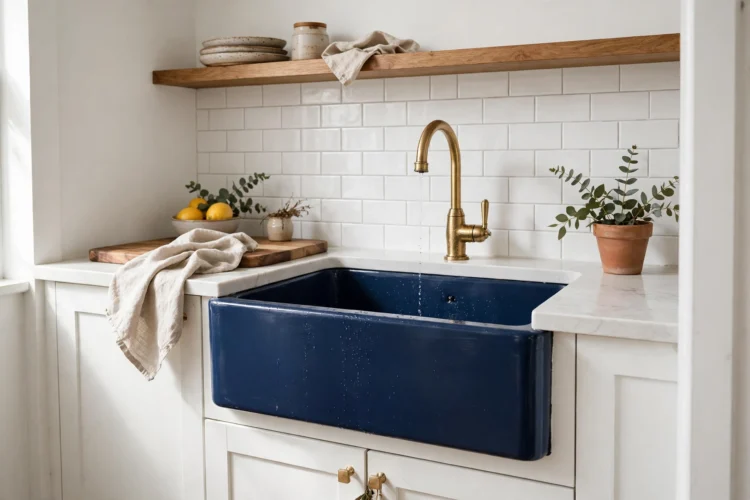
A small kitchen can handle a bold sink because there is so little of everything else. A navy, sage, or matte black apron front becomes the room’s jewelry against simple white cabinets. Fireclay and composite both come in colors now, so you are not stuck with white.
Keep the rest of the palette quiet so the sink stays the star. White counters, simple hardware, and one metal finish elsewhere. Dark colors show water spots more, so keep a microfiber cloth handy. If resale worries you, remember a sink is a weekend swap, not a renovation. A colored apron also photographs well, which matters if you ever list the home. For layout tricks that make the whole room work harder, our small kitchen storage ideas pair well with this pick.