Physical Address
304 North Cardinal St.
Dorchester Center, MA 02124
Physical Address
304 North Cardinal St.
Dorchester Center, MA 02124

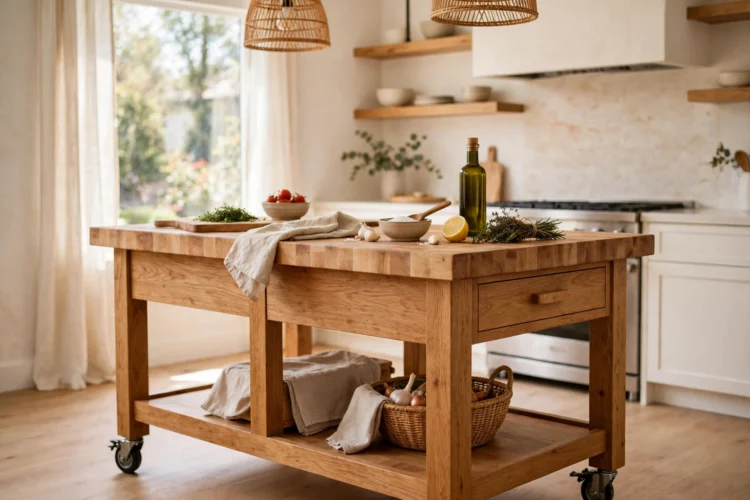
A rolling kitchen island gives you counter space when you need it and floor space when you don't. These ten ideas cover prep stations, seating, and storage on wheels.
A rolling kitchen island earns its floor space only when you are actually using it. Wheel it next to the stove while you cook, then push it against the wall when dinner is over and the room needs to breathe again. Unlike a fixed island, it never locks you into a layout that stopped working two years ago. The ten ideas below cover carts that chop, seat, store, and serve, so pick the one that matches the way your kitchen runs on a normal Tuesday night.
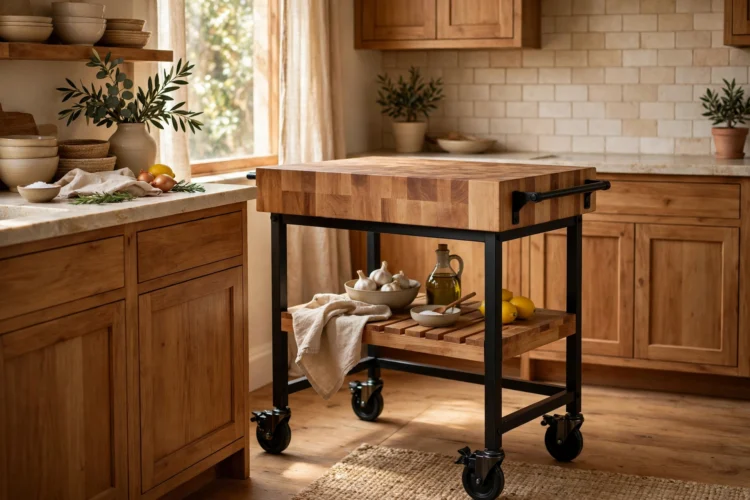
A butcher-block top turns a basic cart into a real chopping station. Look for a top at least 1.5 inches thick, made from edge-grain maple or acacia, with a food-safe oil finish you can refresh in about ten minutes once a month. Pair it with 3-inch locking casters so the cart stays put while you break down a chicken or knead dough. The wood is gentler on knife edges than stone or stainless steel, and small cuts sand out instead of living there forever. Many models hide a drawer and two open shelves underneath, which is where the cutting boards and mixing bowls live.
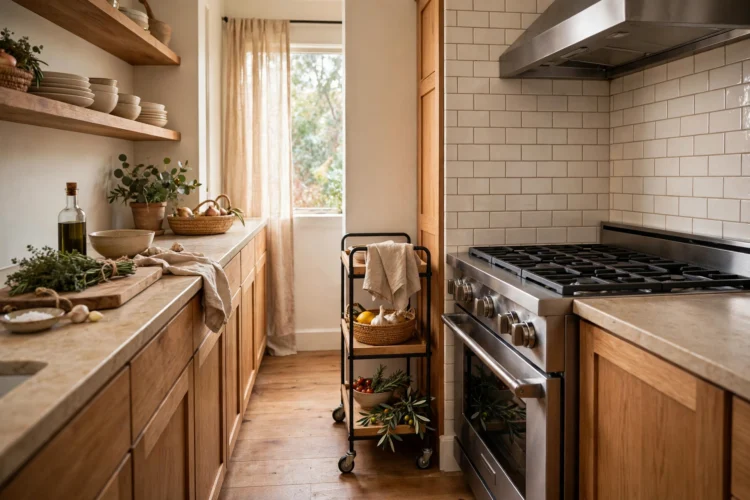
Galley kitchens choke on anything wider than 24 inches, and this is where a slim runner cart earns its keep. A 20 to 24 inch wide cart slides into the gap between the range and the wall, then rolls out when you need extra landing space for sheet pans. Look for a model with a heat-resistant top so a hot tray can land on it straight from the oven. Side towel bars add hanging space without adding width. When guests arrive, park it in the hallway as a drink station and the whole party flows better.
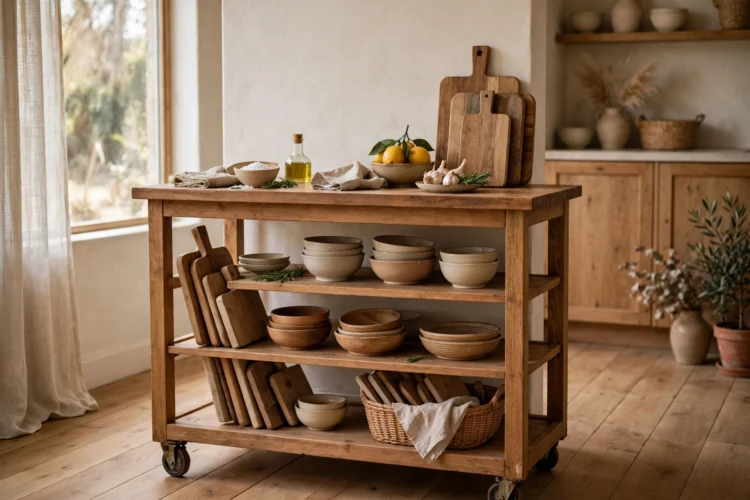
A mobile prep station keeps everything visible, which matters when you cook fast and hate digging through cabinets. Open shelves hold the mixing bowls, the olive oil, and the stack of cutting boards you reach for every single night. Choose a frame with a weight rating around 250 pounds so a loaded stand mixer does not wobble the whole thing. The top should sit at 36 inches to match standard counters, because a height mismatch forces your wrists into odd angles during long prep sessions. Lock two of the four casters once it is in position and the station feels as solid as built-in cabinetry.
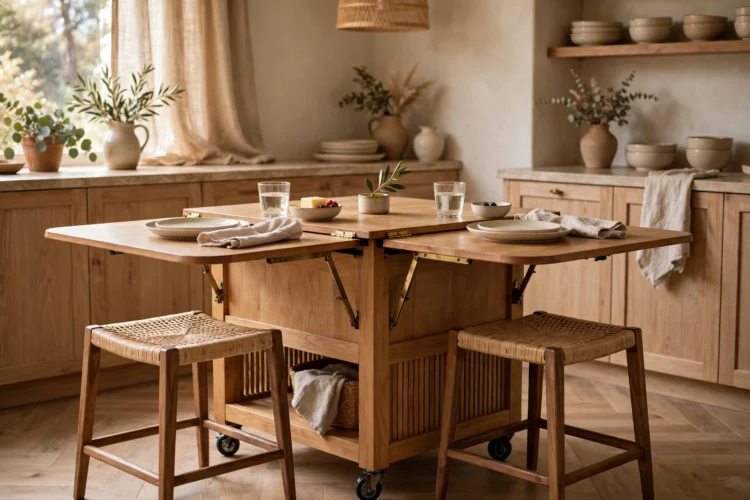
A rolling kitchen island with a drop leaf gives you a dining table that folds away in seconds. With the leaf down, the cart measures about 25 inches wide and hugs the wall. Flip the leaf up and you get an extra 12 inches of counter, enough for two place settings side by side. The leaf needs a sturdy bracket underneath, not just a hinge, or it will sag under a plate of pasta. Tuck two backless stools under the leaf side and the setup works for breakfast without stealing any floor space at lunch. This is the option renters ask about most, because it delivers seating without a single screw in the wall.
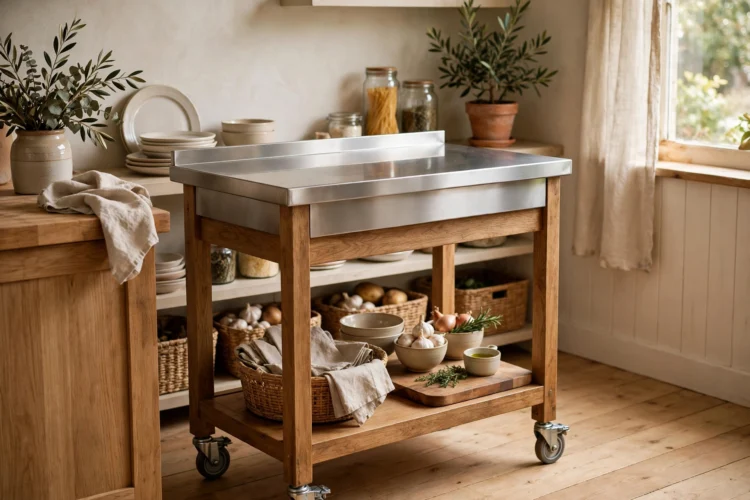
Stainless steel is the top that professional kitchens picked for a reason. It shrugs off heat, it wipes clean with a damp cloth, and it doubles as a landing zone for canning jars or a cooling rack full of bread. A freestanding kitchen cart with a stainless worktop usually ships with an adjustable lower shelf, so you can raise it for tall stockpots or lower it for baking sheets. The metal can dent if you drop a cast-iron skillet from height, so look for 18-gauge steel rather than the flimsy 22-gauge versions. Rubber-tipped casters keep it from skittering across tile when you lean into a heavy mixing bowl.
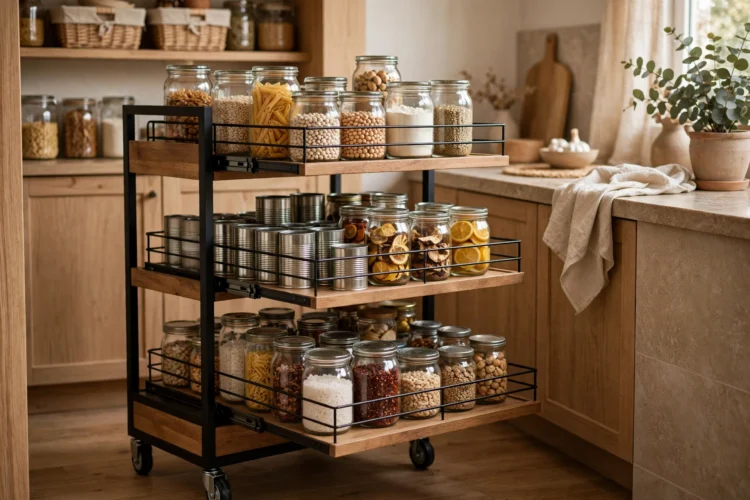
A pantry cart solves the black-hole cabinet problem. Pull-out shelves bring the back row of cans forward so nothing expires in the dark. Each shelf should glide on full-extension ball-bearing slides, which cost more than side rollers but actually hold the weight of canned tomatoes. A depth of 16 to 18 inches keeps jars one row deep so you can read every label. Top the cart with a butcher-block slab and it doubles as a baking station on weekends. Park it inside a pantry closet if you have one, or against the dining room wall if you do not.
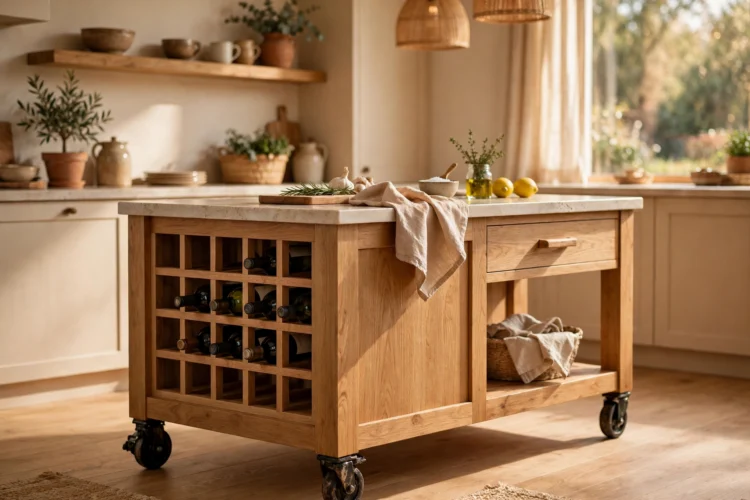
Wine storage usually eats a whole cabinet, but a rolling kitchen island with a built-in wine rack borrows space you were not using anyway. X-shaped dividers or horizontal cubbies hold bottles on their sides, which keeps corks moist. Place the rack low in the cart, below the counter line, because heat rises and wine hates temperature swings. A model with a 12-bottle rack plus a drawer for openers and stoppers covers a casual collector. Roll the island out when friends come over and it becomes the serving station, bottles already in hand.
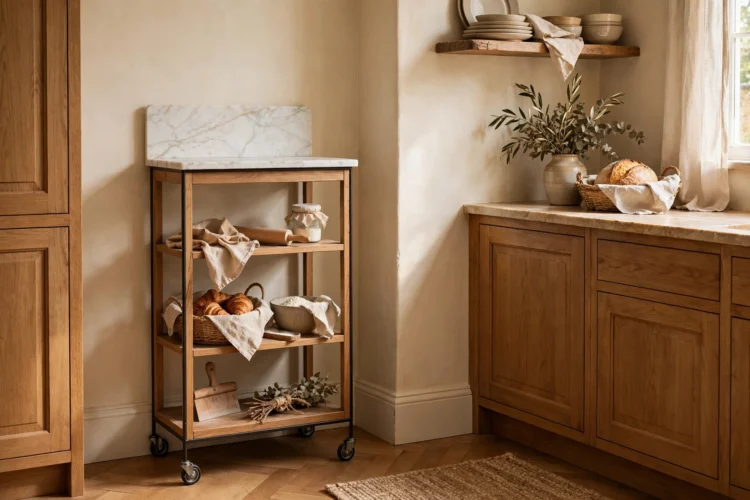
Bakers need height, not width, and a tall narrow cart fits corners that reject everything else. Three or four shelves spaced about 12 inches apart hold flour bins, a stand mixer on the middle shelf, and sheet pans up top. Open sides matter here, because you slide a half-sheet pan straight out without tipping it. Choose casters with individual locks so the cart cannot drift mid-knead. A marble or stone slab on the top shelf gives you a cool surface for pastry dough, which rolls out cleaner when the butter stays cold.
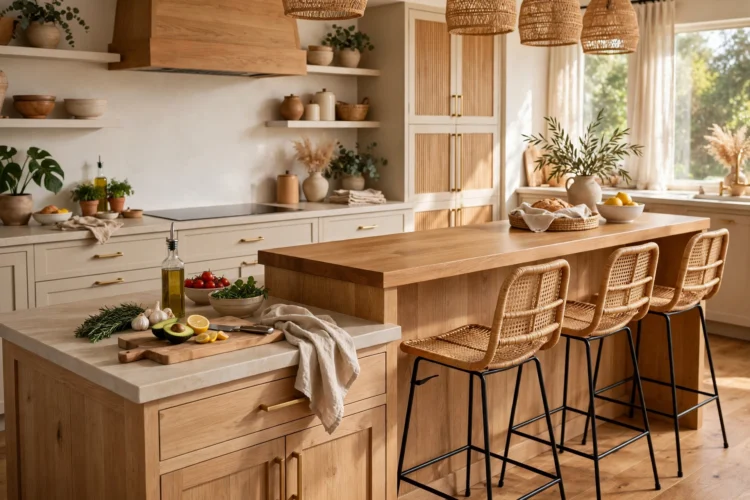
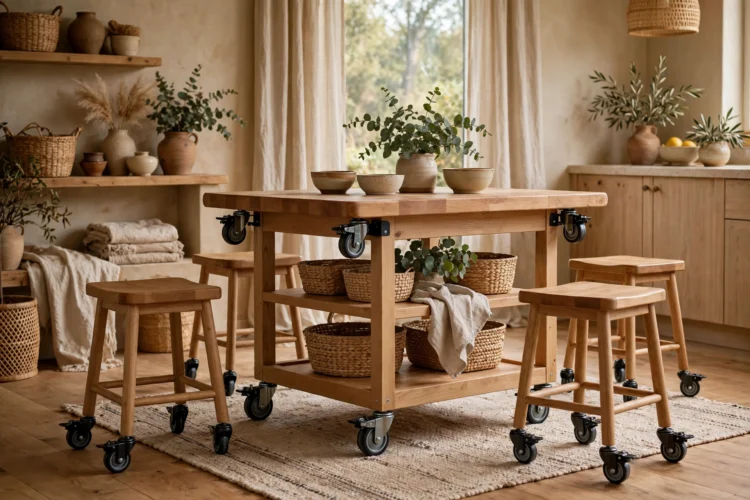
Portable island seating turns the island into the room’s social center. The trick is an overhang of at least 12 inches on the seating side so knees fit underneath without hitting the cabinet. Backless stools tuck fully under the top, which keeps the walkway clear when nobody is sitting. Lock every caster before anyone sits down, because a stool scooting backward can push a loose cart across the room. A padded vinyl seat wipes clean and survives the daily grind of homework, laptop work, and after-school snacks. This rolling kitchen island setup works best in open-plan rooms where the island doubles as the homework desk.
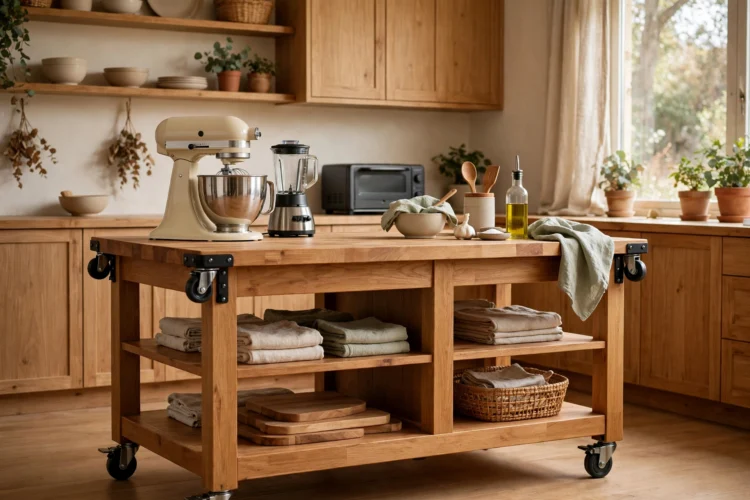
Stand mixers, air fryers, and espresso machines weigh a combined 60 pounds or more, and a locking caster island lets that weight roll instead of being lifted. Look for a cart rated for at least 300 pounds with a 1-inch thick top that will not bow under a mixer running at full speed. A built-in power strip on the side of the cart removes the last excuse for cluttered cords, so the toaster oven can live on the island full time. Lock the casters and the whole appliance station behaves like a permanent counter. Unlock them when the counters need clearing for a big holiday bake, and the heavy lifting is done for you.
Start with the job your kitchen is missing. If you need chopping room, buy the butcher block. If you need seats, buy the drop leaf. One rolling kitchen island that fits your real routine beats a fixed island that fights it.