Physical Address
304 North Cardinal St.
Dorchester Center, MA 02124
Physical Address
304 North Cardinal St.
Dorchester Center, MA 02124

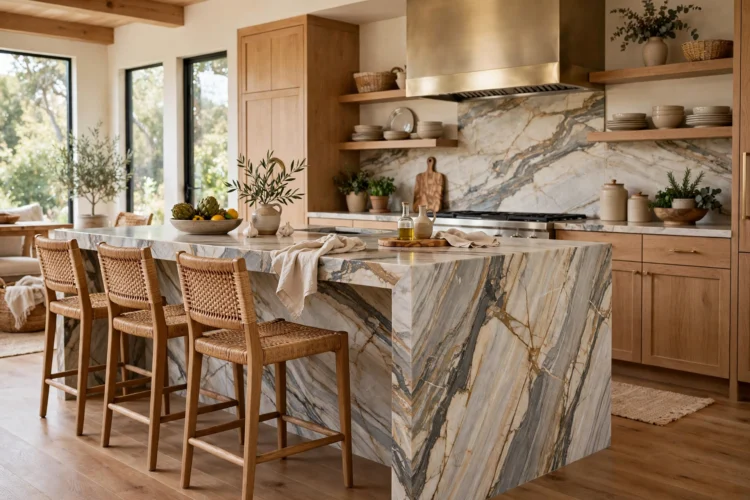
A waterfall island turns stone into sculpture. Nine ways to wrap an island in dramatic slabs, from bookmatched marble to backlit onyx.
A waterfall kitchen island gets its name from the way the countertop pours over the side and runs to the floor. The slab turns a corner and drops vertically, wrapping the island in one continuous surface of stone. A waterfall edge island reads as sculpture and as furniture at once, which is why it anchors open-plan kitchens so well. Each stone kitchen island below uses the same trick with a different material, and the choice of stone decides everything: the mood, the maintenance, and the price. Read through all nine before you visit the slab yard, because the veining you fall for will pick your edge detail for you.
The classic waterfall kitchen island starts with a single slab and lets it flow. The countertop runs across the island, turns a crisp corner, and drops straight to the floor on one or both ends. The visual trick is continuity: the fabricator cuts the slab so the veining carries over the mitered corner without a visible break. Ask the shop to lay out the cuts on the actual slab before sawing, because the best veining usually sits in one corner of the stone. This treatment suits islands at least eight feet long. Shorter islands can look stubby once two feet of each end turn vertical. Keep the base cabinets simple, because the stone is doing all the talking.
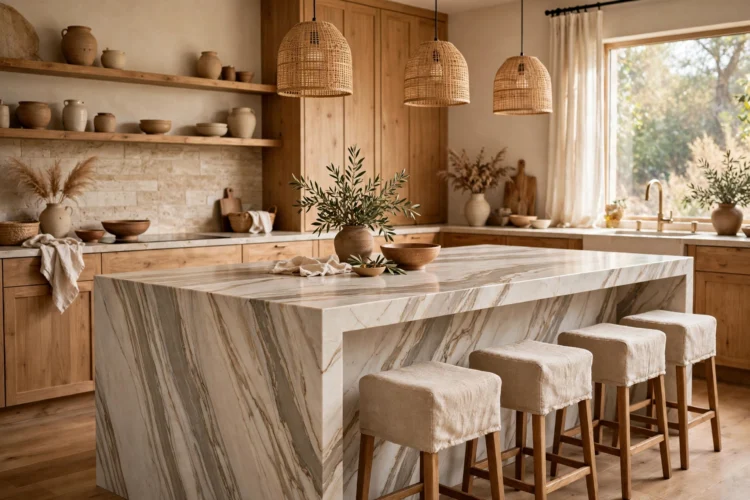
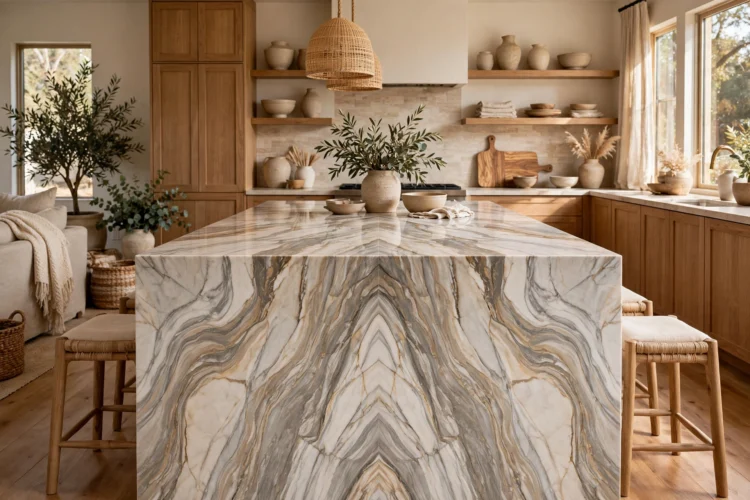
Bookmatching slices a marble block into two mirror-image slabs and opens them like a book. Set the pair across the island top and down the waterfall end, and the veining forms a symmetrical pattern that looks painted on. Calacatta and Arabescato marbles deliver the boldest lines, though bold veining shows every crumb, so daily wiping becomes part of the routine. Seal marble twice a year. Lemon and tomato will etch the polish if they sit. The drama pays off in rooms with plain cabinetry, where the stone becomes the only artwork the kitchen needs. Photograph the slab at the yard in daylight, because warehouse lighting flatters stone that looks flat at home.
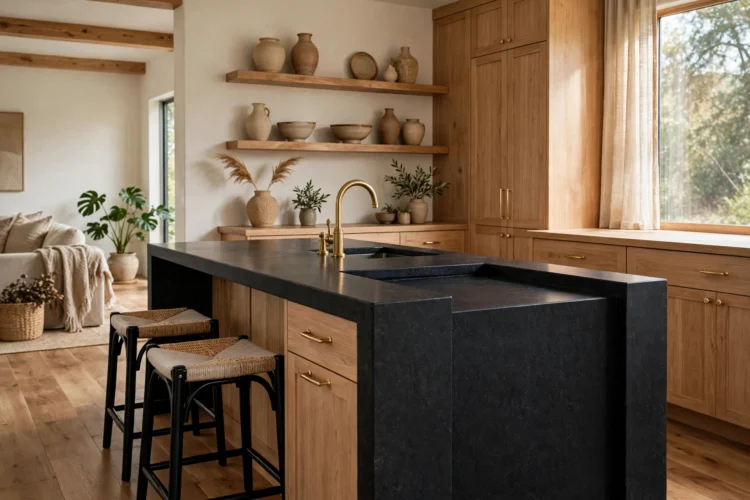
Honed black granite drinks the light instead of bouncing it back. The matte finish gives a waterfall island the weight of a monolith, and fingerprints show less than on polished black stone. Honed surfaces still need sealing, and they can develop a faint sheen where hands rub most, which some owners buff out yearly with a stone polish. Pair it with brass or unlacquered bronze hardware. The warm metal keeps the black from reading cold. This is the stone for kitchens that want drama after dark, when under-cabinet light rakes across the matte face. It also hides crumbs better than any light stone on this list, which busy cooks quietly appreciate.
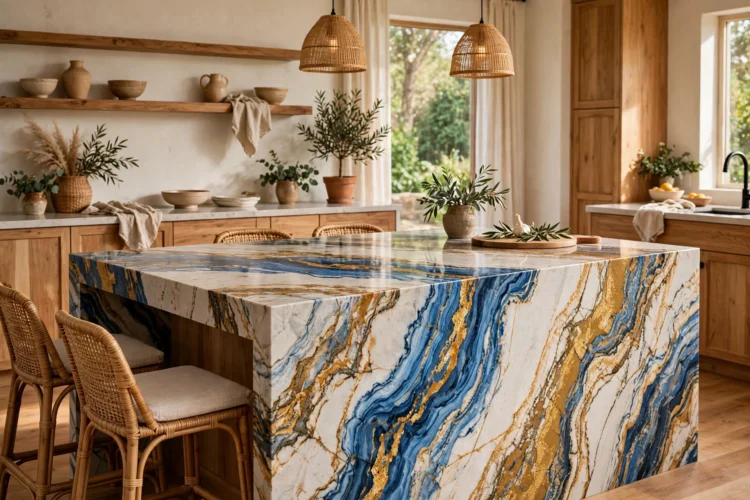
Quartzite looks like marble and behaves like granite. It forms from sandstone fused under heat, so it resists etching from acids that would scar marble, and it takes a polish that shows off veining in blues, golds, and rust. The catch is fabrication. Quartzite runs harder than granite, so cutting a mitered waterfall corner takes longer and costs more at the shop. Confirm the fabricator has cut quartzite waterfalls before. A shop that mostly cuts engineered quartz may underestimate the blade time. The result justifies the fuss, because few materials combine this much movement with this much durability. It is the pick for cooks who want marble drama without marble maintenance.
Build the waterfall profile from two slabs joined at the corner and the island gains a chunky two- or three-inch edge that reads as one massive block. The mitered edge island hides the lamination line on the underside, where the eye never lands. This build uses more material than a single-slab waterfall, so budget accordingly, and it adds real weight. Confirm the floor and the island base can carry it before the stone ships. The thick profile suits large open kitchens where a thin slab would look lost. Keep the cabinets below plain and let the stone’s edge do the talking. For any stone kitchen island, the mitered corner decides whether it looks expensive or improvised, so inspect the shop’s sample corners up close.
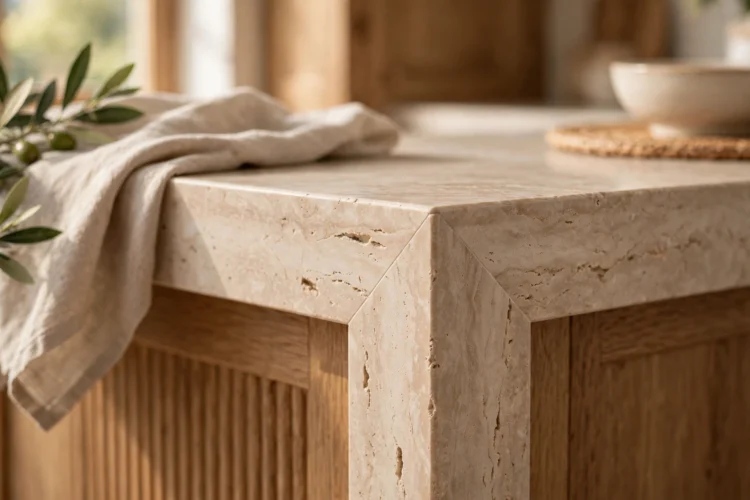
Run the slab down both ends and the island becomes fully symmetrical, a freestanding block of stone. The double waterfall reads best when the island floats in the middle of the room with seating on one long side, because both short ends present the same finished face. This doubles the mitered corners and the slab footage, so it is the priciest version on this list. Use it when the island is visible from the living room or entry, where both ends get seen. Anything less than a full waterfall on the visible end looks unfinished from the sofa. Plan the seating for the long sides only, since the stone ends leave no knee room.
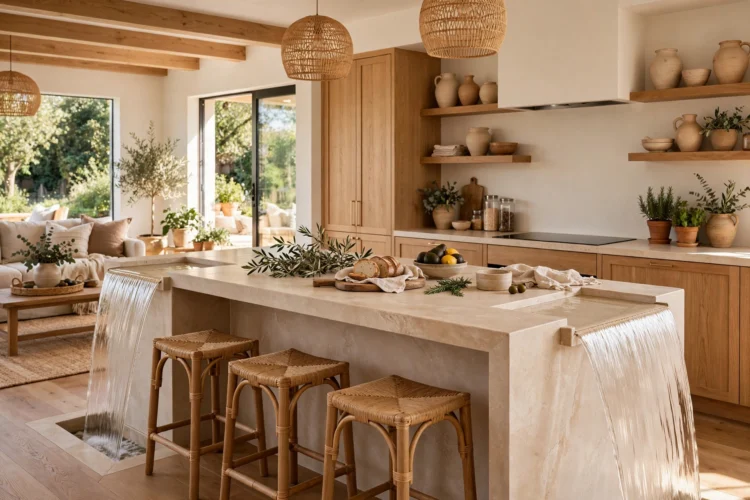
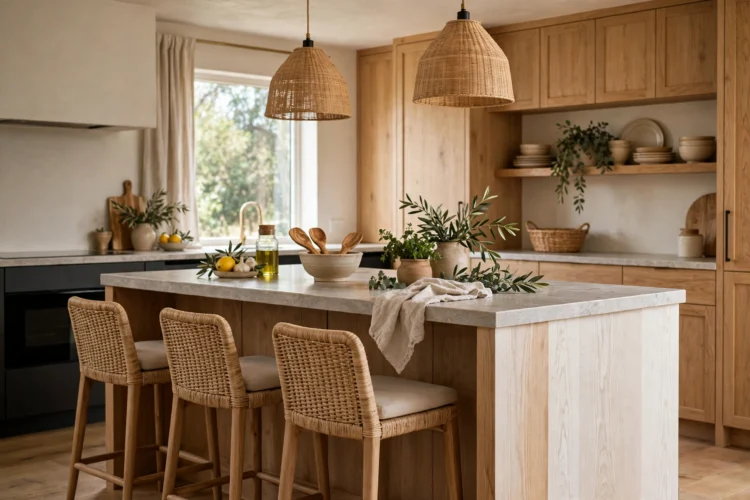
Pair a stone top with waterfall ends in wood, and the island gains warmth that full stone can lack. White oak wrapped down one end echoes a wood floor or open shelving, while the stone top stays practical for hot pans and spills. The wood needs a hardwearing finish, conversion varnish or several coats of polyurethane, because the end panel takes kicks and vacuum bumps. This combo costs less than full stone waterfalls and suits kitchens that already mix materials. Detail the joint where wood meets stone with a slim metal reveal so seasonal movement has somewhere to go. The contrast also photographs well, which matters if the kitchen doubles as a backdrop for content.
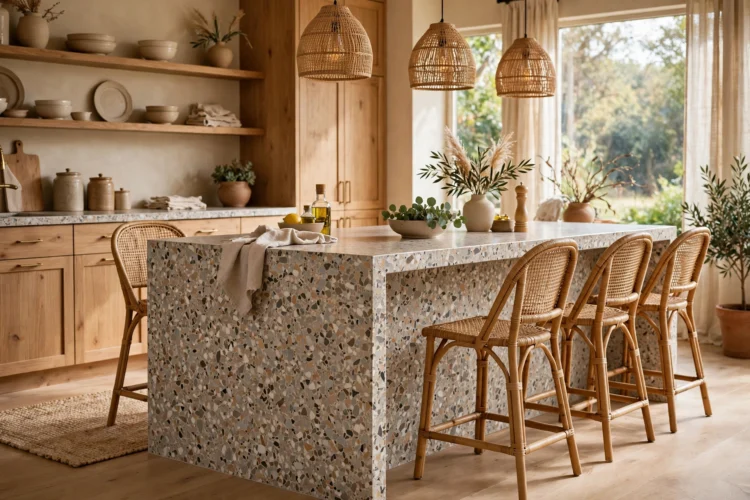
Terrazzo pours marble chips into cement or resin and polishes the mix flat, which makes every waterfall end a field of speckles. It lands between stone and concrete in price, and the aggregate hides crumbs better than any solid slab. Large-format terrazzo panels now come in sizes cut for waterfall edges, so ask the supplier for the maximum panel size before finalizing the island length. Seal cement-based terrazzo yearly. Resin-based versions need less. The pattern plays well with simple Shaker cabinets, because the stone supplies all the visual texture the room needs. Pick a chip scale that suits the room: large chips read playful, fine chips read refined.
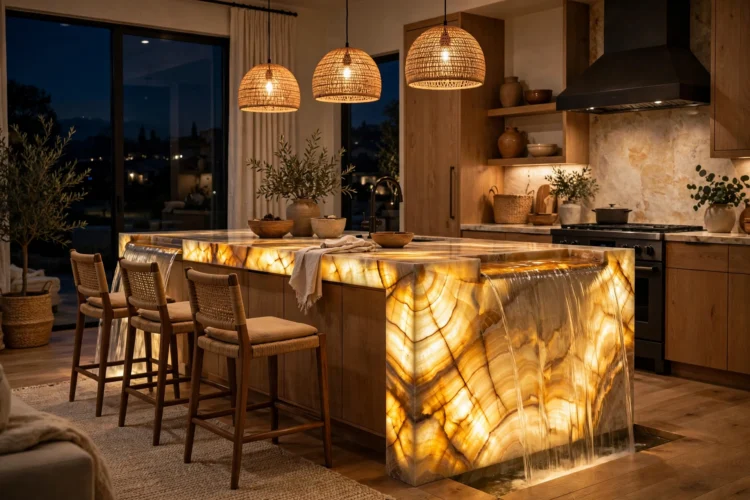
Onyx glows when lit from behind, so a waterfall end in onyx becomes a lantern at night. The fabricator hollows the island end and mounts LED panels behind a thin-cut slab, usually around three-quarters of an inch thick. Onyx is soft and scratches easily, so treat the waterfall ends as display faces and keep the working top in a harder stone if the island sees heavy prep. A dimmer matters more here than anywhere else. Full brightness washes out the veining, while low light lets the amber and gold layers read. Expect the highest price on this list, driven by the stone and the lighting build. Save this one for the island everyone sees from the entry, because it earns its cost in the first impression.
Pick the stone for how you live, then commit to the waterfall detail. Marble and onyx reward careful owners, quartzite and granite forgive busy ones, and terrazzo splits the difference. Whichever slab you choose, the waterfall edge turns the island into the room’s anchor.