Physical Address
304 North Cardinal St.
Dorchester Center, MA 02124
Physical Address
304 North Cardinal St.
Dorchester Center, MA 02124

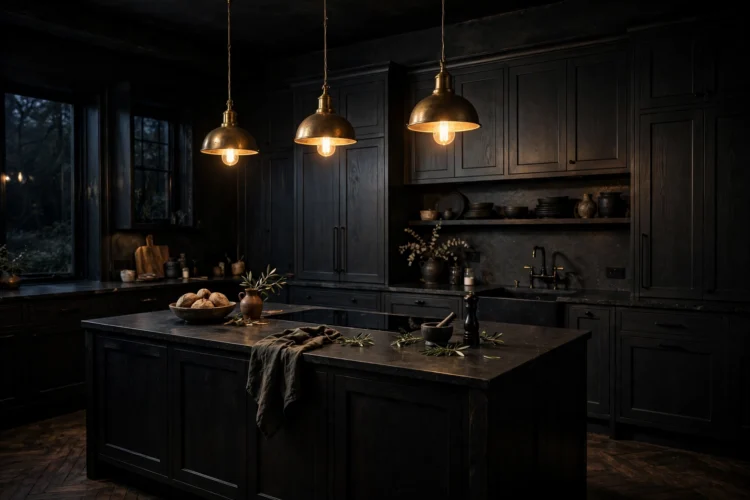
Dark kitchens feel dramatic and cozy when the lighting and materials are right. These nine ideas show how to go dark without losing a usable cooking space.
A dark kitchen can feel like a cave or like a good restaurant. The difference is planning. These moody kitchen ideas use deep color and low light on purpose, then balance them with the lighting and metallic accents that keep the room usable for real cooking. You do not need a large kitchen or a big budget to pull it off. You need one dark anchor, enough task light, and one surface that reflects light back into the room.
Not every dark paint works in a kitchen. Flat black can look chalky and show every fingerprint, while a deep charcoal, espresso, or ink blue with a warm undertone feels rich and forgiving. Test the color on a large board and move it around the room through the day, since a dark paint that looks elegant in the morning can turn muddy under warm evening bulbs. Eggshell or satin finishes clean better than flat paint, which matters on cabinet doors near the stove.
Paint the lowers dark and keep the uppers pale if you want drama without losing light. Or paint the whole room one deep color and let the countertop and the floor carry the contrast. Either route works as long as you commit to it. A half-dark kitchen, where only one cabinet run is painted, often looks unfinished rather than moody.
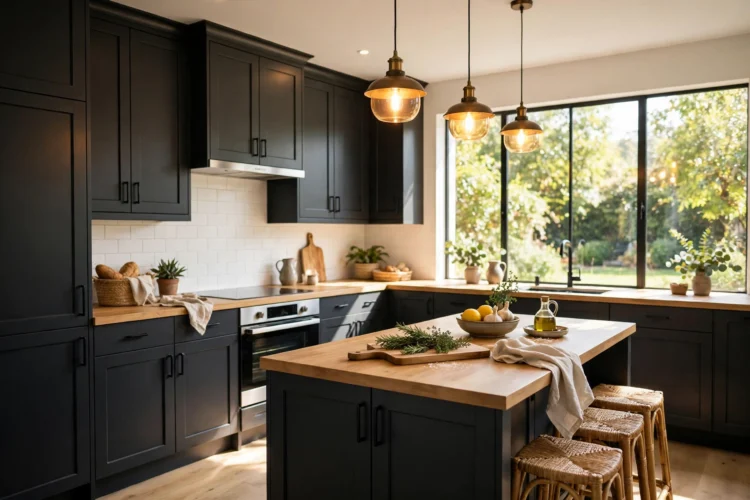
Black cabinets work when the room around them has warmth. Wood floors, a warm metal faucet, and a pale backsplash keep black from reading as cold or industrial. The cabinet style matters too. Shaker doors in black feel classic and calm, while flat slab doors in black feel modern and sharp. Pick the style that matches the rest of your home so the kitchen does not feel like a different house.
Black shows dust and water spots more than pale cabinets, so wipe the doors near the sink and the stove as part of your daily routine. A satin finish hides marks better than high gloss and still reflects enough light to keep the room from going flat. For more ways to use the color, see these black kitchen cabinet ideas that still feel bright.
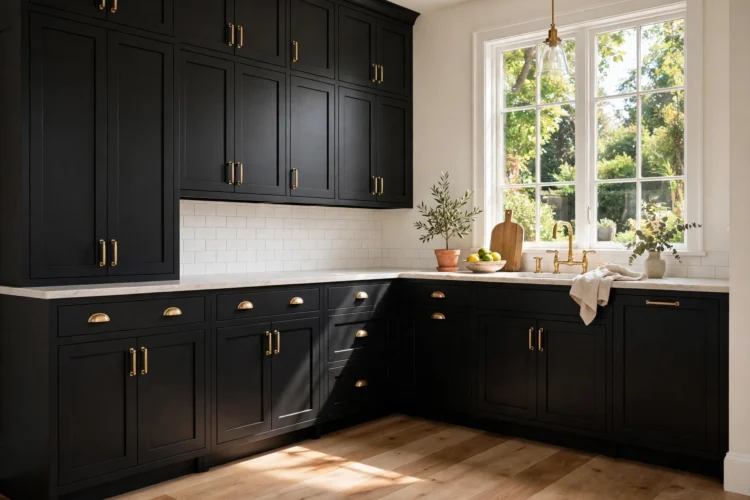
Warm metal is what keeps a moody kitchen from feeling like a basement. Brass handles, a copper faucet, or a row of brass pendant lights catch the light and give the eye bright points to rest on. The metal does not need to match everywhere. A brass faucet with black hardware and copper pans on a rail can live in the same room as long as each metal appears at least twice, so no single piece looks like a mistake.
Unlacquered brass will darken and spot over time, which suits a moody room because the patina adds character. If you prefer a steady finish, choose lacquered brass or brushed bronze instead. Keep the metal warm, though. Chrome and polished nickel can look cold against dark paint, while warm metals echo the glow of the lighting and the wood tones in the room.
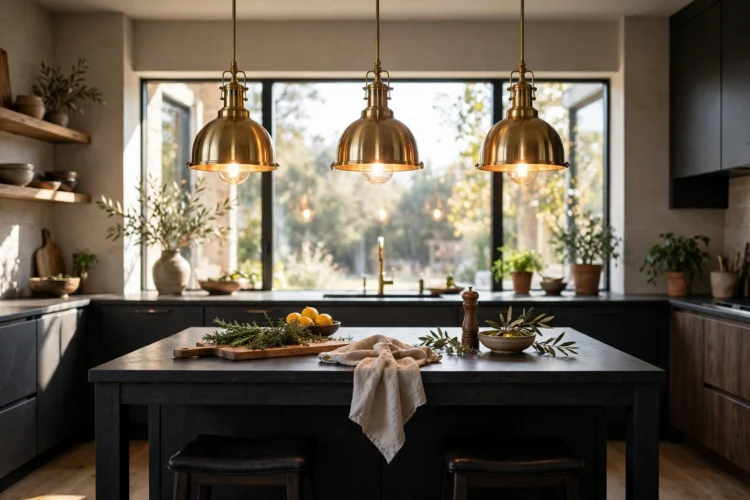
Dark kitchens fail when they rely on one ceiling light. You need three layers: bright task light under the cabinets, warm ambient light from pendants or a chandelier, and a low accent light inside glass cabinets or along a shelf. Under-cabinet strips are the most important layer because they light the counter where the knives and the hot pans are. Choose a warm white bulb, around 2700 to 3000 Kelvin, so the light feels like evening sun rather than an office.
Put the task lights and the ambient lights on separate switches or dimmers so you can cook bright and dine dim. A dark kitchen with a dimmer is a different room at dinner than it is at prep time. These under cabinet lighting ideas show how to place strips so the whole counter stays evenly lit.
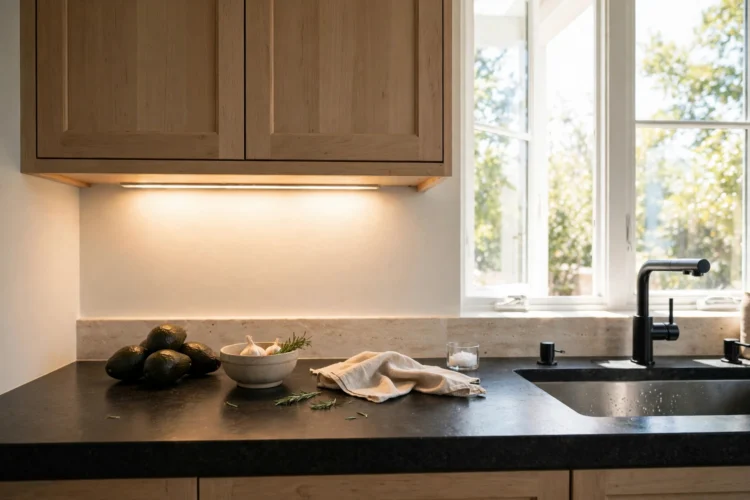
A dark stone countertop ties a moody kitchen together because it connects the dark cabinets to the work surface. Soapstone, honed black granite, and dark quartz all work, and each hides crumbs and coffee rings better than a pale counter does. A honed finish suits the moody look because it softens reflections and feels more like stone than a mirror. A leathered finish adds texture you can feel under your hands.
Balance a dark counter with a pale backsplash or a light wood floor so the room keeps one bright horizontal band. If both the counter and the backsplash are dark, the room can lose its edges and feel smaller than it is. For contrast ideas, see these dark countertop ideas for bold contrast.
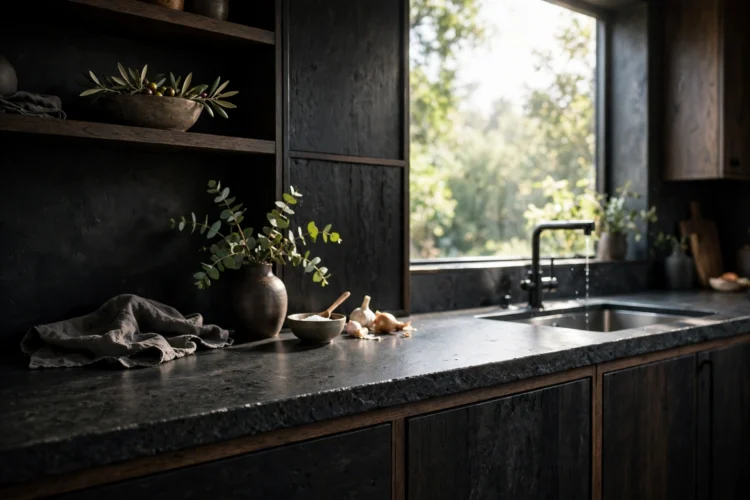
Smoked glass cabinet doors give a dark kitchen depth without the upkeep of full open shelving. You see the shapes of dishes and glasses behind the glass, but not every fingerprint or stacked plate. One or two glass-front cabinets are enough. A whole wall of them can look busy, while a single pair flanking the range hood frames the cooking zone.
Open wood shelves work the same way in a dark room, adding a warm band that breaks up the painted surface. Keep the shelves short and the objects on them simple: a few plates, a row of glasses, and one or two jars. A dark room shows clutter faster than a pale one, so every open shelf needs to earn its place with things you actually use.
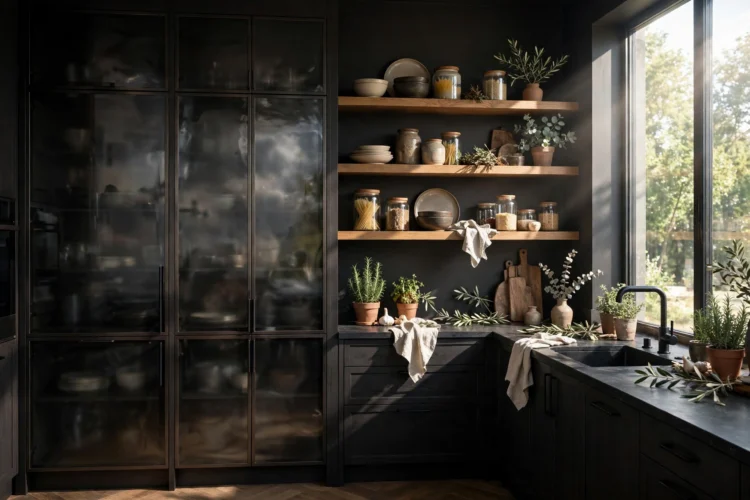
If black feels too severe, deep green or navy gives you the same drama with a softer edge. Forest green reads as a garden color next to brass and wood, while navy reads as classic next to white and marble. Both colors pair well with warm metal, and both hide cooking marks better than black. They also photograph and live better in rooms with little natural light, because their color keeps them from reading as plain shadow.
Use the deep color on the cabinets and keep the walls a warm pale tone, or reverse it and paint the walls deep with pale cabinets. Either way, repeat the deep color once more in the room, such as in a rug, a bar stool, or a piece of art, so it feels intentional rather than isolated on one surface.
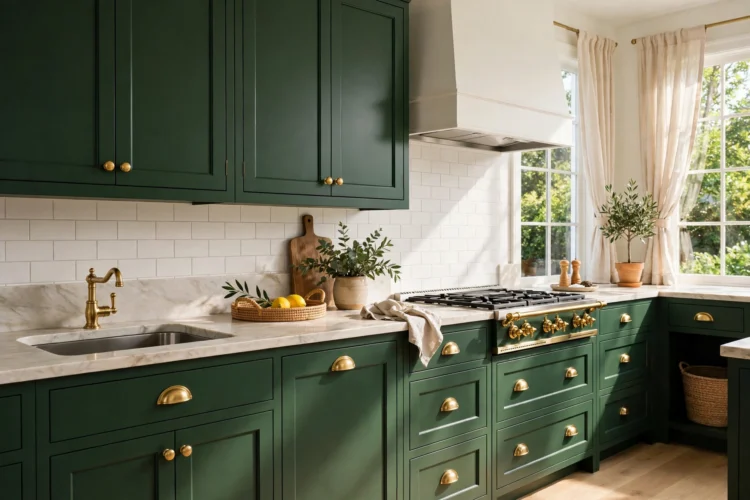
Every moody kitchen needs one light surface to bounce light around. It can be a pale marble backsplash, a white ceiling, a light wood floor, or a bright window wall. Without it, the room absorbs light and the corners disappear. With it, the dark surfaces look deliberate and the room keeps its shape after sunset.
The lightest surface should sit where the light actually falls. A pale backsplash under a window catches daylight, while a light floor catches the glow from pendants at night. Pendant lights over the island do double duty here, since they light the work surface and add bright shapes above it. These pendant light kitchen ideas for islands and peninsulas show fixtures that work well over a dark island.
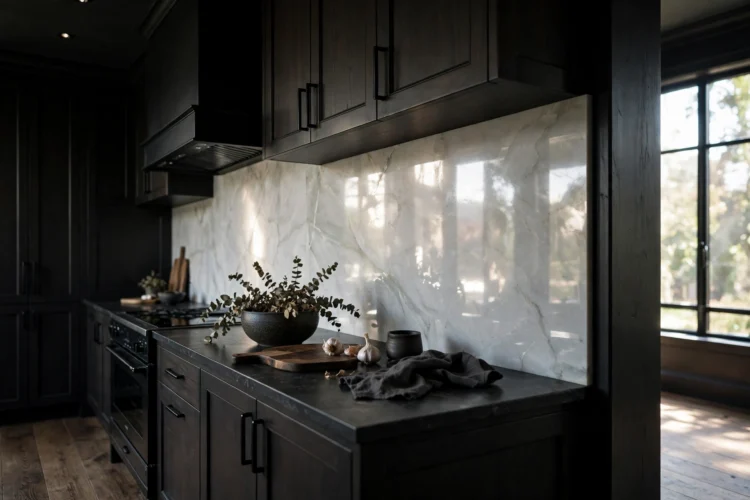
Start with the lighting, then pick your dark. When the task light is bright and one surface stays light, a moody kitchen cooks as well as it looks, and the drama becomes a feature you enjoy every day instead of a look you work around.