Physical Address
304 North Cardinal St.
Dorchester Center, MA 02124
Physical Address
304 North Cardinal St.
Dorchester Center, MA 02124

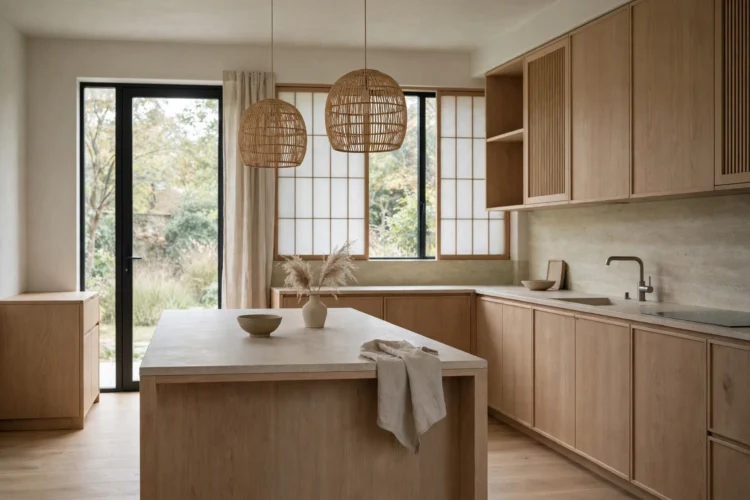
Japanese restraint meets Scandinavian warmth in a Japandi kitchen. These 10 ideas keep the cook space calm, clear, and welcoming every day.
Japandi kitchen ideas blend Japanese restraint with Scandinavian warmth, and the result is a cook space that stays calm even on a busy morning. Low-contrast palettes, natural wood, and storage that keeps counters completely clear do most of the work. Nothing shouts, nothing crowds, and everything has a place. The ten ideas below show how to build that calm without stripping the kitchen of personality. Each one works with standard cabinetry and suits a household that cooks most nights.
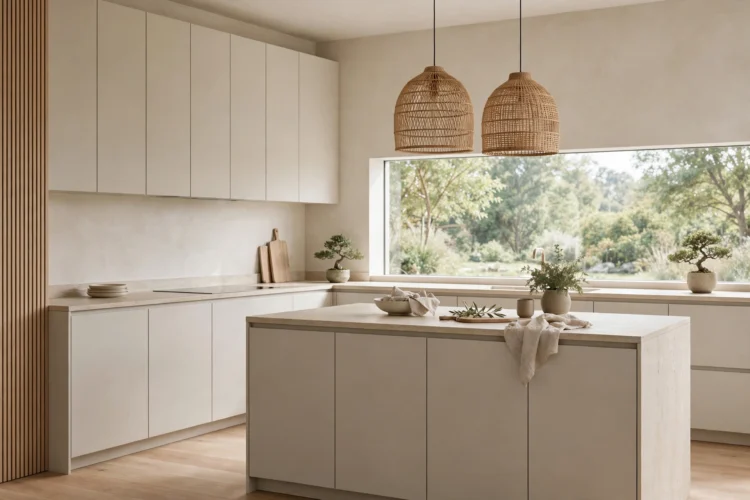
A Japandi kitchen starts with colors that sit close together: warm white, soft beige, pale gray, and light wood. The low contrast keeps the eye moving smoothly across the room instead of jumping from one bold element to the next. The kitchen feels larger because nothing breaks it into pieces.
Pick a wall color and a cabinet color that differ by only one or two shades, then let the wood tone provide the only real contrast. A calm cohesive color palette is the base every other idea in this list builds on, so get the palette right before buying a single fixture. Paint samples on the wall and live with them for a week before committing.
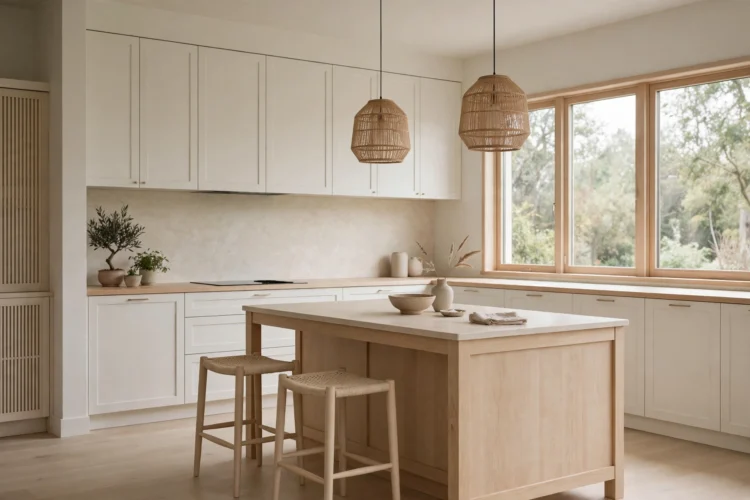
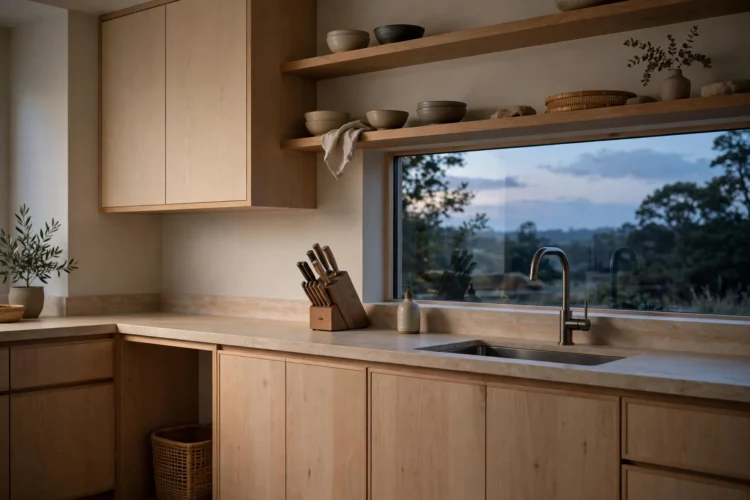
Light wood is the signature material of a Japandi kitchen. White oak, ash, and pale birch add warmth without the heavy grain of dark walnut or the yellow cast of pine. The pale tone keeps the room bright while the grain gives it a natural pattern that paint cannot copy.
Use light wood on the island front, the open shelves, or a single run of lower cabinets, and repeat the same tone in small pieces such as a cutting board and a stool seat. Keep the wood matte or lightly oiled so it stays soft to the touch. One wood tone across the room reads as calm; two or three pale tones start to look accidental.
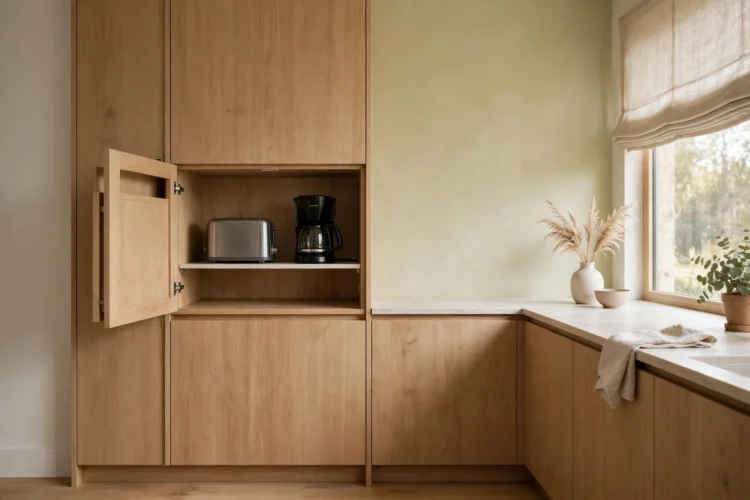
A clutter free kitchen is the core promise of Japandi design, and the appliance garage is how you keep it. A tall cabinet with a roll-up or pocket door hides the toaster, coffee maker, and blender behind a flat front, so the counter stays empty for prep work. The appliances stay plugged in and ready, just out of sight.
Place the garage near the outlet and the water source so the coffee routine does not cross the whole kitchen. Inside, add one shelf for the small items and a pull-out tray for the heaviest appliance. Basket storage that looks like decor works inside the garage too, holding packets and pods in a neat row instead of a loose pile.
Handles and knobs add visual noise to a kitchen, and Japandi design removes them. Handleless cabinets with a push-to-open catch or a recessed finger pull keep the fronts flat and uninterrupted. A matte finish softens the look further and hides fingerprints better than gloss.
Test push-to-open hardware before buying a whole kitchen of it, since some catches need a firm press and others open with a light touch. For drawers that hold heavy pots, a recessed pull gives a better grip than a push catch. Keep the cabinet color consistent across the whole run so the flat fronts read as one calm surface.
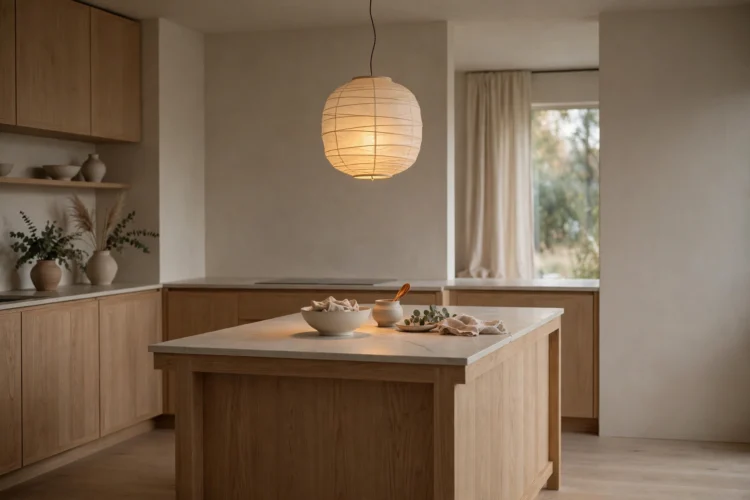
One pendant light over the island is enough in a Japandi kitchen. A paper lantern, a linen drum, or a simple ceramic shade in a warm white gives the room a soft focal point without adding visual weight. The single pendant marks the gathering spot and keeps the ceiling calm.
Hang the pendant 30 to 36 inches above the counter so it lights the work surface without blocking the view across the room. Choose a warm bulb around 2700K and put it on a dimmer so the kitchen can shift from bright prep light to a soft evening glow. Two small pendants work in a long kitchen, but three or more start to look busy.
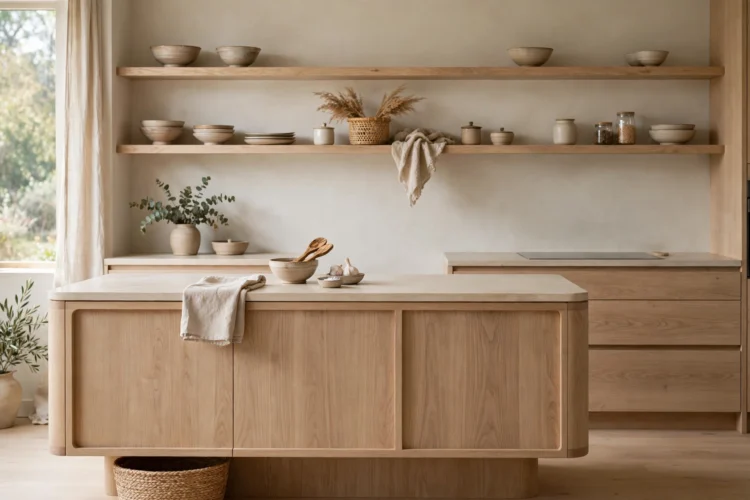
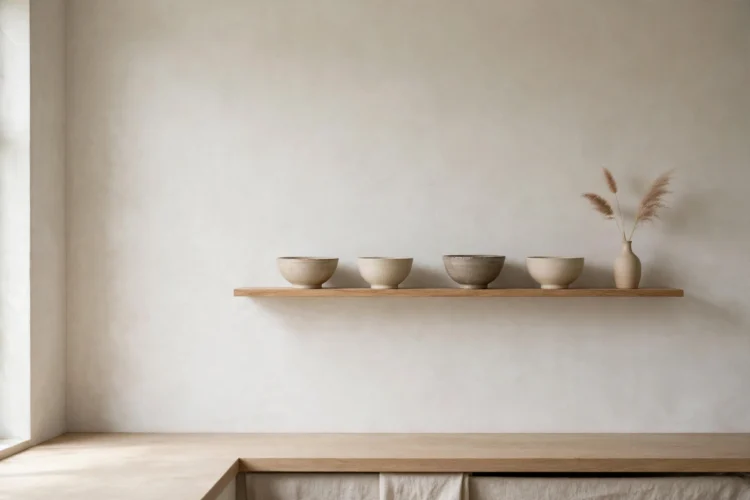
Japandi kitchens use open shelving the way a gallery uses a wall: one short run, a few pieces, and lots of empty space. A single shelf beside the window holding four bowls, two cups, and a small vase looks intentional. Three shelves packed edge to edge look like storage, not design.
Edit the shelf down to the pieces you reach for most and give each group breathing room. Stack bowls in one group, lean a cutting board against the wall, and leave one third of the shelf empty. Revisit the shelf every season and remove anything that has not been used in a month.
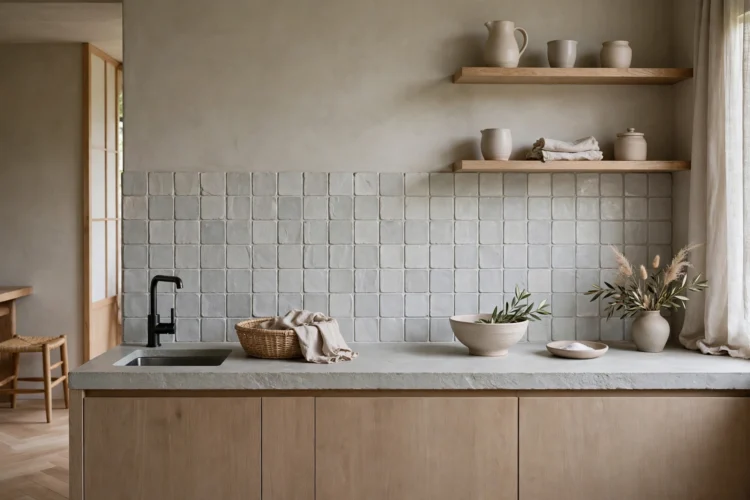
Stone and ceramic add the tactile quality a Japandi kitchen needs without adding color. A honed stone counter, a handmade ceramic tile backsplash in pale gray, or a set of speckled stoneware bowls brings texture that flat paint cannot. The muted tones keep the palette low contrast while the surfaces invite touch.
Choose one stone and one ceramic and repeat them in small doses. The counter stone can reappear as a windowsill or a trivet, and the ceramic tile can show up as a soap dish or a spoon rest. Keep the finishes matte, since gloss reflects light in hard lines that fight the calm mood of the room.
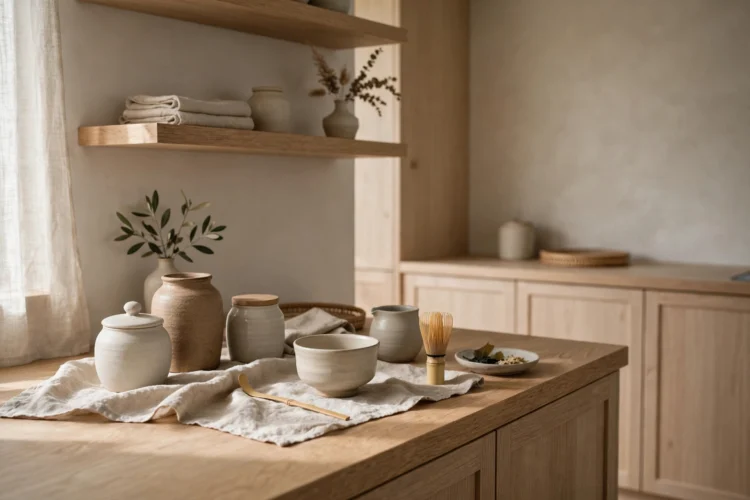
A small tea or coffee corner turns a daily routine into a quiet ritual, which is the spirit of Japandi design. Dedicate one stretch of counter or one shelf to the kettle, the cups, and the tea or coffee supplies, and keep everything else off that spot. The corner becomes a pause point in a room built for work.
Store the supplies in closed containers so the corner stays tidy: a ceramic jar for tea, a wooden box for filters, and a linen cloth under the tray. A small plant or a single flower stem adds a living note without clutter. Textile layering with linen and cotton suits this corner well, since a folded linen towel under the tray softens the hard counter and keeps cups from sliding.
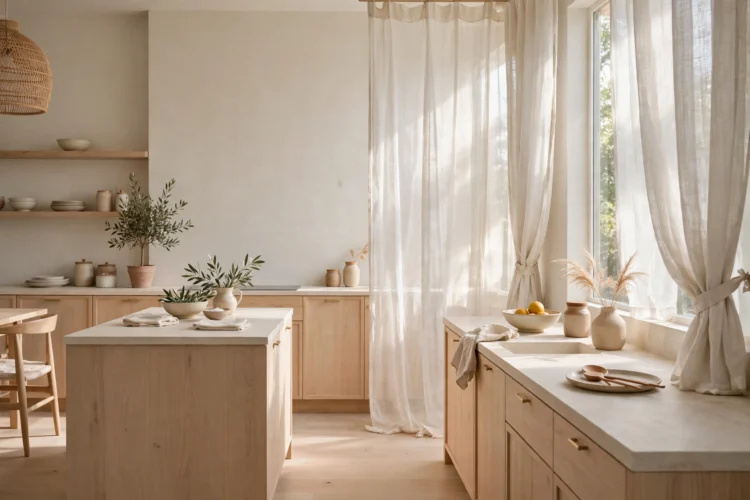
A Japandi kitchen leans on daylight more than on fixtures. Keep the windows clear of heavy curtains and bulky blinds, and let the light fall on the pale surfaces. A sheer linen panel filters the sun without blocking it, and a low windowsill plant catches the light without crowding the glass.
If the kitchen faces north or sits under a deep overhang, add a light-colored backsplash and a pale floor to bounce what light there is. Clean the windows inside and out once a season, since a thin film of grease dims a kitchen window faster than any curtain. The goal is a room that feels bright at noon and soft at dusk without switching on every light.
A calm kitchen is a maintained kitchen. The five minute reset at the end of the day keeps the Japandi look real instead of staged: clear the counters, wipe them down, put the dishes away, and return the cutting board to its hook. The routine takes less time than scrolling through a phone, and the next morning starts in a clear room.
Make the reset easy by giving every tool a fixed home. The knife block sits in one spot, the dish soap lives by the sink, and the compost bin hides under the counter. Minimalist decor that still feels warm works the same way: fewer objects on display, each one chosen, each one put back. When the counters stay clear, the kitchen stays calm without any extra effort.