Physical Address
304 North Cardinal St.
Dorchester Center, MA 02124
Physical Address
304 North Cardinal St.
Dorchester Center, MA 02124

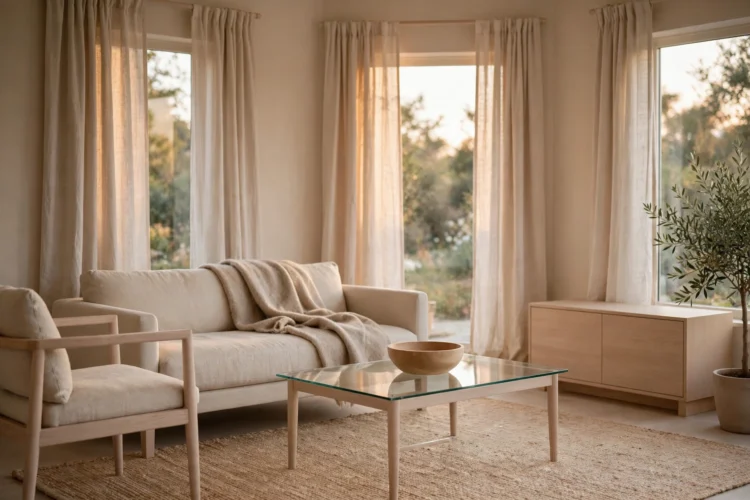
Minimalism built on texture and wood tones rather than stark white, so pared-back rooms feel inviting. Twelve ideas that keep simple rooms warm.
Minimalist home decorating gets a bad reputation for feeling cold. The problem is rarely the lack of things. It is the lack of warmth in what remains. Warm minimalist decor keeps the calm of a pared-back room and adds texture, wood, and soft light so the space feels inviting. These 12 minimalist decor ideas still feel warm, because they build on natural materials instead of stark white and empty surfaces.
Start with one room and one rule: everything visible should earn its place by being useful or beautiful, ideally both. Keep the rest behind closed doors. A room with ten good objects beats a room with fifty average ones, and it is far easier to clean.
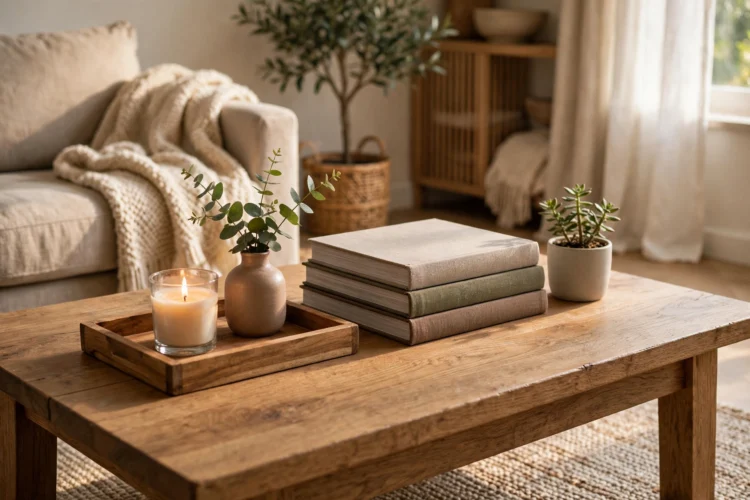
Pick one surface and clear it completely. A coffee table, a nightstand, or a kitchen counter. Leave it empty for three days. You will notice how much calmer the room feels, and you will see exactly what deserves to come back. Usually one or two objects return. The rest can live in a drawer or leave the house.
Empty space is not wasted space. It is what lets your eye rest and what makes the objects you keep look intentional. If a surface feels bare after a week, add one thing with texture, like a wooden bowl or a linen cloth, instead of three small decorations. One good object fills an empty surface better than a crowd of small ones.
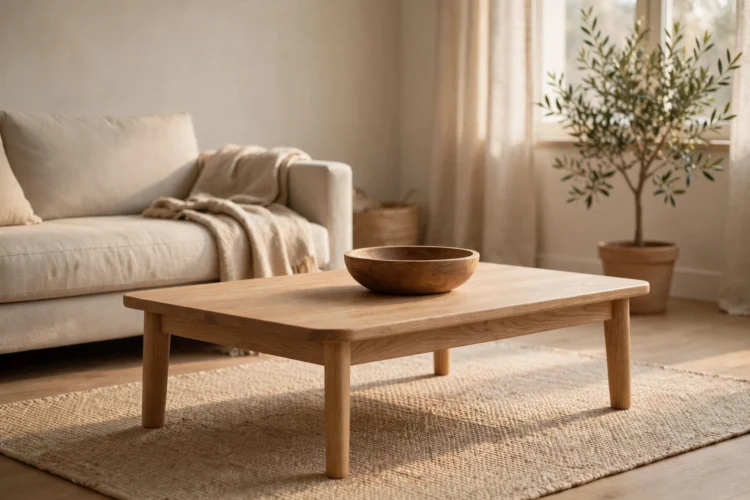
Warm minimalist decor starts with wood. Pale oak, warm walnut, and natural ash bring color into a room without paint or pattern. A wooden coffee table, a timber bench, or oak shelves warm up white walls instantly. The grain itself is decoration, so you need fewer objects on top of it.
Mix no more than two wood tones in one room, and keep them close in warmth. Pale oak and walnut work together. Pale oak and dark mahogany fight. If your floor is already a strong wood tone, choose furniture a shade lighter or darker, not an exact match. These wood kitchen cabinet ideas show how natural wood warms modern spaces without adding clutter.
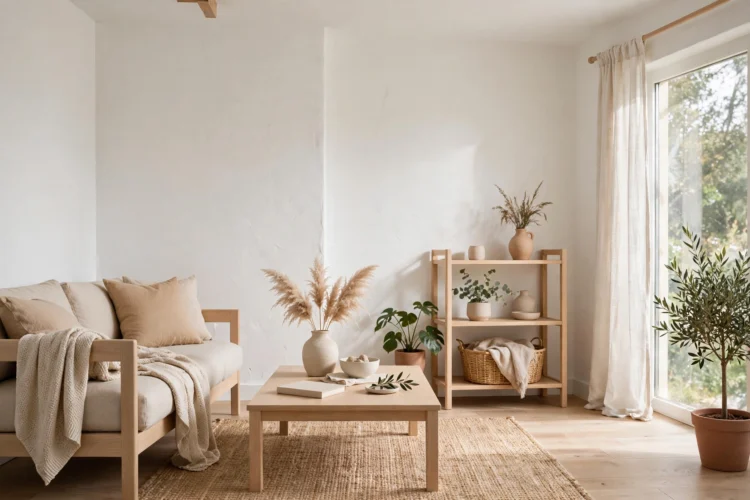
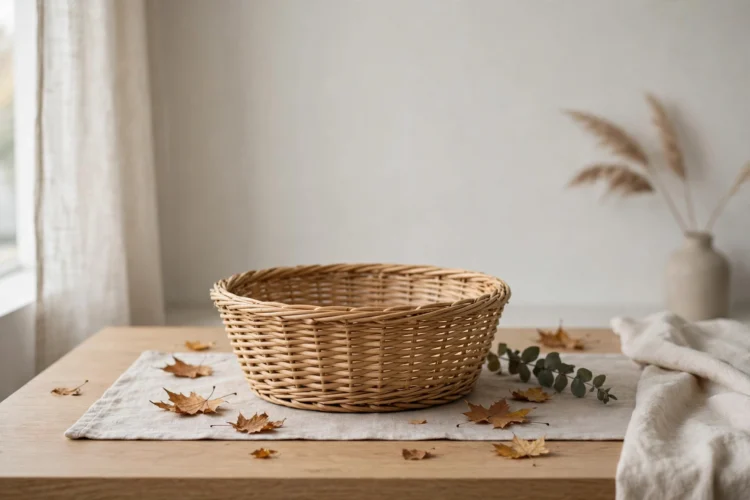
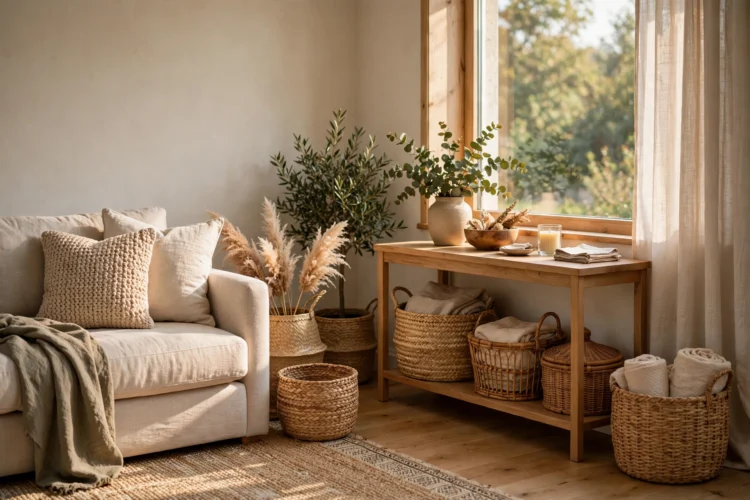
When you remove objects, texture has to do more work. Linen curtains, a wool throw, a nubby rug, and a woven basket give a room depth without adding visual noise. Touch matters as much as sight. A room that feels good to sit in will read as warm even when it looks simple.
Layer three textures in every room: one soft, like wool or linen, one hard, like wood or stone, and one woven, like rattan or jute. That mix keeps a pared-back room from feeling flat. That balance is the heart of cozy minimalism. Avoid shiny surfaces in large areas. Matte finishes absorb light softly and make a room feel calm.
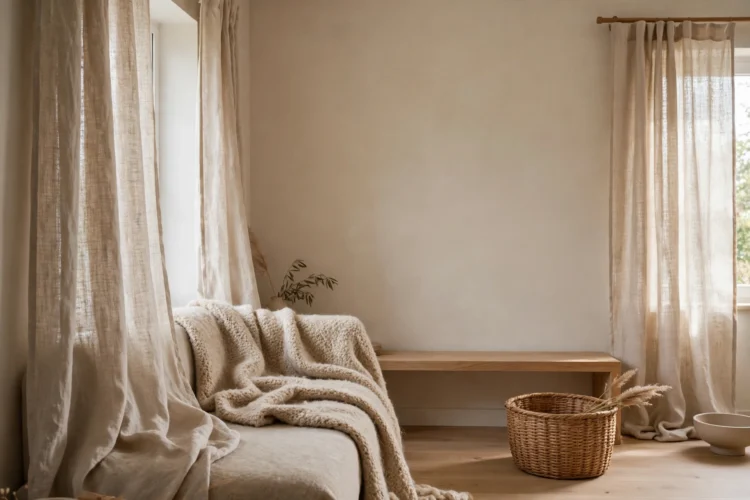
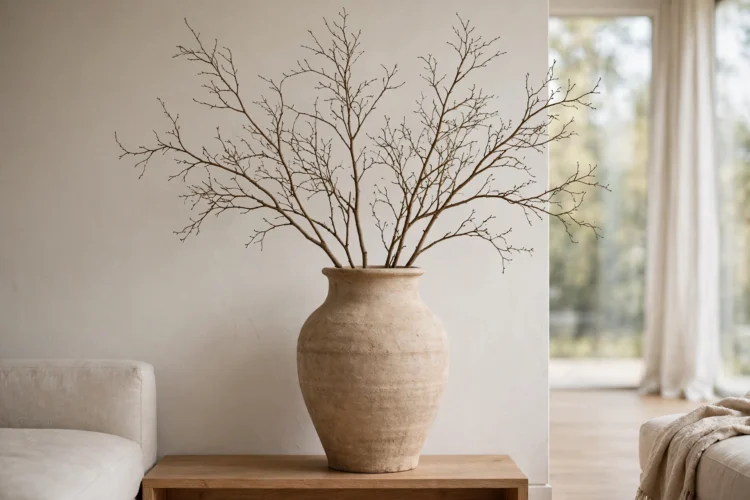
A single large vase, one big piece of art, or one sculptural lamp fills a room more effectively than five small objects scattered around. Large pieces create a focal point and give the eye somewhere to land. Small objects, grouped together, read as clutter even when each one is lovely on its own.
Choose the large piece first, then build the room around it. These minimalist living room ideas scale to any room, because one strong focal point works everywhere. A big linen artwork above the sofa sets the color and the scale for everything else. A tall floor lamp in a corner does the same job with light. For rooms where a single large piece feels right, these gallery wall ideas show the opposite approach, and comparing the two helps you decide which suits your wall.
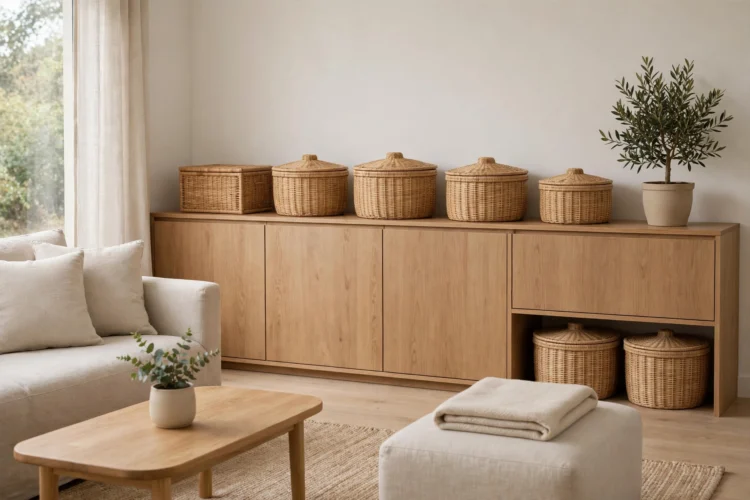
Minimalism fails without closed storage. Open shelves look good in photos and fill up fast in real life. Baskets with lids, cabinets with doors, and ottomans with hidden compartments keep daily life out of sight. The rule is simple: if you use it every day, it needs a closed home within arm’s reach.
A basket by the door for shoes, a lidded box on the shelf for chargers, a drawer for the remote controls. Small closed storage solves most of the mess that makes a room feel busy. For storage that looks like decor, these garage tool wall ideas are a useful reminder that even work zones stay calmer when every item has a place, and the same logic applies inside the house.
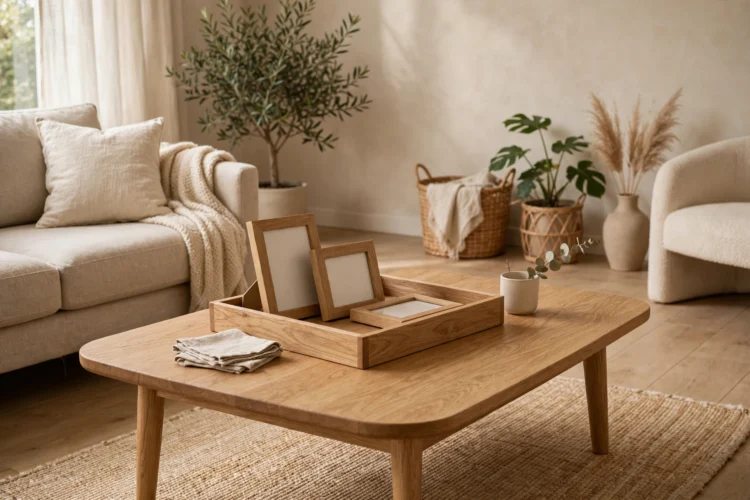
Repetition creates calm. If your coffee table is oak, echo that oak in a picture frame, a tray, or a shelf. If your lamp is matte black, repeat black in a curtain rod or a vase. Two or three repeats of one material tie a room together without adding a single new object.
This works with textiles too. Linen on the curtains, linen on the cushions, and a linen table runner make a room feel considered. The eye reads the repetition as order. Avoid repeating a pattern instead. Repeating a material is calm. Repeating a bold pattern is busy.
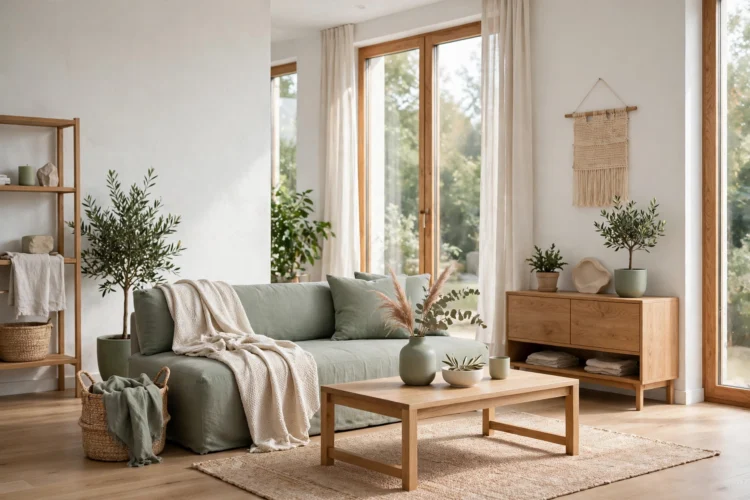
A warm minimalist room needs no more than three colors: one neutral for walls and large furniture, one wood tone, and one accent that appears in small doses. White, oak, and sage. Cream, walnut, and terracotta. Gray, ash, and dusty blue. Three tones are enough for depth and few enough for calm.
Let the accent appear three times in the room, in different sizes: a cushion, a vase, and a piece of art. That repetition makes the accent look deliberate. If you want help choosing the three tones, these neutral bedroom ideas show how pale rooms stay interesting with texture and one warm accent.
Furniture needs space to breathe. Pull the sofa a few inches off the wall. Leave a gap between the coffee table and the rug edge. Do not push every chair into a corner. A room with space between pieces feels larger and calmer than a room where everything touches.
Walk the room after you arrange it. You should be able to move through it without turning sideways or stepping around a chair leg. If a path feels tight, remove one piece of furniture instead of shifting everything by an inch. Removing beats rearranging when a room feels crowded.
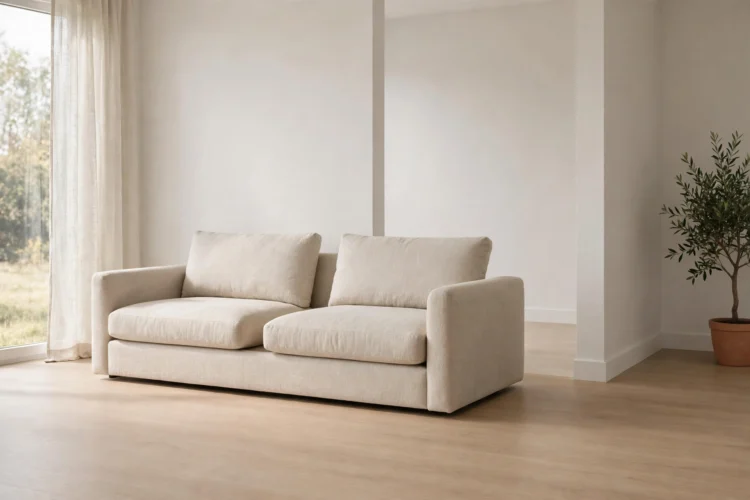
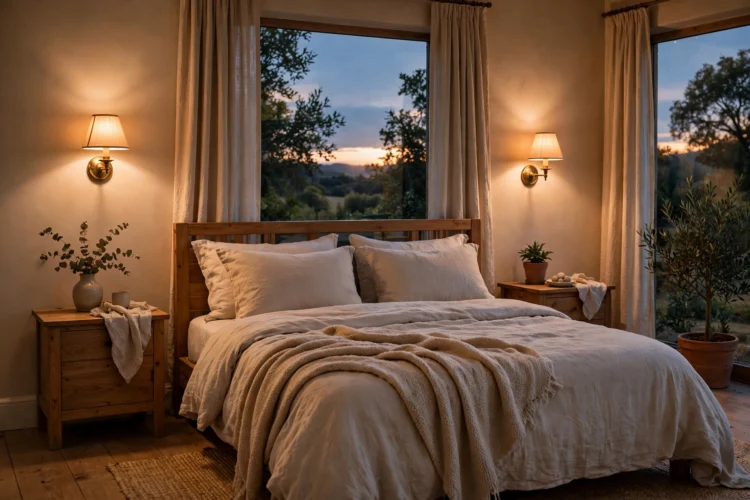
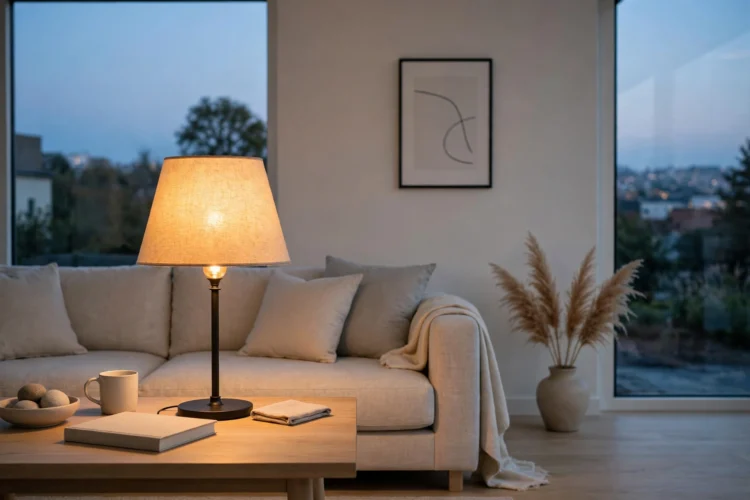
Light is the final layer. Warm bulbs around 2700K make wood glow and linen look soft. Cool white bulbs make the same room look like an office. Use lamps at different heights, a floor lamp, a table lamp, and one low light, instead of a single ceiling fixture. Layered light is what makes a simple room feel like evening.
Put the brightest light where you work and the softest light where you rest. A dimmer switch on the main light costs little and changes everything. These living room lighting layers show how floor-to-ceiling light layers make a pared-back room feel finished after dark.
A minimalist room stays minimal only if you edit it regularly. Once a season, walk each room with a basket and remove anything that drifted in without a purpose: the extra candle, the third throw, the stack of magazines. If you have not used it or loved looking at it in three months, it goes.
The seasonal edit takes twenty minutes per room and stops clutter from creeping back. It also gives you a reason to rotate the few objects you own, so the room feels fresh without new purchases. Keep a small box for items in transit, things you are not sure about yet. If the box is still full after a season, donate it unopened.