Physical Address
304 North Cardinal St.
Dorchester Center, MA 02124
Physical Address
304 North Cardinal St.
Dorchester Center, MA 02124

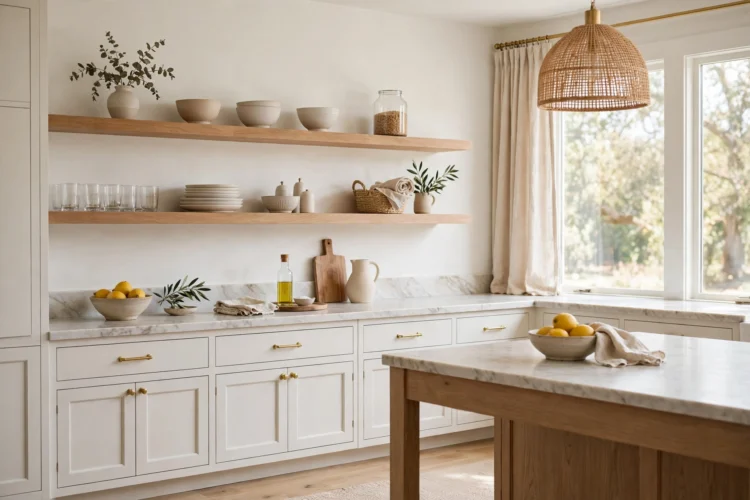
A repeatable method for open shelves: give each shelf a job, pick one anchor, group in odds, and leave a third of the shelf empty on purpose.
Styling open kitchen shelves well has little to do with buying more decor. It comes down to editing what you already own and giving each shelf a clear job. Open shelves show everything, so a few careless piles can make the whole kitchen feel messy even when the counters are clean. The fix is a repeatable method: choose anchors, group pieces in odd numbers, vary the heights, and leave empty space on purpose. This guide walks through that method step by step, with practical fixes for the clutter traps that trip up most kitchens. Once you learn the pattern, you can restyle a shelf in ten minutes and keep it looking calm for months.
Before you move a single plate, decide what each shelf is for. One shelf can hold everyday dishes, another can hold glasses, and a third can hold the pieces you rarely touch but love to look at. When a shelf has no job, it collects random items, and random items read as clutter. Write the job on a sticky note if it helps, and keep it there while you style. Take everything off the shelves first, wipe them down, and sort items into three piles: daily use, display, and store elsewhere. Daily use items earn the lowest, easiest shelf. Display pieces go higher, where you can see them without reaching past them every morning. Anything that fits neither pile belongs in a closed cabinet, not on open display.
Think about how you actually cook. If you grab a mug before the coffee maker every morning, mugs belong near the coffee station, not three shelves up. If you bake on weekends, keep mixing bowls together on one shelf instead of scattering them across the wall. Grouping by use also makes the shelf easier to keep tidy, because every item has an obvious home to return to. This is the same logic behind good minimalist kitchen ideas that hide the clutter: fewer visible items, each with a purpose, beats a full shelf every time.
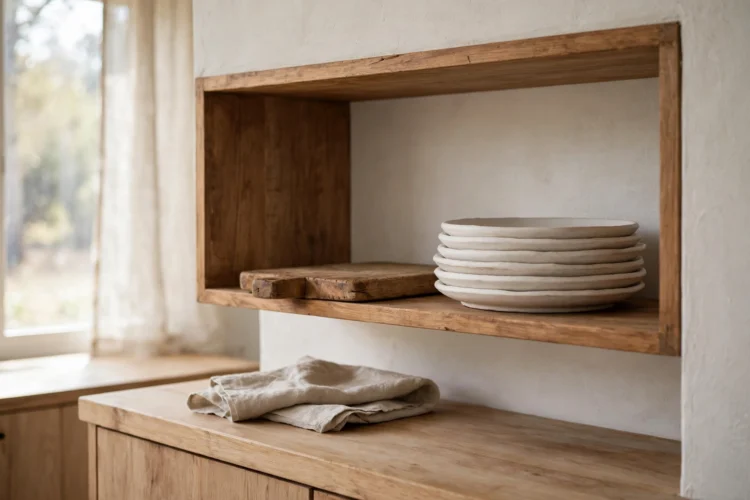
Every shelf needs one anchor, a larger piece that sets the scale and gives the eye a place to land. A stack of dinner plates, a tall vase, a wooden board leaned against the wall, or a large serving bowl all work. Without an anchor, small items float and the shelf looks scattered. With one, the rest of the pieces fall into place around it. Place the anchor slightly off center, toward one end of the shelf, and build outward from there. A centered anchor can work on a short shelf, but on a long shelf it tends to split the display into two dull halves.
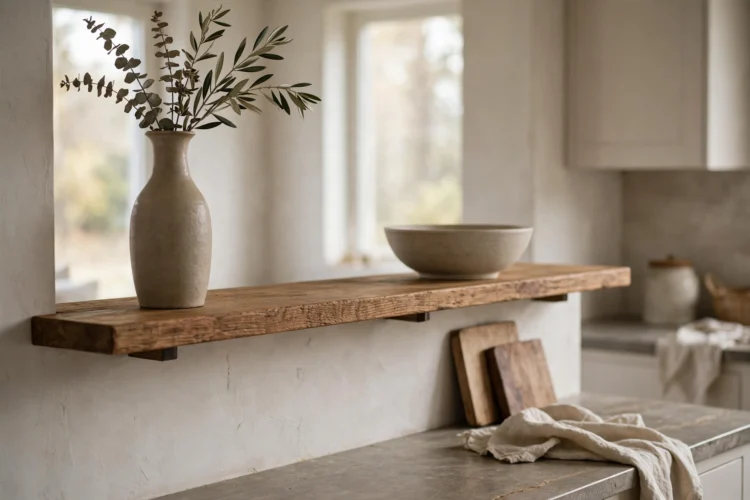
Groups of three or five look settled, while groups of two or four often look like pairs waiting for a partner. This is one of the oldest open shelf styling ideas, and it works because odd groupings feel relaxed rather than staged. Try three mugs in a row, a stack of bowls beside a small plant, or five spice jars lined up with a gap at one end. Vary the heights inside each group so the top edge of the shelf has rhythm instead of a flat line. A tall bottle next to a short stack of bowls next to a medium jar gives the eye something to follow.
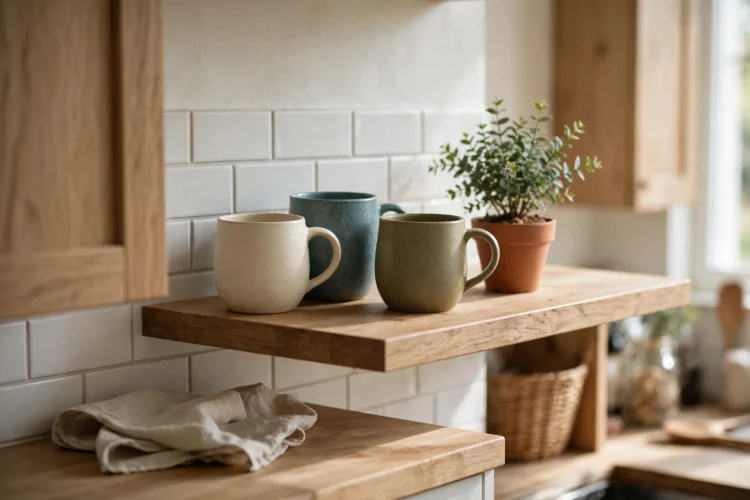
Daily dishes deserve a method of their own, because they move on and off the shelf every day. Stack plates in short piles of four to six, never in towers that wobble when you pull the bottom plate. Keep bowls nested in pairs and mugs hung from hooks or lined up with handles facing the same way. This part of styling open kitchen shelves is about function first: if a stack is hard to use, you will stop putting things back, and the shelf will drift into clutter within a week. Test the flow by taking a plate and a mug off the shelf and putting them back, as you would on a normal morning.
Keep the everyday shelf at eye level or just below, so no one needs a step stool for breakfast. Reserve the top shelf for items you use weekly, not daily, such as serving platters and vases. If your kitchen shelf decor includes pieces you never use, move them to the top shelf where they can be admired without getting in the way. Wash the shelf and the dishes on it once a month, because open shelves collect cooking grease and dust faster than closed cabinets. A quick wipe keeps white plates looking white instead of faintly yellow.
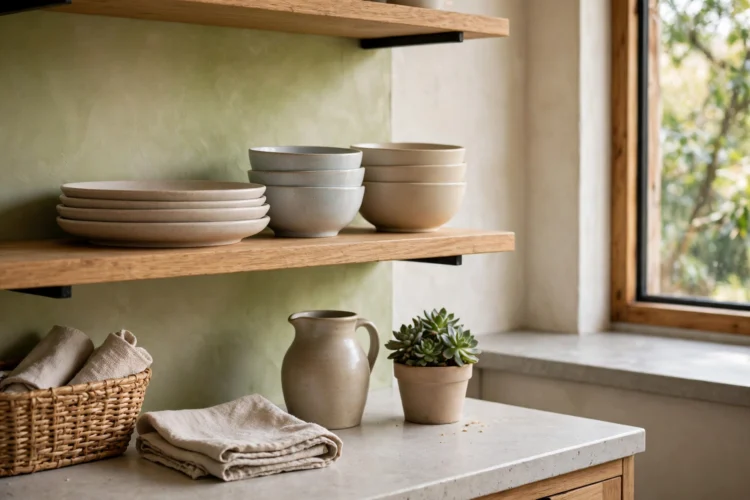
Empty space is part of the design, not a sign that you ran out of things to display. Aim to leave about a third of each shelf visibly empty. That gap lets each group stand on its own and keeps the wall from looking like a shop display. Beginners usually fill every inch, then wonder why the shelf feels busy. Try removing one item from each shelf and living with the gap for a day. Most people find the shelf looks calmer at once, and nothing important was lost.
Breathing room also has a practical side. You need space to slide a plate out without knocking over the vase next to it. Leave a hand-width gap between groups, and keep the front edge of the shelf clear so items do not crowd the lip. If you buy a new piece, remove an old one first, the same one-in-one-out rule that keeps closets tidy. Kitchens with strong wall-mounted kitchen storage ideas that free the counters work the same way: the wall holds what you use, and the rest stays out of sight.
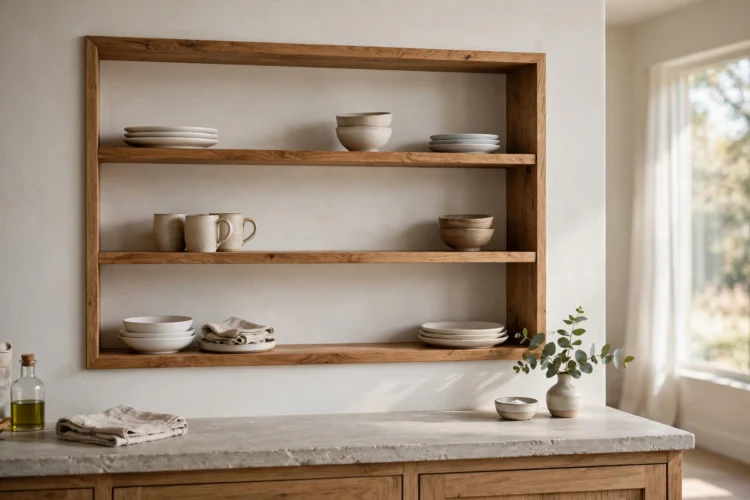
Repetition ties a shelf together. Pick one material, such as light wood, and repeat it at least twice across the shelves: a wooden board on one shelf and wooden spoons in a jar on another. Or pick one color, such as sage green, and repeat it in a plant pot on one shelf and a small bowl on the next. The repeat does not need to be loud. A quiet echo is enough to make separate shelves feel like one design instead of five unrelated piles.
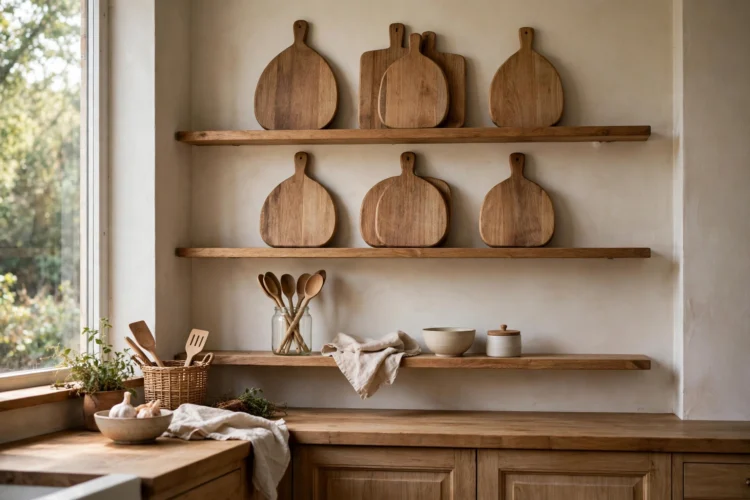
Restyling every week burns out even the most enthusiastic decorator. Rotate seasonally instead, four times a year, and make small swaps rather than full overhauls. In spring, swap a dark vase for a clear one with fresh stems. In autumn, bring in a wooden bowl and a linen cloth in a warm tone. The shelf stays fresh without demanding a weekend project every month. Keep a small box of spare display pieces in a cabinet so swaps take minutes, not a shopping trip.
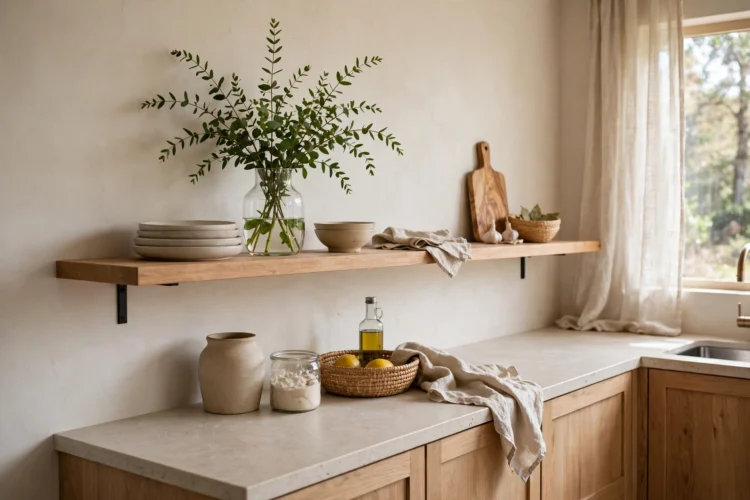
Three traps cause most open shelf clutter. The first is the catch-all shelf, where batteries, keys, and mail land because no better spot exists. Give those items a closed home, such as a drawer or a lidded box, and keep them off the shelves entirely. The second trap is mismatched containers: a dozen different jars, tins, and boxes with no shared color or material. Decant dry goods into matching glass jars with simple labels, and the shelf calms down at once. The third trap is the too-tall stack, which looks unstable and makes you nervous every time you reach for it. Shorten the stack and move the extra pieces into a cabinet.
When all three traps are fixed, most shelves need only small styling, not a rescue. Walk into the kitchen and look at the shelves as a guest would: what draws the eye first, and is it something you want noticed? If the answer is a tangle of cords or a leaning tower of mismatched mugs, fix that one thing today. Pair this with a small kitchen storage plan that keeps daily items close but out of the way, and the shelves can stay display-only. For a coffee corner, the same rule applies: keep mugs and beans on the shelf, and move the rest to one of these built-in coffee station ideas for small kitchens.
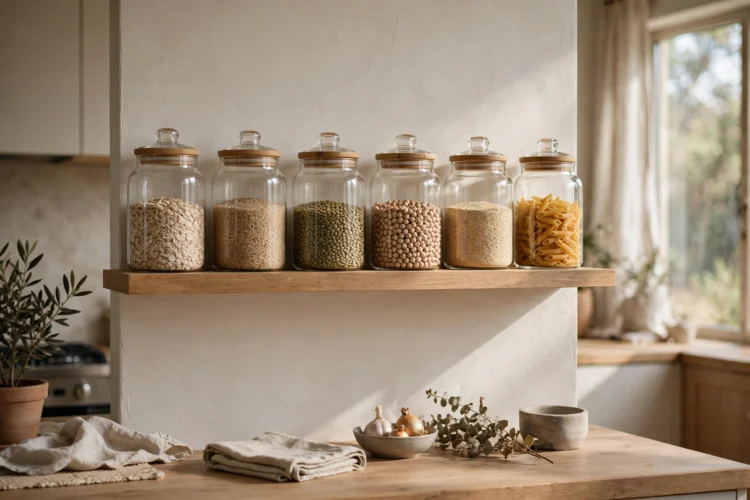
Start with one shelf, not the whole wall. Clear it, give it a job, place one anchor, group the rest in odds, and leave a third of it empty. Live with the result for a few days before you touch the next shelf. Good shelf styling is a habit of small edits, and once the pattern clicks, keeping clutter free shelves becomes the easy part of your kitchen routine.