Physical Address
304 North Cardinal St.
Dorchester Center, MA 02124
Physical Address
304 North Cardinal St.
Dorchester Center, MA 02124

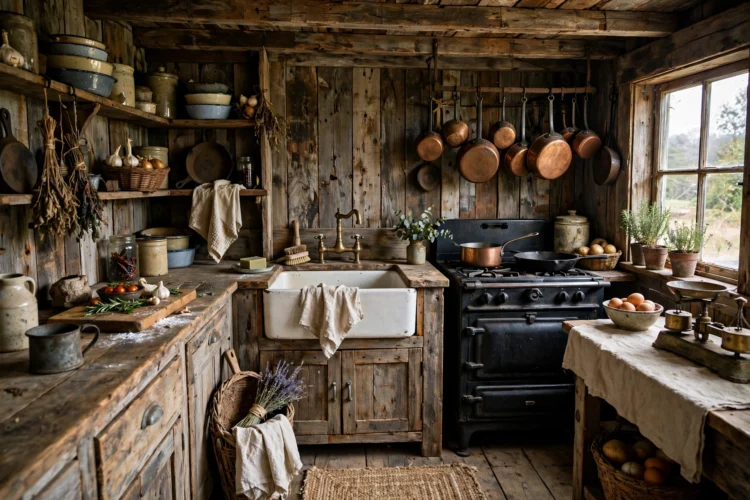
A real farmhouse kitchen feels collected over years, not bought in a weekend. These 13 ideas use reclaimed wood, apron sinks, and genuine vintage pieces.
Farmhouse kitchen ideas work best when the room feels collected over years, not bought in one weekend. The look comes from reclaimed wood, an apron sink that has seen real use, and a few vintage pieces with a story, not from mass-produced signs and distressed finishes. The thirteen ideas below focus on authentic, lived-in character that holds up to daily cooking. Each one adds warmth without turning the kitchen into a costume, and most of them work with standard cabinetry and a realistic budget.
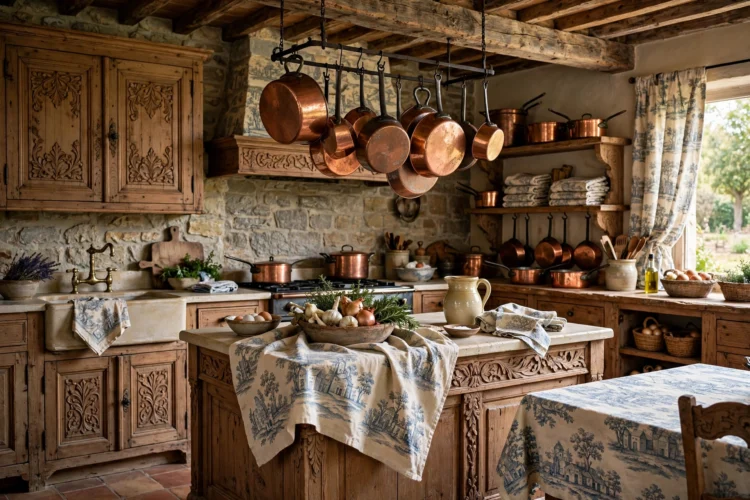
Reclaimed wood is the heart of a real farmhouse kitchen because it carries marks that new wood cannot fake. A beam above the range, a thick shelf by the window, or a reclaimed wood island top gives the room age and texture in one move. The nail holes, saw marks, and color variation tell the eye the piece has a past.
Use reclaimed wood in one or two strong spots rather than on every surface. A single beam and a shelf are enough; a whole wall of it can overwhelm a small kitchen. Ask the supplier where the wood came from and how it was cleaned, since old barn wood needs proper treatment before it sits near food.
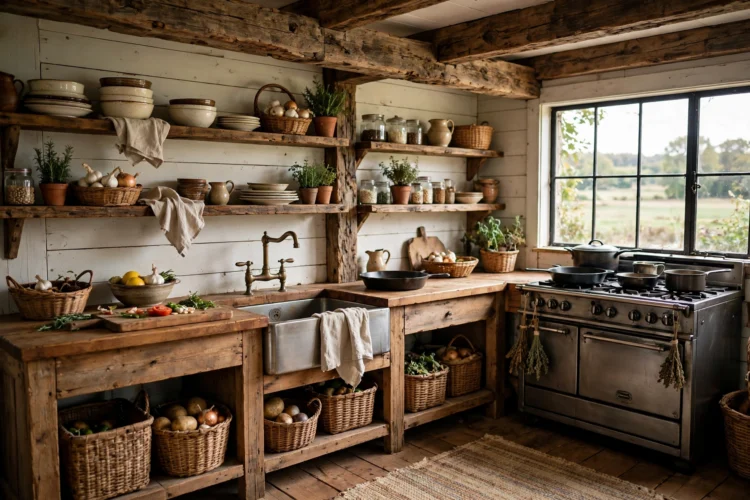
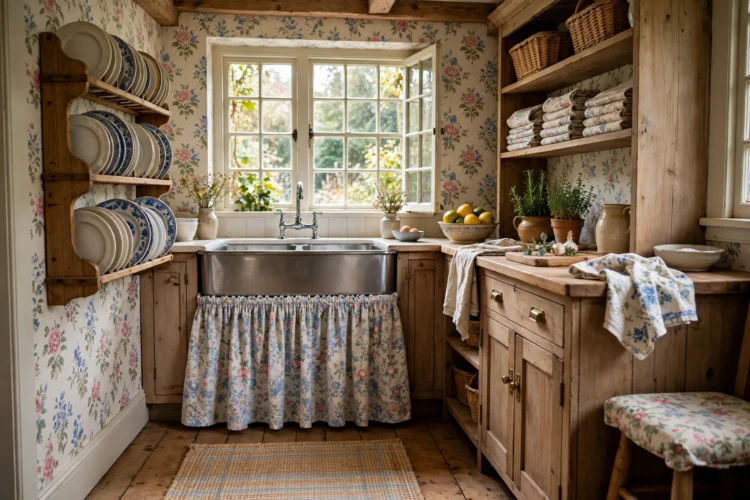
An apron front sink, often called a farmhouse sink, earns its place through daily use. The deep single bowl swallows stockpots and sheet pans, and the front panel sits close to the cook so there is less reaching and less water on the floor. Fireclay and cast iron versions hold up for decades and develop a patina that suits the style.
Check the cabinet size before ordering, since an apron sink needs a special base cabinet and support frame. A 30-inch sink fits most standard kitchens, while a 33-inch or 36-inch version needs a wider cabinet run. Pair it with a simple bridge faucet in brushed nickel or aged brass and let the sink be the statement.
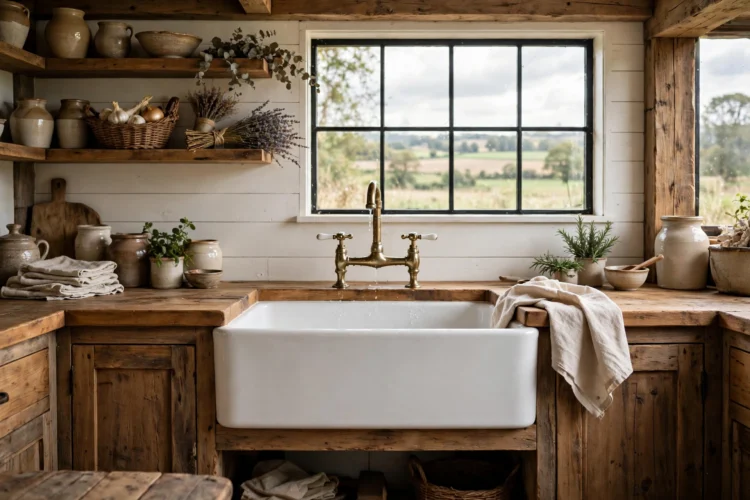
A farmhouse kitchen rarely has one uniform cabinet color. The island in a deep sage or navy, the wall cabinets in warm white, and a hutch in natural wood read as pieces gathered over time. Mixing finishes adds the collected feeling that matching cabinets cannot.
Keep the mix to two or three finishes and repeat each one at least twice so it looks planned. The island color can reappear on a small pantry door, and the wood tone can show up on the open shelves. A calm cohesive color palette keeps the mix from turning random, even when the finishes differ.
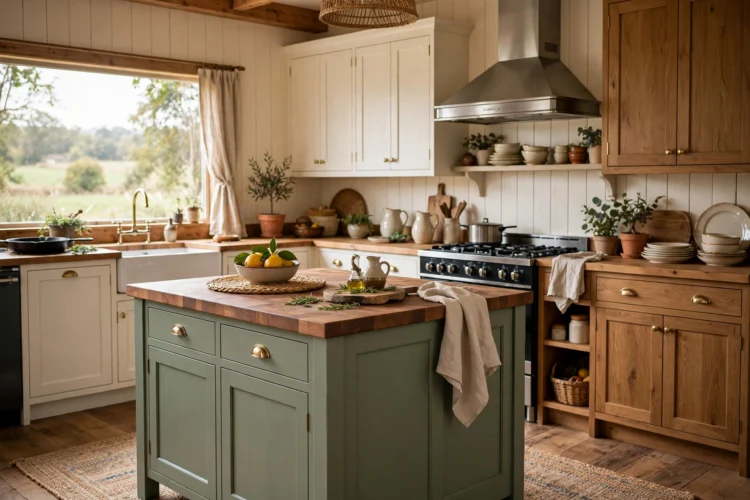
One real vintage piece does more for a farmhouse kitchen than a dozen reproduction signs. A worn enamel bread box, a cast iron skillet hung by the range, a wooden dough bowl on the island, or an old scale on the counter brings age that no factory distressing can copy. The piece should look used, because it was.
Buy the piece because you like it and will use it, not because it says farmhouse on it. A vintage item that serves a real job, holding fruit, storing utensils, or hanging pans, earns its counter space. Keep the rest of the kitchen simple so the one old piece stands out instead of competing with five others.
Salvage yards, estate sales, and flea markets are where genuine farmhouse pieces hide. A salvage yard might hold old corbels, a worn butcher block, or a set of iron brackets for a fraction of retail. Arrive early, bring measurements, and check the piece for rot, lead paint, or wobble before you pay. The hunt is part of the charm, and the find will mean more than anything ordered online.
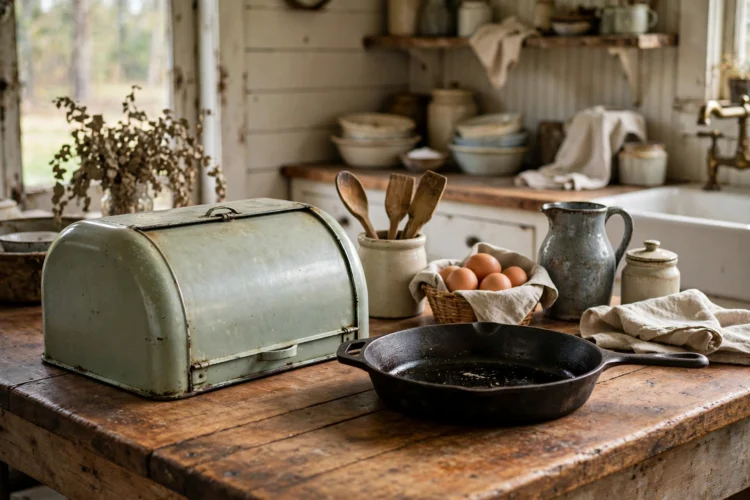
Open shelves in a farmhouse kitchen should hold the dishes you use every day, not a display of matching sets bought for the shelf. White plates, wooden bowls, and a few enamel mugs stacked in small groups look honest and useful. The shelves stay tidy because the dishes cycle through the dishwasher instead of gathering dust.
Limit open shelving to one or two runs and keep the rest of the kitchen closed. A short run beside the window or above the coffee station is enough. Add basket storage that looks like decor on the top shelf for linens or small items, and the shelves stay practical instead of staged.
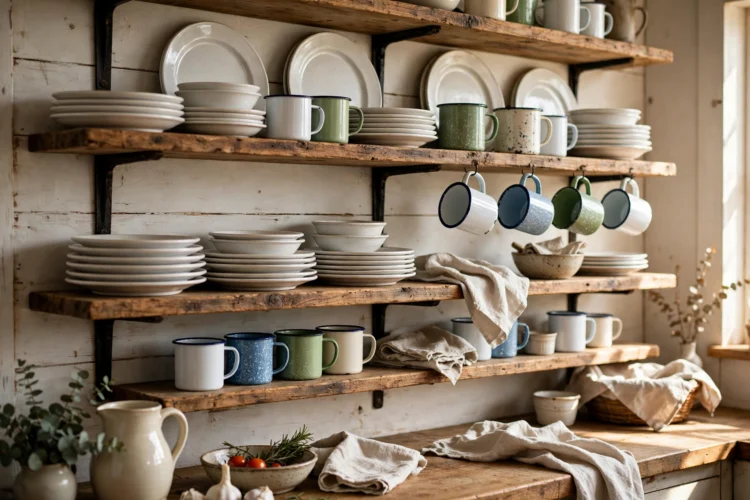
Beadboard and shiplap are the wall treatments that make a farmhouse kitchen read as farmhouse without a single word sign. A beadboard backsplash, a shiplap wall behind the range, or a paneled island front adds texture and a hand-built feeling. The narrow boards catch light and shadow, which gives a plain wall depth.
Install the boards vertically for a taller feeling or horizontally for a wider one, and keep the rest of the walls smooth so the accent has room to breathe. Paint the boards the same color as the cabinets for a quiet look, or use a soft contrast such as pale sage against white walls.
Painted beadboard suits a farmhouse kitchen better than stained boards in most homes. Paint unifies the boards, hides gaps and nail holes, and lets the texture do the work instead of the wood tone. A satin finish wipes clean after cooking splashes, while a matte finish shows every mark. Choose a warm white or soft cream and let the shadow lines between the boards carry the pattern.
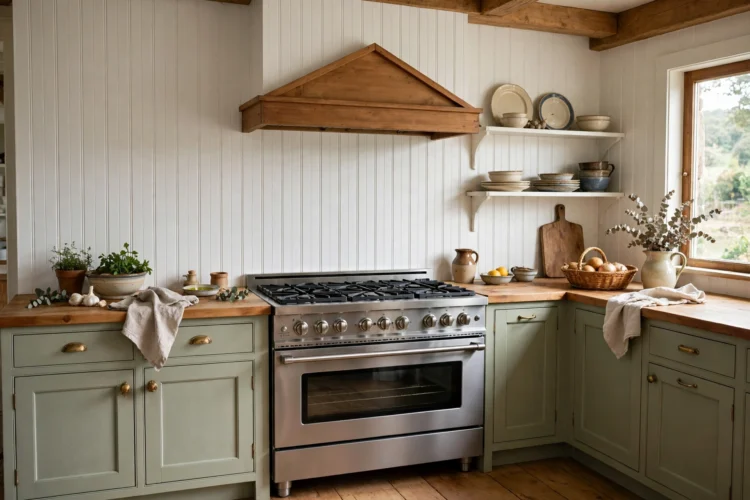
New shiny hardware fights the aged feeling of a farmhouse kitchen. Oil-rubbed bronze, aged brass, and blackened iron pulls and knobs look like they have been there for years, and they get better as the finish wears at the edges. Bin pulls on drawers and simple knobs on doors are the classic farmhouse pairing.
Keep one hardware finish across the whole kitchen so the patina reads as a choice. Mix the shapes, bin pulls and knobs together, but not the metals. If the budget is tight, replace the hardware on the most visible cabinets first and finish the rest later; the change is small and the effect is immediate.
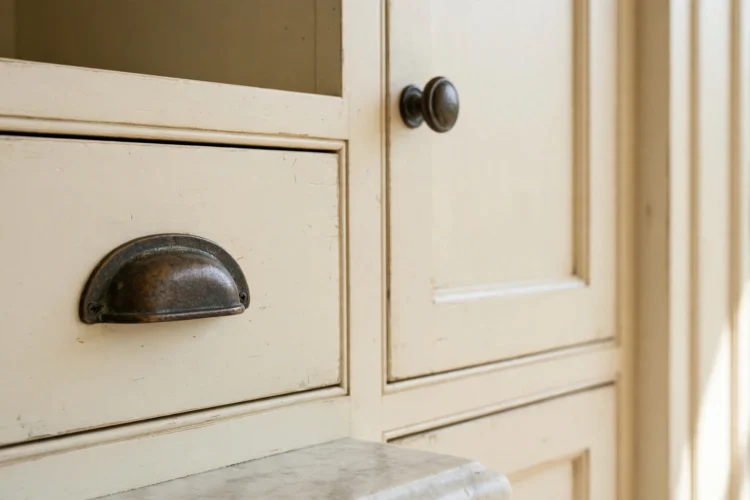
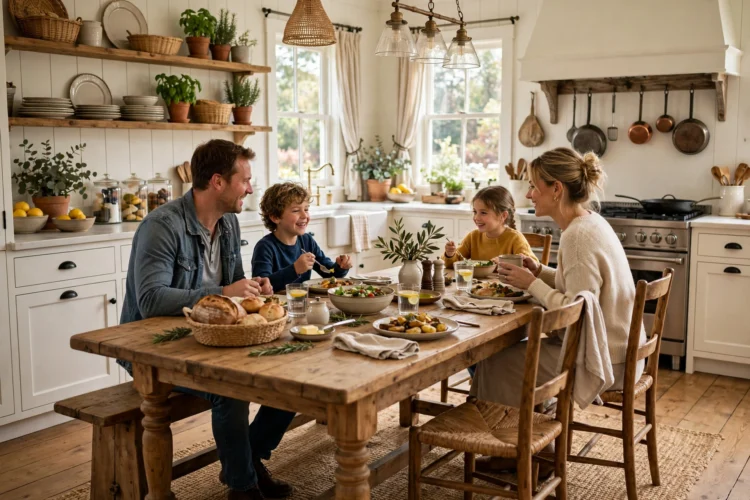
A long farmhouse table in the middle of the kitchen does the job of an island while looking like furniture, not cabinetry. A thick wood top on turned legs holds homework, prep work, and dinner without the hard edges of a built-in island. The table can move when the room needs to change, which a fixed island cannot.
Size the table to leave at least 36 inches of walking space on each side. A table that is too large for the room blocks the work triangle and turns the kitchen into an obstacle course. Add a row of stools on one side and a bench on the other for flexible seating that slides out of the way.
A bench on one side of the farmhouse table seats more people than chairs and tucks fully under the table when not in use. A simple wood bench with a linen cushion matches the table without matching it exactly, and it gives children a place to climb up without a chair tipping over. Keep the bench the same wood tone as the table top so the pair reads as one piece.
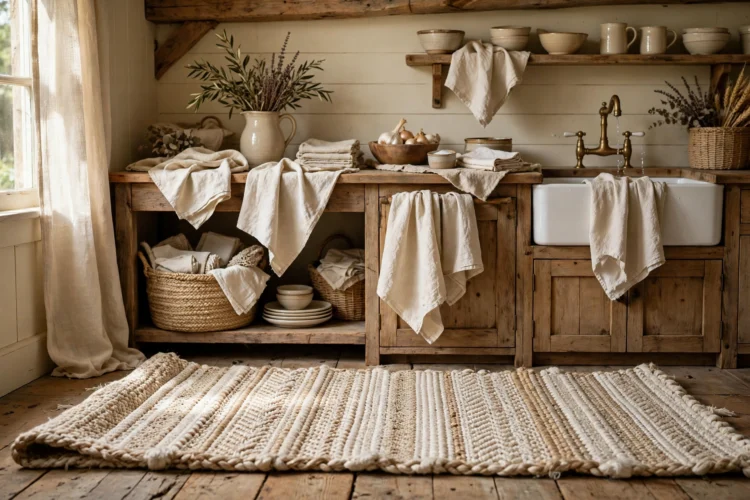
Farmhouse kitchens feel soft because of textiles, not just wood. Linen tea towels, a cotton runner by the sink, a woven rug in front of the range, and a simple curtain on a small window add layers that hard surfaces cannot. Natural fibers in cream, oatmeal, and soft gray keep the palette calm while the texture does the work.
Choose textiles you can wash often, since kitchen fabrics collect grease and crumbs. A machine-washable rug by the sink and a stack of plain linen towels by the range stay fresh with a weekly wash. Add one small plant on the windowsill for a green note; indoor plant display ideas work well in a farmhouse kitchen, where a potted herb fits the cooking theme.
The fastest way to make a farmhouse kitchen feel like a costume is to hang word signs on every wall. Eat, gather, bless this mess: the words say farmhouse, but the room does not feel like one. Real character comes from materials, an old wood beam, a worn stone counter, a cast iron pan, not from lettering.
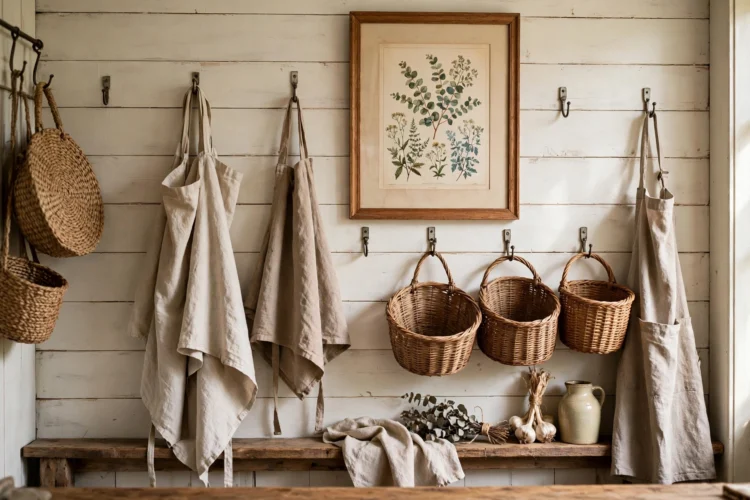
Take down the signs and look at the wall that is left. If it feels bare, add a real object: a framed botanical print, a small clock with a plain face, or a row of hooks holding aprons and baskets. Change the small things with the seasons using seasonal decor swaps that refresh without redecorating, such as swapping the tea towels and the fruit bowl instead of the whole room. The kitchen will feel collected because it is, not because a sign says so.