Physical Address
304 North Cardinal St.
Dorchester Center, MA 02124
Physical Address
304 North Cardinal St.
Dorchester Center, MA 02124

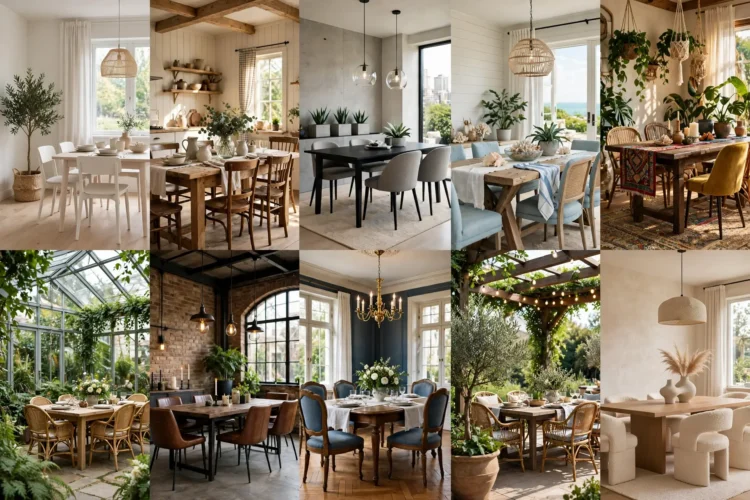
The best host-ready dining room is a checklist, not a renovation. These ten ideas cover drink stations, lighting, spare seating, and a landing zone for coats and dishes.
These dining room ideas for entertaining treat the host checklist as design. A stress-free dinner party does not start with a perfect menu. It starts with a room that answers the small questions before guests ask them: where do I put my coat, where do I get a drink, where do I sit, and where does my plate go when I finish. When the room answers those questions, the host stops running around and starts enjoying the evening.
Each idea below fixes one friction point. A drink station keeps guests out of the kitchen. Dimmable light sets the mood without a ladder and a new fixture. Spare seating means an extra guest never becomes a crisis. A landing zone for coats and dishes keeps the entry and the table clear. Put them together and the dining room does half the hosting for you.
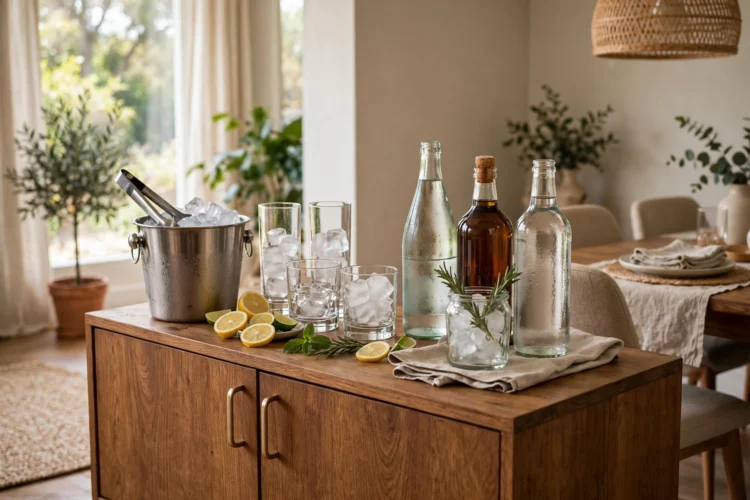
A dining room drink station is the single best move for a relaxed host. Set a tray, a bar cart, or a cleared corner of the sideboard with glasses, water, ice, and one or two drink choices, and guests help themselves from the moment they arrive. The host never becomes the bartender, and the kitchen stays free for cooking.
Keep the station simple and visible: a tray to catch drips, a small ice bucket, glasses upside down on a clean cloth, and a bottle opener within reach. Put the station near the entrance to the dining room but away from the food, so guests pour a drink on the way in without blocking the table. Refill the ice and glasses once during the evening, and the station runs itself. A mirror behind the station bounces light and makes the corner feel intentional; these dining room mirror ideas show placements that double the candlelight in the same room.
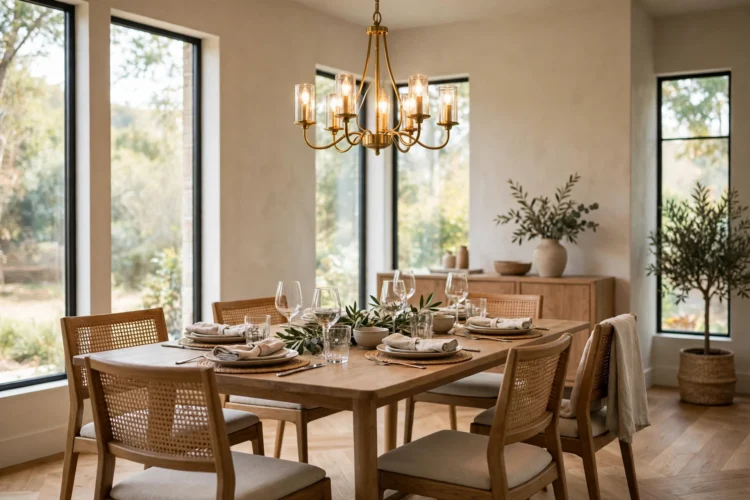
A dimmable dining room light changes the room more than a new chandelier. Dim the light to about half for dinner, and the room feels warm, the food looks better, and everyone relaxes. Full brightness suits setting the table and clearing up, while a low glow suits the meal itself, so a dimmer gives you both rooms in one.
If your fixture has no dimmer, swap the bulbs for warm dimmable ones and add a plug-in dimmer or a smart bulb you control from your phone. Test the level the night before, and mark the sweet spot with a small piece of tape on the switch so you can find it in the dark. Add candles on the table for a second layer of light that flatters every face. Keep a spare bulb in the sideboard drawer, because a blown bulb on party night is a small crisis with an easy fix.
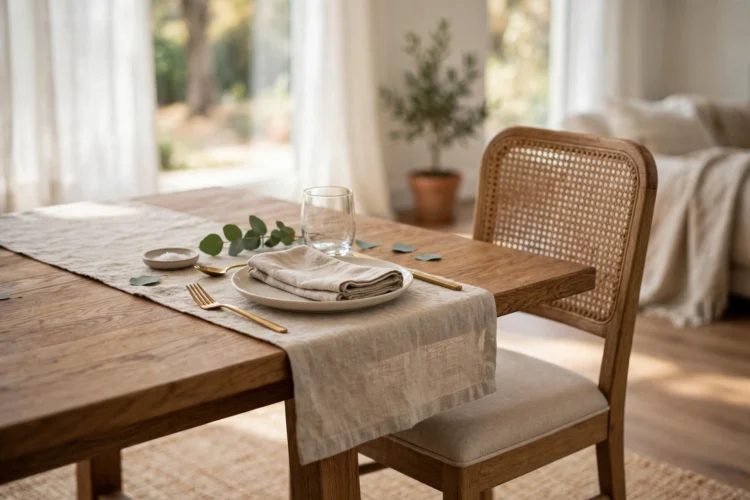
Dining room seating ideas should always include a spare. Keep one extra chair and one extra place setting ready, even when the guest list looks final, because someone always brings a plus one or a neighbor drops by. A folding chair stored in a closet, a bench along the wall, or a spare dining chair from another room all work, as long as the chair is clean and the seat height matches the table.
Set the spare place at the end of the table or keep the chair tucked nearby with a folded napkin on the seat, so adding a guest takes thirty seconds instead of a scramble through the house. Check that every chair is sturdy before the party, tighten any wobbly leg, and wipe the seats clean. Comfort matters for long dinners, and these upholstered dining chair ideas show chairs built for evenings that run long. Count the seats the morning of the party, not when the doorbell rings.
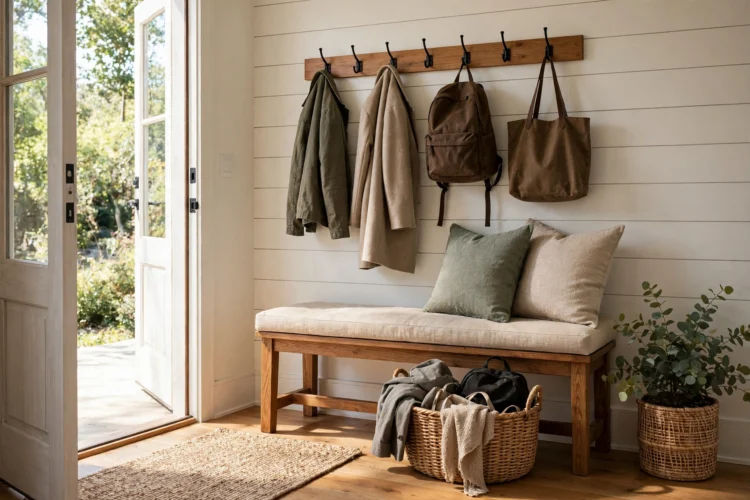
A landing zone for coats and bags keeps the dining room from becoming a coat rack. Set a hook rail, a small bench, or a cleared chair near the entrance, and point guests to it when they arrive. Coats stay off the dining chairs, bags stay off the table, and the room looks like a dining room instead of a hallway.
Keep the zone outside the dining room if you can, in the entry or a hallway, so the dining room stays clear for the meal. Add a small tray for keys and a basket for umbrellas on rainy nights. If space is tight, use the back of the front door or a row of adhesive hooks inside a closet. Tell guests where the zone is as they walk in, because a landing zone only works when people know it exists. Clear it again before dessert, so coats are easy to find when guests leave.
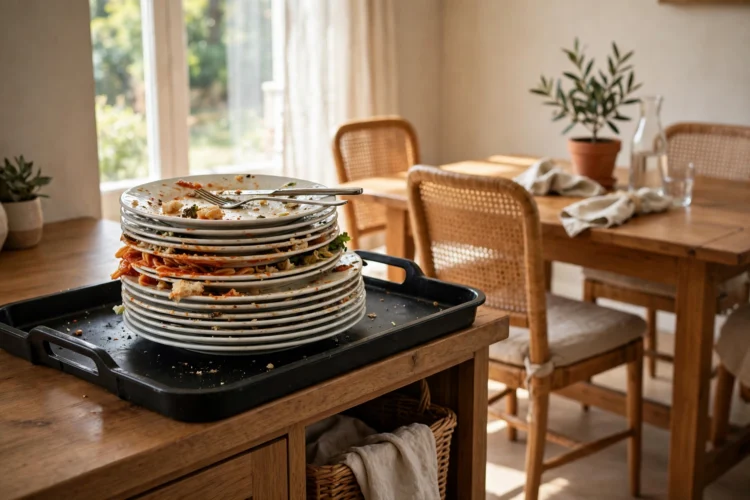
A clearing station saves the host from carrying one plate at a time to the kitchen. Set a tray or a cleared spot on the sideboard, a kitchen counter, or a small table near the door, and stack used plates there as courses finish. The dining table stays clear, the kitchen stays calm, and the washing up waits until after dessert.
Use a large tray with a raised edge so plates do not slide, and keep a damp cloth nearby for quick wipes. Scrape plates into a small bowl on the station instead of walking to the bin after every plate. If you have a dishwasher, load it in batches during a natural break, not during the meal. Hidden storage near the table helps the clearing station work; these dining room storage ideas show places to keep trays and extra plates within reach. A clear table between courses makes the next course feel like a fresh start.
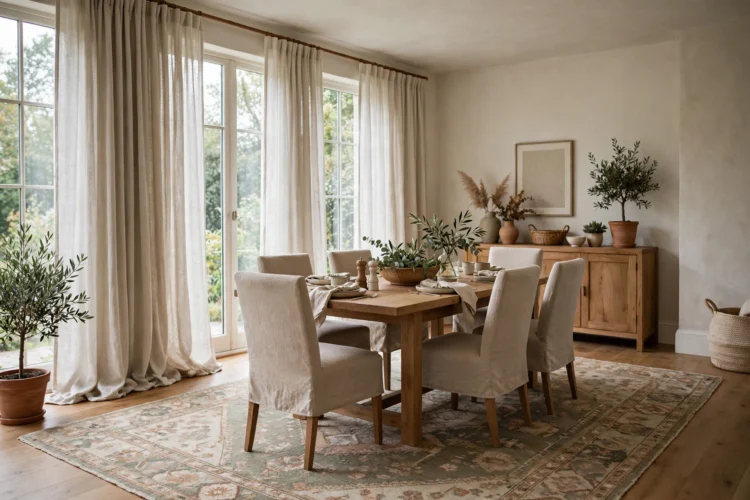
Hard surfaces make a dining room loud. Bare walls, a wood floor, and a glass table bounce every voice and clink, and guests raise their voices to compete. Curtains and a rug absorb that sound, soften the edges, and make conversation easy at normal volume. The room feels calmer the moment the soft surfaces go in.
Choose curtains that hang to the floor and a rug that extends at least two feet past the table on every side, so chairs stay on the rug when guests pull out. A low pile rug cleans easily and lets chairs slide, while a high pile rug traps crumbs and fights the chair legs. Floor length curtains soften hard edges without blocking light, and these dining room rug ideas survive spills and chair legs. Test the sound by clapping once before and after: the difference is easy to hear.
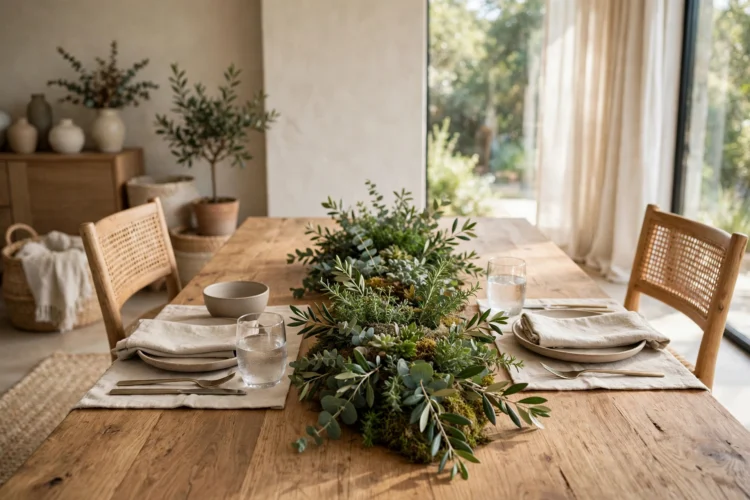
A low centerpiece keeps the conversation open across the table. Guests should see each other’s faces, not a tall vase or a pile of fruit blocking the view. A low bowl of greenery, a row of small bud vases, or a wooden tray with candles all sit below eye level and leave the sightlines clear.
Keep the centerpiece narrow enough that plates fit on both sides, and leave a clear space in the middle for serving dishes that arrive family style. Change the centerpiece with the season and keep the table setting the same, so the room feels fresh without a full reset. A sideboard behind the table holds the extra pieces and the serving dishes; these sideboard styling ideas make that surface look finished. Sit in a chair and check the view across the table before guests arrive, because the host’s eye level is the only test that matters.
A menu built around one pot and one tray frees the host from the stove. Choose a main dish that cooks in one pot and a side that roasts on one tray, then add a simple salad and bread from the bakery. The host plates from two vessels, the kitchen stays tidy, and the food arrives hot at the same time.
Prep everything you can the day before: chop vegetables, mix a dressing, set the table, and chill the drinks. On the day, the only jobs left are the pot, the tray, and a quick salad toss. Write the cooking times on a card and tape it inside a cabinet door, so you never have to remember them while guests talk. A simple menu also means fewer serving dishes to wash, which is a gift to the host at the end of the night. Guests remember a relaxed host far longer than they remember a complicated menu.

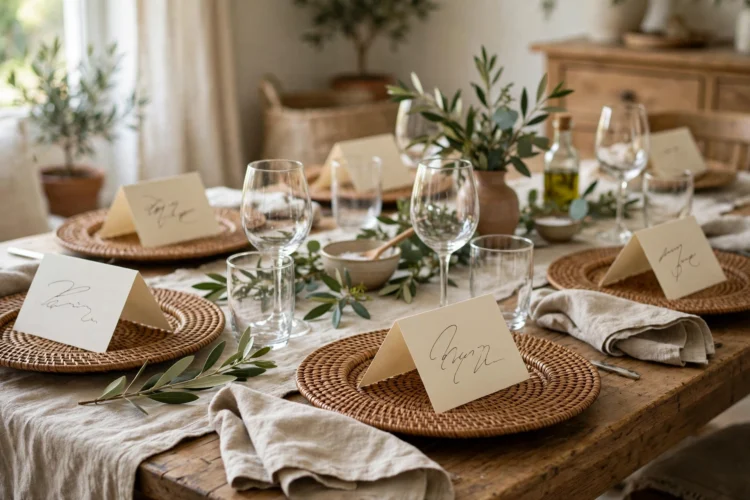
Clear seating removes the awkward shuffle at the start of dinner. Use place cards, even simple folded cards with a handwritten name, so every guest knows where to sit without asking. Seat lively talkers near quiet guests, keep couples apart so conversation mixes, and put the guest of honor near the host.
Place the cards on the charger or just above the plate, and check the names twice before guests arrive, because a misspelled name is worse than no card at all. If the party is casual, a seating plan still helps: the host can simply point and say where everyone sits, and the room settles in seconds. A clear seat also tells a guest they were expected, which is the warmest welcome a host can give. Keep a spare card and a pen nearby for a last minute guest.
A simple closing ritual ends the party without an awkward drift. Serve coffee or tea with a small sweet, dim the lights a little lower, and let the conversation wind down on its own. The host clears the dessert plates, offers a last drink, and guests take the cue to gather coats and say goodnight.
Keep the closing short and warm: thank everyone for coming, mention the next time you will cook together, and walk guests to the door instead of waving from the table. A small take-home, a slice of cake in a box or a jar of leftover sauce, turns a good evening into a remembered one. Then close the dining room door, leave the dishes for the morning if you must, and enjoy the quiet room you built. A host who ends the night calmly is a host guests want to visit again.