Physical Address
304 North Cardinal St.
Dorchester Center, MA 02124
Physical Address
304 North Cardinal St.
Dorchester Center, MA 02124

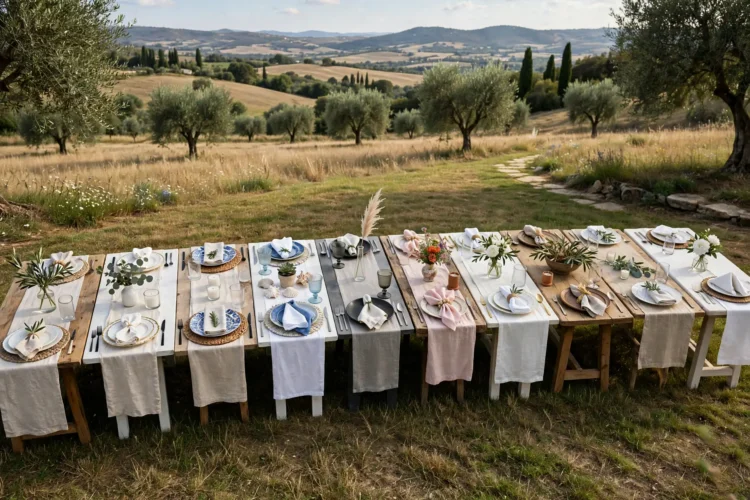
A formal table does not need fussy rules. These ten ideas turn correct placement into a repeatable checklist any holiday host can follow.
These formal table setting ideas work because they treat a formal table as a system, not a test. You do not need to memorize a diagram from a etiquette book. You need a clear order of layers, a place for every glass, and a napkin that looks finished without a degree in origami. Start with the charger, build outward in the order guests use each piece, and keep the center low enough for conversation.
Formal dinner table placement follows one simple logic: forks on the left in order of use, knives and spoons on the right, and glasses above the knife. Once you know that logic, you can set a table for four or fourteen without second guessing. The ten ideas below give you that logic in small, practical steps, plus a few polish moves that make the whole room feel considered.
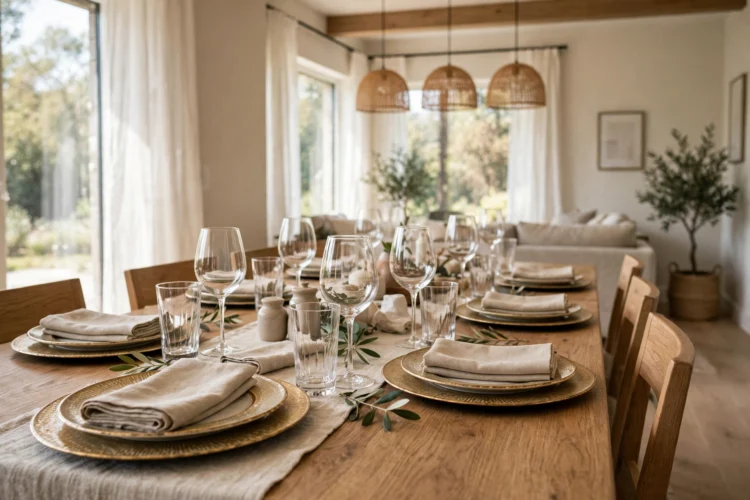
A charger plate setting anchors the whole place setting. Set one charger at each seat, about one inch from the table edge, and build everything else around it. The charger stays through the salad course and comes off before the main dish, so choose one that looks good on its own and under a plate. Metallic rims, woven rattan, and simple white chargers all work, as long as they match the mood of the room.
Keep chargers the same at every seat. Mixed chargers read as a mistake at a formal table, even when the mix looks charming elsewhere. If you only own six matching chargers and you seat eight, borrow two more or skip chargers entirely and let a folded napkin carry the place. Consistency matters more than owning the fanciest set. A clean, even row of chargers tells guests the host thought about the table before they sat down.
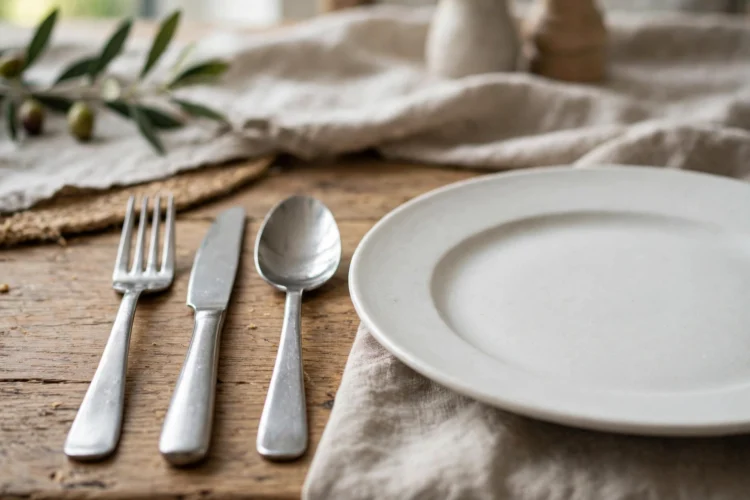
Formal dinner table placement puts the fork for the first course farthest from the plate and the fork for the main course closest to it. On the right, the knife sits blade toward the plate, with the soup spoon outside the knife when soup is served. Dessert fork and spoon go above the plate, fork handle to the left and spoon handle to the right, or they arrive with dessert.
Count the courses before you count the cutlery. A three course meal needs fewer pieces than a five course one, and extra silver on the table only confuses guests. Lay out only what the menu needs, then step back and check the symmetry from the end of the table. Straight lines and even spacing do more for a formal look than an extra fork ever will. If a piece feels crowded, remove it and serve it with the course instead.
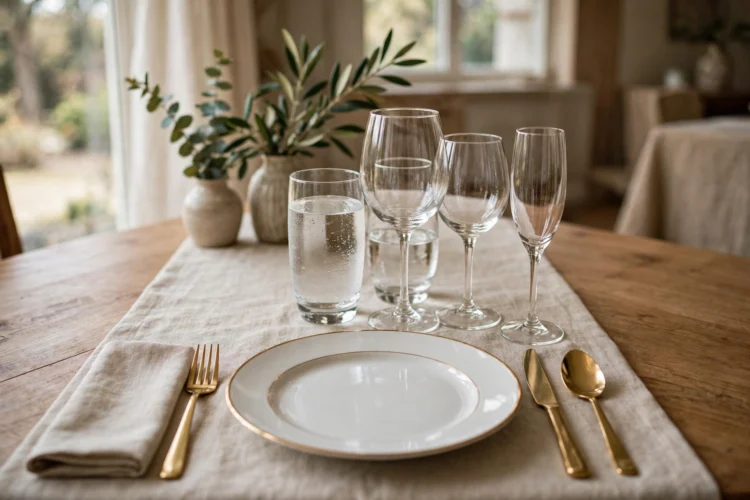
Glassware order trips up more hosts than any other part of a formal table. Put the water glass directly above the knife, then place the wine glasses to its right in the order they will be used, usually red first, then white. Keep the group tight, with about an inch between glasses, so the setting reads as one neat cluster instead of a scattered row.
Use only the glasses the menu needs. A table with four glasses per person looks impressive in a photo and stressful in real life, because elbows and sleeves catch rims. For most holiday dinners, a water glass and one or two wine glasses cover the meal, and a champagne flute can join them when you serve a toast. Polish each glass with a lint free cloth before guests arrive, and hold glasses by the stem so fingerprints stay off the bowl.
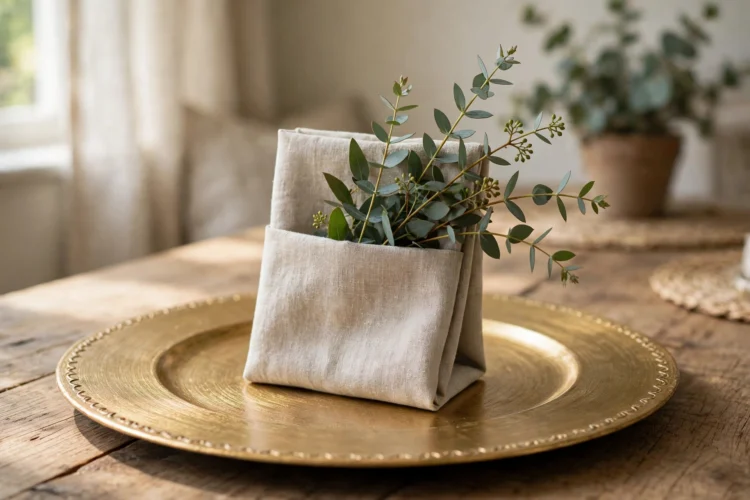
Napkin fold ideas do not need to be complicated to look formal. A simple pocket fold holds the cutlery or a sprig of greenery, a classic rectangle fold sits neatly on the charger, and a loose knot works when the fabric is thick linen. Pick one fold for the whole table and repeat it exactly, because repetition is what makes a simple fold look intentional.
Press or steam cloth napkins the morning of the dinner, then fold them right before guests arrive so creases stay crisp. If you use a napkin ring, slide it to the center of the folded napkin and keep it snug enough that the napkin holds its shape. A small sprig of rosemary, eucalyptus, or a dried orange slice tucked into the fold adds color and scent without extra cost. For seasonal color, pair your fold with one of these Thanksgiving table setting ideas that layer warm tones over the same formal base.
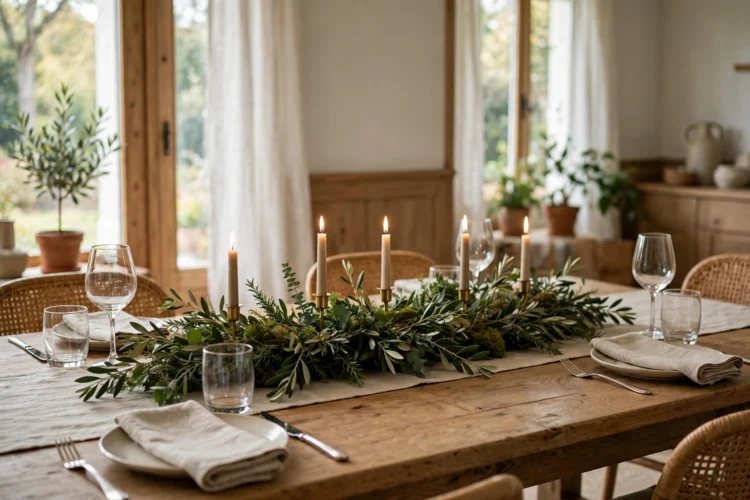
A formal centerpiece should sit below eye level when guests are seated, so conversation flows across the table instead of around a tall arrangement. A low bowl of greenery, a row of small bud vases, or a garland down the center all work. Leave at least twelve inches of clear space at each place setting so plates and glasses never crowd the decor.
Use unscented candles at a dinner table. Scented candles compete with the food, and that is the last thing a cook wants after hours in the kitchen. Taper candles in stable holders add height without blocking sightlines, while short votives in glass cups give a soft glow that flatters everyone at the table. Light the candles just before guests sit down, and keep a small tray or runner under the arrangement to catch wax and protect the wood.
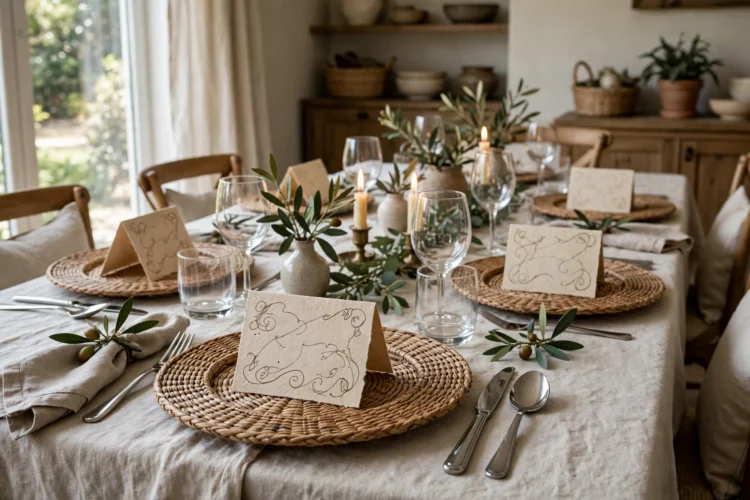
Place cards turn a formal table from a free for all into a hosted evening. Write each name clearly on a folded card and set it on the charger or just above the plate. Place the host at one end and the guest of honor at the other, or seat couples apart so conversation mixes across the table instead of staying in pairs.
Keep the cards simple: a name, a clean fold, and a small sprig or wax seal if you want a finish. Handwritten cards feel personal, while printed cards suit a larger party and stay legible in candlelight. If you serve a multi course meal, a small menu card at each place helps guests pace themselves and gives the table a restaurant level polish. A tidy sideboard nearby holds extra plates and serving dishes; these sideboard styling ideas show how to keep that backup station looking finished instead of cluttered.
Mixed metals can work in a whole room, but a formal table looks calmer when the flatware, charger rims, candle holders, and napkin rings share one finish. Gold feels warm and festive, silver feels cool and classic, and blackened metal suits a modern dining room. Pick the finish that matches your light fixtures or your favorite serving pieces, then repeat it in small doses.
Repeat the finish at least three times so it reads as a choice: flatware, candle holders, and a rim on the charger, for example. Avoid adding a fourth metal just because a pretty piece caught your eye at the store. If your everyday flatware is stainless steel, lean into it with silver toned candle holders and a pewter vase, and let the plates carry the color. The goal is a table that looks collected on purpose, not assembled from whatever was on sale.
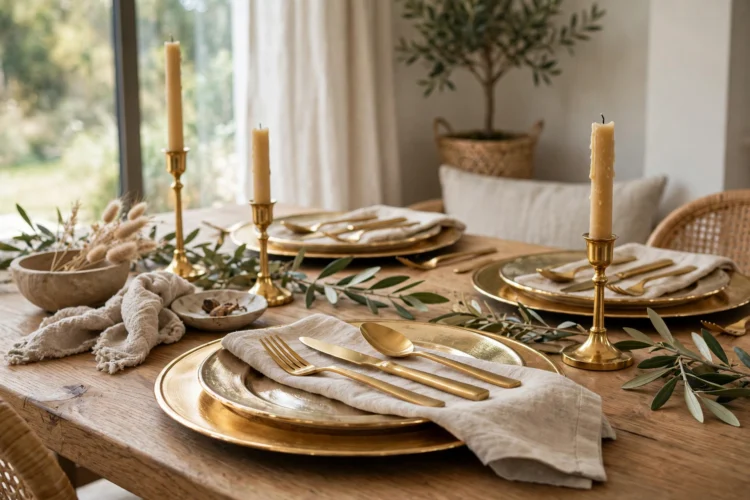
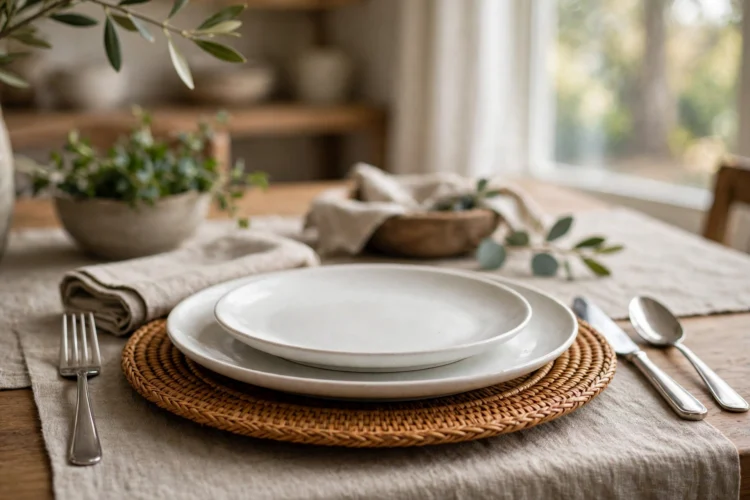
Plate layering gives a formal table its depth. Start with the charger, add the dinner plate, then the salad plate or soup bowl on top. Each layer should be centered on the one below it, with edges lined up so the stack looks neat from above. Remove layers as courses finish, and always clear from the right and serve from the left when you can.
White plates make food look its best and forgive a mix of patterns elsewhere on the table. If you own patterned dinner plates, pair them with plain salad plates so the two patterns never fight. Check every plate for chips before you set the table, and swap any chipped piece for a spare, because a chip at a formal dinner is the detail guests notice. A plate wall nearby can display the pieces you love most; these plate wall ideas turn family china into art when it is not on the table.
Lighting changes a formal table more than any single decoration. Dim the overhead light to about half, light the candles, and let the table glow instead of glare. If your dining room has a dimmer, test it the night before so you are not guessing while guests wait at the door. Warm bulbs flatter food and skin, while cool white bulbs make a formal table feel like an office.
Add a mirror on the wall behind the table if you want more candlelight without more candles. A well placed mirror bounces the glow across the room and makes a small dining room feel larger. These dining room mirror ideas show placements that double the candlelight without glare. Close the curtains, turn off the television in the next room, and let the dining room hold the evening. Guests relax faster in a room that feels set for them.
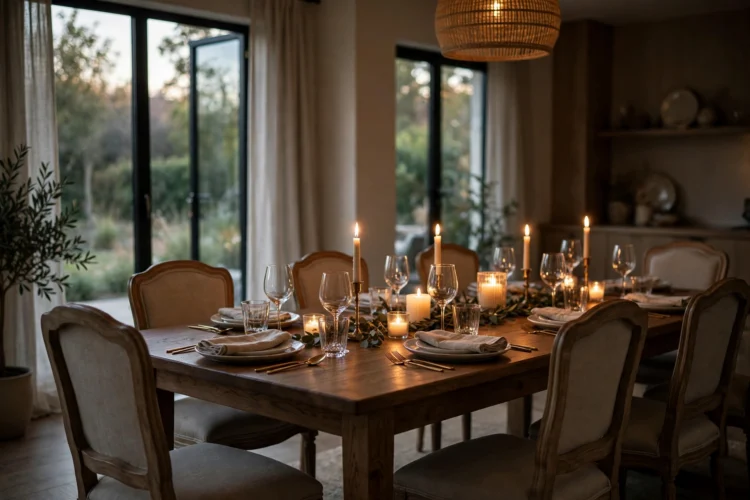
A short final check catches the small errors that undermine a formal table. Walk around the table and count the settings, check that every knife blade faces the plate, straighten any tilted charger, and refill the water glasses. Sit in one chair and look across the table: can you see the person opposite you, reach your glass, and find your napkin without hunting?
Keep a small kit nearby for last minute fixes: a lint free cloth, a spare napkin, an extra fork, and a lighter for candles that blow out. Then stop fussing. A host who keeps adjusting the table after guests arrive makes everyone nervous, while a host who sits down and pours the first glass sets the tone for the whole night. For a seasonal version of this same checklist, these spring table setting ideas swap in fresh color and flowers without changing the placement rules.