Physical Address
304 North Cardinal St.
Dorchester Center, MA 02124
Physical Address
304 North Cardinal St.
Dorchester Center, MA 02124

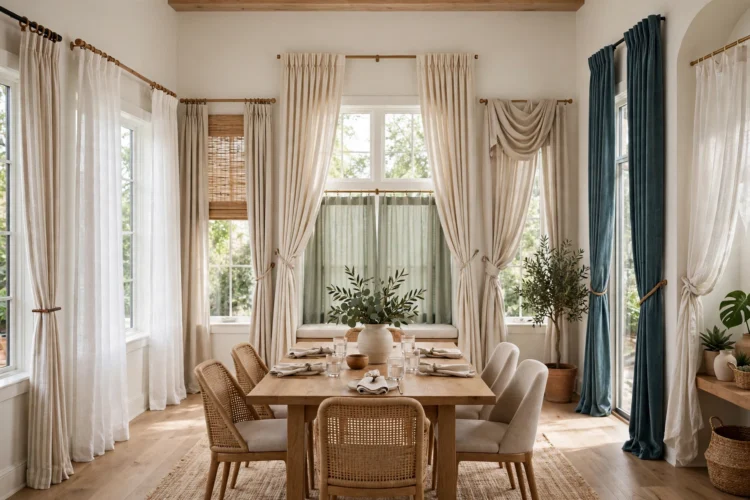
A dining room full of wood, glass, and chair legs needs something soft. These eight curtain ideas add height, warmth, and glow without blocking the light.
A dining room is a hard room. Wood table, wood chairs, glass, metal light fixtures, and a bare floor add up to a space that looks sharp and sounds echoey. Curtains fix both problems at once: fabric softens the lines and absorbs the sound, so dinner conversation feels warm instead of clipped. These dining room curtain ideas cover full length panels, sheers, and roman shades, with the hanging heights and fabrics that make each one work. The goal is not to cover the window. It is to dress it so the room feels finished.
Hang the rod four to six inches below the ceiling, or at least six inches above the window frame, and extend it eight to twelve inches past the frame on each side. This one move makes the window look taller and wider than it is, and it lets the curtains stack clear of the glass when open, so the room keeps its daylight. A rod hung right on the frame makes the window look small and the curtains look stingy, even when the fabric is expensive. Measure the drop from the rod to the floor, then buy panels that reach the floor with a half inch of clearance, or that puddle an inch or two for a formal room. Panels that stop at the sill look unfinished in a dining room, where the eye expects the fabric to meet the floor.
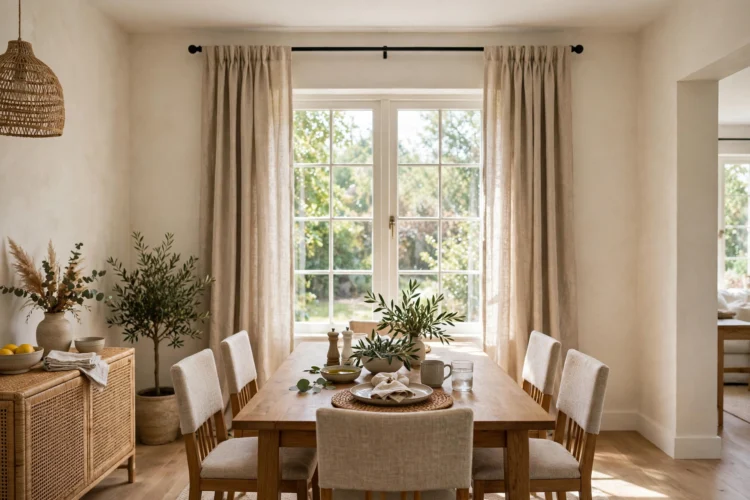
Linen panels are the easiest way to soften a dining room without darkening it. The weave lets light through in a soft scatter, the fabric falls in relaxed folds, and it never looks stiff the way a heavy synthetic can. Choose a washed linen in a warm white, a soft gray, or a pale sage, and hang two panels per window so the stack looks full even when the curtains are open. A single flat panel per window looks thin and cheap, while two panels with a gentle wave look generous. Linen wrinkles, and that is part of its charm, but if wrinkles bother you, choose a linen blend with a little cotton, which holds a smoother fall and costs less than pure linen.
Wash linen panels on a gentle cycle and hang them damp to dry, which keeps the length true and avoids the shrinkage that ruins a floor length hem. In a dining room, keep the panels clear of the table edge so no one tugs them when they pull out a chair. Linen suits a room that hosts often, because it looks good slightly lived in, and it pairs well with wood tables of any tone. For more ways fabric softens a room, these living room curtain ideas for height and light use the same high and wide hanging rule.
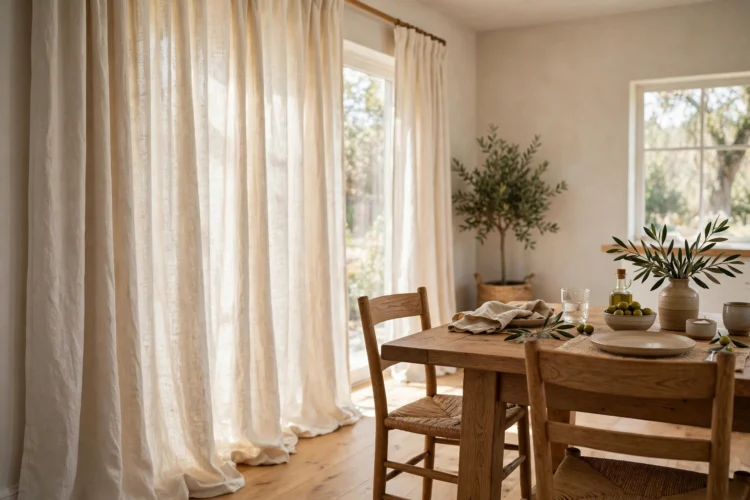
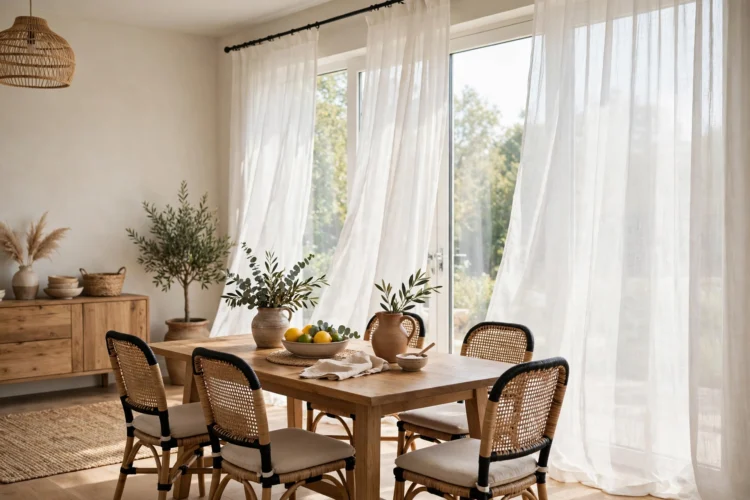
Sheer curtains solve the dining room that is too bright at lunch and too bare at night. They cut the glare without blocking the view, so the room stays bright and the table stays usable at midday. Hang sheers on their own rod behind heavier panels, or hang them alone on a slim rod for a clean, airy look. A white or ivory sheer suits most rooms, while a sheer with a faint stripe or a woven texture adds interest without pattern. Keep sheers clean, because dust shows on sheer fabric faster than on any other curtain, and a gray sheer reads as dirty even when it is only dusty. Wash them twice a year and they stay bright.
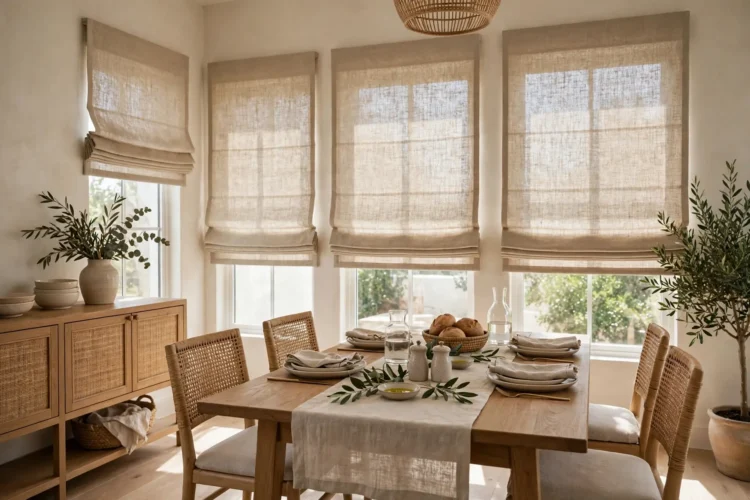
Roman shades suit a dining room where full panels would crowd the furniture, such as a bay window behind a banquette or a window beside the sideboard. A flat roman shade folds up in clean horizontal lines and sits inside the window frame, so it adds fabric without adding bulk. Choose a cotton or linen blend in a solid color or a small pattern, and mount the shade inside the frame for a tailored look or outside the frame to make the window look larger. A roman shade with a blackout lining suits a dining room that doubles as a home theater or a room with a west facing window that glares at dinner time.
Measure the window in three places, top, middle, and bottom, because old windows are rarely square, and order the shade to the smallest measurement so it fits without binding. Cordless shades are the safer choice in a house with children, and they look cleaner too. A roman shade pairs well with a short valance or a pair of slim side panels, which add softness at the edges without the full weight of floor length curtains. For tricky window shapes, these window treatment ideas for tricky windows cover the measuring and mounting details.
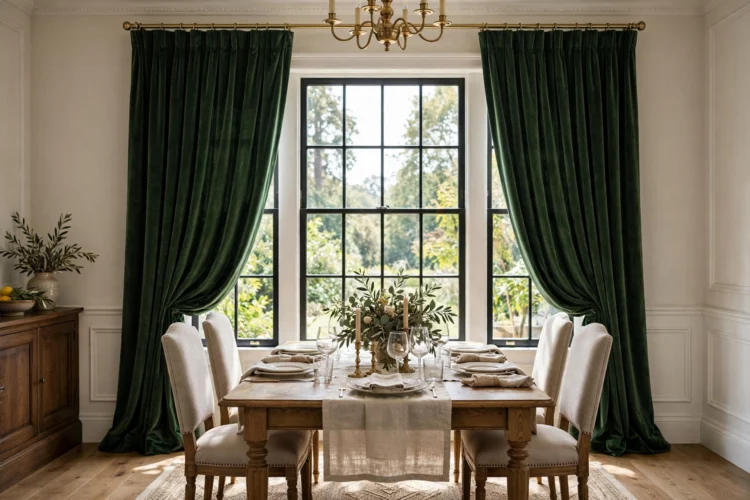
Velvet panels turn an ordinary dining room into a room that feels dressed for dinner. The fabric absorbs sound better than any other curtain material, so conversation stays warm and the room loses its echo, and the deep color catches candlelight in a way flat fabric never does. Choose cotton velvet over synthetic velvet, because it falls better and lasts longer, and hang it on a strong rod, since velvet is heavy. A deep green, navy, or burgundy velvet suits a formal dining room, while a blush or pale gray velvet softens a modern room without the drama. Keep velvet panels lined, because lining protects the fabric from sun damage and gives the panels a fuller fall.
Velvet needs care: vacuum it gently with an upholstery attachment twice a year, and brush the nap in one direction after cleaning so the color stays even. In a sunny room, velvet fades on the side that faces the window, so rotate the panels yearly if the room gets strong afternoon sun. Velvet is a commitment, but in a dining room used for long evening meals, it pays that commitment back every night.
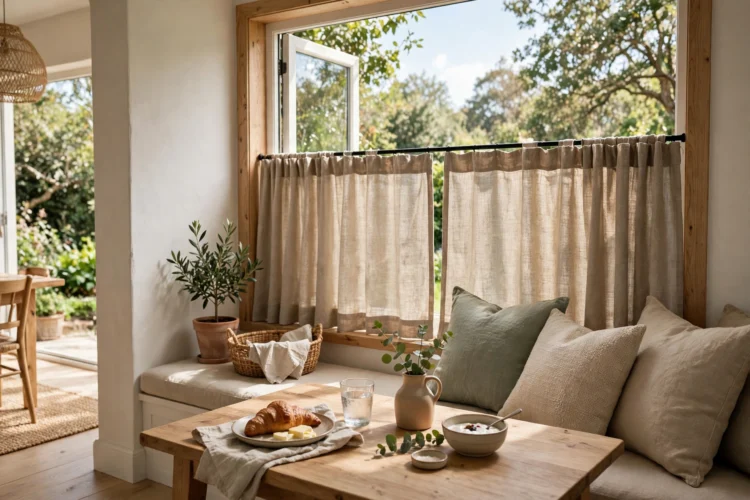
Cafe curtains cover only the lower half of the window, which makes them perfect for a breakfast nook or a dining area where privacy matters at table height but light matters above it. Hang a slim rod at the middle of the window, usually at the height of a chair back, and choose a light cotton or linen in a small check or a plain weave. The top half of the window stays open, so the room keeps its daylight and its view, while the bottom half blocks the sightline from the street. Cafe curtains suit a cottage or farmhouse dining room, and they pair well with a roman shade above them for evenings when full coverage helps.
Keep cafe curtains short and tidy, with the hem ending just below the rod line or at the sill, so they never brush the table or the chairs. A cafe curtain in a washable fabric is the practical choice, because it sits close to the table and collects cooking steam and fingerprints. Change the fabric with the season if you like: a light gingham in summer and a warm plaid in winter cost little and change the whole mood of the nook.
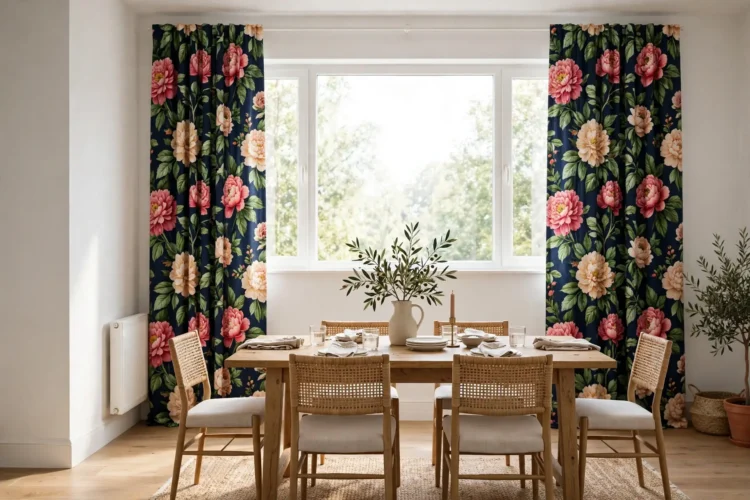
When the dining room is mostly plain, a patterned curtain can carry the color for the whole space. Choose one pattern with two or three colors already in the room, such as the wood tone of the table and the color of the chairs, and let the curtains repeat those colors in a larger scale. A bold floral, a wide stripe, or a geometric print all work, provided the pattern scale suits the window: large prints suit tall windows, small prints suit short ones. Hang patterned panels with the pattern centered on each panel, so the two sides mirror each other when closed. A patterned curtain also hides stains better than a solid one, which matters in a room where food and drink travel past the window.
Keep the rest of the room quiet when the curtains carry a pattern. Plain chair cushions, a simple centerpiece, and a solid rug let the curtains be the statement without competition. If the pattern includes a color you love, pick it up in one small place, such as a napkin or a vase, so the room feels tied together. A patterned panel is the fastest way to change a dining room without painting, and it swaps out in an afternoon when tastes change.
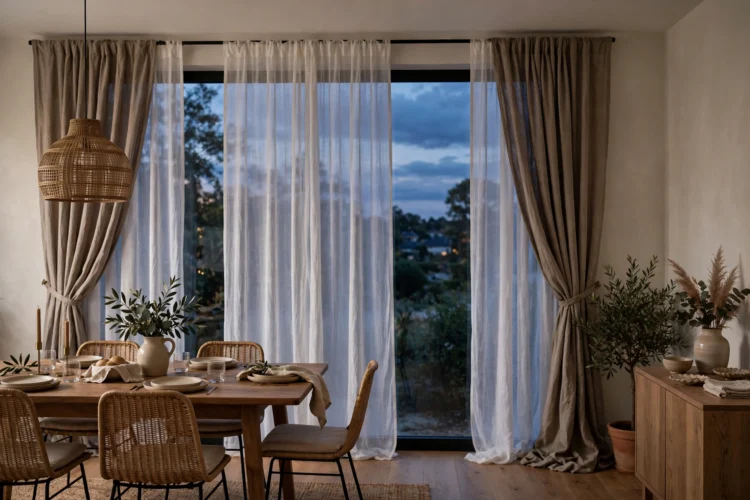
Layering a sheer behind a full panel gives a dining room two moods: sheer alone for bright lunches, panels drawn for candlelit dinners. Hang a double rod or two slim rods, with the sheer on the inner rod and the panels on the outer one, and keep the sheer a shade lighter than the panels so the layers read clearly. The sheer softens the daylight, the panels add weight and color, and together they frame the window like a picture. This layering suits a large window or a pair of windows on one wall, where a single layer would look thin. It also suits a room with a mirror opposite the window, because the sheer softens the light the mirror returns at every hour.
Budget for the extra fabric, because a layered window needs full panels on both layers, not a single skimpy sheer behind a single panel. Wash the sheer twice a year and the panels once, and check the rods yearly, since the combined weight is heavier than a single layer. For more layering ideas across the house, these bedroom curtain ideas for light control and style show how the same sheer plus panel pairing works in a different room.
Curtains do more than cover a window. Hung high and wide, they make the room taller. In linen they soften the hard edges of table and chairs. In velvet they hush the echo and warm the candlelight. Pick the fabric that suits how you actually use the room, measure twice, and hang the rod where the ceiling, not the window frame, sets the height. The room will feel finished the moment the fabric meets the floor.