Physical Address
304 North Cardinal St.
Dorchester Center, MA 02124
Physical Address
304 North Cardinal St.
Dorchester Center, MA 02124

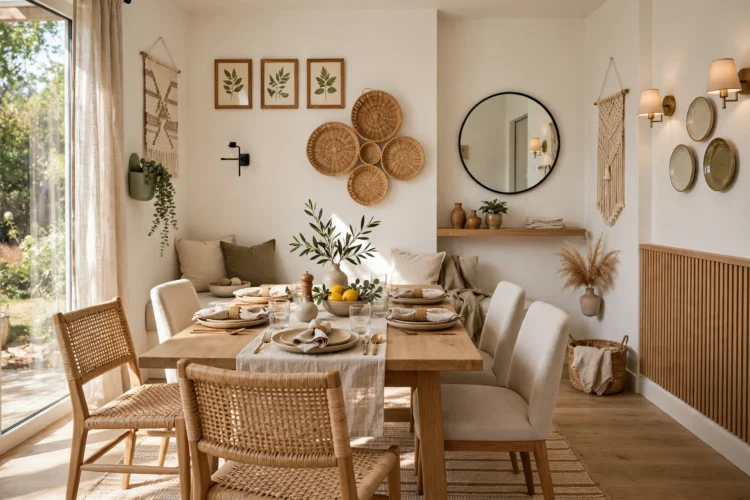
A long blank wall above the sideboard is the dining room's biggest missed opportunity. These eleven wall decor ideas fill it with art, mirrors, and molding sized correctly for the space.
Dining room wall decor ideas matter because the dining room usually has the longest blank wall in the house, and it sits right where everyone looks during a meal. A bare wall above the sideboard or behind the table makes the whole room feel unfinished, no matter how nice the furniture is. The fix is rarely expensive. It comes down to scale, placement, and picking one strong move instead of many small ones. These eleven ideas cover art, mirrors, shelving, and molding, all sized correctly for the long wall above a sideboard or table.
Start with the wall above the sideboard, since it is the natural focal point. One oversized piece of art, about two thirds the width of the sideboard, anchors the wall better than a cluster of small frames. Hang the center of the piece about 150 cm from the floor, roughly at eye level when standing, so it reads clearly from the table. Choose art with a calm palette that picks up a color already in the room, such as the wood tone of the table or the fabric of the chairs. A landscape, an abstract wash of color, or a large black and white photograph all work. Leave at least 15 cm of breathing room between the top of the sideboard and the bottom of the frame, and keep the lamp or vase on the sideboard low so it never crowds the art.
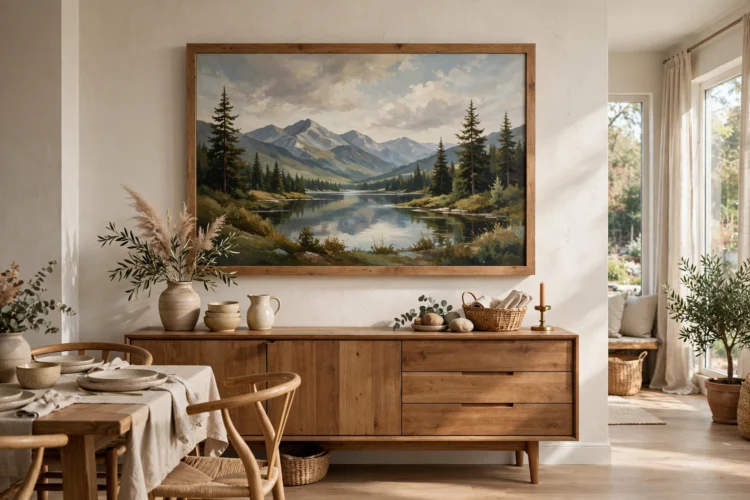
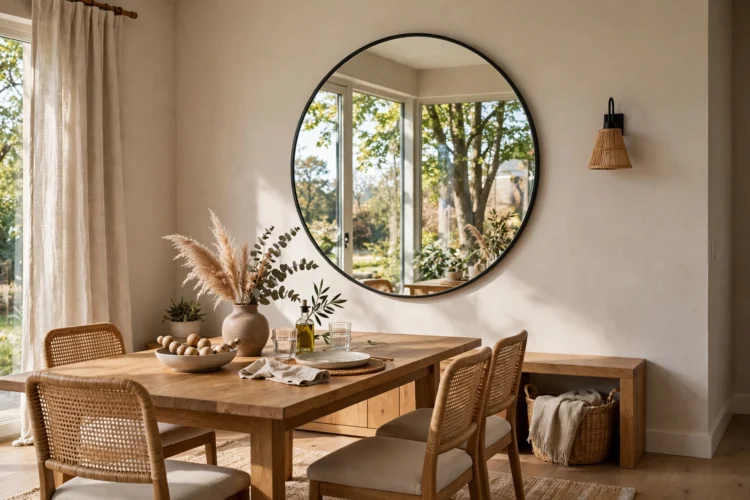
A mirror is the fastest way to make a dining room feel larger and brighter, and it works hardest on the wall opposite a window. Pick a mirror about two thirds the width of the table or sideboard below it, and hang it so it reflects something worth seeing, such as the garden, the pendant light, or a piece of art on the far wall. A mirror that reflects a blank wall or the kitchen clutter doubles the wrong thing. Round mirrors soften a room full of rectangles, while a tall arched mirror adds height to a low ceiling. A thin black or brass frame keeps the look clean. For placement tricks that work in every room, these mirror placement ideas that double the light cover the angles and heights that catch the most daylight.
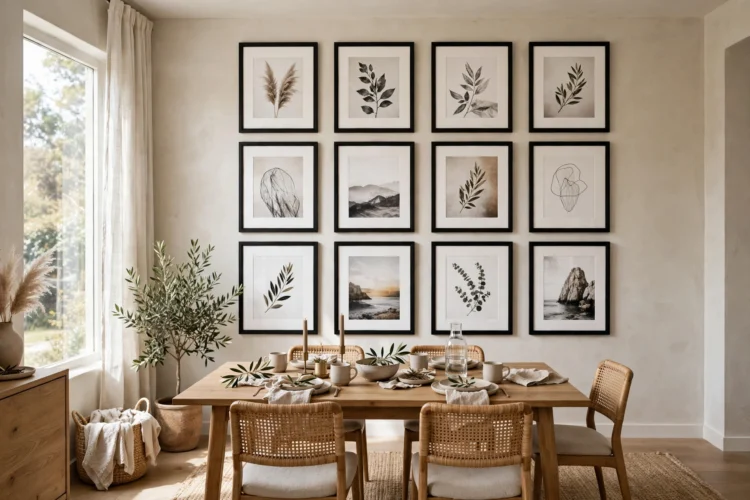
A gallery wall suits a dining room when it follows a grid instead of a random scatter. Pick frames in one finish, such as all black or all natural wood, and space them evenly, about 5 to 8 cm apart. Start with the largest piece in the center and build outward, keeping the outer edges roughly rectangular so the arrangement reads as one composition. Mix photographs, prints, and one small object, like a woven disc or a ceramic plate, for texture. Keep the bottom edge of the lowest frame at least 20 cm above the sideboard or chair backs so nothing gets knocked. A grid gallery works best on a wall at least 2 meters wide, where the repetition of frames fills the space without looking busy. If the wall is narrow, a single vertical column of three frames does the same job.
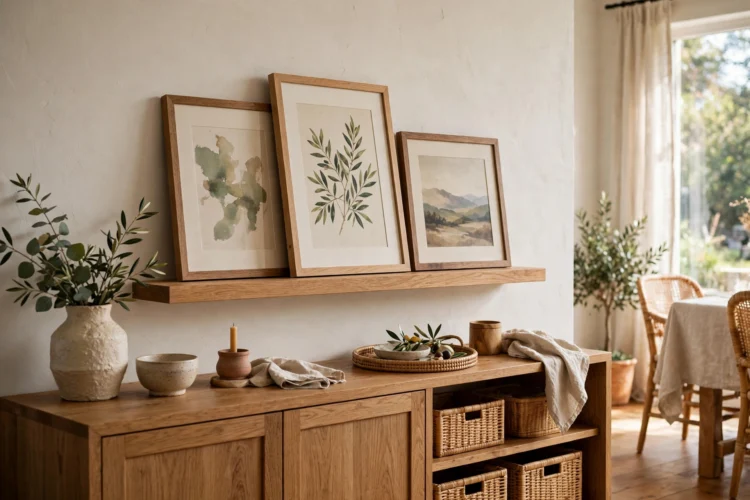
A picture ledge is a shallow shelf that holds framed art leaning against the wall, and it suits a dining room because the art can change with the seasons. Mount one or two ledges above the sideboard, each about 10 cm deep, and lean frames of different sizes along them, overlapping slightly. The leaning frames feel relaxed, and swapping a print takes seconds. Layer a small frame in front of a large one and add a tiny vase or candle at one end for depth. Keep the ledge itself simple, in painted wood or slim metal, so the art stays the star. This approach also solves the fear of hanging art wrong, since nothing is nailed in place and the arrangement can shift until it looks right.
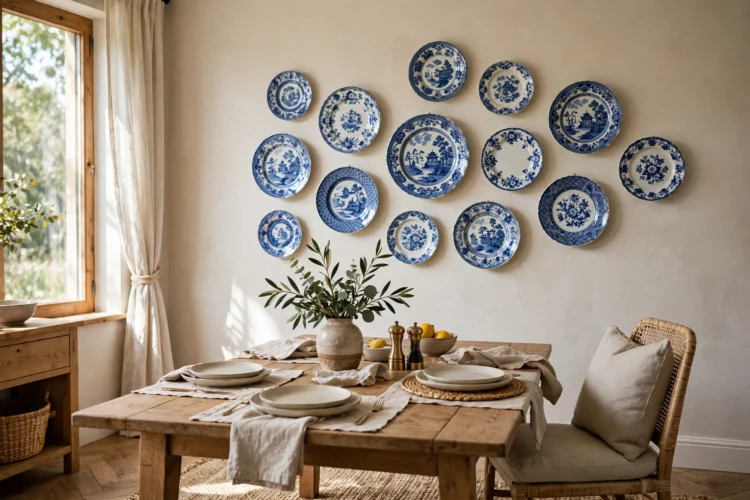
A wall of decorative plates turns a plain dining room wall into a collection with a story. Gather plates in one color family, such as blue and white, or mix patterns that share a single accent color. Hang them with discreet plate hangers and plan the layout on the floor first, keeping gaps even at about 5 cm. An odd number of plates, such as seven or nine, looks more natural than an even row. Vary the sizes, with the largest plate near the center, and keep the whole arrangement within the width of the sideboard below. Plates suit traditional and farmhouse dining rooms best, but a set of plain matte ceramic plates in one tone works in a modern room too. Avoid hanging plates where chair backs can bump them.
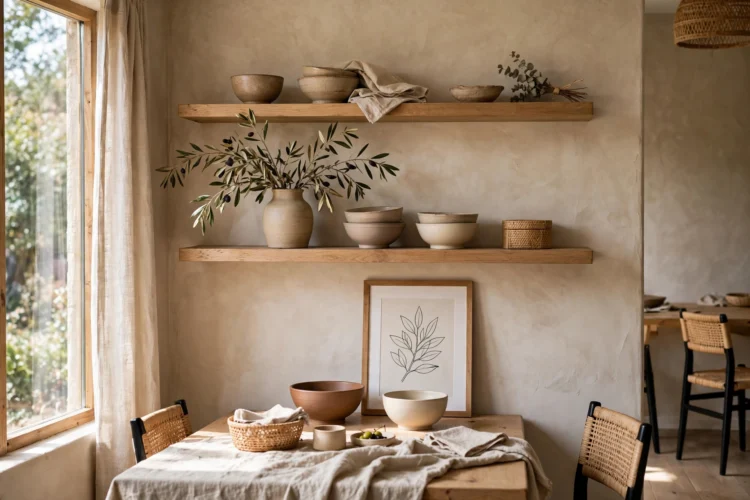
Two open shelves above a sideboard give the dining room a place for the pretty things that never fit in a cabinet. Mount the lower shelf about 40 cm above the sideboard and the upper one another 40 cm above that, so both stay within easy reach. Style each shelf with three groups: a stack of bowls or plates, a vase or jug, and a small framed print. Leave empty space between the groups so the shelf breathes. Wood shelves warm up a painted wall, while slim black metal brackets suit a modern room. Keep everyday clutter off these shelves. They are for display, and a shelf full of random mugs reads as storage, not decor. Swap the pieces seasonally, and the wall gets a fresh look four times a year for free.
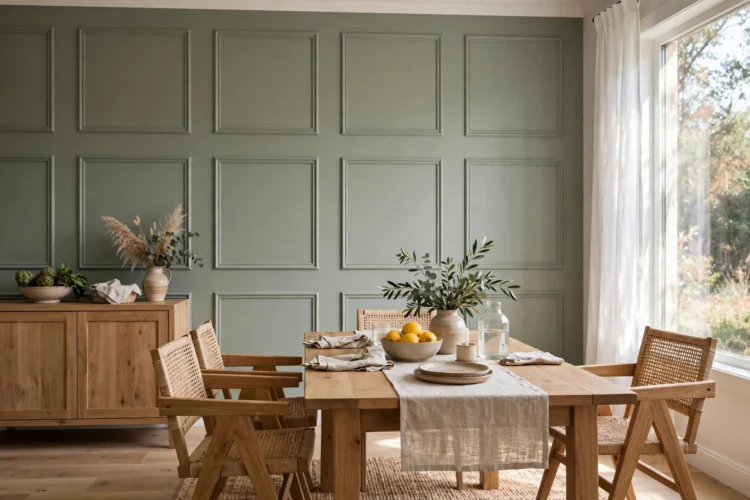
Picture frame molding turns a flat wall into architecture for the cost of a few lengths of trim and a weekend. Mark out large rectangles on the wall with painter tape first, keeping the panels evenly spaced and aligned with the sideboard below. The classic layout uses two or three tall rectangles, each about 60 to 90 cm wide, with the bottom rail about 90 cm from the floor. Paint the molding the same color as the wall for a quiet, tailored look, or paint it one shade darker for definition. The panels can stay empty, which suits a minimal room, or hold a small piece of art centered inside. This trick works on any wall, and the same technique shapes the panels in these bedroom wall molding ideas for instant character.
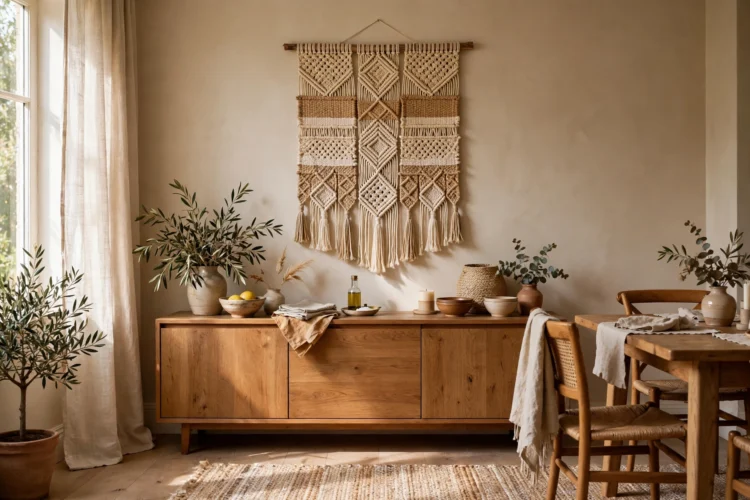
A large woven wall hanging softens a dining room full of hard surfaces, and it absorbs sound, which makes conversation easier. Choose a textile at least 90 cm wide so it reads as a deliberate piece, not a leftover. Macrame, a flat weave kilim, or a simple linen wall hanging all work, and the texture matters more than the pattern. Hang it on a wooden dowel or a slim brass rod, centered over the sideboard, with the bottom edge well above chair height. Keep the rest of the wall bare so the textile has room to breathe. A woven piece suits boho, Scandinavian, and rustic dining rooms, and it adds warmth without the weight of a framed canvas.
Wall sconces turn a plain dining room wall into a source of evening light. Mount a pair of sconces flanking a mirror or a piece of art, about 160 cm from the floor and at least 90 cm apart, so the light washes the wall evenly. Choose shades that cast light upward and downward for a soft glow, and put them on a dimmer so the room can shift from bright family dinner to low candlelit mood. Brass or matte black sconces suit most dining rooms, and a fabric shade softens the light further. Sconces also solve the problem of a wall that is too narrow for art, since a single slim sconce fills a gap of 30 cm. For more evening light options, these wall sconce ideas for ambient evening light cover the styles that flatter a dining table.
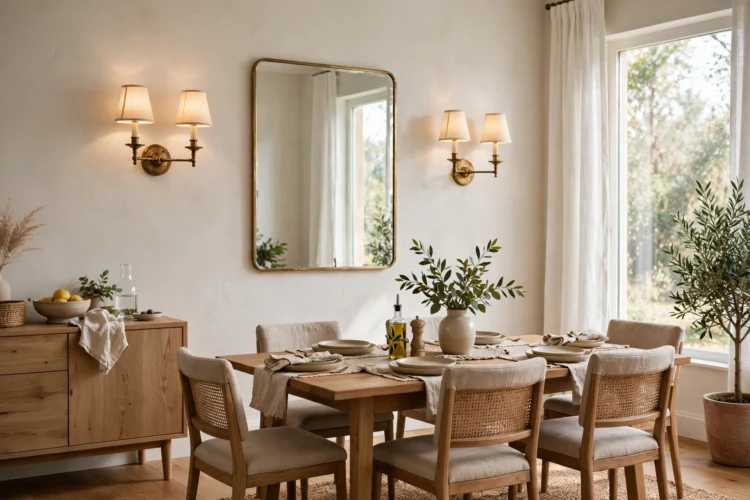
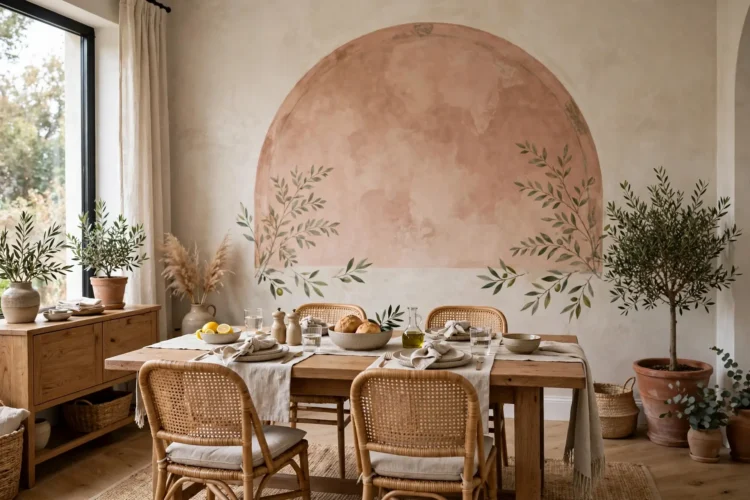
A painted mural is the boldest move on this list, and it suits a dining room because the wall is large and the room is used for lingering. A simple oversized motif, such as a single arch, a landscape silhouette, or a branch sweeping across the wall, fills the space without the fuss of wallpaper. Sketch the design in chalk first, then paint it in two or three tones from the room palette. Keep the motif to one wall and let the other walls stay plain, so the mural reads as art rather than a theme. A mural works best behind the table or above the sideboard, where it becomes the backdrop for every meal. If painting freehand feels risky, a large scale stencil gives the same effect with more control.
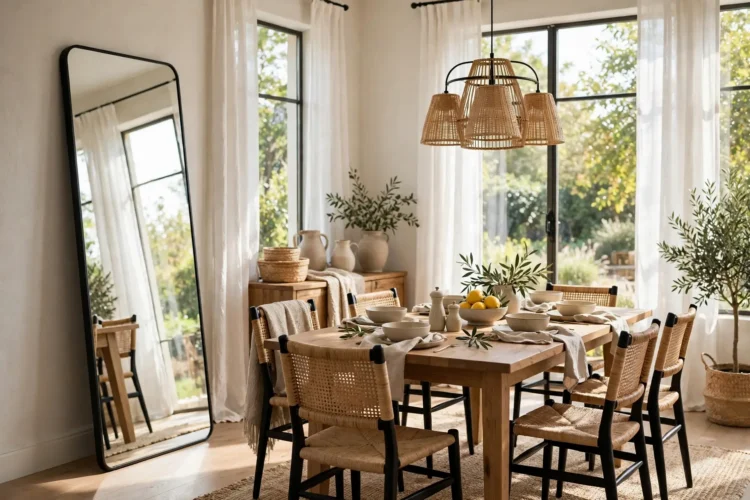
A tall mirror leaned against the wall in a dining room corner adds light and depth without a single nail. Choose a mirror at least 150 cm tall with a frame that matches the room, such as light wood for a Scandinavian room or black metal for a modern one. Lean it at a slight angle, with the top resting on the wall and the base about 10 cm out, and secure the top with a small wall anchor so it cannot slip. The mirror reflects the table and the pendant light, which makes the room feel twice as wide. Keep the floor in front of it clear, since a chair pushed against the glass ruins the effect. A leaned mirror also suits renters, since it leaves the wall untouched.
The last idea is the hardest: leave one wall completely bare. A dining room with art on every wall feels like a gallery, not a place to eat. Pick the strongest wall for your one big move, decorate it well, and let the other walls stay plain. The bare wall gives the eye a rest and makes the decorated wall look intentional rather than desperate. It also leaves room for the room to change. A bare wall can hold a sideboard, a bench, or nothing at all, and that flexibility matters when the table grows for a holiday. Start with the sideboard wall, use one idea from this list, and live with it for a month. If the room still feels unfinished, the gallery wall ideas for a personal living room offer a looser, more collected approach worth borrowing for the dining room too.