Physical Address
304 North Cardinal St.
Dorchester Center, MA 02124
Physical Address
304 North Cardinal St.
Dorchester Center, MA 02124

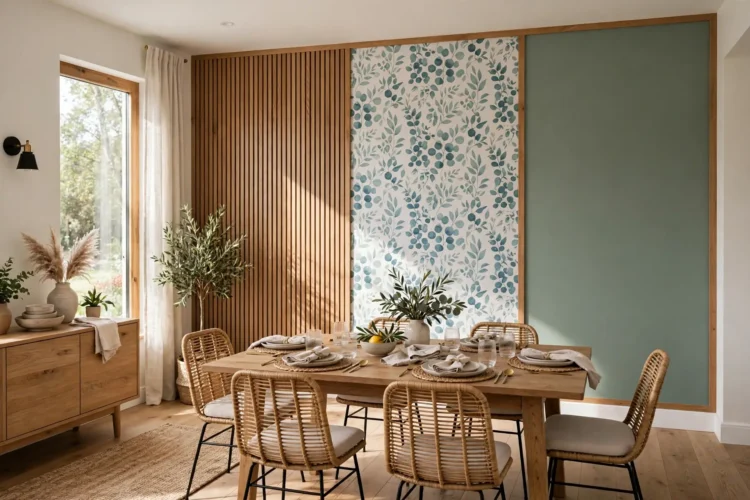
An accent wall behind the table or hutch gives the dining room a focal point in a single weekend. Here are nine ideas in paint, wood, and wallpaper.
Dining room accent wall ideas work because a dining room usually has one wall that does nothing: the long stretch behind the table or the hutch. Give that wall a job and the whole room gains a focal point. Paint, limewash, wood, and wallpaper each do it differently, and none of them needs a full renovation. These nine ideas place the accent wall where it earns its keep, behind the table or the hutch, and each one fits a weekend of work.
Place the accent wall behind the table, not beside it. Diners face that wall for the whole meal, so it becomes the backdrop for every dinner and every photograph. Measure the wall first: an accent wall works best when it is at least 2.5 meters wide, with the table centered on it. If the wall has a door or a large window, pick the next longest uninterrupted wall instead. Keep the other three walls quiet, in a soft neutral that lets the accent wall lead. The contrast between one strong wall and three calm ones is what makes the trick work. A room with two accent walls just looks busy. Before you commit, tape out the area and live with the outline for a day, then choose the material that fits the room, not the trend.
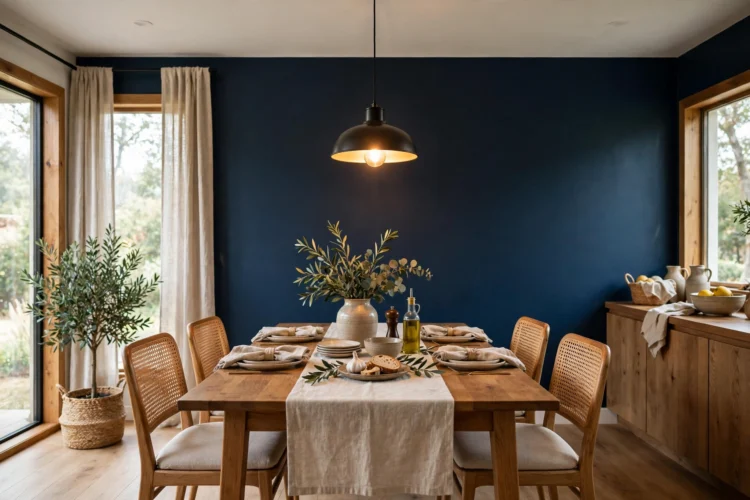
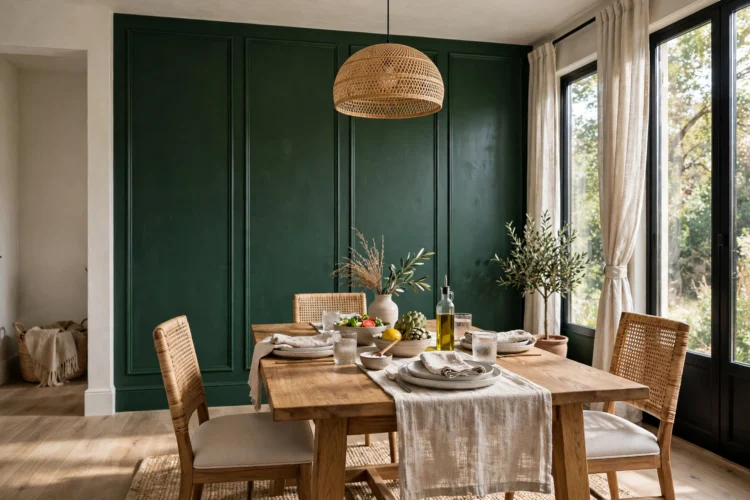
A deep paint color turns an ordinary dining room into a room built for evening meals. Navy, forest green, charcoal, or a warm oxblood all glow under a pendant light and make candlelight feel richer. Paint the wall behind the table in a matte or eggshell finish, since flat paint hides flaws and reads softer than gloss. Test the color at night, not just in daylight, because dining rooms live after dark. Paint a large test patch, at least a meter square, and check it under the actual pendant light with the curtains closed. Pair the dark wall with pale trim and a light table top so the room stays balanced. One dark wall is a statement; four dark walls is a cave, so stop at one.
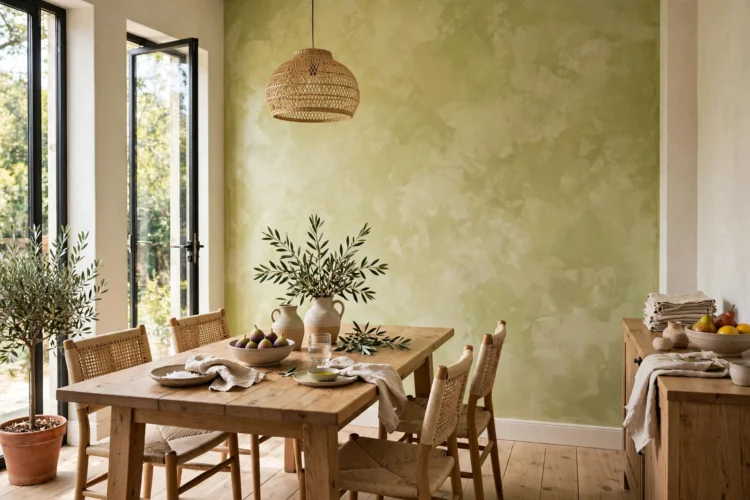
Limewash gives a wall the soft, cloudy texture of old plaster, and it suits a dining room because the movement in the finish catches the light as the evening changes. Apply it with a block brush in loose, overlapping strokes, and let each coat dry fully before the next. Two coats usually give a good depth of tone. Choose a warm white, a pale sage, or a dusty clay, since limewash looks best in muted, earthy colors. The finish is matte and slightly chalky, which hides small wall flaws better than flat paint. Limewash costs more than a tin of paint and takes longer to apply, but the result has a depth that no roller can copy. Keep the rest of the room simple so the texture stays the star.
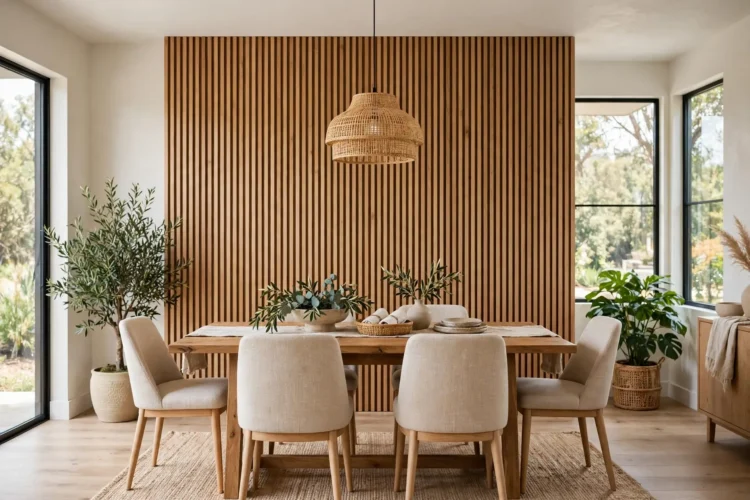
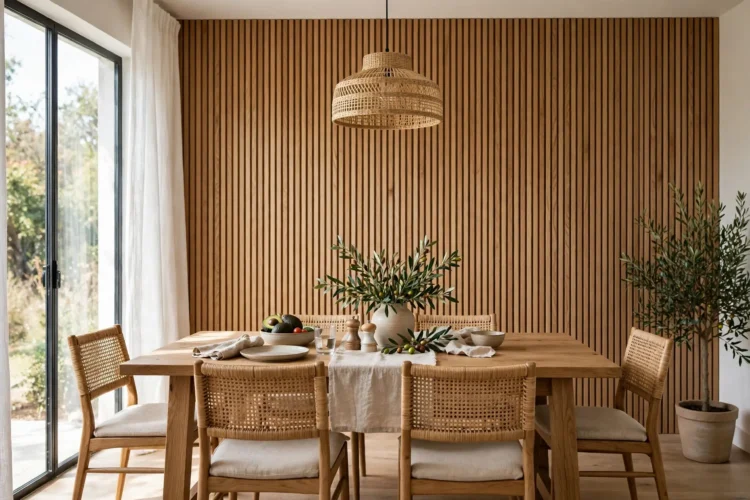
Vertical wood slats add warmth and rhythm to a dining room wall, and they hide a multitude of sins, including uneven plaster and old patch marks. Use slats about 3 cm wide with a 1 to 2 cm gap between them, mounted on a backing board painted to match the gaps. Oak slats suit Scandinavian and Japandi rooms, while walnut slats suit a moodier, more formal dining room. Run the slats floor to ceiling behind the table, and stop them at the edges of the table width plus a little extra, so the panel reads as a backdrop rather than a full wall covering. The same slatted treatment works in other rooms too, and these wood panel accent wall ideas for the living room show how the spacing changes the feel. Seal the wood with a matte oil so it resists splashes and dust.
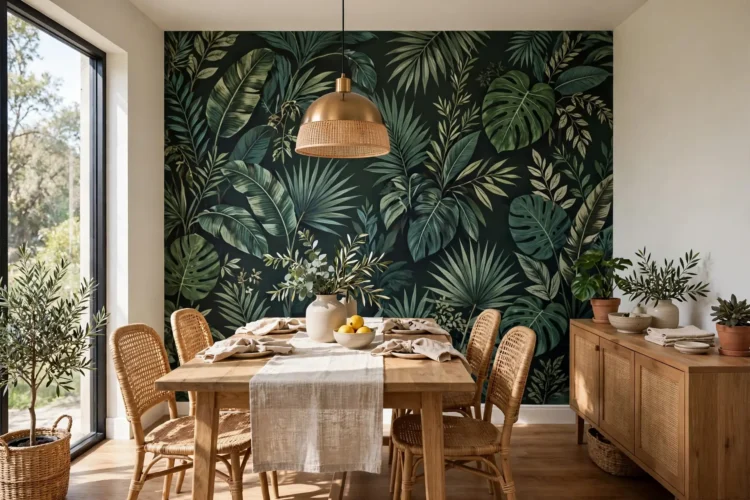
Wallpaper is the fastest way to give a dining room a finished, layered look, and one wall keeps the cost and the commitment low. Pick a pattern with a scale that suits the room: a large scale botanical or geometric print reads well from across the table, while a tiny print disappears. Paste the wall behind the table or hutch, and choose a paper with a wipeable surface, since dining rooms collect splashes. A dark botanical print turns a plain room dramatic, while a pale grasscloth adds texture without pattern. Measure carefully and order one extra roll, since pattern matching wastes more paper than most people expect. If the wall is not perfectly straight, a busy pattern hides the flaws better than a stripe.
Board and batten, the grid of thin vertical battens over a flat wall, gives a dining room instant architecture for little money. Space the battens about 40 to 60 cm apart, run a horizontal rail at chair rail height, and paint the whole wall one color, trim and all, for a tailored look. White board and batten suits a farmhouse dining room, while the same grid painted deep green or navy suits a formal one. The vertical lines add height to a low ceiling, and the grid frames the sideboard or hutch below it beautifully. Plan the layout on paper first so the battens land evenly, with no sliver of a panel at the edges. The idea borrows from the broader family of accent wall ideas that are not just paint, and the same grid logic applies in a bedroom, as these bedroom accent wall ideas with paint, panels, and wood show.
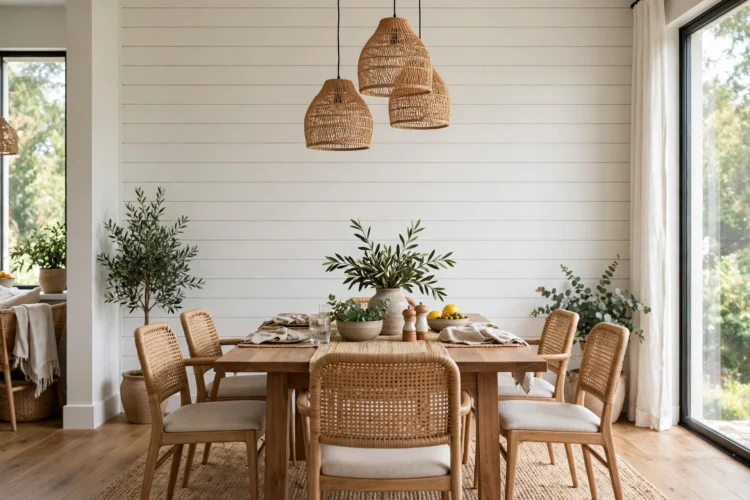
Shiplap and tongue and groove boards bring a calm, horizontal rhythm to a dining room wall, and they suit coastal, farmhouse, and cottage rooms best. Run the boards horizontally for a relaxed feel, or vertically if the ceiling is low and the room needs height. Paint them a soft white or a pale warm gray so the shadows in the grooves do the decorating. The boards also protect the wall behind a bench or a sideboard, where chairs and serving dishes leave marks. Use real wood or moisture resistant MDF, and caulk the edges where the boards meet the ceiling and the baseboard for a clean finish. Keep the furniture simple, since the wall already carries the pattern. A shiplap wall behind a plain oak table is all the decoration the room needs.
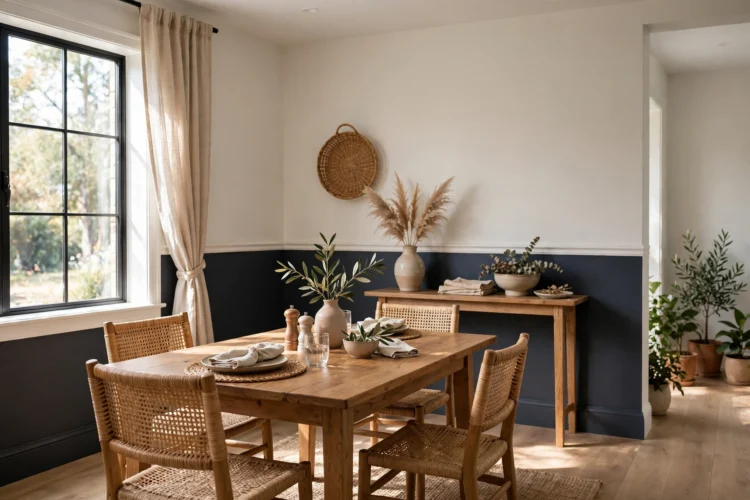
A two tone wall splits the accent wall at chair rail height, with a darker color below and a lighter one above, or the reverse. The split adds structure to a tall wall and protects the lower half from scuffs. Paint the lower half in a deep tone, such as sage green or dusty blue, and the upper half in a warm white that matches the ceiling. Add a slim chair rail molding at the split, about 90 cm from the floor, to make the division look deliberate rather than accidental. The two tone trick suits formal dining rooms and older homes, where the rail echoes the period details. It also works as a compromise when the household cannot agree on a dark wall: the color stays low, where it grounds the furniture, and the upper wall stays bright.
A framed mural panel gives the drama of wallpaper without pasting a whole wall. Choose a mural printed on canvas or a set of framed panels, sized to about two thirds the width of the table, and hang it centered behind the table. A landscape, a botanical print, or an abstract wash all work, and the frame turns the mural into art rather than a wall treatment. The panel can move with you if you relocate, and it can come down if tastes change, which makes it the lowest commitment accent wall on this list. Hang the center of the panel at eye level, about 150 cm from the floor, and keep the sideboard or table clear below it. The empty space between the panel and the furniture matters as much as the panel itself.
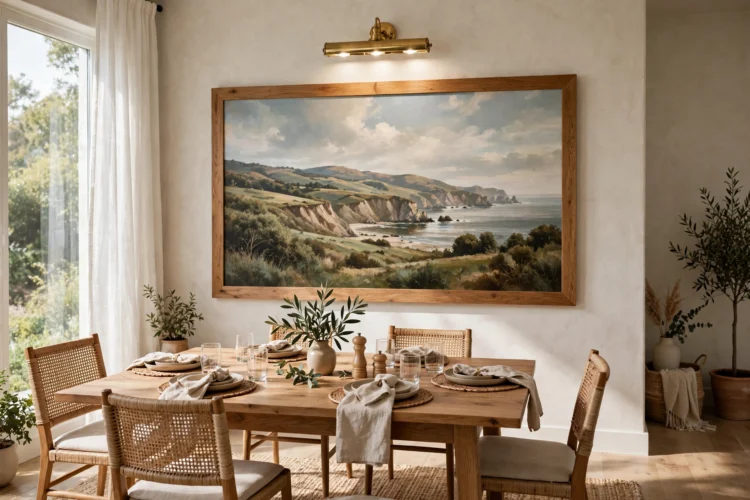
An accent wall only works if the light shows it off, so finish the job with lighting aimed at the wall itself. A picture light above a mural panel, a pair of sconces flanking a slat wall, or a pendant hung close to the wall all pull the texture and color forward after dark. Warm light, around 2700K, flatters paint, wood, and wallpaper alike, and a dimmer lets the wall shift from bright backdrop at lunch to soft glow at dinner. Check the effect at night before you call the project done, since a wall that looks flat in daylight can come alive under a warm wash of light. The right light turns a painted wall into the reason people linger at the table, which is the whole point of an accent wall in the first place.