Physical Address
304 North Cardinal St.
Dorchester Center, MA 02124
Physical Address
304 North Cardinal St.
Dorchester Center, MA 02124

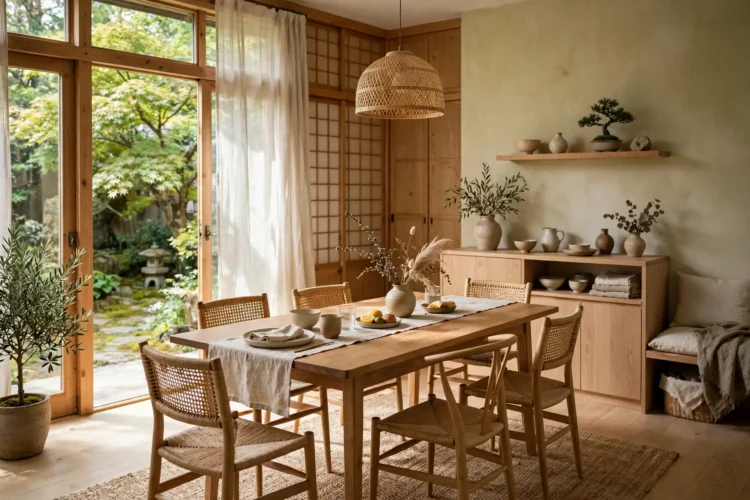
Low tables, pale wood, and empty space turn the dining room into the calmest room in the house. Here are eight Japandi ideas that slow meals down in the best way.
Japandi dining room ideas bring together Japanese calm and Scandinavian warmth, and the result is a room that slows meals down in the best way. Low profiles, pale wood, and empty space do the work here. Nothing shouts. The table sits low, the chairs feel light, and the room keeps only what it needs. This guide walks through eight ideas that turn an ordinary dining room into the calmest room in the house, one change at a time.
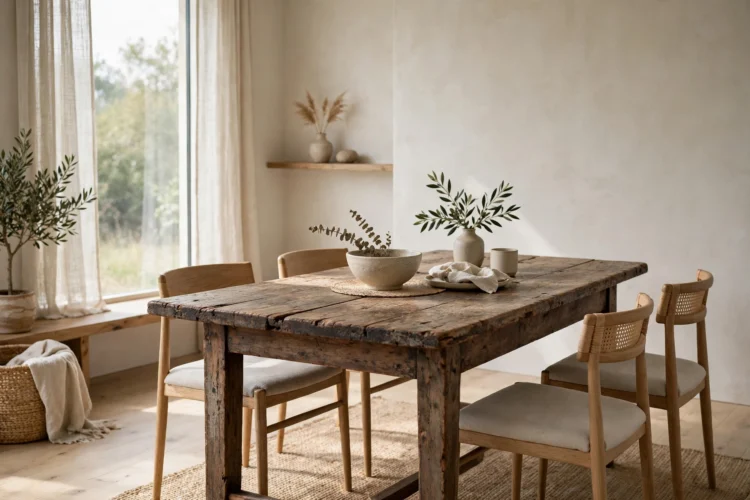
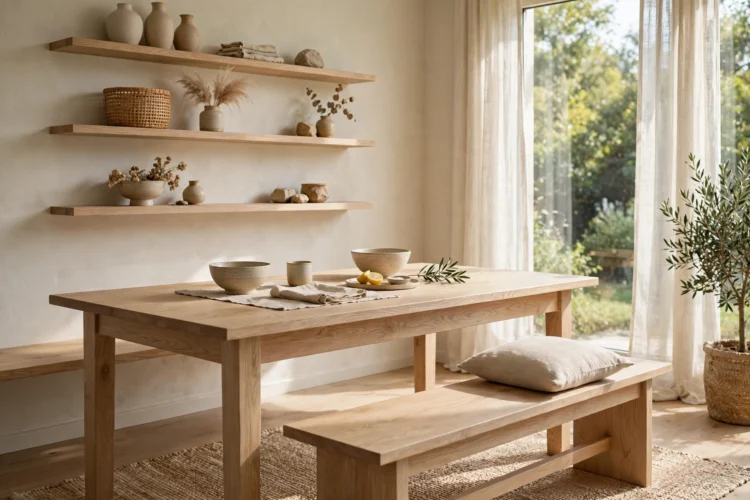
The table sets the tone, so start there. A Japandi dining table sits a touch lower than a standard one, with a top in pale oak or ash and softly rounded corners. The low profile pulls the whole room down a notch and makes long dinners feel unhurried. Pick a top with visible grain and a matte oil finish, not a thick glossy lacquer. The wood should look like wood. For a table that seats four to six, a top around 180 cm long and 90 cm wide leaves elbow room without crowding the space. Keep the base simple too. A trestle base or four straight legs beats a carved pedestal, and it leaves the floor line clean. If your room runs small, the same low, pale table works with a bench on one side, a trick that also shows up in small dining room ideas that seat more in less space.
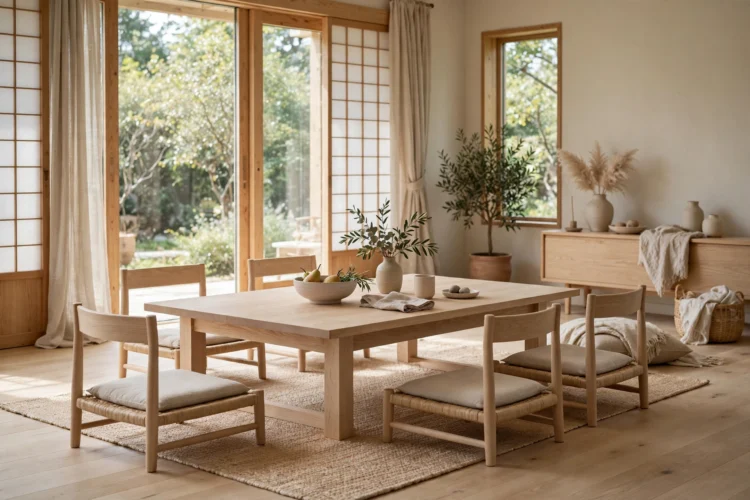
Negative space is the quiet hero of Japandi design. Pull the table at least 90 cm away from the nearest wall so chairs slide out freely and nobody brushes the wall when they stand. Leave one wall completely bare. That empty stretch of plaster gives the eye somewhere to rest, and it makes the pieces you do keep feel chosen rather than crammed in. Resist the urge to fill every corner. A dining room needs a clear path from the kitchen door to the table, and it needs breathing room around the sideboard. When the room feels tight, remove one thing before you add anything. Most dining rooms improve more from subtraction than from shopping. The empty space also helps the room feel larger than its floor plan, which matters in homes where the dining area shares space with the kitchen or living room.
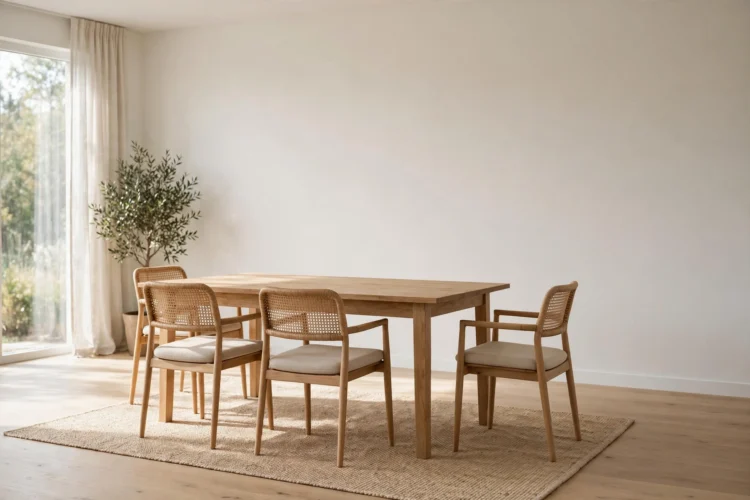
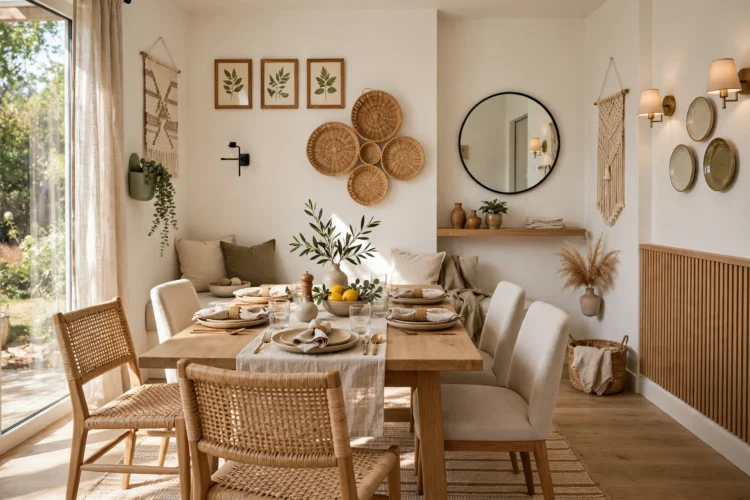
Japandi meals run long, so the chairs have to earn their place. Look for a gently curved plywood shell or a solid wood frame with a woven paper cord or cane seat. The seat should sit at a height that lets feet rest flat on the floor, and the back should support the lower back without forcing an upright posture. A thin linen seat pad adds comfort without adding visual weight. Mix two chair styles at most, such as four matching side chairs and two armchairs at the ends, so the set feels collected rather than matched to death. Avoid tall, heavy backs that block sight lines across the table. Low backs keep the conversation open and the room airy. If you already love your chairs, a set of simple linen covers in a warm off white can pull a mismatched set together for very little money.
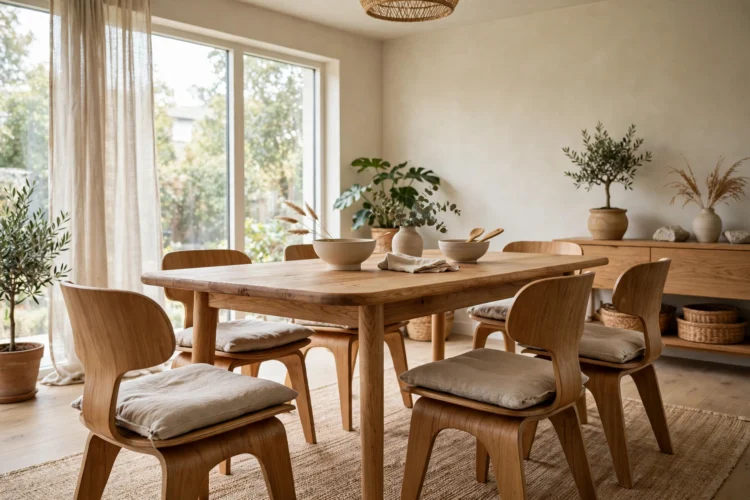
Repetition makes a room feel calm, and Japandi leans on it hard. Pick one wood, such as white oak, and use it in three places: the table top, a bench or shelf, and a small detail like a tray or a pair of serving boards. The repetition ties the room together without any matching furniture sets. Pair the wood with one other natural material, like linen, stone, or handmade ceramic, and stop there. Too many materials create noise. The same idea works across the house, and the pale wood and clean lines in these Scandinavian dining room ideas in pale wood and soft light show how far one material can go. Keep metal finishes to a single tone as well, such as matte black or unlacquered brass, and use it sparingly on handles, light fittings, or chair feet.
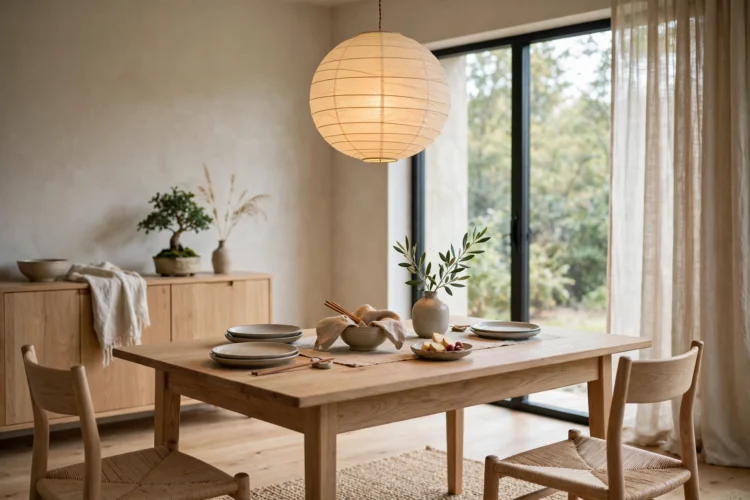
One paper lantern over the table does more than a row of spotlights. The round washi shade spreads a soft, even glow that flatters food and faces, and it casts no hard shadows on the table. Hang it so the bottom of the shade sits about 75 cm above the tabletop, low enough to feel intimate and high enough to see across. Choose a warm bulb around 2700K and put it on a dimmer, so the same light works for a bright family lunch and a slow candlelit dinner. A lantern with a simple round or oval shape suits the Japandi mood better than a fussy tiered design. Keep the cord short and dark, and skip the extra pendant lights. One light, one shadow, one calm pool of warmth over the table is the whole point.
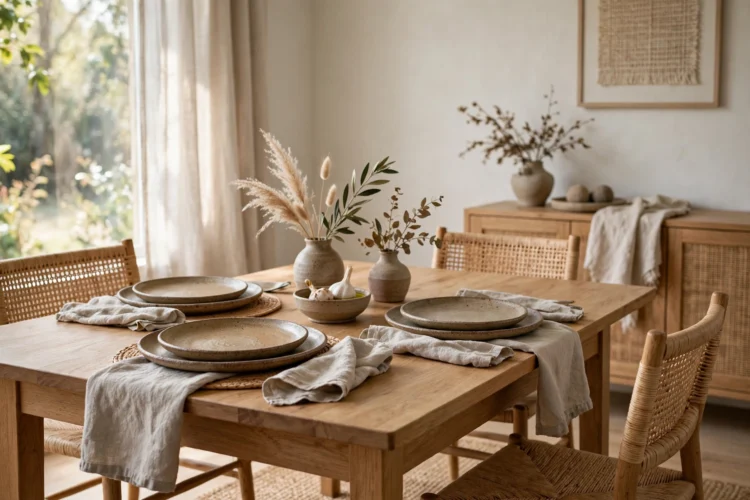
The table setting carries the Japandi mood as much as the furniture does. Choose handmade stoneware plates in soft white, warm gray, or speckled clay, with slightly uneven rims that show the maker hand. Stack a small bowl on each plate for soup or rice, and lay a linen napkin beside it, not folded into a sculpture. Keep the palette to two or three tones from the room itself, so the table looks like part of the room rather than a separate display. Wooden chopstick rests or a simple linen runner add texture without pattern. Skip the tall centerpiece during meals. A low bowl of fruit or a single sprig of greenery keeps sight lines open and leaves room for the dishes that matter. The table should look ready to eat at, not ready to photograph.
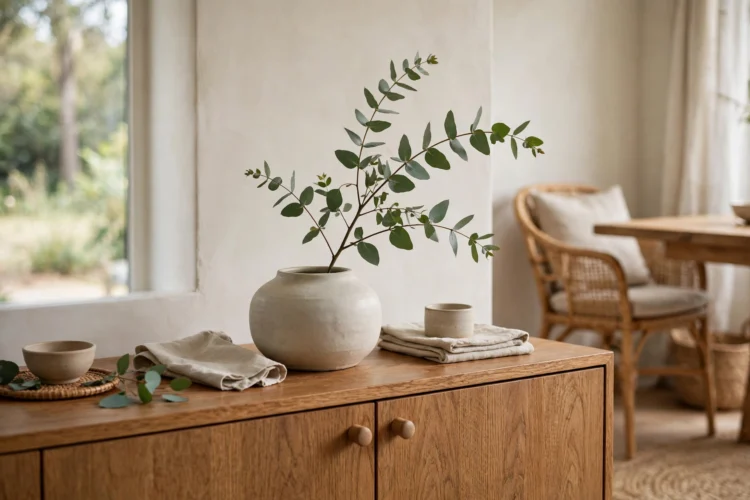
A single branch in a low ceramic vase brings the outdoors in without turning the sideboard into a garden center. Choose a branch with an interesting shape, such as eucalyptus, cherry blossom in season, or a bare sculptural twig in winter, and let it stand alone. The Japanese habit of ikebana treats one stem as enough, and the empty space around it is part of the arrangement. Change the branch with the seasons and the room stays fresh all year. Keep the vase low and wide so it never blocks the view across the table. One living thing also sets a natural limit: when the urge to add a second plant or a bowl of potpourri arrives, the room is already finished. A calm room knows when to stop.
The last idea is a habit, not a purchase. Buy pieces that age gracefully and let them. Solid wood deepens in color, linen softens with washing, and handmade ceramic picks up small marks that tell the story of meals shared. Choose the table, chairs, and light as if you will keep them for twenty years, because Japandi style rewards patience and punishes trend chasing. Repair a wobbly chair instead of replacing the set. Re-oil the table top once a year and it will outlast three cheaper tables. The same slow approach shapes the rest of a Japandi home, from the Japandi kitchen ideas for a calm, clutter-free cook space to the Japandi bathroom ideas for calm minimalism. Start with one idea from this list, live with it for a week, and let the room tell you what it still needs.