Physical Address
304 North Cardinal St.
Dorchester Center, MA 02124
Physical Address
304 North Cardinal St.
Dorchester Center, MA 02124

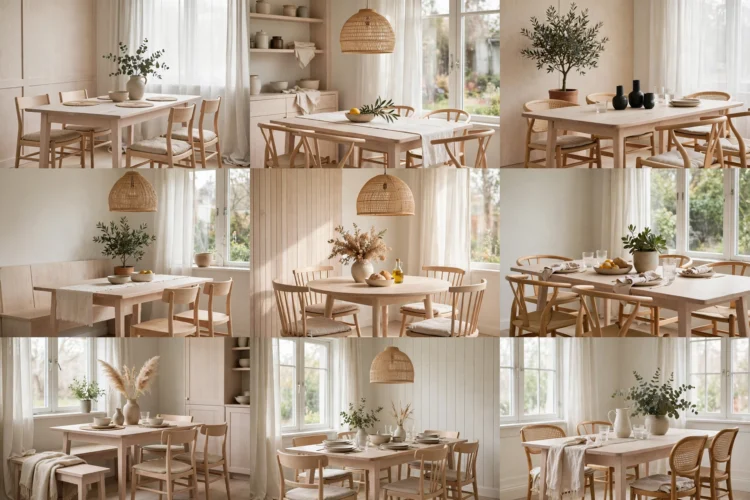
Pale oak, candlelight, and sheepskin layers turn a dining room into a place for long, slow dinners. These nine ideas borrow the best of Scandinavian design without turning the room into a showroom.
These scandinavian dining room ideas come from a simple habit: in the Nordic countries, dinner is the slow part of the day. The table stays set longer, the candles stay lit, and nobody rushes off to another room. The design follows that habit. Pale wood keeps the room bright through long winters, soft textiles keep it warm, and every object earns its place by being useful or beautiful, ideally both.
You do not need to buy a whole new dining set to get there. Most of these ideas work with furniture you already own, plus a few careful swaps in lighting, textiles, and color. The goal is a room that feels calm at breakfast and warm at dinner, and that still works when the table is covered in homework or board games. If the room doubles as a workspace, these built-in kitchen desk ideas for bills, homework, and laptops show how to keep work corners tidy without losing the calm.
Pale oak is the foundation of the look. Its honey-blonde tone reflects daylight, which matters in a climate where winter afternoons end early, and it pairs with almost any chair color. A pale oak table with a matte oil finish shows the grain without glare, and small marks blend into the wood instead of standing out. If your table is dark, a pale oak bench on one side breaks the heaviness and adds seating for extra guests.
Care for pale oak with oil, not varnish. A thin coat of hardwax oil once or twice a year keeps the surface protected while letting the wood breathe. Wipe spills quickly, since pale wood stains faster than dark, and use placemats for hot dishes. The point of scandinavian dining room decor is not perfection. It is a room that looks better the more it is used, and pale oak ages that way.
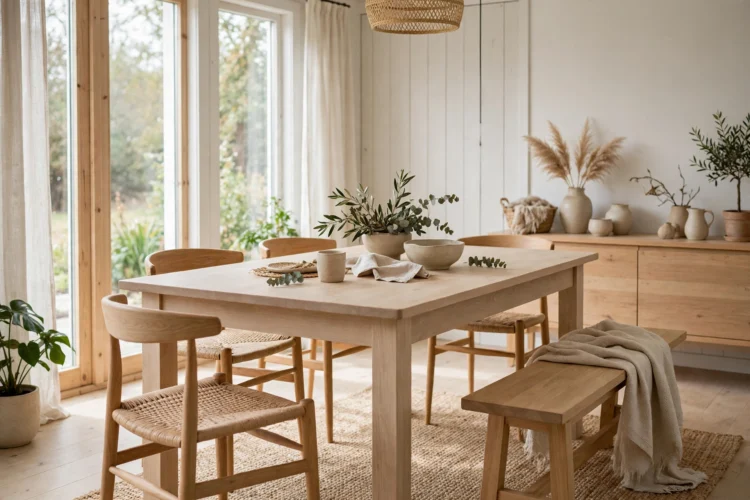
A Scandinavian palette stays close to white, warm grey, and pale wood, with color used in small, deliberate amounts. Walls in soft white or pale grey make the room feel larger, and they let the wood and textiles carry the warmth. If white walls feel cold, choose a white with a warm undertone, the kind that reads creamy in daylight rather than blue. Paint a test patch and check it at dusk, when the light is weakest.
Add color through things you can change easily. A sage linen runner, dusty blue napkins, or a terracotta vase gives the room a focal point without a commitment. Keep the count low: one or two accent colors, repeated in two or three places, is enough. Three or more competing colors pull the room in different directions. A pale wood dining room with one soft accent feels calm. The same room with five accents feels busy.
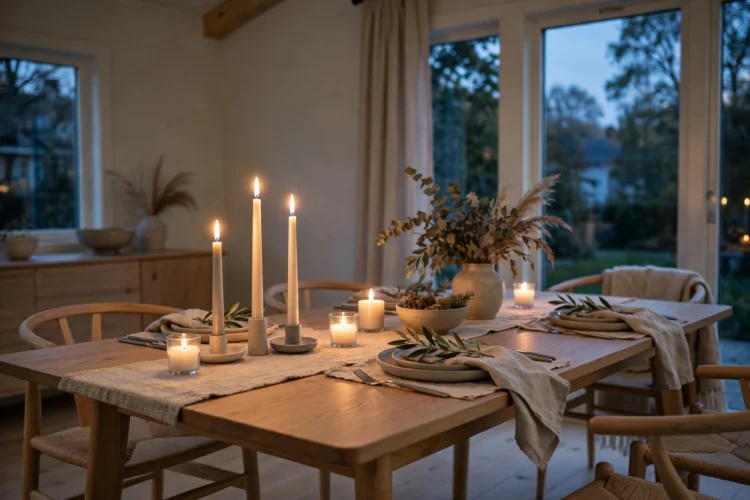
Candles are not decoration in Scandinavian homes. They are lighting. In winter, when daylight ends by mid-afternoon, a few lit candles on the table turn an ordinary Tuesday dinner into something worth sitting down for. Use plain white or beeswax tapers in simple holders, or a cluster of small tea lights in glass jars. Keep the flame at eye level or below, so it glows across the table instead of glaring.
Safety comes first. Place candles on a stable tray, keep them away from curtains and paper napkins, and never leave them burning in an empty room. Battery candles with a warm flicker work well if children or pets sit at the table. The habit matters more than the wax: lighting the candles signals that dinner is a pause, not a pit stop. That small ritual is the cheapest idea in this whole list, and it changes the room more than new furniture does.
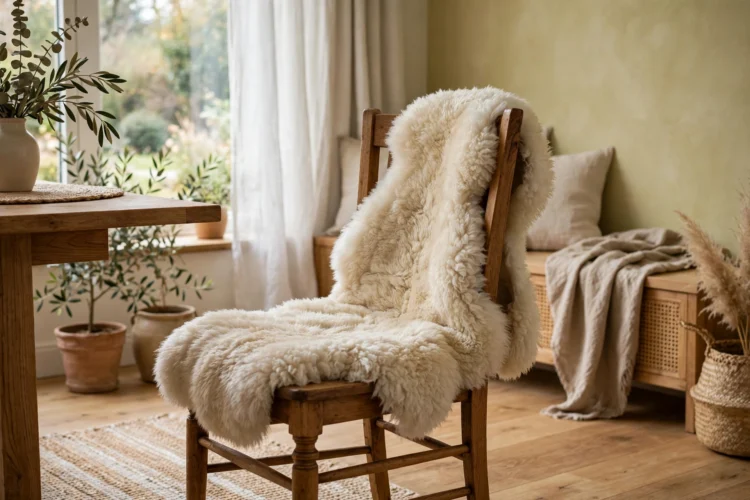
Sheepskin is the textile that makes a pale wood room feel warm instead of bare. Drape one over a chair back, fold one across a bench, or place one on the seat of a wooden chair that feels cold in winter. The texture breaks up all the flat wood and gives the room a soft place for the eye to land. Real sheepskin lasts for years if it is brushed now and then and kept out of direct sun.
If real sheepskin is outside your budget, a good faux version works just as well visually. The test is the hand feel: it should be soft and dense, not slick or plasticky. Wash faux sheepskin on a gentle cycle and air-dry it, since heat mats the fibers. One sheepskin per chair is plenty. Covering every chair turns the room into a ski lodge. A single layer on the bench and one or two chairs gives the nordic dining room its warmth without overdoing it.
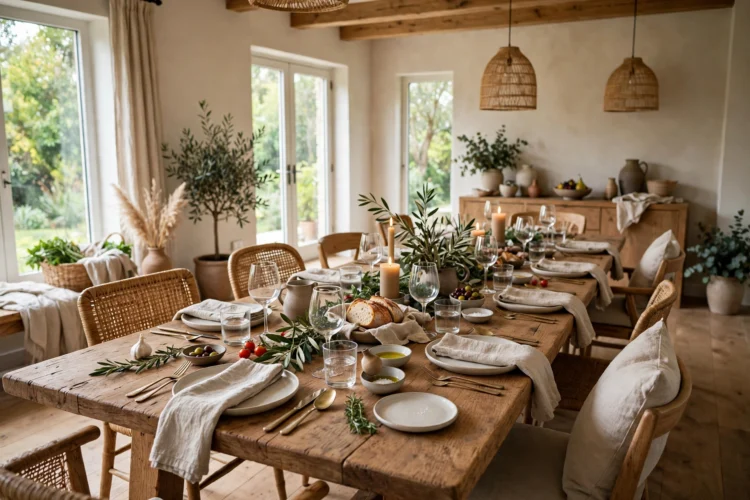
A long table is the heart of the Scandinavian dining room because it holds a slow meal. It fits a roast in the middle, side dishes down both sides, and extra chairs pulled in when friends drop by. If your room allows it, choose a table that seats six to eight rather than four. The extra length makes the room feel generous even when only two people are eating.
An extendable table solves the space problem in smaller rooms. It sits compact for daily meals and stretches out for gatherings, and the leaves store inside the table or flat against a wall. Check the mechanism before buying: it should open with one hand and lock firmly, since a wobbly extension ruins the meal. Pair the long table with a bench on one side. Benches tuck under the table when not in use and seat children easily, which keeps the room flexible for everyday life.
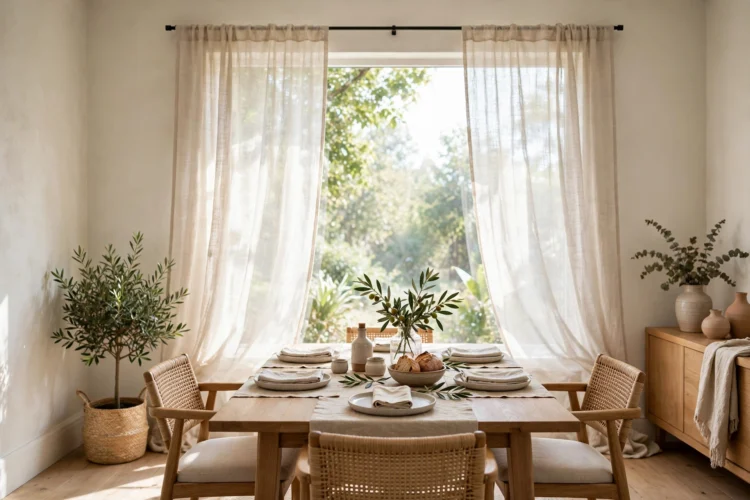
Scandinavian design grew up around scarce daylight, so it treats windows as the main light source. Keep window frames painted white or pale wood, and skip heavy curtains that block the light. A sheer linen panel or a simple roller blind in near-white filters glare without cutting the daylight the room needs. Clean the windows inside and out at the start of winter. A dirty pane can cut the light by a surprising amount.
Mirrors help in rooms with only one window. Hang a plain mirror on the wall opposite the window and it bounces daylight across the table. Keep the frame thin and pale, so the mirror reads as a window rather than a decoration. If the room still feels dim at noon, the same thinking behind these ways to brighten a dark kitchen without painting the cabinets applies here: clear the sill, lighten the surfaces, and let the window work. Daylight is free, and in a Scandinavian room it is the best light you have.
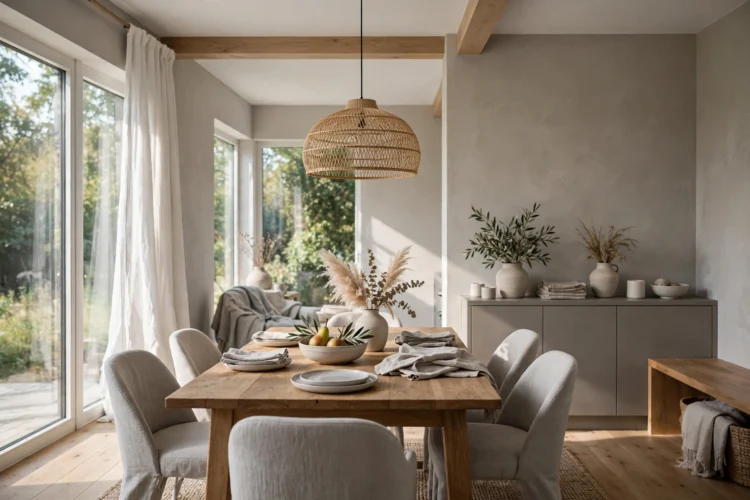
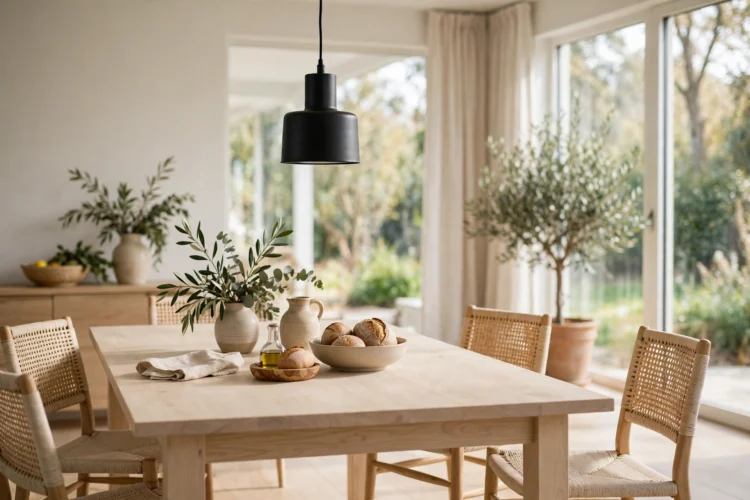
An all-pale room can drift into washed-out, and one black accent fixes it. A black pendant light, black chair frames, or a thin black picture frame gives the eye a resting point and makes the pale wood look warmer by contrast. The key is one accent, repeated once or twice at most. A black pendant over the table and black handles on the sideboard is enough. A black table, black chairs, and black curtains is a different room entirely.
Choose matte black over gloss. Matte finishes look softer against pale wood and do not show fingerprints the way gloss does. If black feels too harsh, charcoal or dark bronze gives the same contrast with less edge. The accent should feel intentional, like a period at the end of a sentence, not like a leftover. In a nordic dining room, restraint is the design, and one strong dark note proves the point.
Scandinavian rooms stay calm because most of what sits out is used every day. A ceramic jug holds water. A wooden bowl holds fruit. A linen cloth protects the table. When decor has a job, the room never looks cluttered, because nothing is there just to fill space. Start by removing everything from the sideboard and the table, then put back only what you reach for in a normal week.
What remains should be simple and well made. One vase with fresh branches, one stack of plates, and one candle tray is a complete sideboard. If you love objects, rotate them: keep a small box of favorite pieces and swap one in each month, so the room changes without accumulating. A weekend refresh can do the same work here as it does elsewhere, and these weekend kitchen updates that need no contractor show how small swaps can shift a whole room. Less on display means more calm at the table.
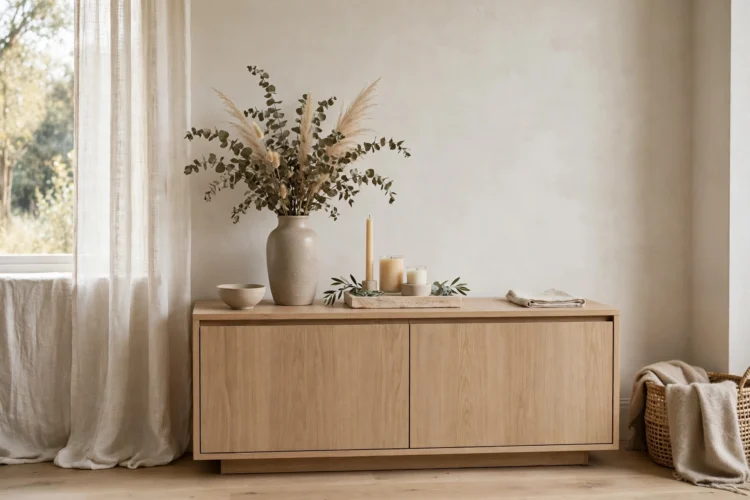
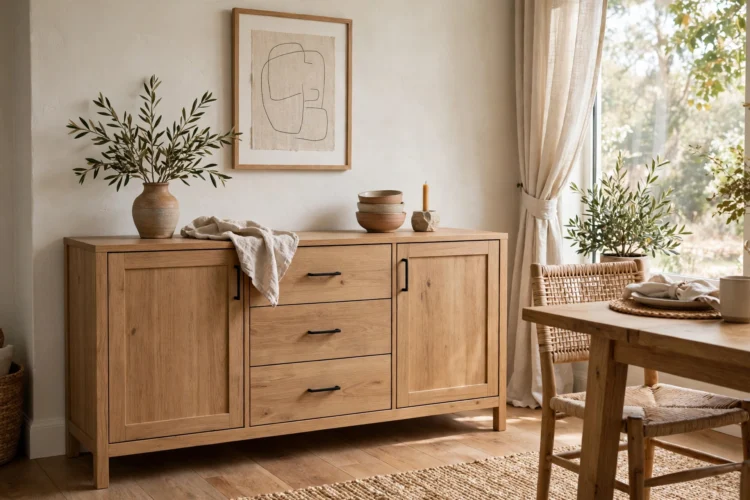
The calm of a Scandinavian dining room depends on storage that hides the mess. Placemats, candles, board games, and school papers all need a home, and a sideboard with closed doors does the job better than open shelves. Open shelves look good in photos and collect dust and clutter in real life. Closed storage keeps the room looking the way it does after you tidy, not the way it looks an hour later.
Inside the sideboard, use simple dividers. A tray for candles, a basket for placemats, and a lidded box for small items keeps everything findable. Label nothing if you live alone, but label the baskets if the family shares the room, so everyone puts things back in the right place. The same declutter habit that clears a work surface works here too, and this kitchen counter declutter guide with 9 fixes for a clear work surface has tricks that translate directly to a dining sideboard. A room that hides its clutter stays a room you want to sit in.