Physical Address
304 North Cardinal St.
Dorchester Center, MA 02124
Physical Address
304 North Cardinal St.
Dorchester Center, MA 02124

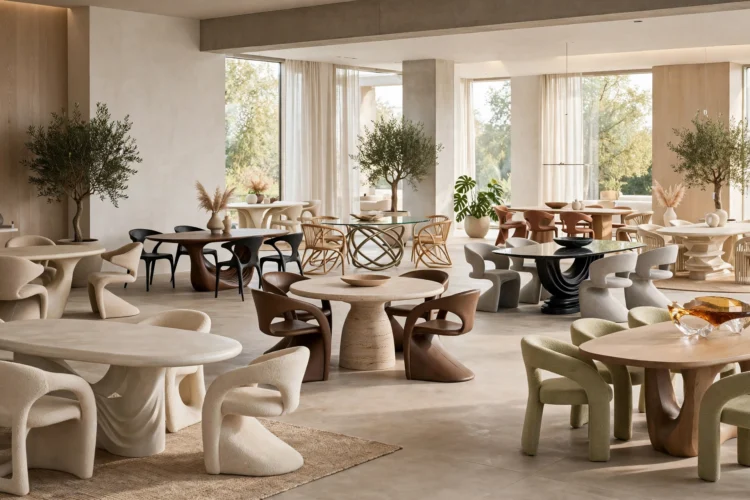
Sculptural furniture turns a modern dining room into a room worth lingering in. These 13 ideas pair statement pieces with warm wood and soft textiles.
Modern dining room ideas often lean cold: white walls, sharp edges, and furniture that looks better than it feels. Sculptural furniture fixes that. A curved table, a molded chair, or a pendant with a strange and beautiful shape gives the room a focal point, and the rest of the design can stay calm around it. The trick is balance. One statement piece per sightline, warm materials to soften the geometry, and textiles to keep the room comfortable. These 13 ideas show how to build a modern dining room around sculpture without losing the warmth that makes people stay at the table.
Start with the table, since everything else in the room orbits it. A sculptural dining table with a curved or twisted base reads as sculpture from every angle, and the single central support leaves legroom free all around, so no one fights a table leg for space. Choose a round or oval top if the room is square, since the curve softens the corners and makes conversation easier across the table. A stone or solid wood top adds weight and keeps the sculptural base from feeling like a gimmick. Pair it with simple chairs and let the table carry the room.
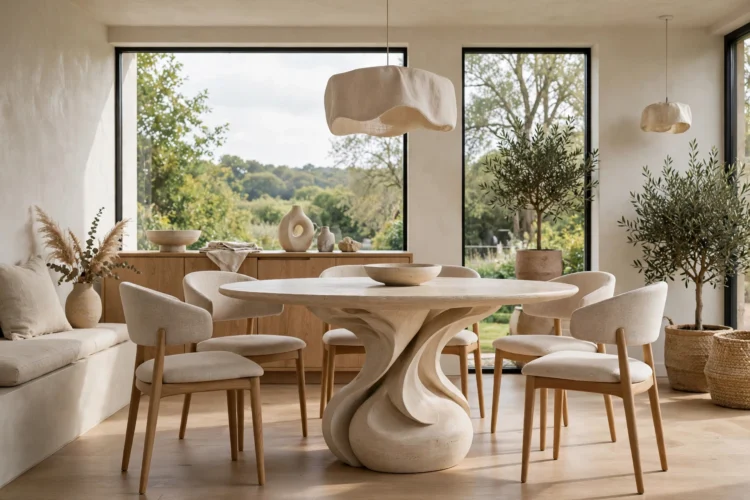
Molded chairs earn their place when the curve is the whole design. Look for a chair with one strong gesture, such as a backrest that sweeps into the arms in a single line, or a seat that curls up at the edges. Keep the color quiet, a warm white, a soft grey, or a natural wood tone, so the shape does the talking. A set of six identical modern dining chairs around a sculptural table can feel repetitive, so mix in two different chairs at the ends of the table for contrast. The molded form is also easy to clean, which matters in a room where food and drink are always nearby. Comfort matters as much as shape, so sit in the chair for a full minute before you buy a set.
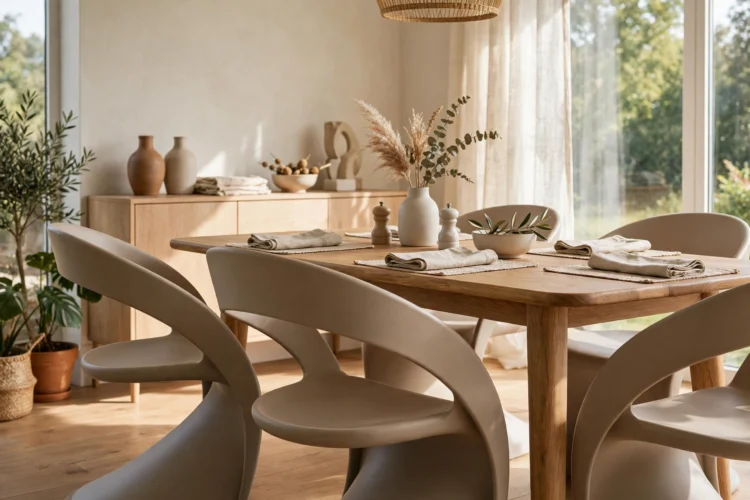
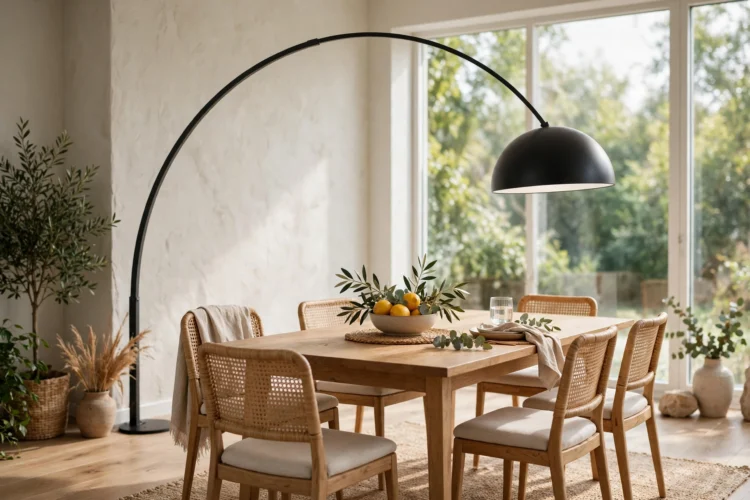
Skip the chandelier and let an arc floor lamp do the work. A tall arc lamp curves over the table like a drawn line, and its scale makes the whole room feel designed rather than decorated. Choose a lamp with a heavy base and a shade that throws light down onto the table, not out into the room. The arc works best in a room with a plain ceiling, where the curve reads clearly against the flat surface above it. Keep the rest of the dining room lighting simple, a dimmer on the arc and a small lamp on the sideboard, so the room can shift from bright family dinner to a quiet evening.
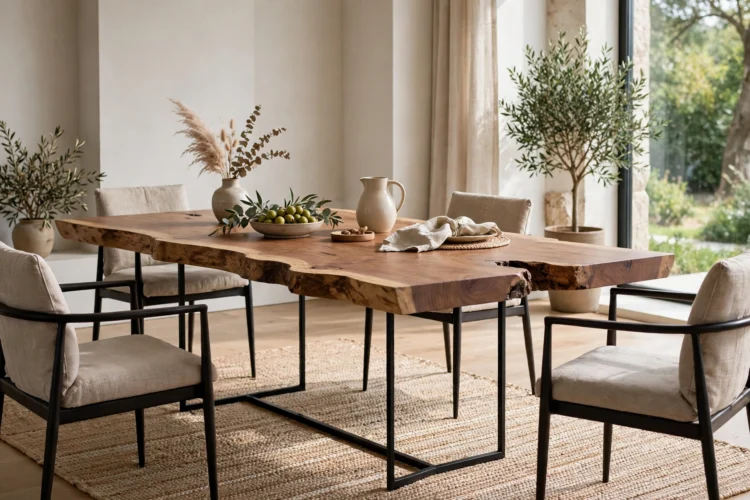
A live-edge slab brings the outdoors into a modern dining room without turning it rustic. The natural edge of the wood contrasts with a clean steel or blackened metal base, and that contrast is the whole idea. Keep the base as simple as possible, two flat panels or a slim frame, so the wood stays the focus. Seal the top well, since a dining table takes spills every day, and choose a slab wide enough for plates and serving dishes with room to spare. The live edge works best with chairs that have straight lines, which keep the room modern while the table adds the organic note.
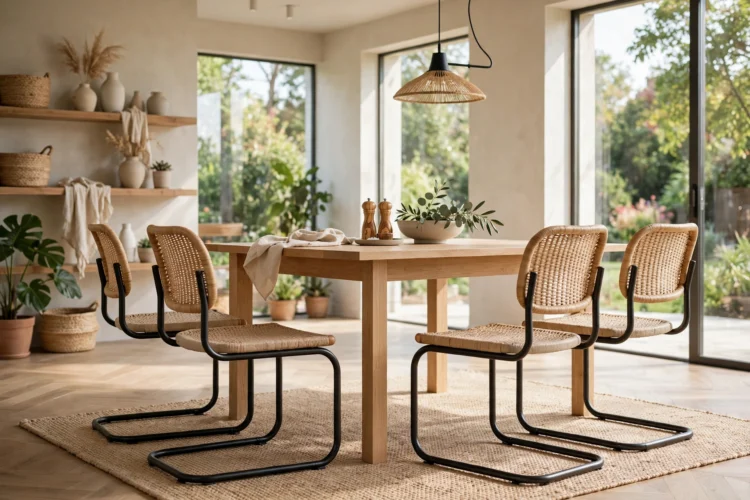
Cantilevered chairs look like they float, since the seat extends past the frame with no front legs to anchor it. That visual lightness suits a modern dining room, where heavy furniture can make the space feel crowded. Choose a cantilevered chair with a leather or molded plywood seat, which flexes slightly when you sit and feels more comfortable than it looks. The open frame also makes the room easier to clean, since there are fewer legs to work around. Pair cantilevered chairs with a solid table, since two floating shapes can make the room feel unstable. A rug under the table grounds the set and keeps the chairs from sliding on hard floors.
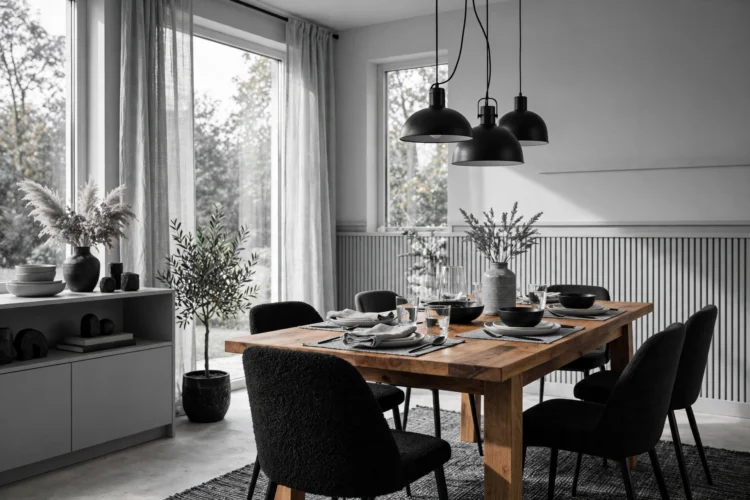
A monochrome dining room in soft white, warm grey, or pale stone looks calm and modern, but it needs one warm note to keep it from feeling sterile. A single wood element does the job: a walnut table, oak chairs, or a timber sideboard against a pale wall. Keep the wood tone consistent across the room, since two competing wood tones fight each other. The rest of the palette can stay quiet, with linen napkins, ceramic plates, and a simple centerpiece in the same family of tones. The monochrome base also lets a sculptural piece stand out, since there is no color competition. If the room feels flat, add texture instead of color: a woven rug, a plaster wall, or a linen table runner.
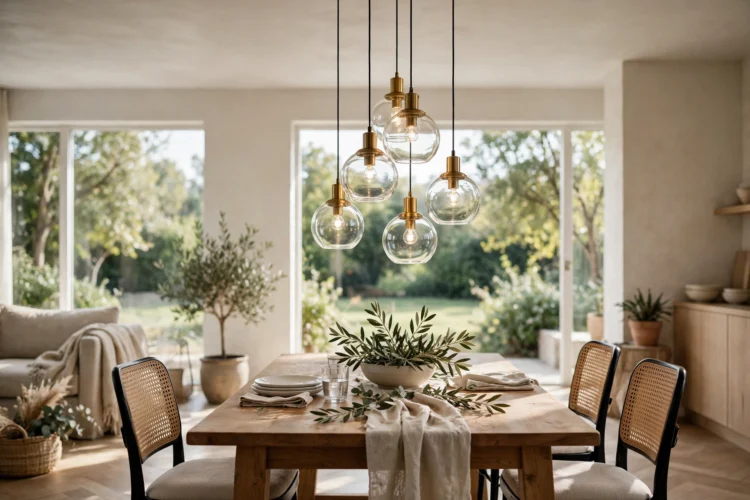
A cluster of pendants hung at different heights turns the ceiling into part of the design. Three to five small pendants, staggered by a few inches, create a rhythm over the table that a single fixture cannot match. Keep the shades in the same family, glass, ceramic, or spun metal, and vary only the height, so the cluster reads as one composition. The lowest pendant should still clear the sightline across the table, roughly 30 to 36 inches above the surface. A cluster works best over a rectangular table, where the line of pendants follows the length of the table. Put the cluster on a dimmer, since the layered light is at its best in the evening, when the room shifts from dining to lingering.
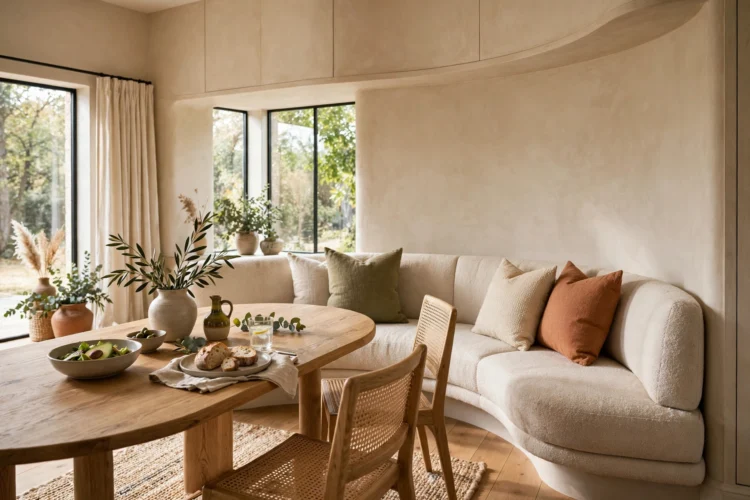
A curved banquette built into the wall turns a corner into the best seat in the house. The curve softens the room and saves space, since a banquette needs less floor than chairs pulled out from the table. Upholster it in a durable fabric, a performance linen or a wipeable leather, and add a cushion in a contrasting texture for comfort. Pair it with a round or oval table so the curve of the banquette and the curve of the table echo each other. The built-in feel makes the dining room look custom, even in a modest house, and it turns an awkward corner into a destination.
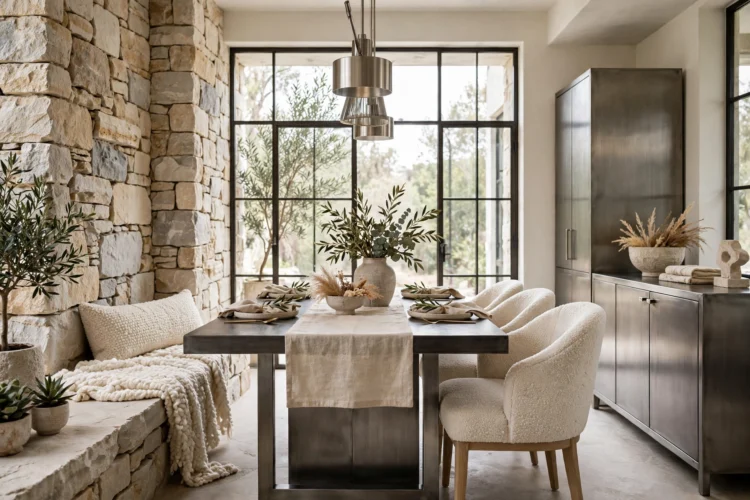
Mixing materials is the fastest way to make a modern dining room feel rich without adding color. A stone table top, steel chair frames, and boucle seat cushions give the room three textures that play against each other: cool and smooth, hard and dark, soft and nubby. The rule is to repeat each material at least twice, so no single texture appears only once. Stone can appear in the table and a serving platter. Steel can appear in the chair frames and a pendant. Boucle can appear in the chairs and a throw over the sideboard. Keep the palette warm, with the stone in a honey or travertine tone rather than a cold grey, so the mix reads inviting. These kitchen wall art ideas for blank walls and awkward gaps also work well in a dining room that needs one more layer.
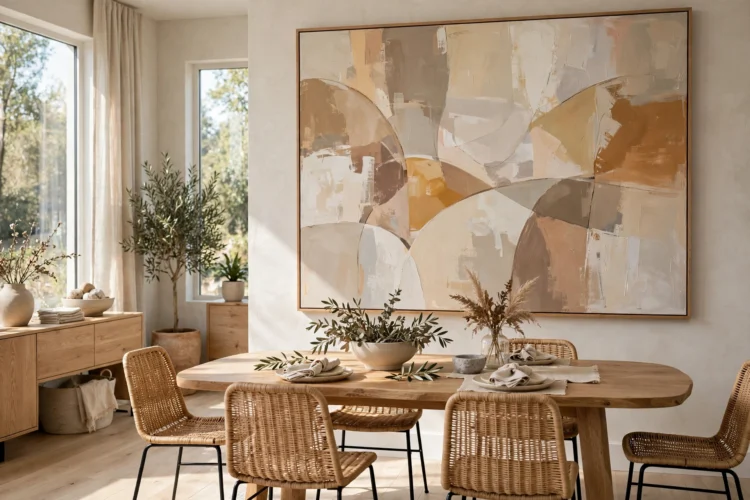
One oversized abstract painting does more for a modern dining room than a grid of small frames. Choose a piece at least half the width of the table, hung with its center at eye level from a seated position, which is lower than most people expect. The art should share at least one tone with the room, a warm wood, a soft grey, or a muted earth color, so it feels connected rather than random. A single large canvas also keeps the wall calm, which suits a room that already has a sculptural table and chairs. If the art is bold, keep the rest of the wall bare and let the painting carry the whole side of the room.
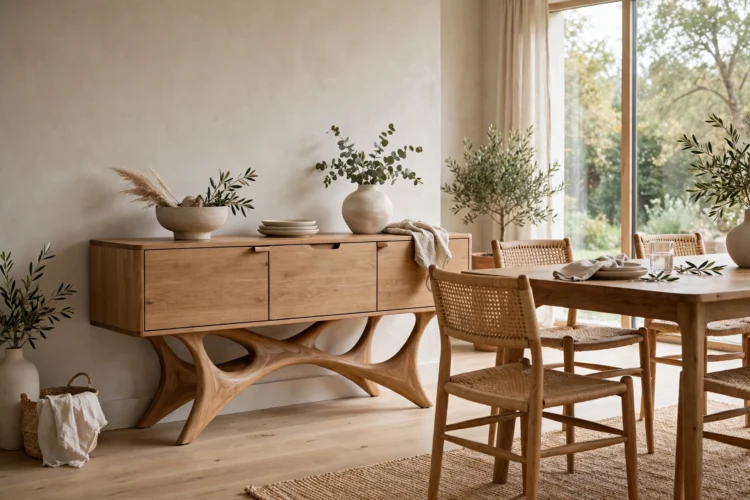
A low sideboard with sculptural legs does double duty: it stores the dining room and it acts as a second sculpture in the room. Look for legs that curve, taper, or splay, and keep the cabinet body simple so the legs stay the focus. The sideboard top is the place for a lamp, a vase, or a stack of serving dishes, and its surface should stay mostly clear so it reads as furniture, not a shelf. Choose a sideboard in a different material from the table, such as walnut against stone, so the two pieces contrast instead of matching. A sideboard also anchors the wall behind the table, which is often the emptiest wall in the room. If you collect dishes, these plate rack ideas that turn everyday dishes into decor can help you display the prettiest pieces nearby.
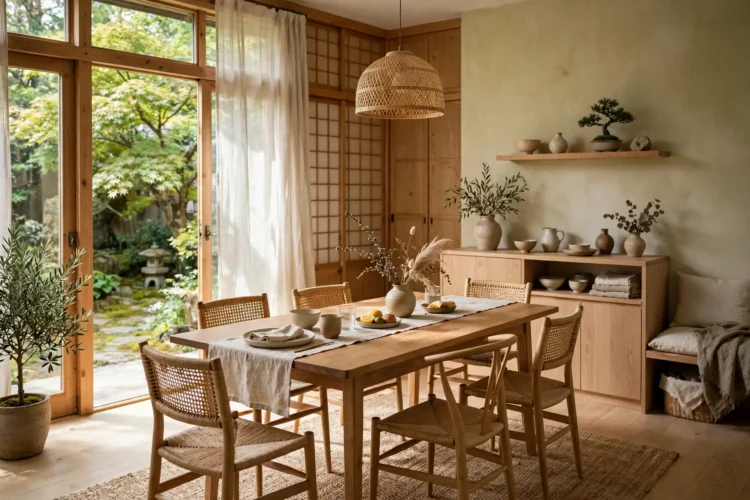
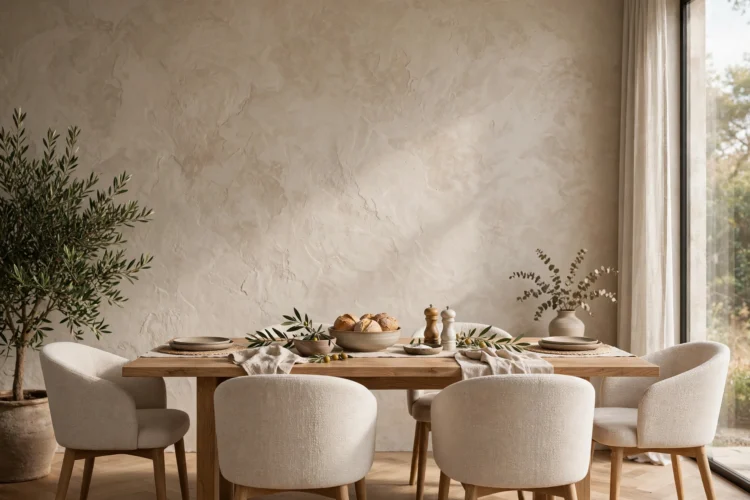
Textured plaster on the wall behind the table adds depth that paint cannot match. A lime wash or a hand-troweled plaster finish catches the light differently through the day, so the wall changes as the sun moves. Keep the texture subtle, a soft movement rather than a rough pattern, so it reads as a backdrop and not a feature competing with the furniture. The plaster wall works best in a warm white or pale stone tone, which keeps the room bright while adding the tactile layer a modern room often lacks. Pair it with a sculptural table and simple chairs, and the wall becomes the quiet third element in the room.
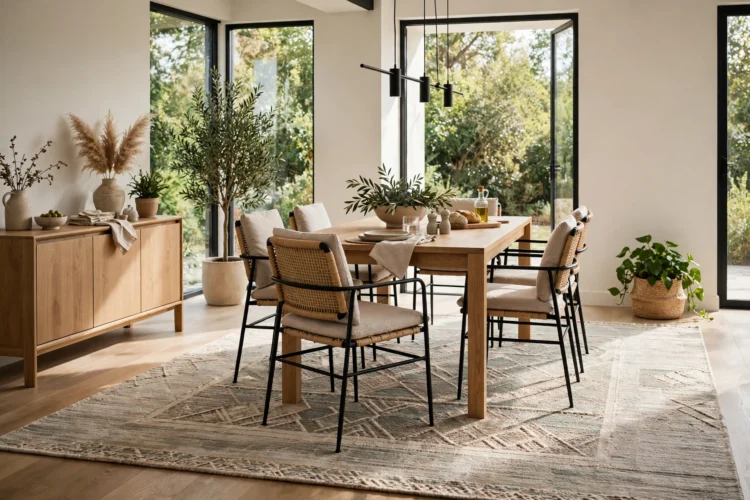
A rug under the dining table defines the zone and softens the whole room. Size it so the chairs stay on the rug even when pulled out, which usually means at least 24 inches of rug beyond the table on every side. Choose a low-pile, durable weave in a pattern that hides crumbs, since dining rooms are hard on rugs. A rug with a subtle geometric or organic pattern suits a modern room better than a busy traditional design. The rug also protects the floor from chair legs and deadens the sound of a busy dinner, which matters in an open plan where the dining area shares space with the kitchen. If the dining area opens onto the kitchen, these eat-in kitchen ideas show how to make a shared eating space feel intentional rather than leftover.