Physical Address
304 North Cardinal St.
Dorchester Center, MA 02124
Physical Address
304 North Cardinal St.
Dorchester Center, MA 02124

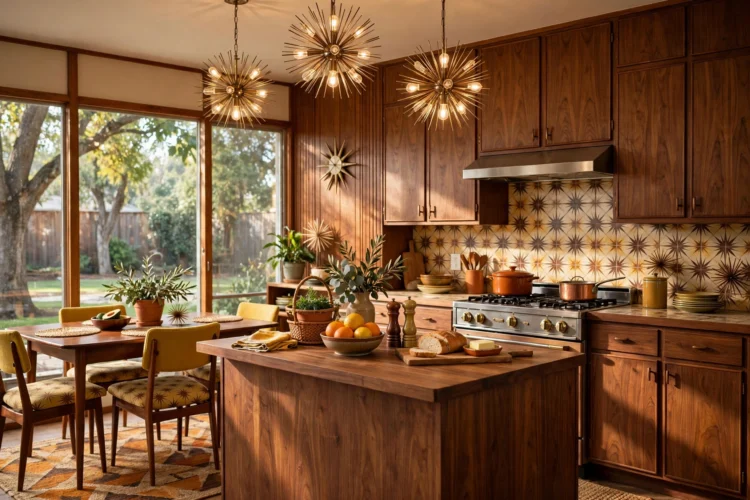
Walnut, starburst motifs, and period colors in small doses give a mid-century kitchen retro warmth without feeling like a museum set.
These mid century kitchen ideas use walnut, starburst and boomerang motifs, and period colors in doses that read stylish today rather than like a museum set. A mid century modern kitchen works when the retro pieces feel chosen, not collected by accident. One walnut feature, one period color, and one bold motif are usually enough.
Start with the cabinets or the island, since walnut sets the tone for the whole room. Then add color on stools or a backsplash, and keep the rest of the room quiet. Modern appliances and clean lighting keep the kitchen working for today, while the retro details carry the warmth.
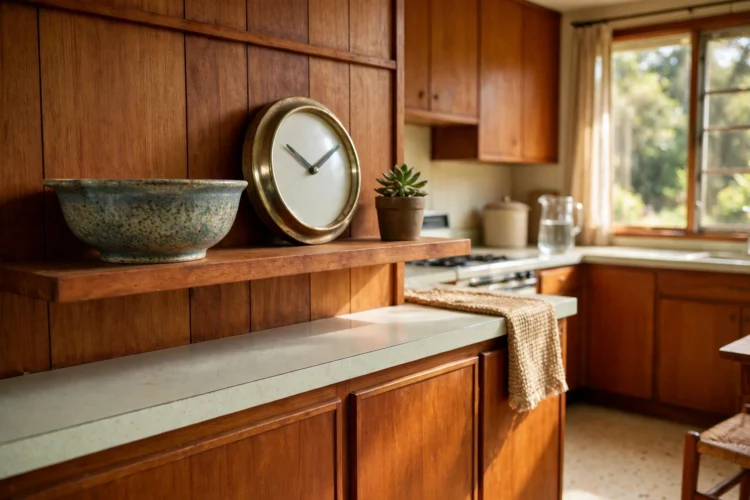
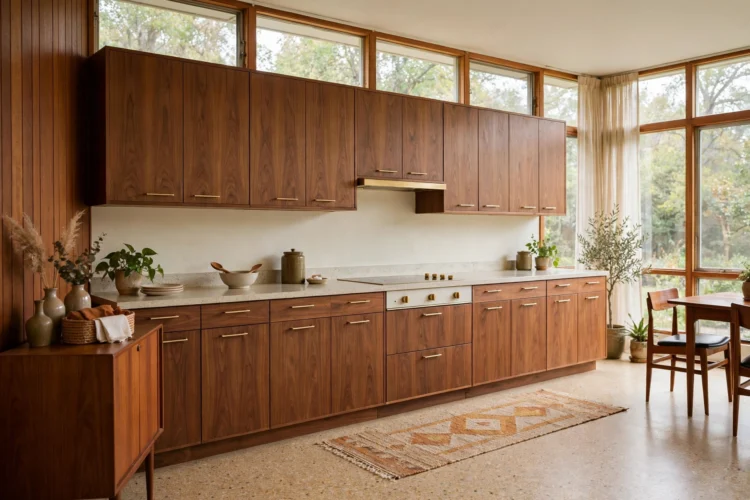
Walnut kitchen cabinets give a mid-century kitchen its warm, dark base. Flat-front walnut veneer with a matte finish shows the grain without gloss. If full walnut cabinets cost too much, use walnut on the island front and lower cabinets, with white uppers to keep the room light. Match the walnut across the island, shelves, and stools so the wood reads as one surface.
Keep walnut away from constant water. Seal the wood around the sink and wipe splashes quickly. A walnut cutting board and a walnut knife block bring the same tone to a white kitchen for far less than new cabinets. Oil finished walnut once a year so the grain stays rich and water marks never settle.
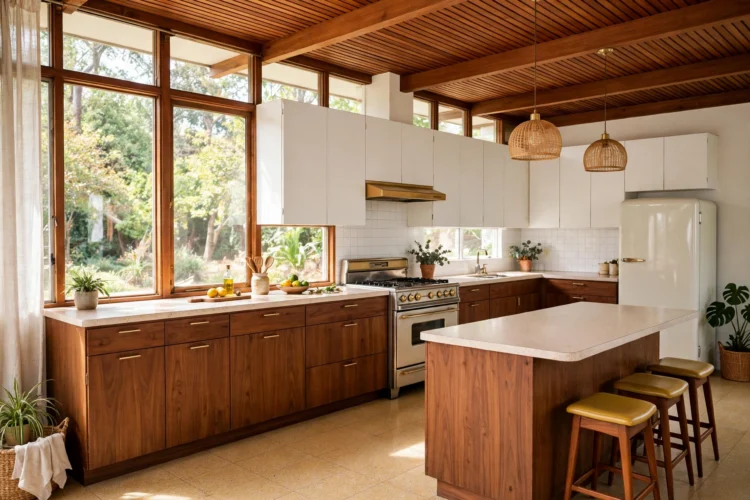
Starburst and boomerang motifs are the clearest mid-century signals, so use them once and let them shine. A starburst clock on one wall, a boomerang pattern on a backsplash tile, or a starburst light fixture over the table each work alone. Pick the motif in brass, walnut, or a period color, and keep the rest of the room plain.
Do not repeat the motif on the clock, the tiles, and the fabric all at once. One bold motif plus plain surfaces reads stylish. Two or three motifs in one small room read like a set. If you love the pattern, put it on a removable piece, such as a clock or a tea towel, so you can swap it later without a remodel.
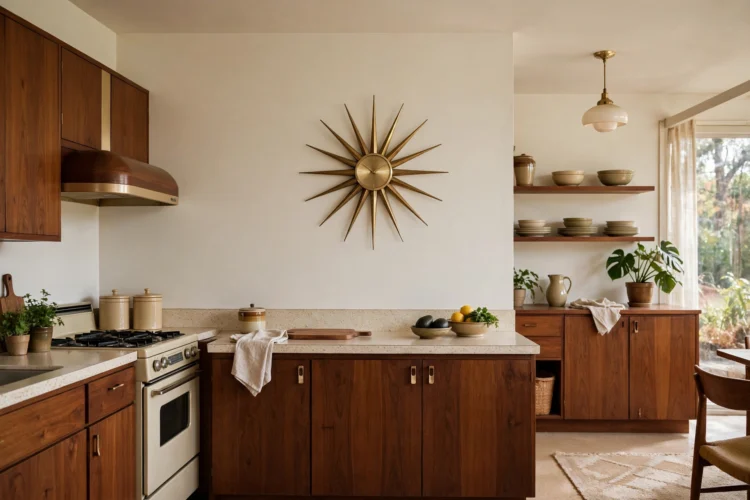
Period colors, mustard yellow, burnt orange, avocado green, and teal, work best in small doses. A mustard kettle, teal bar stools, or an orange runner each add one clear note of retro color. Keep the walls white or pale gray so the color sits against a quiet background and never fights the walnut.
Pick one period color and use it in two places, such as the stools and a small appliance. A second period color works only as a tiny accent, such as a single orange bowl on a shelf. For help keeping bold colors balanced, see these color palette ideas for calm cohesive homes. When the color stays in small doses, the room feels retro and calm at once.
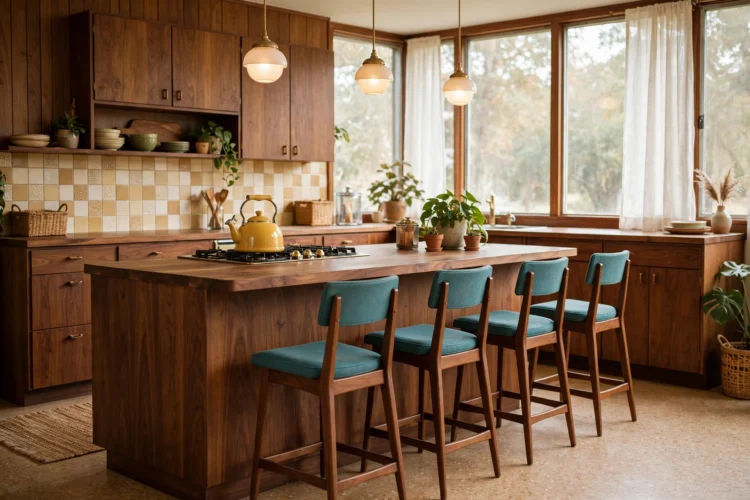
Flat-front cabinets with slim brass bar handles suit the period and stay practical. Brass warms the walnut without adding pattern. Keep the handles the same length across all doors and drawers so the run reads as one clean line. Inside, use full-extension drawers for pots so the back of each drawer stays easy to reach.
Clean brass with a soft cloth and warm soapy water, and let it age naturally if you like a softer tone. If you prefer a bright finish, polish the handles every few months. Keep the rest of the metals in the room quiet: one brass tap and one set of brass handles is enough, with stainless steel kept to the appliances only.
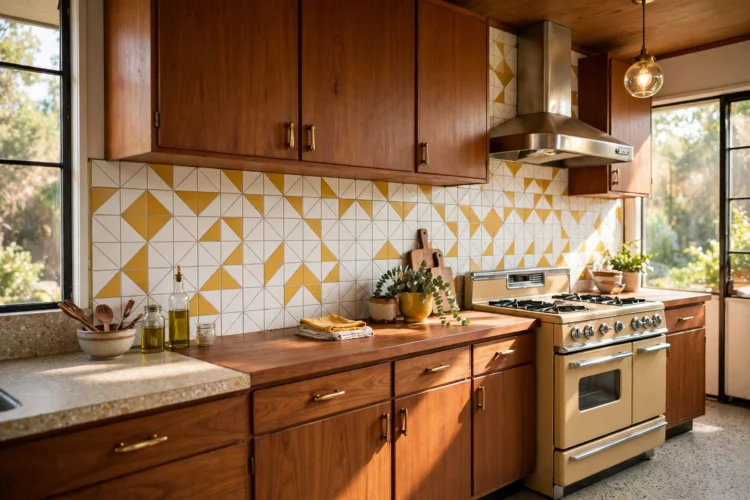
A geometric tile backsplash gives a retro kitchen design its pattern without covering the room in it. Small diamond, triangle, or hexagon tiles in white with one mustard or teal accent row suit the period. Keep the tile to the cooking zone, from the counter to the underside of the cabinets, so the pattern stays in one band.
Choose a glazed tile that wipes clean after cooking. Pale grout keeps the pattern soft; dark grout makes each tile stand out and can feel busy in a small kitchen. If you rent, peel-and-stick geometric tiles on the backsplash give a similar look and come off without damage when you move.
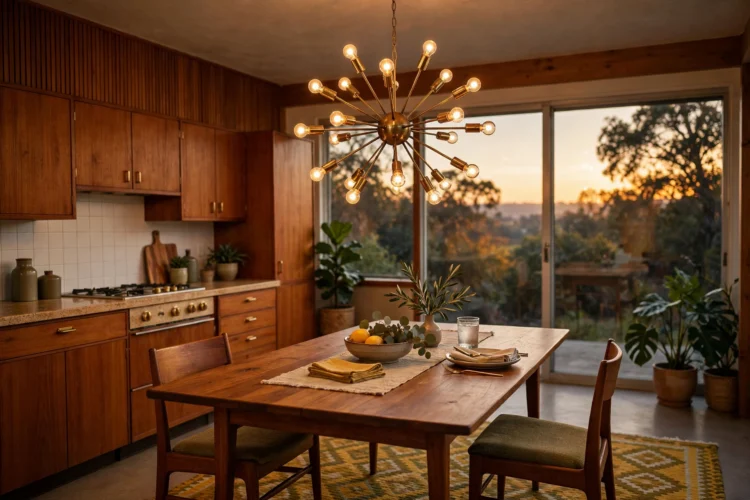
A starburst or sputnik light over the dining table is the classic mid-century centerpiece. Hang it low enough to light the table, about 75 to 90 centimeters above the tabletop, and fit warm bulbs at 2700 Kelvin so the light feels soft in the evening. Pair it with simple molded chairs in white or walnut for a clean, period-correct table.
Keep the table setting simple: a plain runner, two placemats, and a small vase with one stem. The light fixture carries the drama, so the table can stay quiet. For more evening lighting ideas that suit a retro room, see these wall sconce ideas for ambient evening light. Dim the light at dinner so the room feels warm, not bright.
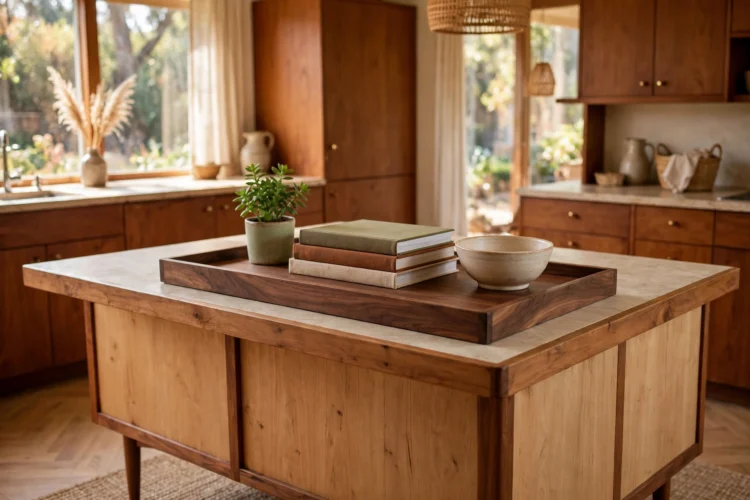
A kitchen island needs one simple display, not a crowded one. A walnut tray holding a small plant, a stack of two cookbooks, and a ceramic bowl gives the island a finished look without blocking prep space. Keep the display to one end of the island so the rest stays clear for chopping and serving.
Clear the display when you cook a big meal, then put it back after. That habit keeps the island useful and the display looking intentional. The same simple grouping works on a coffee table, as these coffee table styling formulas that always work show: one tray, one green thing, and one stack of books.
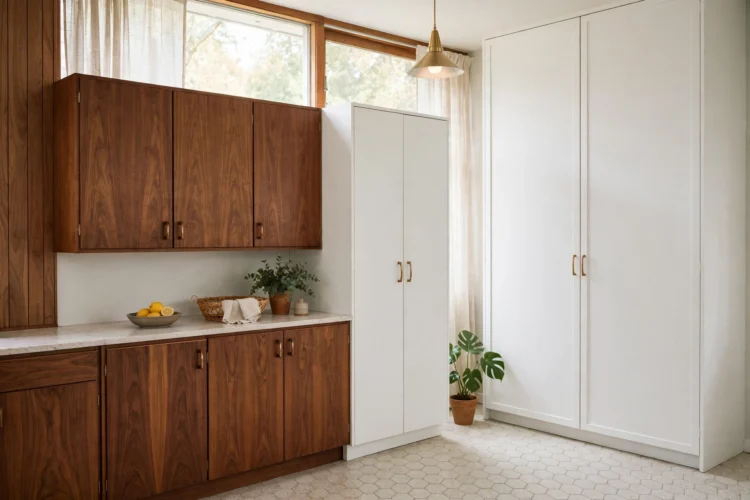
Retro warmth needs calm storage to balance it. Tall white cabinets on one wall hide the pantry, cleaning supplies, and small appliances. Keep the walnut and the period colors on show, and hide the rest. Use drawer dividers for cutlery and a pull-out bin under the sink so the counters stay clear.
One open shelf, holding everyday plates and two or three glasses, is enough. Everything else stays behind doors. This is the same less-but-warmer logic behind these minimalist decor ideas that still feel warm: fewer items on show, each one used and chosen. A clear counter lets the walnut and the tile carry the room.
Finish the room with a vintage kitchen style built on one or two vintage finds that you actually use. A 1960s ceramic serving bowl, a set of teak salad servers, or a retro wall clock that keeps good time all earn their place. Buy vintage pieces in person when you can, so you can check for chips, cracks, and a working mechanism before you pay.
Keep vintage finds to the pieces you love most. A single vintage bowl on the island plus a vintage clock on the wall is enough. The rest of the room stays new and functional, so the vintage pieces read as chosen highlights instead of a collection that took over. That mix of old and new is what keeps a retro kitchen feeling like a home, not a museum.