Physical Address
304 North Cardinal St.
Dorchester Center, MA 02124
Physical Address
304 North Cardinal St.
Dorchester Center, MA 02124

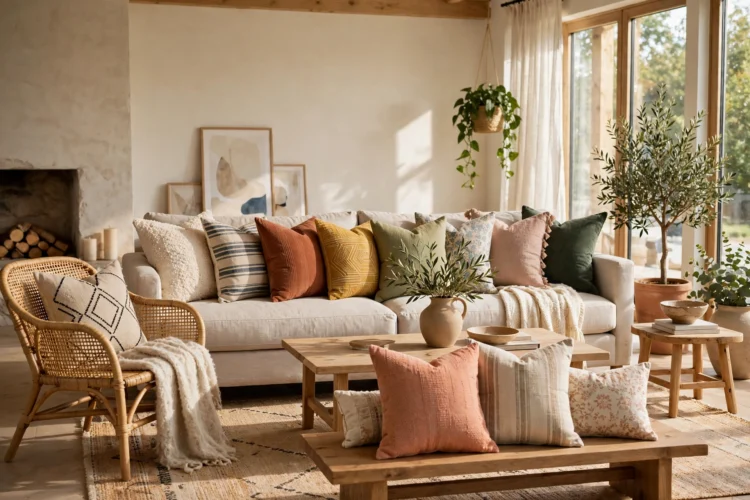
Throw pillows are the cheapest way to change a room, and the easiest to get wrong. These eleven combinations use simple formulas for pattern, scale, and texture, so the sofa looks collected instead of matched.
Throw pillow combinations are the fastest way to change how a room feels, and the easiest place to get it wrong. Buy a matching set and the sofa looks like a showroom. Buy at random and it looks like a clearance bin. The fix is a formula, not a shopping trip: a mix of pattern, solid, and texture in a color story the room already owns. The eleven combinations below work on a standard three-seat sofa, a sectional, and a reading chair, and each one starts with pillows you may already own. Work through one formula at a time, step back, and keep the combination that makes the sofa look like it was styled by someone who lives there.
The 3-2-1 throw pillow formula is the starting point for almost every good sofa: three pillows on one side, two on the other, and one lumbar in the middle, or some variation that adds up to an odd total. Odd numbers look relaxed because the eye cannot split them into matching pairs, and the asymmetry gives the sofa a lived-in feel. Start with the largest pillows at the corners, a 50 centimeter square on each end, then step down in size as you move toward the center. The lumbar in the middle, about 35 by 60 centimeters, ties the two sides together and gives the arrangement a spine.
This formula works because it builds in the variety the eye wants: different sizes, different fills, and room for at least one pattern. If your sofa is a loveseat, drop to a 2-1-1 version with two on one side, one on the other, and the lumbar in the middle. If it is a deep sectional, add one more pair at the corner where the two sections meet, since that corner swallows pillows. These pillow combinations for sofa sizes from loveseat to sectional all follow the same rule: odd totals, varied sizes, and one pattern at most.
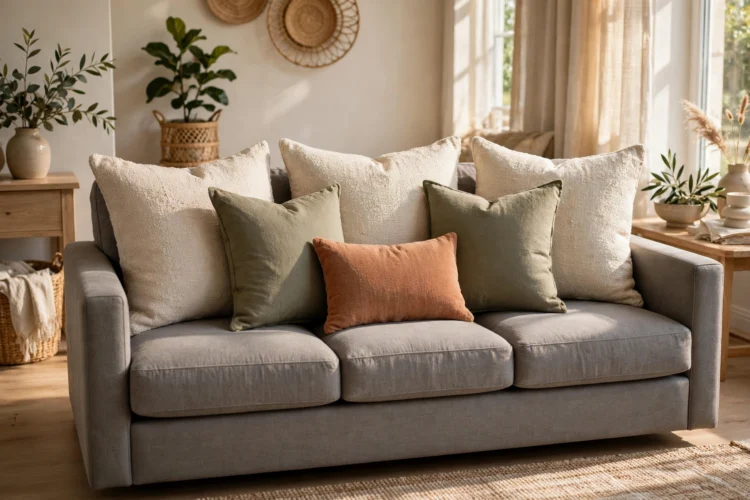
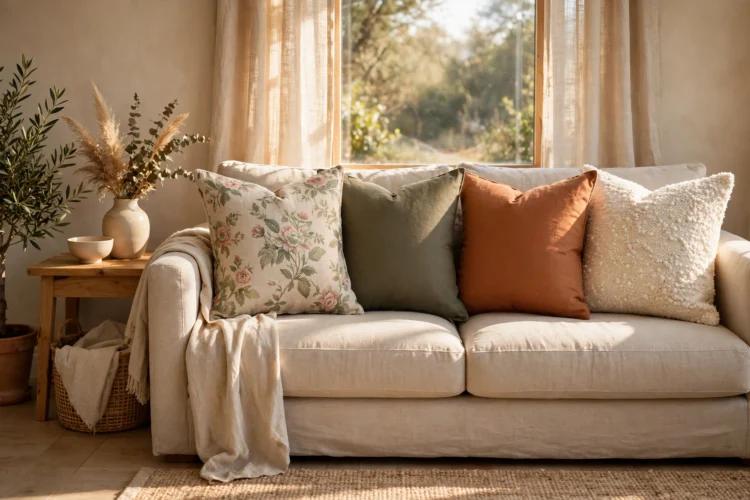
The safest combination for a first attempt is one pattern, two solids, and one texture. The pattern pillow carries the personality, the solids calm it down, and the textured pillow adds the depth that flat fabric cannot. A floral or geometric print in front, two solid pillows in colors pulled from that print, and a nubby boucle or woven pillow on the end gives you a complete look with four pillows and no guesswork. The key is that the solids come from the pattern, not from a separate color idea, so the whole group shares a color story.
Place the pattern pillow where the eye lands first, usually the left corner of the sofa, and let the solids sit beside it. The textured pillow works best at the far end, where it catches the light and reads as a different surface. For the rug underneath, our guide to living room rug ideas to define your seating area shows how to pick a rug that grounds the pillows instead of competing with them.
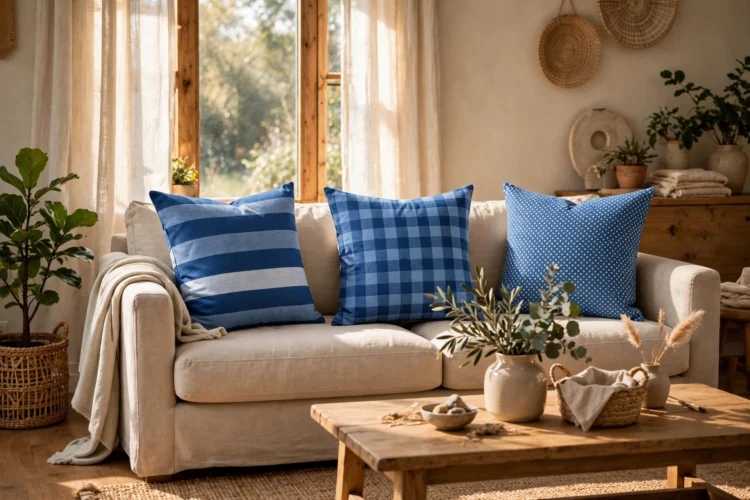
When the pattern feels risky, build the combination from one color family and let scale do the work. A large-scale stripe, a medium-scale check, and a small-scale dot in the same blue, for example, read as a set because the color unifies them while the patterns stay distinct. The rule is simple: patterns in the same color family can mix freely as long as their scales differ. If two patterns are the same size, they fight. If one is large, one medium, and one small, they cooperate.
This approach suits rooms that already have a strong color identity, like a blue-grey living room or a warm terracotta bedroom. Pull the color from something permanent, the rug or the curtains, and the pillows will look like they were chosen with the room rather than for it. Mixing pillow patterns is easier than it looks when the color stays constant and the scales differ. The result reads calm from across the room and interesting from the sofa itself.
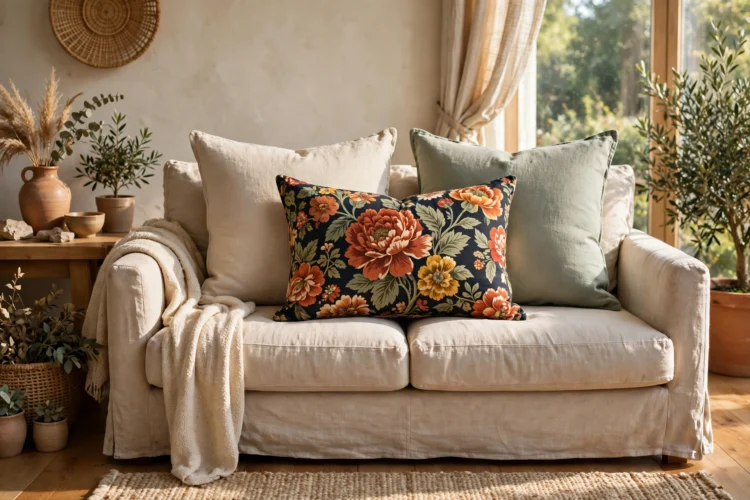
A bold print earns its place at the front of the arrangement, where it can be seen and touched, while quiet solids sit behind it and do the structural work. Place the loud pillow, a big floral, a strong geometric, or an animal print, in the center front, leaning against a solid that is one shade darker than the sofa. The solid behind it acts as a frame, and the contrast makes the print look deliberate instead of loud. The pillows behind should be larger than the print in front, so they peek out at the edges and give the arrangement depth.
This combination works best when the bold print repeats a color that already exists in the room, even in a small dose. A rust print on a grey sofa works if the rug or the throw has a rust thread in it, and it fails if rust appears nowhere else. Limit yourself to one bold print per sofa, and let the second bold idea live in another part of the room, like the art or a chair.
Texture is the ingredient most pillow combinations miss, and leather plus linen is the pairing that proves it. A leather pillow adds weight, shine, and a surface that ages well, while linen adds softness and a matte finish that keeps the leather from looking cold. The two materials sit next to each other naturally because one is smooth and one is textured, and the contrast reads as intentional even in a neutral color palette. A cognac leather lumbar with two natural linen squares turns a plain grey sofa into a room with a point of view.
Mixing textures also lets you keep the color palette simple. When the materials differ, the colors can stay close, which is why a cream linen, a tan leather, and a soft wool pillow work together without a single pattern. The rule is to include at least two textures in every combination, and three is better. Velvet, boucle, and woven cotton all pair with leather, and each one changes the mood: velvet makes it formal, boucle makes it relaxed, and cotton keeps it everyday.
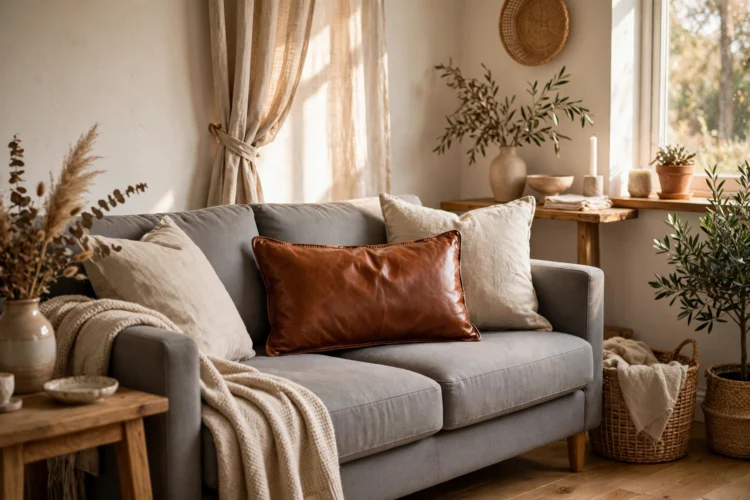
Odd numbers flatter a sofa because they break symmetry, and the rule holds for chairs and benches too. Three pillows on a reading chair, with two at the back and one in front, look styled, while four look like a display. The odd-number rule is less about math and more about avoiding the matched-pair look that makes a sofa feel like a furniture store.
The seventh combination is the single statement pillow, which is the exception that proves the rule. One oversized pillow in a print you love, placed alone on a small loveseat or a bench, can carry the whole seat when the rest of the room is quiet. It works because the pillow becomes the art on the sofa, and a single strong choice reads as confidence. Keep the rest of the sofa empty, or add one small solid for support, and let the statement pillow do the talking. Our ideas for sectional sofa ideas for every living room shape show where a single statement pillow lands best on larger seating, where the corner seat often needs one strong piece to anchor it.
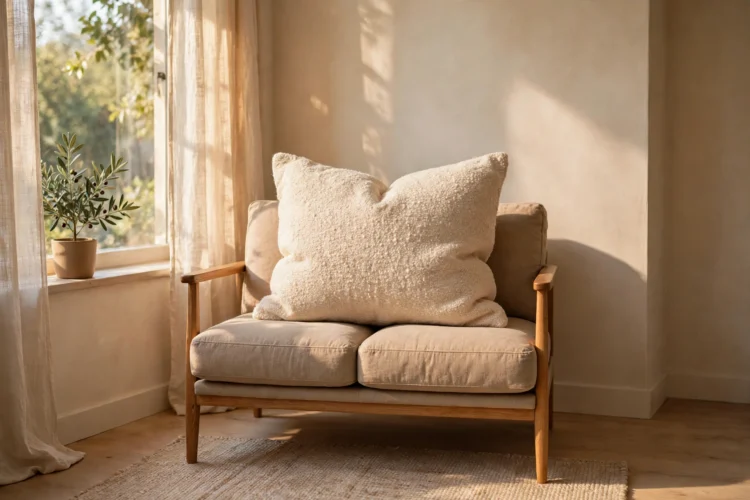
The eighth combination is a seasonal swap, and it starts with covers, not new pillows. Keep four good inserts in standard sizes, and change the covers twice a year: linen and cotton in light colors for spring and summer, velvet and wool in deeper tones for autumn and winter. A cover costs a fraction of a full pillow, stores flat in a drawer, and changes the whole sofa in ten minutes. The combination stays the same, one pattern, two solids, one texture, but the colors shift with the season.
The ninth combination is the one-cover refresh, which is the cheapest update in this list. Swap a single pillow cover for a new color or pattern, and the whole sofa reads differently because the eye notices the change, not the pillows that stayed. Pick the pillow that sits in the center front, since that is the one everyone sees first, and choose a cover that pulls a color from something else in the room, like a new plant or a piece of art.
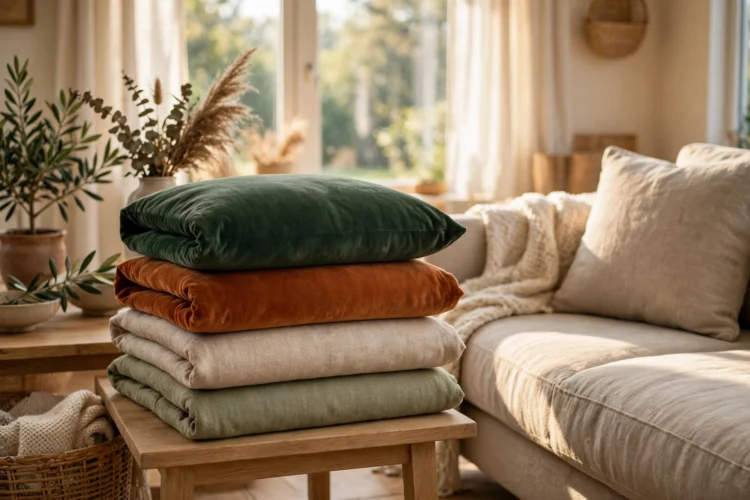
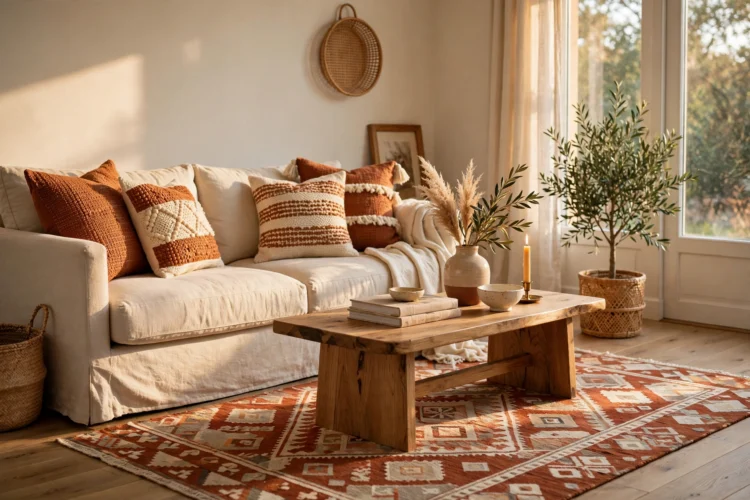
The tenth combination borrows a color from the rug without copying the rug, which is the difference between coordinated and matched. If the rug is a Persian pattern in rust, cream, and navy, pick one of those colors for a solid pillow, and let a second pillow carry a small pattern in the same rust. The sofa and the rug share a color story, but neither one repeats the other, so the room feels layered instead of decorated in a set. The best pillow color combinations borrow one color and let the rest stay quiet. The mistake to avoid is a pillow that copies the rug pattern at the same scale, which makes the two pieces compete.
The eleventh combination borrows a color from the art instead, which works the same way and suits rooms where the rug is plain. Look at the largest piece of art in the room, find its smallest color, and put that color on a pillow. A small touch of ochre in a painting becomes an ochre lumbar on the sofa, and suddenly the art and the seating belong to the same room. For evenings when the sofa is the center of the room, our roundup of cozy living room ideas for relaxed evenings shows how pillows, throws, and lighting work together after dark, and our guide to neutral living room ideas with warm texture covers the same color-borrowing trick for rooms that stay in a quiet palette.
Start with the pillows you already own, sort them into pattern, solid, and texture, and build one formula from what is there. Buy only the one piece the formula is missing, and the sofa will look collected by the weekend.