Physical Address
304 North Cardinal St.
Dorchester Center, MA 02124
Physical Address
304 North Cardinal St.
Dorchester Center, MA 02124

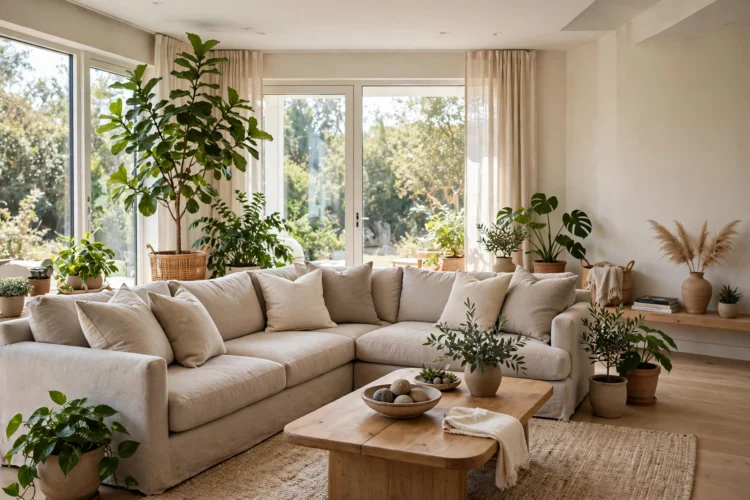
A sectional is the biggest purchase in most living rooms. Match its shape to your room's geometry first, and the rest of the layout gets easy.
Sectional sofa ideas living room buyers actually need start with the room, not the sofa. A sectional is usually the largest and most expensive piece in the room, and it is also the hardest to return, so getting the shape right the first time saves money and frustration. The good news is that room geometry narrows the choice fast: square rooms, long rooms, and open-plan spaces each suit a different sectional shape.
Before you shop, sketch the room to scale on graph paper or a free floor plan app. Mark doors, windows, radiators, and outlets, then draw the walkways you need to keep clear. A sectional that looks perfect in a showroom can block a door swing or trap you against a wall at home, and a sketch catches those problems before delivery day.
Measure three things: the wall the sectional will sit against, the depth from that wall into the room, and the width of every doorway and hallway the sofa must pass through on delivery day. Sectionals ship in pieces, but a long chaise section can still fail to turn a tight hallway corner, so check the delivery path as carefully as the room itself.
Leave at least 30 inches of walkway around the open sides of the sectional. That gap is what keeps the room feeling open instead of stuffed, and it is the number most buyers skip. Tape the footprint on the floor and live with it for a day or two. If you keep stepping around the tape, the sectional is too big for the space, no matter how good it looked online.
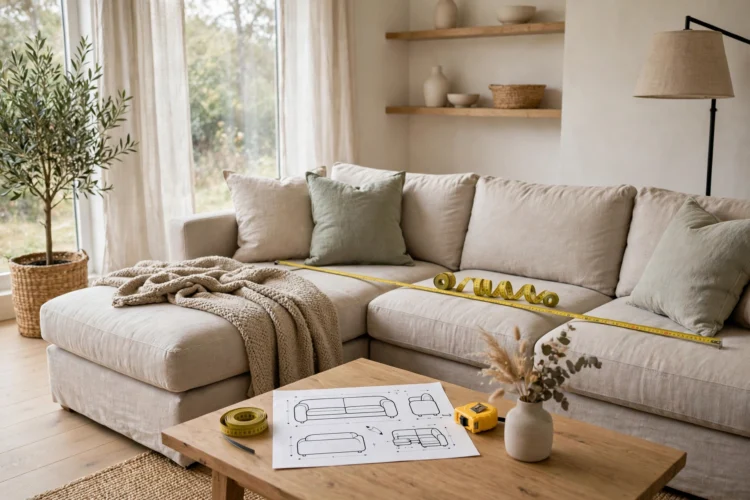
An L-shaped sectional is the default choice for a reason: it tucks into a corner and turns dead space into seating. The short side of the L can face a window, a fireplace, or a TV wall, while the long side anchors the room. Corner placement also leaves the rest of the floor open, which matters in rooms that double as play areas or home offices.
Choose the orientation carefully. A left-facing chaise and a right-facing chaise are not interchangeable, and swapping them after delivery is rarely simple. Stand facing the sofa’s main wall to determine the side, and double-check the product listing’s diagram before ordering. A rug under the front legs of both sections ties the L together, and the same sizing rules in these bedroom rug placement ideas apply here: the rug should reach under every seat in the group.
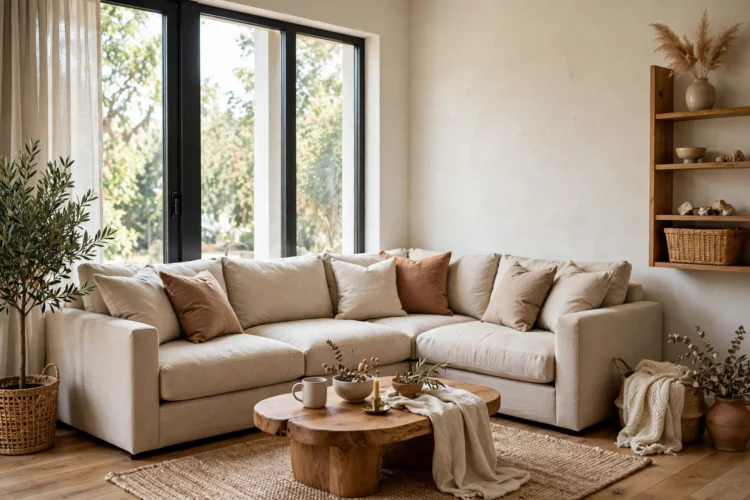
A chaise sectional suits long, narrow living rooms better than a full L-shape because it adds lounging space without adding a second full row of seats. The chaise runs along one wall and gives one person a place to stretch out, while the main sofa body keeps the walkway on the other side clear. The result feels like a sofa with a bonus, not a room swallowed by furniture.
Place the chaise on the side away from the main traffic path so people walking through do not trip over extended legs. If the room has a window at the far end, run the chaise toward it so the lounger gets the view and the light. A slim side table at the chaise end holds a book and a drink without blocking the walkway, which keeps the narrow room functional.
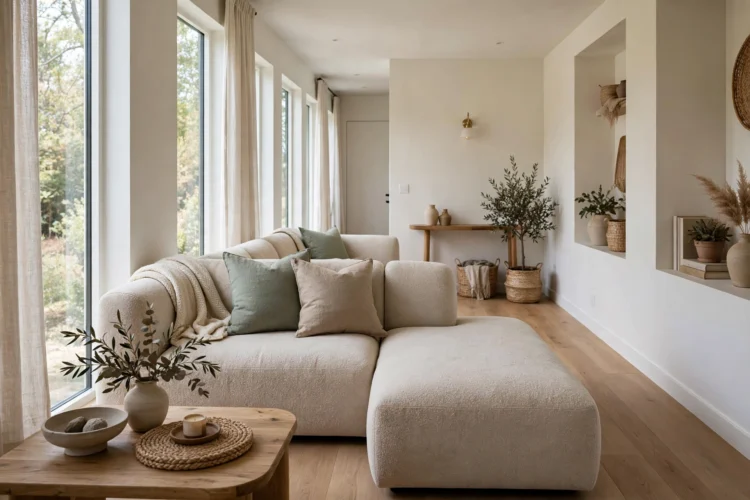
A modular sectional sofa is a set of individual seats, corners, and ottomans that connect and disconnect. That flexibility suits renters, growing families, and anyone whose living room changes purpose through the year. Rearrange the pieces into a straight sofa for a party, split them into two loveseats when guests stay over, or add a section later when the budget allows.
Modular pieces cost more per seat than a fixed sectional, but the long-term value shows up when you move house. Instead of selling a sofa that does not fit the new room, you reconfigure the modules you already own. Check that the connectors feel solid and that individual pieces have finished sides, since a module that looks unfinished from the back limits how you can arrange it.
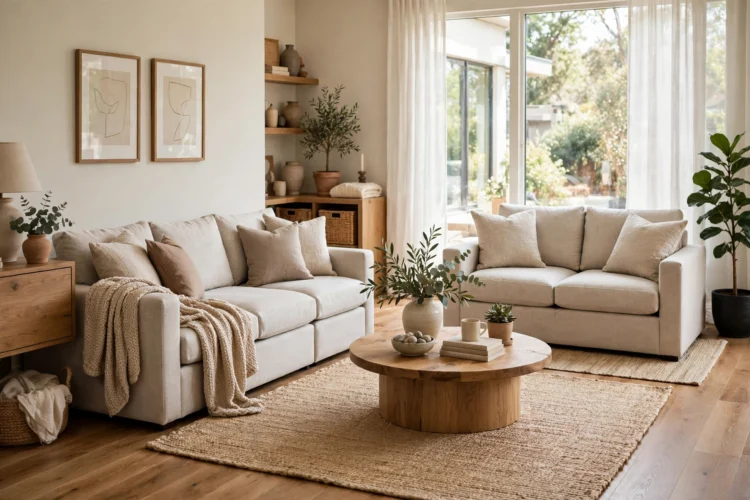
Big square rooms can swallow a standard sofa and still feel empty, which is where a U-shape sectional earns its keep. With seating on three sides, it creates a conversation pit in the middle of the room and gives everyone a face-to-face seat. It works best in rooms where the TV or fireplace sits on the open fourth side, so the whole group faces one focal point.
A U-shape needs generous floor space, so measure honestly. If the room is under about 14 feet in either direction, a U-shape usually crowds the walkways and leaves no room for side tables. In that case a large L-shape plus an accent chair gives a similar conversation feel with a smaller footprint. Keep the coffee table inside the U within easy reach of every seat, and choose a round or oval table so nobody catches a sharp corner.
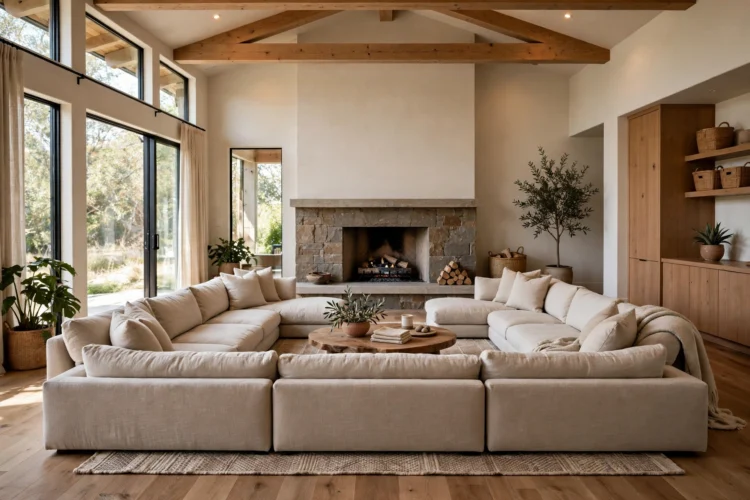
A sectional for small living room spaces looks different from a full-size one: shallower seat depth, lower arms, shorter overall length, and often a reversible chaise that adapts to either wall. Apartment-scale sectionals usually run under 90 inches long, which fits the standard wall in many rentals while still seating four people.
Low arms matter more than they seem. A low arm keeps sightlines open across a studio apartment and lets the sofa double as a room divider without building a visual wall. Pair a compact sectional with a leggy coffee table and a rug that extends past the sofa on both sides, and the seating area will read as generous rather than cramped. For more on keeping a tight space open, these master bedroom sitting area ideas use the same visible-legs trick in small corners.
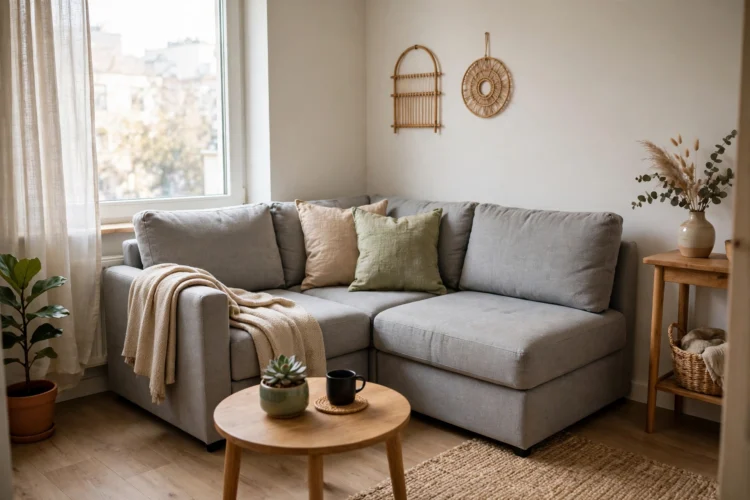
Fabric choice decides whether you love the sectional in year three or cover it with a throw. Homes with kids or pets do best with tight-weave performance fabrics or leather, which wipe clean and resist snagging. A light linen looks beautiful in a showroom but shows every mark in a house where the sofa is the main gathering spot, so match the fabric to real life rather than the photo.
Order swatches and live with them for a week before committing. Put a swatch where sunlight hits it, spill a little water on it, and sit a pet on it if you have one. Colors shift dramatically under home lighting, and a swatch test costs nothing compared with reupholstering a sectional. If you fall for a pale color, choose a removable, washable cover so the sofa stays practical.
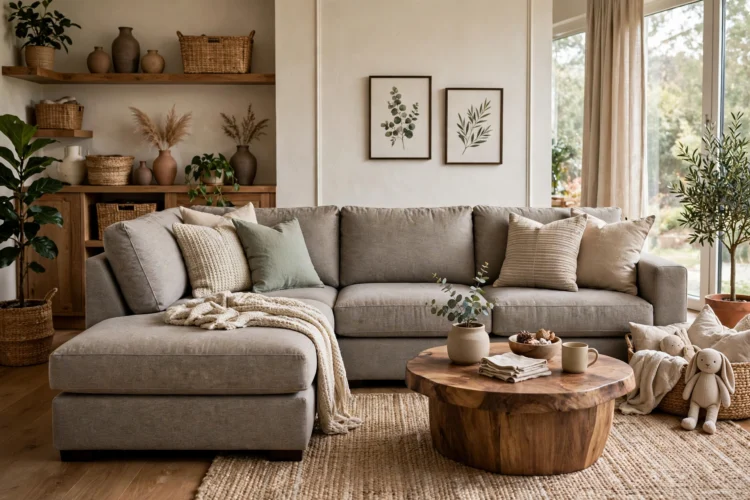
Once the sectional is placed, everything else follows it. The coffee table sits about 18 inches from the seat edge, close enough to reach but far enough to stand up without shuffling sideways. Side tables go at the ends where arms meet the wall, and a floor lamp behind one corner gives evening reading light without a table lamp crowding the surface.
Wall decor should follow the sectional’s lines too. Art hung above the long side of the sofa should span roughly two-thirds of that length, and a gallery wall works better on the adjacent wall than squeezed above a chaise. Curtains that frame the nearest window soften the big block of upholstery, and the length and fullness tips in these bedroom curtain ideas transfer directly to living room windows. Get the sectional shape right first, and the rest of the room arranges itself around it.