Physical Address
304 North Cardinal St.
Dorchester Center, MA 02124
Physical Address
304 North Cardinal St.
Dorchester Center, MA 02124

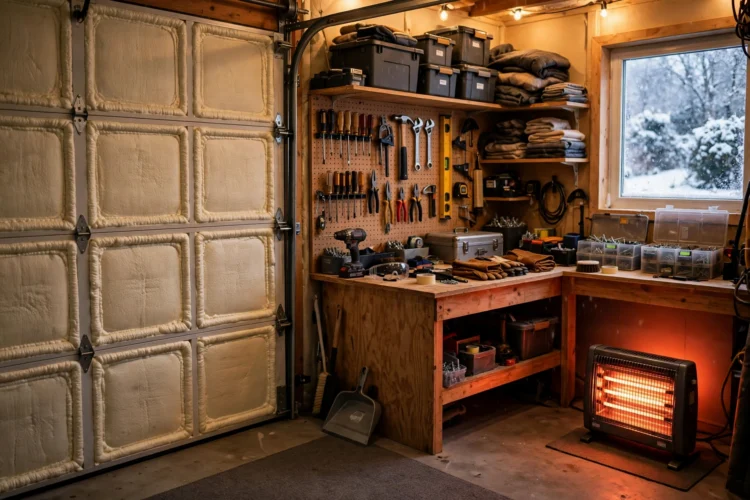
A garage that freezes in winter and bakes in summer barely gets used. These seven insulation ideas steady the temperature so the space works all year.
A garage that freezes in January and bakes in July is a garage you barely use. These insulated garage ideas fix that, one layer at a time, so the space stays workable through winter cold and summer heat. The goal is not a sealed, heated room. It is a garage that holds a steady temperature with modest effort and cost.
Start with the biggest leaks first. The garage door and the wall shared with the house lose more heat than everything else combined. Fix those, then move to the ceiling and the floor. Each layer you add makes the next one work better.
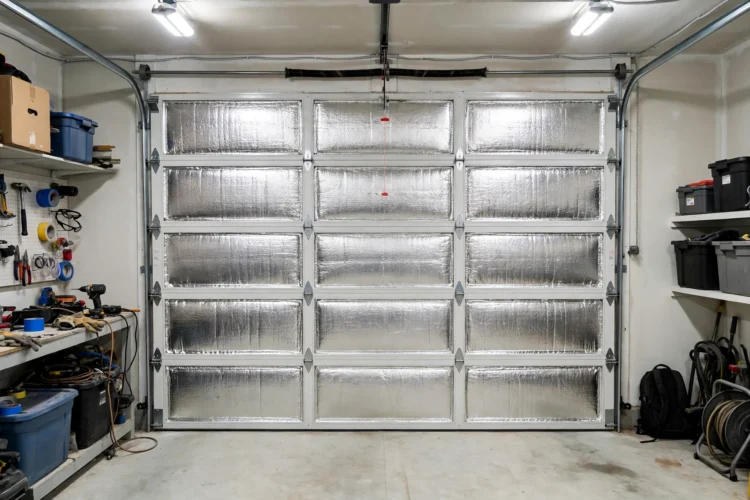
The garage door is a giant sheet of thin metal, and it is usually the worst insulator in the room. A garage door insulation kit fixes that in an afternoon. The kit includes pre-cut panels of foam or reflective bubble insulation that press into the door sections, plus tape to seal the edges.
Measure each door panel before you buy. Most kits fit standard sectional doors, but older doors and carriage-style doors need panels cut to size. A sharp utility knife and a straight edge give clean cuts, and foil tape seals the seams so warm air cannot slip through the gaps.
Replace the weather seal around the door frame at the same time. A new bottom seal and side seals close the drafts that sneak in around the edges, and they keep dust and leaves out too. This one job often makes the biggest single difference in how the garage feels on a cold morning.
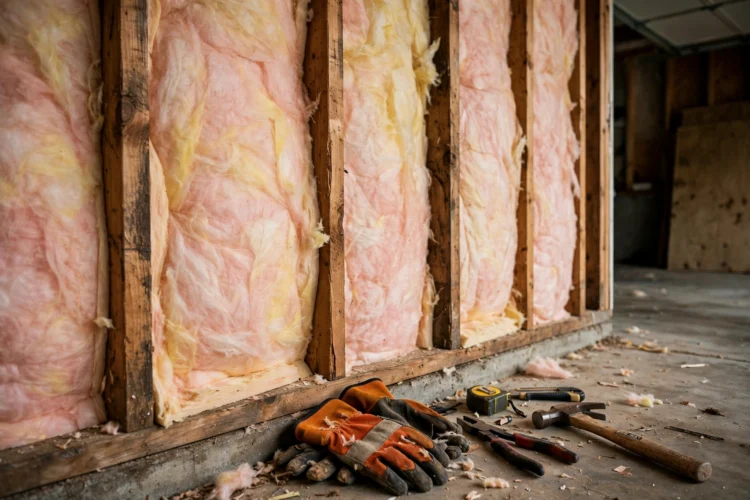
Most garages have bare studs with nothing between them, which means the walls offer almost no resistance to heat. Wall insulation batts fill that gap. Fiberglass batts sized for standard stud bays press in by hand, and a vapor barrier on the warm side keeps moisture out of the wall.
Work one bay at a time and cut batts with a serrated bread knife for a snug fit. Gaps and compressed spots leak heat, so take the time to fit each piece properly. Wear gloves, a mask, and long sleeves, since fiberglass itches and the dust irritates lungs.
Cover the finished walls with plywood or drywall to protect the batts and give you a surface to hang tools on. Bare insulation snags on everything and sheds fibers into the air. A covered wall also looks finished, which matters if the garage doubles as a workspace. Good wall storage helps too, and these garage storage wall ideas beyond pegboard make the most of newly covered walls.
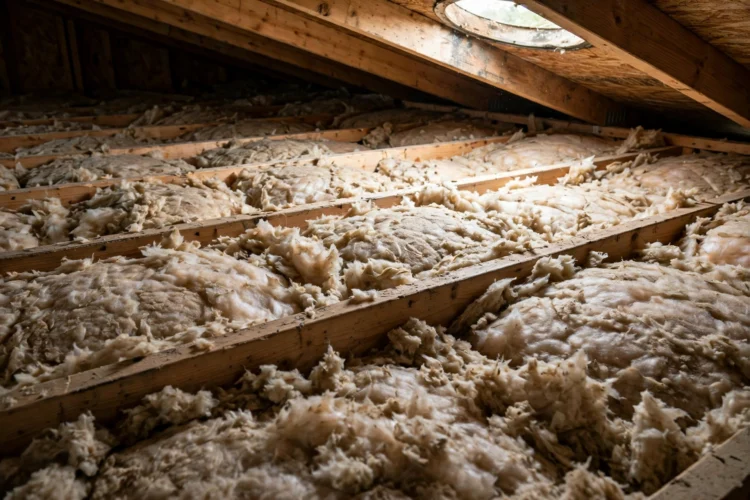
Heat rises, and in a garage it rises straight through an uninsulated ceiling into the attic. Blown-in cellulose or fiberglass over the ceiling joists slows that loss dramatically. A depth of about a foot gives solid coverage in most climates, and the job takes a morning with a rented blower.
Seal air gaps before you add insulation. Light fixtures, wire holes, and the gap around the attic hatch leak warm air around any insulation you lay down. A bead of caulk and a foam gasket on the hatch close the worst of them.
Keep the vents clear. Soffit and ridge vents need airflow to carry moisture out of the attic, so use baffles to hold insulation back from the eaves. Trapped moisture rots roof decking, which costs far more to fix than the insulation ever saved.
A mini split garage heating setup gives you heat in winter and cooling in summer from one wall-mounted unit. The indoor head mounts high on the wall, the outdoor compressor sits outside, and a small line set connects them through a three-inch hole. No ductwork, no furnace, and no gas line.
Size the unit to the garage, not to the house. A single-car garage usually needs a small unit, while a two-car garage with high ceilings needs a larger one. An undersized unit runs constantly and never quite catches up, so check the square footage rating before you buy.
Hire a licensed technician for the refrigerant work, even if you mount the indoor unit yourself. A proper vacuum and charge keep the system efficient for years, and a sloppy install leaks refrigerant and wastes power. The comfort payoff is real, and it turns the garage into usable space in every season, much like a garage-to-home-gym conversion turns it into a room you actually use.
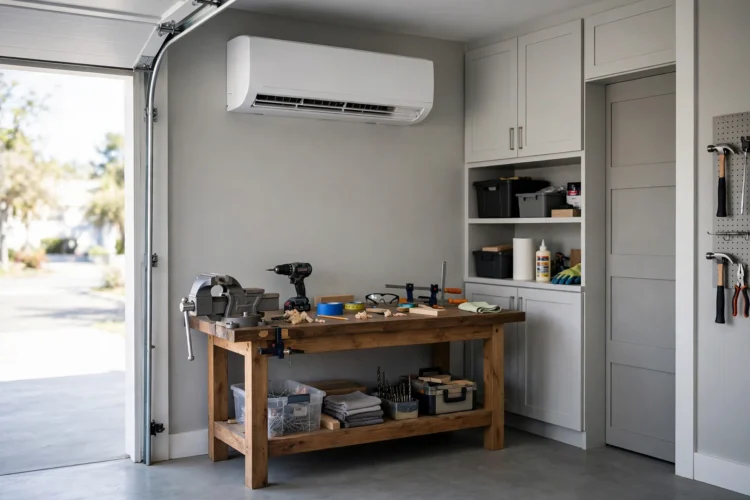
Insulation slows heat loss, but air leaks bypass it entirely. Walk the garage on a windy day with a lit incense stick and watch the smoke. Where it wavers, air is moving, and that spot needs sealing. Windows, outlets, and the rim joist above the foundation are the usual suspects.
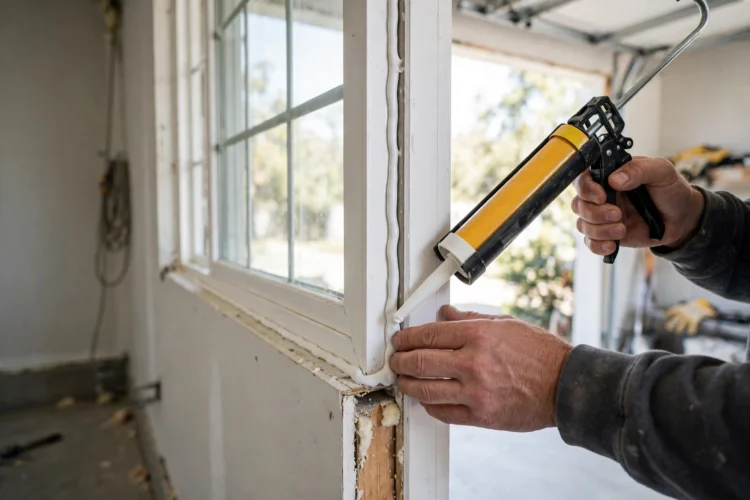
Caulk window frames inside and out, and add foam gaskets behind outlet covers on exterior walls. A gasket costs pennies and stops a surprising amount of cold air. For the rim joist, cut rigid foam to fit each bay and seal the edges with spray foam.
Check the door into the house too. A worn seal there leaks heated air from the house into the garage all winter, which is money spent warming a space nobody sits in. A new sweep and fresh weatherstripping close it off.
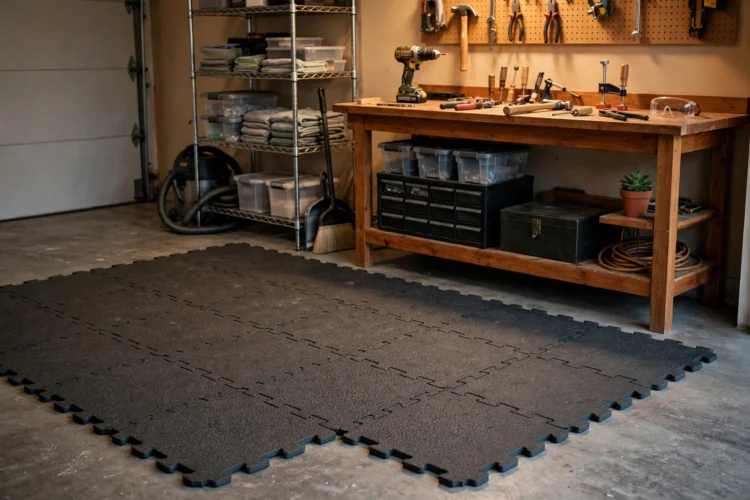
Garage floor insulation does not have to mean a full subfloor. A bare concrete slab pulls heat out of your feet and everything standing on it. Interlocking foam tiles or rubber mats over the work area break that contact and make the floor bearable in winter. They also cushion dropped tools and soften long hours on your feet.
For a fuller fix, lay rigid foam under a plywood subfloor in the area you use most. It raises the floor by about two inches, so check door clearances first. The payoff is a floor that stays near room temperature instead of near ground temperature.
A good coating helps as well. Epoxy or polyaspartic coatings seal the concrete against moisture and make the slab easier to clean, and they pair well with mats in the work zone. Compare finishes with these garage floor coating ideas that handle daily wear before you commit.
No single upgrade makes a garage comfortable year-round. The door kit stops the worst drafts, the wall batts slow heat loss, the ceiling keeps warmth from escaping upward, and the mini-split tops it off. Each layer makes the next one cheaper to run.
Test the result with a simple thermometer. Hang one at bench height and check it on the coldest morning and the hottest afternoon. If the garage holds within a comfortable band, the insulation is doing its job. If one corner stays cold, that corner has a leak or a gap worth hunting down.
Keep a short log of what you installed and when. When the next project starts, you will know exactly what is already insulated and what still needs work, and you will not pay twice for the same fix. The same plan-ahead thinking helps when you lay out the space, and these small garage layout ideas that fit cars and storage show how to fit work zones around insulation.