Physical Address
304 North Cardinal St.
Dorchester Center, MA 02124
Physical Address
304 North Cardinal St.
Dorchester Center, MA 02124

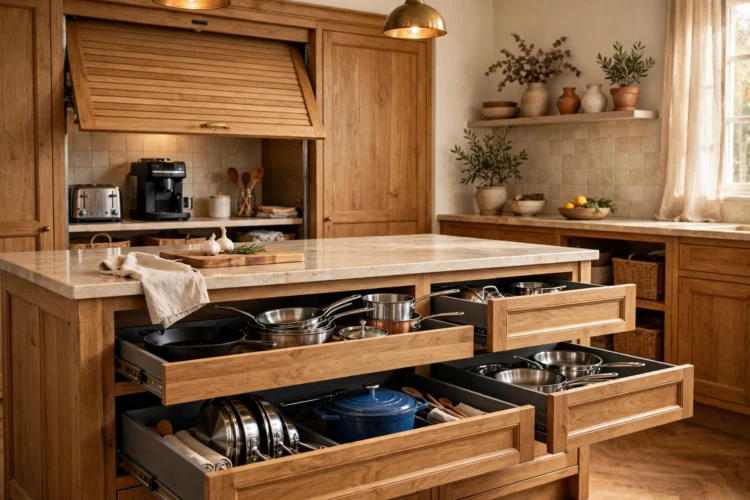
The inside of a kitchen island base is the most valuable storage real estate in the room. These eight ideas turn it into drawers, pull-outs, and hidden compartments.
A kitchen island looks like one big box, but the inside of that box is the most valuable real estate in the room. Most builders leave it as empty shelving behind doors, which wastes the depth and swallows small items whole. These kitchen island storage ideas turn the base into hard-working compartments, from drawers deep enough for a stockpot to racks that pull every spice into view. Every idea below fits inside a standard 24-inch-deep island base, so nothing here requires a custom build.
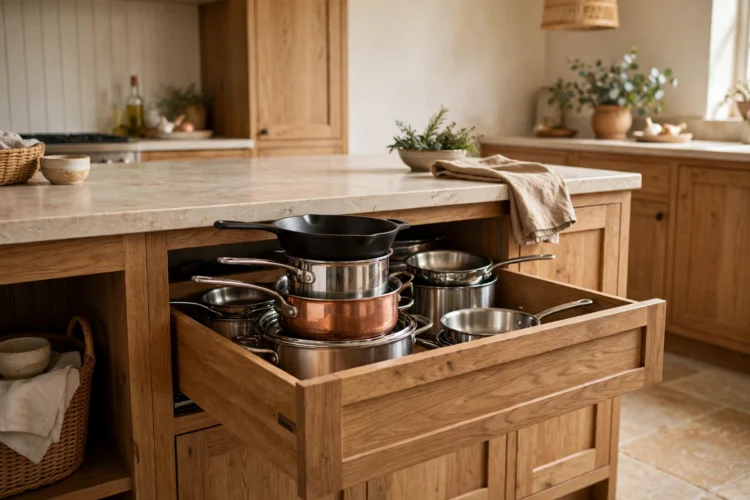
Deep drawers beat cabinet doors for heavy cookware because you see everything at once instead of crouching and reaching into the dark. Build the top drawer 8 to 10 inches deep and it swallows a 12-quart stockpot with room to spare. Full-extension slides pull the drawer completely out of the cabinet so the pan at the back is as reachable as the one at the front. A second, shallower drawer above it, about 4 inches deep, holds lids stored on their edges in a simple wire rack. Soft-close hardware is worth the upgrade because a drawer full of cast iron slams hard enough to shake the whole island. This deep drawer island setup alone can empty an entire wall cabinet. Line the drawer with a non-slip mat so pots do not slide when the drawer opens, and the whole drawer bank stays quiet for years.
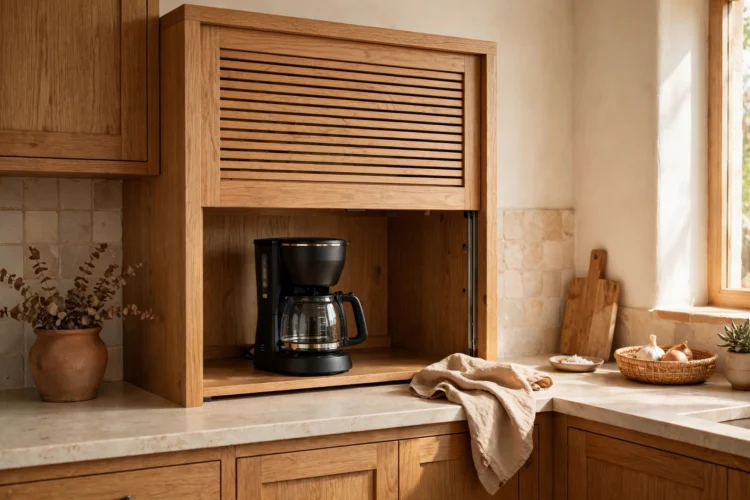
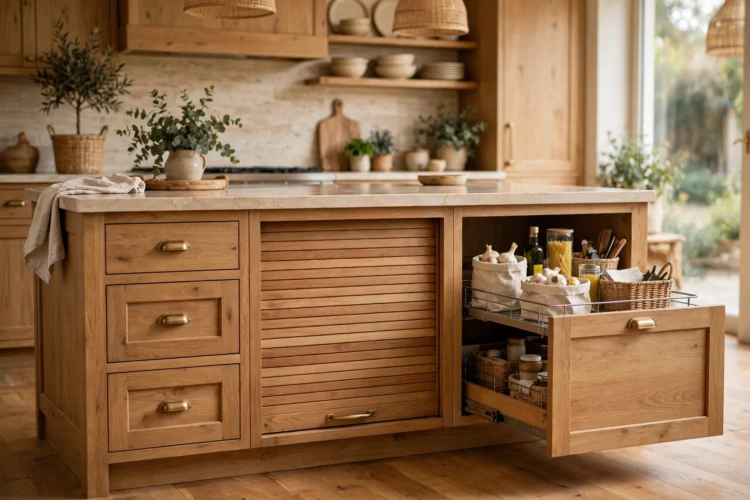
Small appliances earn counter space but steal it too, so give them a garage instead. An appliance garage cabinet hides the toaster, the coffee grinder, and the stand mixer behind a tambour door that rolls up like a window shade. The roll-up design needs only about 2 inches of clearance above the opening, while a hinged door needs a full swing radius into your walkway. Line the inside with a heat-resistant mat and plug a power strip into the back wall, so the coffee maker can stay plugged in behind the closed door. When guests arrive, the whole cluttered corner disappears in one motion. Choose a tambour door with a wood or laminate slat finish that matches the surrounding cabinets, and the appliance garage cabinet reads as a design feature instead of an afterthought.
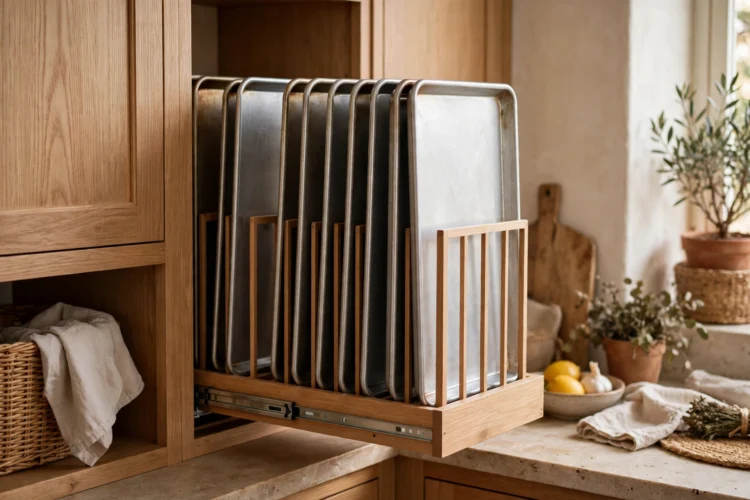
Sheet pans, cutting boards, and cooling racks are flat, wide, and impossible to stack neatly, which is exactly what pull-out island shelving solves. A vertical pull-out, about 6 inches wide, stands pans on their edges in dividers so each one slides out like a book from a shelf. Full-extension slides rated for 75 pounds keep the mechanism gliding even when it is loaded with cast-iron griddles. Mount one pull-out on each end of the island and the bakeware stops migrating into random cabinets. Measure your largest pan first, because a 21-inch half-sheet needs a 22-inch-deep cabinet to clear the slides. Add a second, narrower pull-out next to the first for cutting boards alone, and the pull-out island shelving earns back a full cabinet for dishes.
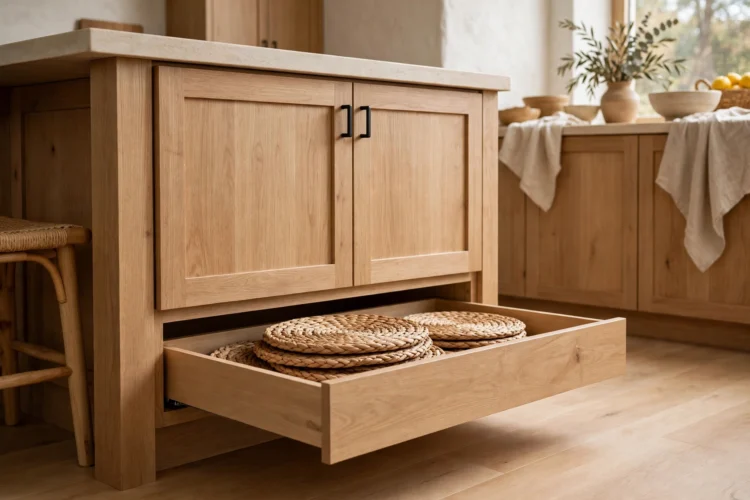
The 4-inch strip at the bottom of every cabinet is dead space until you turn it into a drawer. A toe-kick drawer runs the full width of the island base and holds the flat things that clutter other drawers: placemats, trivets, and the long serving platter that fits nowhere else. The drawer front matches the toe-kick molding, so it disappears into the cabinetry when closed. Push-to-open hardware means no handle to catch your foot, and a soft-close damper keeps it from slamming when you nudge it shut with your toe. One of these drawers replaces an entire junk drawer, and it costs less than a set of shelf risers. This is also the smartest spot for the oversized holiday platters, which finally get a home that does not require stacking them on top of the refrigerator.
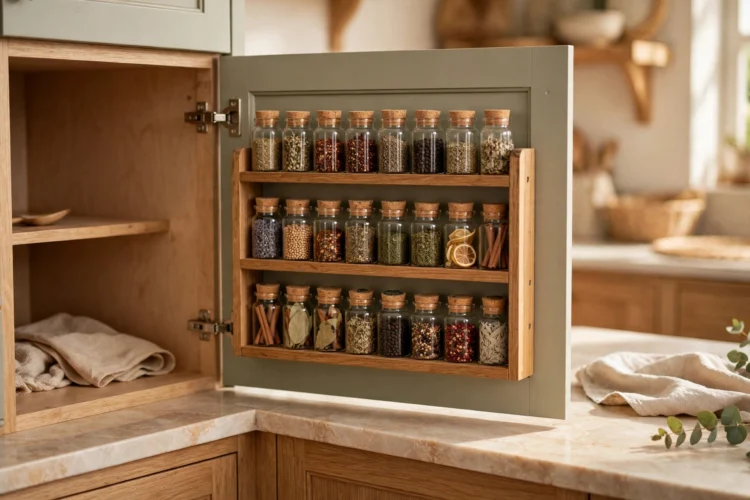
Spices vanish into deep cabinets, so mount the rack where you can actually see it. A hidden spice rack screws onto the inside of an island cabinet door, holding 12 to 20 standard jars in two or three rows. Keep the jars small, 4-ounce size, so the door still closes without straining the hinges. Label the lids, not the sides, because you read a door-mounted rack from above. This keeps the cooking zone stocked without giving up a single inch of shelf or counter. Restock from the pantry once a month and the rack never runs dry during a weeknight rush. Keep a small funnel on the rack for refilling jars from bulk bags, and the hidden spice rack turns a five-minute restock into a thirty-second one.
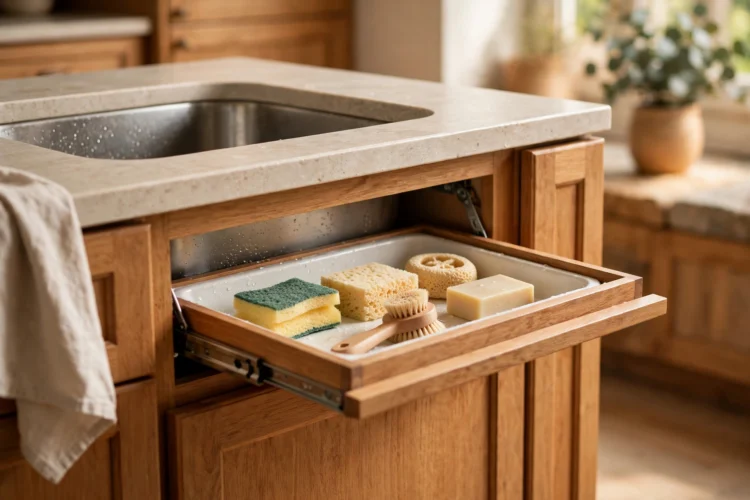
The false drawer front under the sink is wasted space on most islands. Island base storage with a tilt-out tray converts that fake front into a shallow bin that tips forward on hinges. It is the perfect depth for sponges, dish soap, and the scrub brush that otherwise sits wet on the counter. A plastic liner tray inside catches drips and lifts out for rinsing. The hinge hardware costs less than a takeout dinner and installs with four screws. Do this on every sink-side drawer front and the clutter around the faucet finally has a home instead of a puddle. The tilt-out design also works on the island end panel, where it can hold the handheld vacuum charger and the spare trash bags nobody wants to look at.
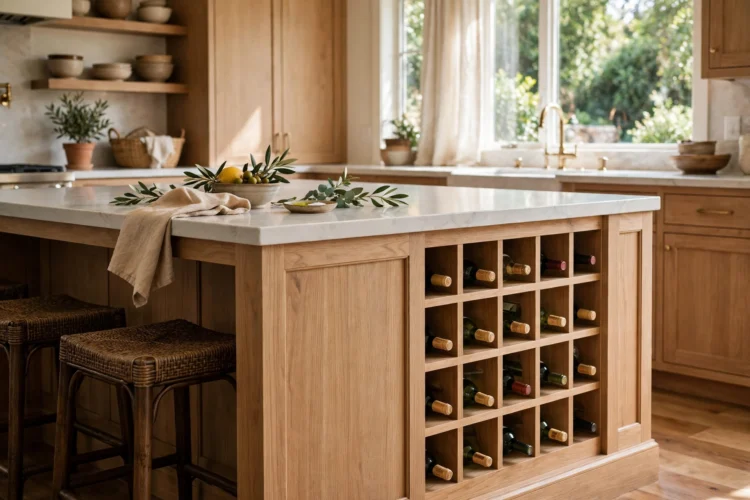
The narrow end of an island base fits wine cubbies better than any cabinet in the kitchen. A grid of 4-inch square cubbies holds bottles on their sides at the island’s end panel, where the depth is shallow but the height is full. Keep the cubbies away from the dishwasher side, because heat and vibration are wine’s two enemies. Twelve cubbies cover a casual drinker’s rotation without turning the island into a bar. If you do not drink wine, the same grid organizes water bottles, thermoses, and the kids’ sports bottles that currently colonize the counter. Angle the cubbies slightly downward toward the back so bottles cannot roll forward when someone bumps the island during a busy dinner party.
One base can hold four of these kitchen island storage ideas without a fight if you assign each zone a job. Put the deep drawers on the cooking side near the range, the appliance garage on the end facing the counter, and the pull-out shelving on the side nobody sees. The toe-kick drawer runs underneath all of it. Measure twice before you order: a standard island base is 24 inches deep and 34.5 inches tall before the countertop, so every pull-out and drawer box must clear those numbers. Sketch the layout on paper, hand it to your cabinet maker or keep it for your own weekend build, and the island finally works as hard as the rest of the kitchen. Cabinet makers charge by the pull-out, so combining the toe-kick drawer with the door-mounted spice rack stretches one labor bill across two storage wins.
Open one island cabinet tonight and look at what is actually inside. Whatever is hard to reach is the first thing to fix, because storage only works when grabbing the item takes less effort than leaving it on the counter.