Physical Address
304 North Cardinal St.
Dorchester Center, MA 02124
Physical Address
304 North Cardinal St.
Dorchester Center, MA 02124

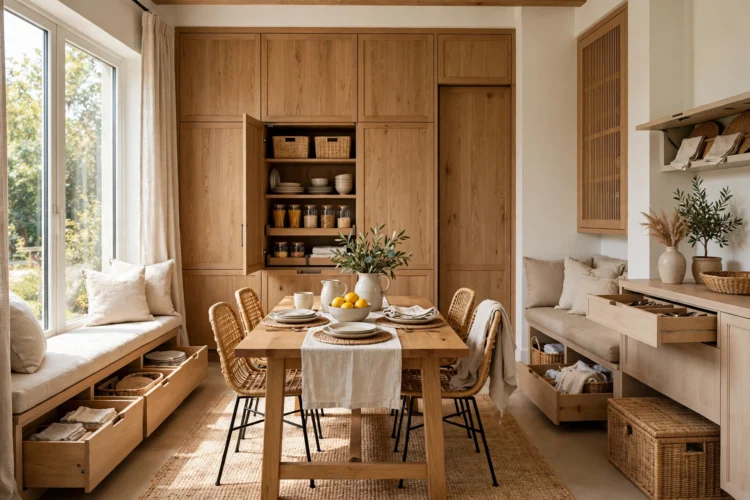
Nine dining room storage ideas that hide in plain sight, from window seats and skirted consoles to hollow benches that swallow linens and board games.
Good dining room storage ideas hide in plain sight. The best ones never look like storage at all. They look like a window seat you sit on every morning, a console table with a skirt, or a bench that holds board games under its lid. This guide rounds up nine dining room storage ideas that disguise themselves as furniture, so the room stays calm and the table stays clear. Each idea works in a real dining room, not a showroom, and most of them need no renovation at all. Pick the one that fits the clutter you actually have, then steal the rest for later. Good dining room furniture storage never looks like storage, and that is the test every idea below has to pass.
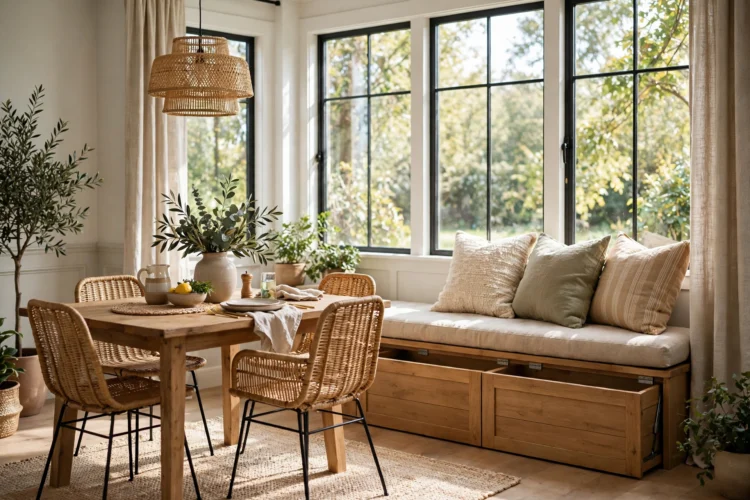
A window seat is the oldest trick in the book, and it still works because nobody expects a seat to hold anything. Build the base as a box with a hinged lid, then fill it with table linens, placemats, and the board games that come out after dinner. The cushion on top hides the seam, and the seat stays comfortable because the lid sits on a solid frame, not on the things stored inside.
Keep the heavy items at the bottom and the things you reach for weekly near the top. A shallow tray inside the box stops small items from sliding to the back where you cannot reach them. If you already have a window seat, check whether the base is hollow before you build anything new. Many older seats hide empty space behind a fixed front panel, and a simple hinge turns that dead space into storage. Hidden dining storage works best when guests never notice it, and a window seat like this proves the point. For more seat inspiration, these window seat ideas show how the same nook can work in a dining room.
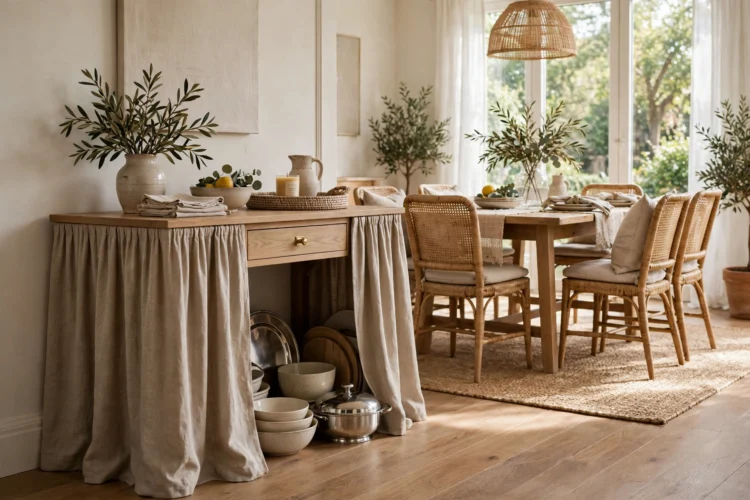
A console table against the dining room wall holds a lamp and a vase, and that is all most people ask of it. Add a floor-length skirt and you get skirted console storage: the same table hides a stack of serving platters, a punch bowl, and the cake stand that only comes out for birthdays. The skirt reads as soft furnishing, so the storage underneath never registers as clutter.
Choose a heavy linen or cotton duck for the skirt so it hangs straight and does not billow when someone walks past. Velcro tape along the table edge lets you lift the skirt for access and drop it back in seconds. Keep a flat basket under the console for placemats and napkins, and the whole setup costs less than one new cabinet.
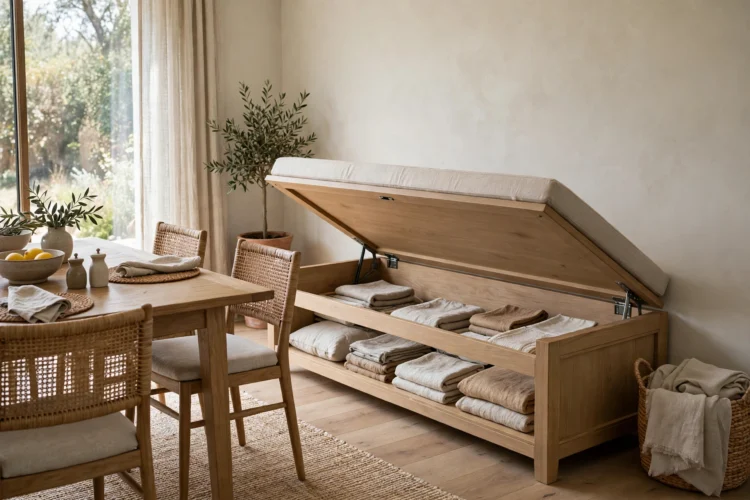
A dining bench earns its floor space twice when the seat lifts. The long, low box under the cushion holds folded tablecloths, cloth napkins, and the stack of games that usually lives on top of the sideboard. Because the bench sits at the table, everything you need for dinner is within arm’s reach when you set the table.
Gas struts or a simple stay hinge keep the lid from slamming on fingers, which matters in a house with kids. Storage benches dining room families use every day need that hinge most, since the lid opens and closes at every meal. Line the inside with cedar or a washable liner so linens stay fresh and crumbs wipe out easily. A dining room storage bench like this pairs well with a dining bench that keeps family meals casual, and it frees a whole shelf somewhere else in the house.
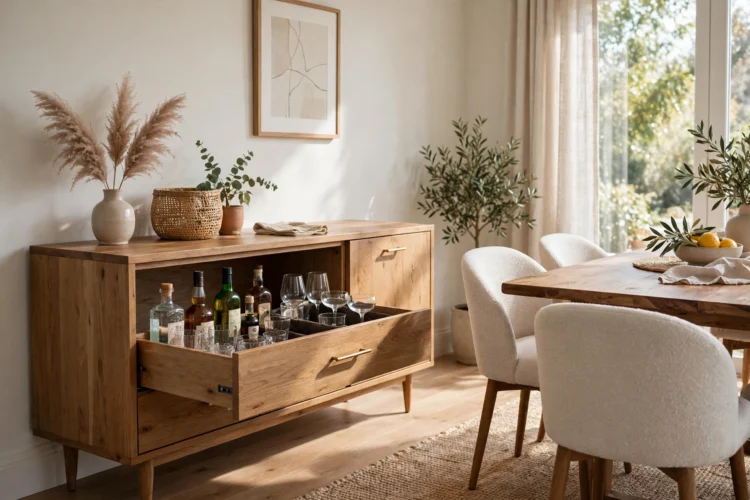
The sideboard is the dining room workhorse, but most of them waste their top drawer on candles and spare batteries. Give the top drawer a new job as a bar drawer with bottle dividers, a jigger, and a small cutting board. The bottles lie flat, the glasses stand in the cabinet below, and the sideboard still looks like a sideboard when guests arrive. Of all the sideboard storage ideas in this guide, the bar drawer is the easiest win.
If the drawer is too shallow for bottles, use the cabinet doors instead. A pull-out shelf inside the cabinet holds a tray of glasses at waist height, and the doors close to hide the whole setup. Finish the look with what you already own, and borrow a few sideboard styling tricks to keep the top surface calm instead of crowded.
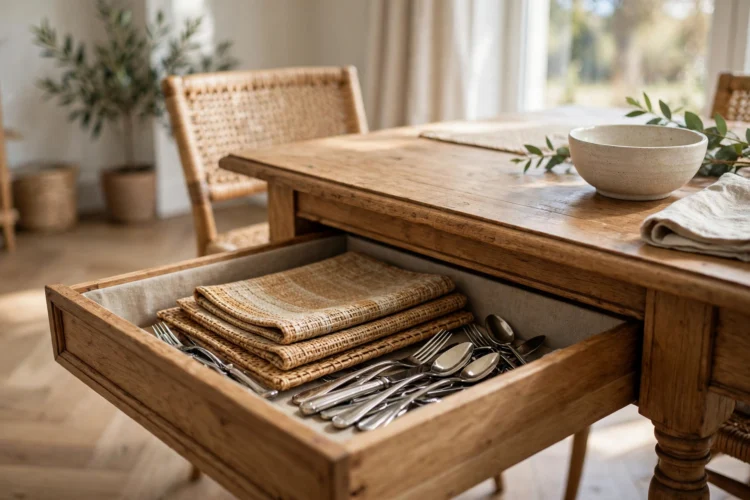
The apron under a dining table is dead space in most homes. A shallow drawer built into that apron holds placemats, napkin rings, and the cutlery you only use for guests, right where you sit down to eat. The drawer front matches the table, so it reads as part of the furniture rather than an add-on.
This works best on a table with a deep apron, at least four inches, and it suits a table you already own if a carpenter can cut in a drawer box. Keep the contents light. Heavy serving dishes belong in the sideboard, not in a drawer that hangs off the table frame.
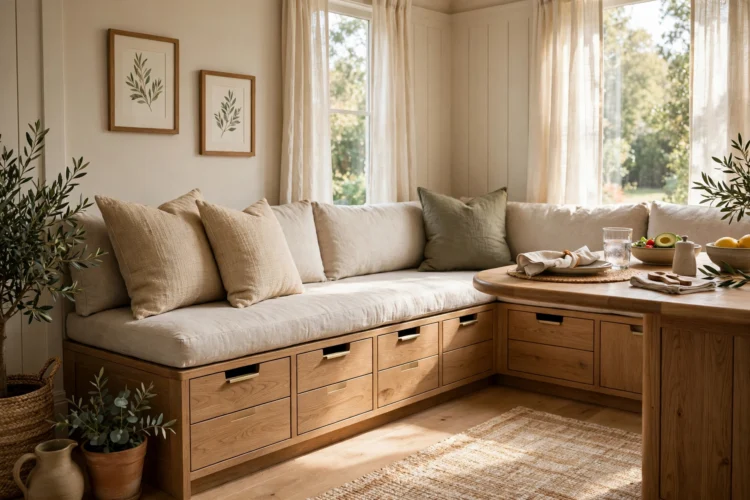
A banquette turns an awkward corner into the best seat in the house, and the base under the cushion is prime storage. Deep drawers in the base hold large platters, baking trays, and the tablecloths that never fit in a kitchen drawer. Drawers beat a lift-up lid here because you can open one drawer without clearing the whole seat.
Plan the drawer depth around the biggest item you own, then add an inch. A drawer that almost fits a roasting pan is worse than no drawer at all. If you are still deciding on the shape, a built-in banquette shows how the same corner can seat a crowd and swallow the serving gear in one move.
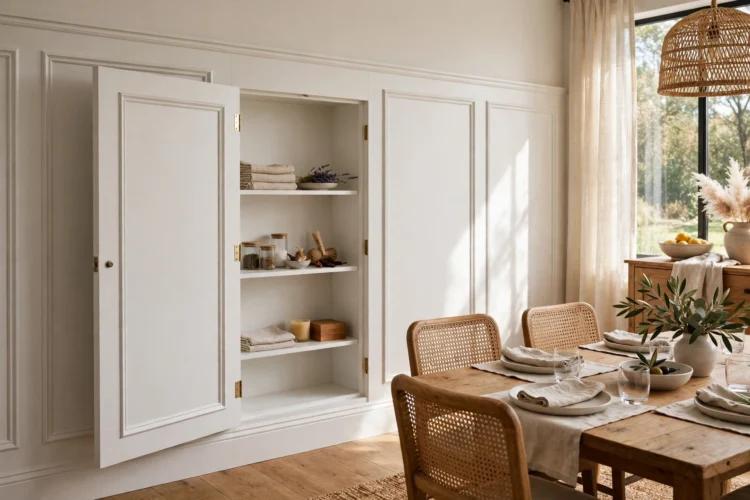
Wainscoting reads as decoration, which makes it a perfect cover. A section of paneling on a hinge opens to a shallow cabinet that holds candles, table runners, and the good napkins. The panel matches the wall, so guests see woodwork and you see storage.
Keep the hidden cabinet shallow, no deeper than a handspan, or the panel gets heavy and the hinge sags. Magnetic catches hold it shut without a visible handle. This trick suits a dining room that already has paneling, and it costs little more than a hinge, a catch, and an afternoon.
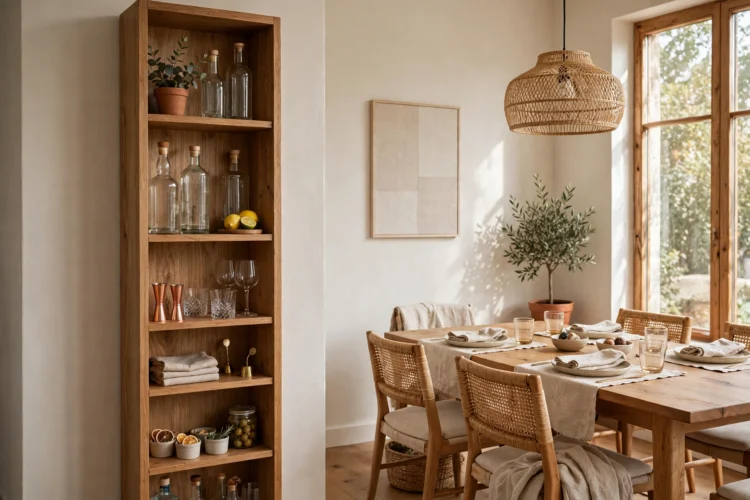
A narrow bookcase in the dining room does not have to hold books. Give the middle shelves to glasses and bottles, the top shelf to a small plant, and the bottom shelf to a basket of linens. The piece still reads as furniture, and the drinks station stays out of the kitchen during a party.
A bar cart does the same job on wheels, but a bookcase holds more and never rolls away mid-pour. Keep a small tray on one shelf to carry glasses to the table in one trip. When the party ends, the bottles go back behind closed doors and the room returns to normal.
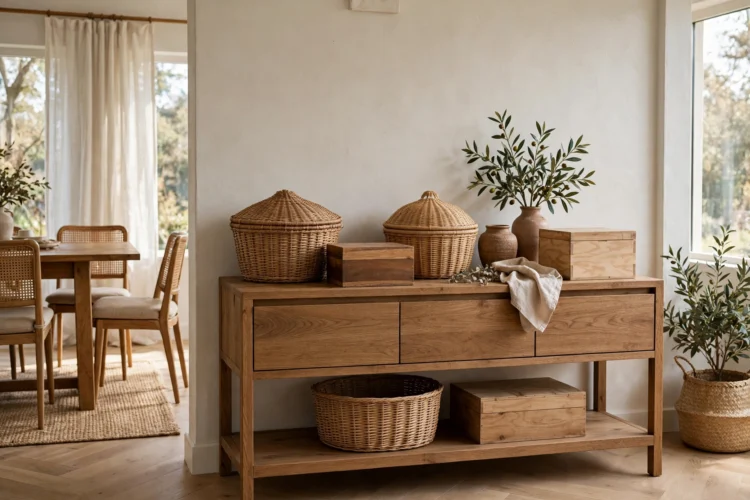
Not every hidden spot needs a hinge. A lidded basket under the sideboard holds cloth napkins, a wooden box on the sideboard holds candles and matches, and a woven tray on the lowest shelf of a console corrals the charger plates. The containers are the decor, and the clutter inside them never shows.
Match the containers to the room instead of to each other. One basket in seagrass, one box in dark wood, and one tray in woven rattan look collected rather than matched, and they hide three different kinds of clutter. Label the inside of each lid if the household shares the job of putting things away.
Start with the clutter that bothers you most, then pick the hiding spot that fits it. A window seat swallows linens, a skirted console hides serving pieces, and a hollow bench takes the games. The room looks the same to guests, and dinner gets easier every night.