Physical Address
304 North Cardinal St.
Dorchester Center, MA 02124
Physical Address
304 North Cardinal St.
Dorchester Center, MA 02124

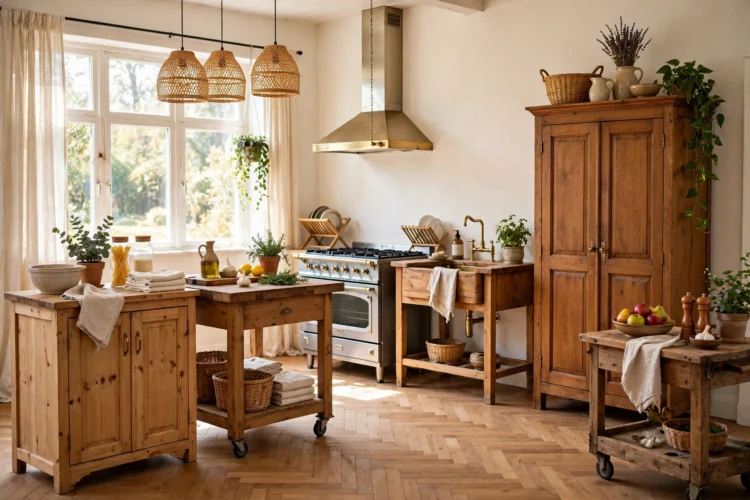
No pantry? These 13 storage ideas use freestanding cabinets, armoires, and closet conversions to keep food organized without a renovation. Start with the wall you already have.
No pantry sounds like a dealbreaker until you live without one for a month. The fix is a set of freestanding pieces that hold the same food in the same order, just outside the wall. Good kitchen storage without pantry space starts with one tall cabinet and a habit of keeping daily food separate from backup stock. The ideas below cover freestanding cabinets, armoires, closet conversions, and a few small pieces that fill the gaps between them. Pick the one that fits the wall you actually have, measure it twice, and start with the food you reach for every day.
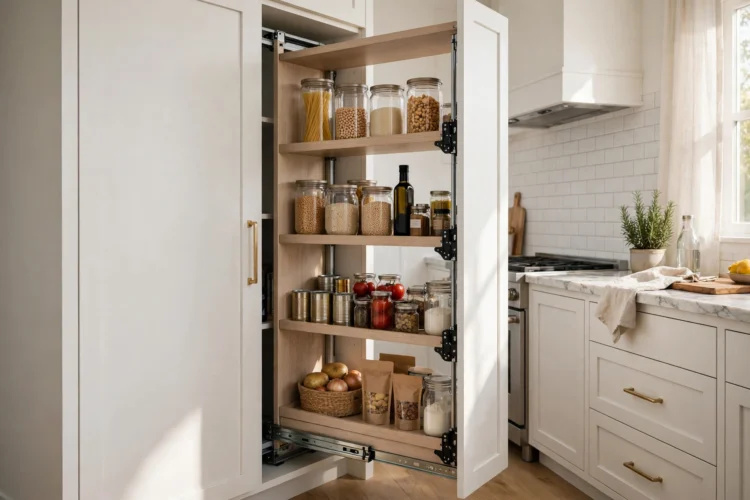
A tall freestanding pantry cabinet is the closest thing to a built-in pantry without the build. Look for one at least 180 cm tall with adjustable shelves, so tall cereal boxes and short jars both fit without wasted air. A depth of 30 to 40 cm keeps it flush enough to sit against a wall without eating the walkway. Put daily food at eye level, baking supplies one shelf down, and backup stock at the bottom or the very top. A cabinet with doors beats open shelving here, because it hides the visual clutter of mismatched packaging.
Before you buy, measure the wall and the door swing, and leave a hand-width gap on the hinge side so the doors open fully. If the kitchen is short on space in general, these small kitchen storage ideas show how to squeeze storage from corners and gaps you already have. Anchor the cabinet to the wall if you have small children, since a tall piece full of cans can tip.
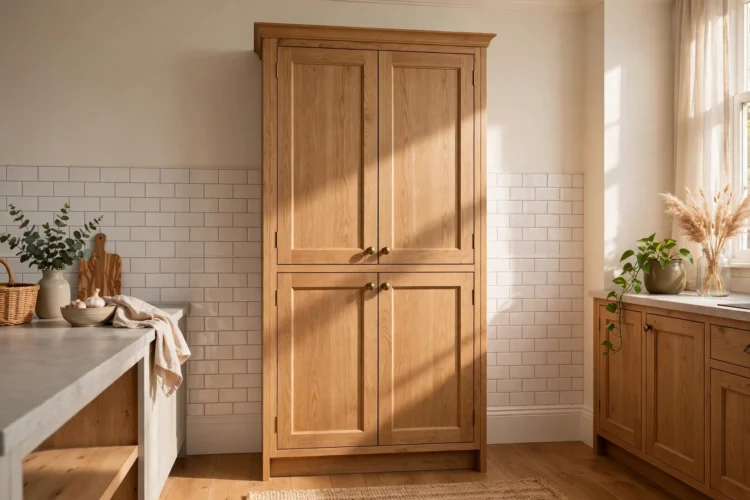
An old armoire makes a strong pantry because it was built to hold a lot behind closed doors. Take out the hanging rod, add three or four plywood shelves cut to fit, and screw small racks to the inside of each door for spices and sauces. Paint the inside a pale color so you can see what sits at the back. Keep the heaviest items low: canned goods and bottles on the bottom shelf, dry goods in the middle, snacks and tea at eye level.
An armoire pantry conversion works best when the piece stands within a few steps of the stove. If it sits across the room, you will stop using it and the food inside will go stale. Check the depth before you commit: most armoires are 45 to 55 cm deep, which fits cereal boxes and jars but wastes space behind short items. Add a shallow basket on each shelf to pull the back row forward. For more weekend storage projects, these tiny kitchen storage ideas take an afternoon or less.
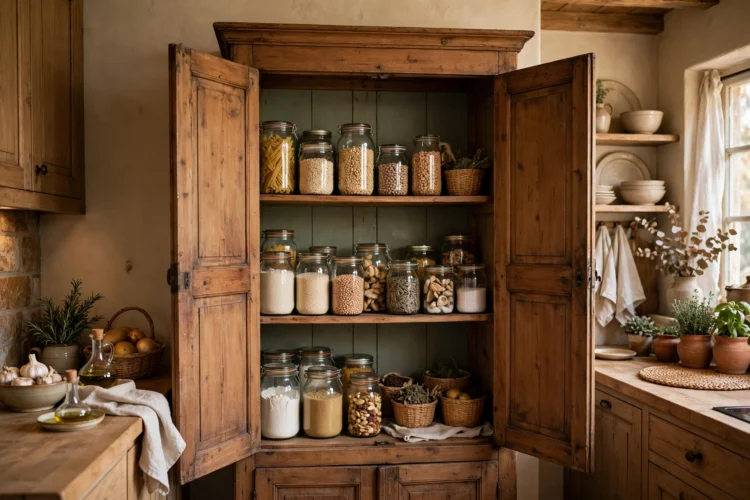
The closet by the back door often holds three coats and a pile of bags. That space can hold a month of dry goods instead. Clear it out, paint the inside, and add shelves spaced 30 to 35 cm apart so jars and boxes stack without toppling. Keep the door, since a closed door hides the food and keeps cooking smells out. Move the coats to a hook rail by the door, where they are easier to grab anyway. It is one of the simplest pantry-free kitchen storage swaps, since the shelves and door already exist.
If the coat closet sits too far from the stove, keep daily food in the kitchen and use the hall closet for backup stock. Store bulk rice, extra cans, and paper goods there, and restock the kitchen shelves once a week. Label the shelves so anyone in the house can find the backup pasta without asking. A small step stool nearby helps, since closet shelves run high.
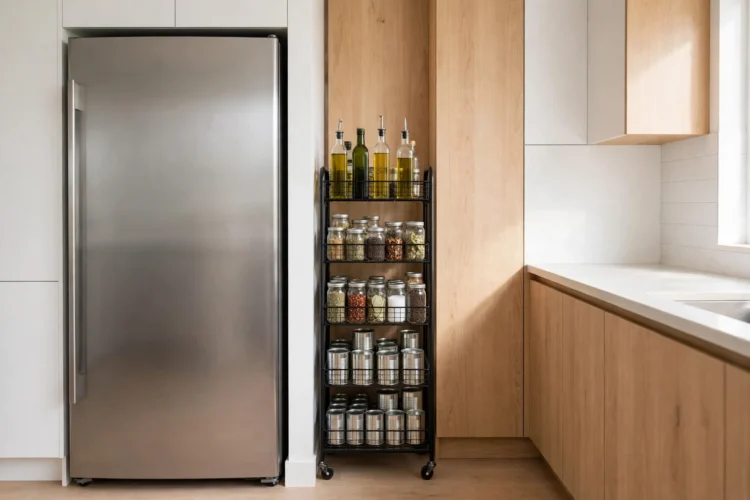
Most kitchens have a gap: between the fridge and the wall, beside the stove, or at the end of a counter run. A slim rolling cart, 15 to 25 cm wide, turns that dead strip into storage for oils, spices, and canned goods. Choose one with at least three tiers and a small rail on top so bottles do not slide off when you pull it out. Park it flush when you are done, and pull it out only when you cook.
Wheels matter more than looks here. Locking casters keep the cart still while you cook and let you roll it aside for cleaning. If the gap is beside the stove, keep a heat-safe tray on the top tier and store oils one tier down, away from direct heat. When a cart is not enough, a rolling island adds a work surface as well as storage.
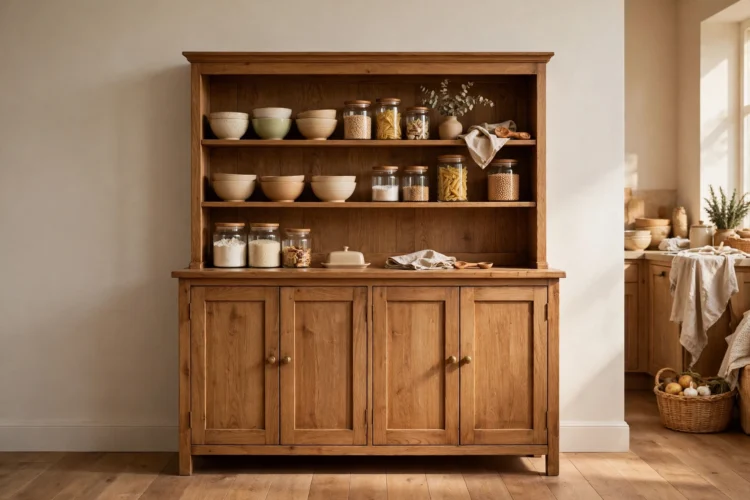
A hutch or sideboard gives you a pantry and a serving station in one piece. Use the closed base for heavy items like flour, rice, and canned goods, and the open top shelf for the bowls and jars you reach for daily. A sideboard under a window works well, since it stays out of the cooking zone but within reach at mealtimes. Look for one with drawers, which hold cutlery, linens, and small packets better than a deep shelf.
Measure the wall first, and leave room to open drawers fully. A piece 90 to 120 cm wide fits most blank walls without blocking a doorway. If you entertain often, keep serving dishes on the top shelf and food below, so setting the table means one trip. These small kitchen ideas show how a single piece of furniture can change the way a tight kitchen works.
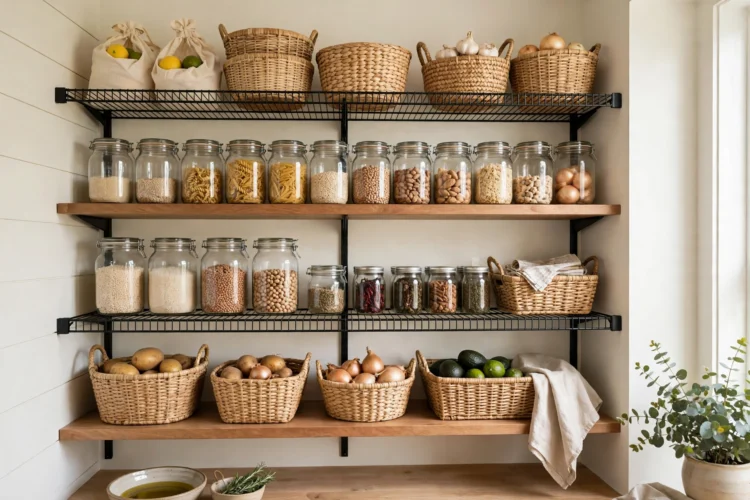
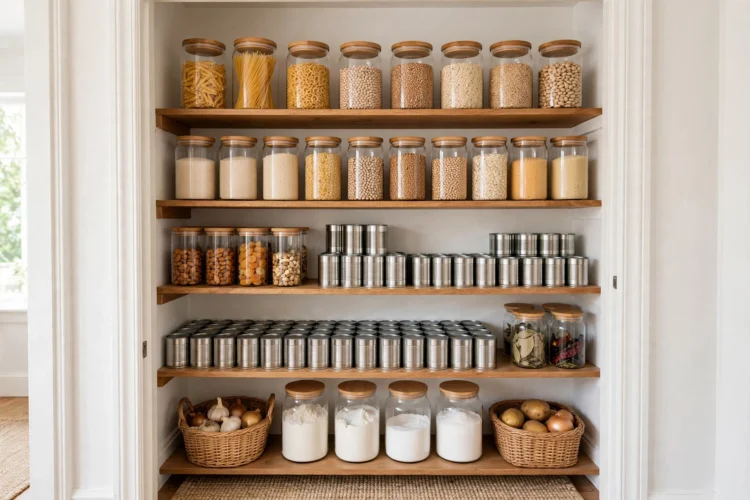
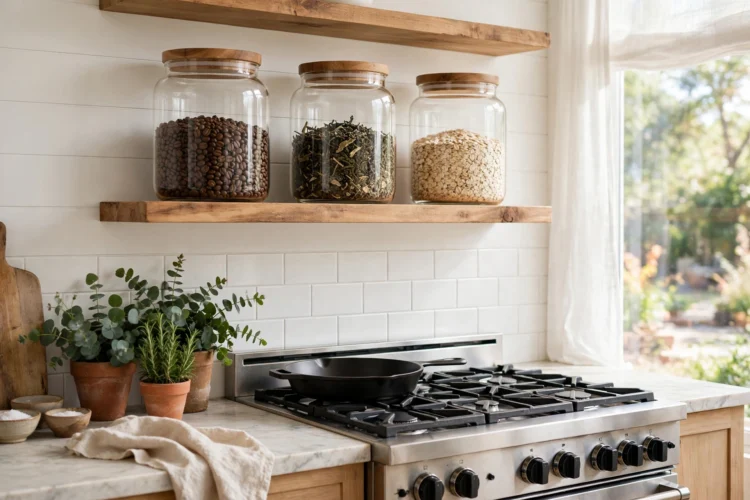
Open shelves work best for the food you use every day, not for everything you own. Keep coffee, tea, oats, and cooking oil on two shelves near the stove, and leave the rest in closed storage. Use matching jars so the shelf reads as a set rather than a jumble. Keep each shelf to one row deep so nothing hides behind anything else.
Dust is the real cost of open shelves, so wipe them once a week and keep the items you use least in closed cabinets. If your cabinets are already crowded, these kitchen organization ideas for cluttered cabinets show how to clear space before you add shelves.
Shelf risers double the usable space inside a cabinet or on a deep shelf, and clear bins keep small packets from sliding to the back. Use one bin per category: one for breakfast food, one for baking, one for snacks. Pull the bin out like a drawer instead of reaching past jars. Label the front of each bin with a short word, not a sentence.
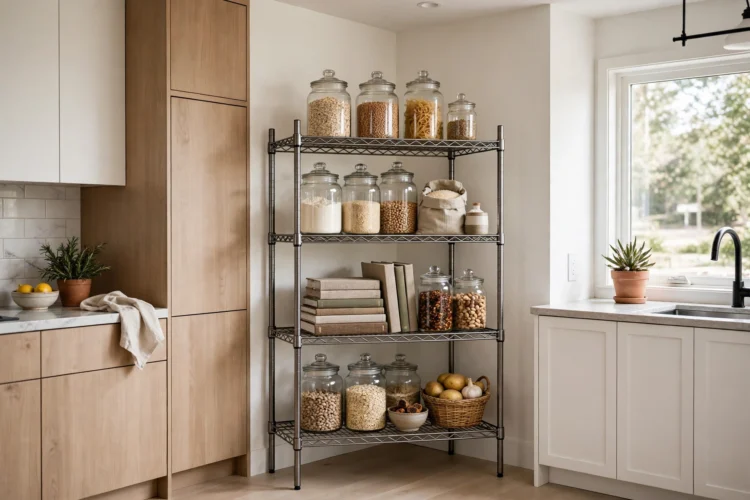
A baker’s rack is a set of open metal shelves, often with hooks and a small work top, that fits into a corner the cabinets ignore. Use the top shelf for cookbooks and plants, the middle shelves for dry goods, and the bottom for heavy pots or a microwave. Metal shelves wipe clean and hold more weight than most people expect, but check the weight limit before you load the bottom shelf with cast iron.
Corners collect clutter, so give the rack one job and keep it to that job. If it becomes a landing spot for mail and bags, the food moves back to the counter. Put a basket on the lowest shelf for potatoes and onions, which need air and darkness, and keep them away from the stove heat.
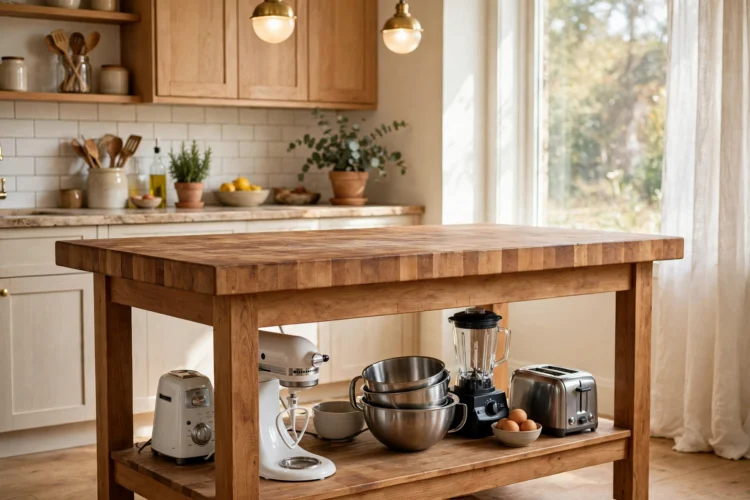
A sturdy work table with a shelf underneath gives you a prep surface and a pantry shelf in one footprint. Store mixing bowls and small appliances on the lower shelf, and keep the top clear for chopping and rolling. Butcher block tops take knife marks well and can be sanded smooth again, which makes them a good pick for a table you actually cook on.
A rolling island adds the same storage but moves where you need it: beside the stove while you cook, against the wall when guests arrive. Look for one with a shelf and a drawer, and lock the wheels before you chop anything on it. Keep the items you use most on the island, so the walk to the pantry cabinet stays short.
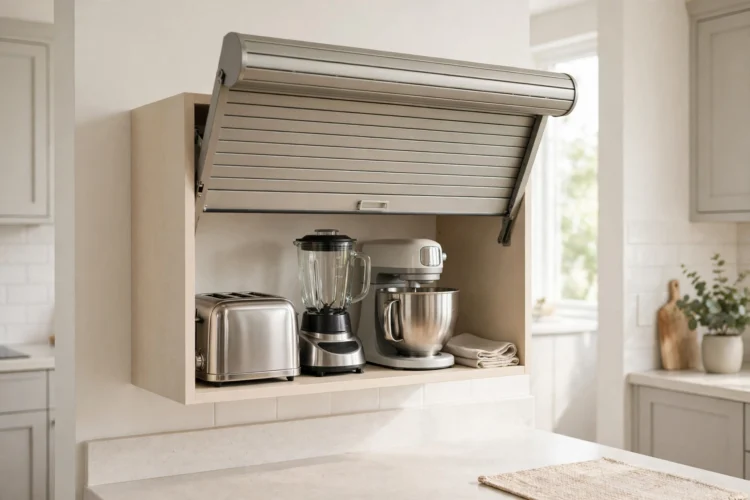
Small appliances eat counter space fast. A short cabinet with a roll-up door, or a single deep shelf with a curtain, gives the toaster, blender, and mixer a home that is not the counter. Keep the daily coffee maker out, and store the rest. A restock shelf, one shelf kept half empty on purpose, gives new groceries a landing spot until you sort them.
Labels sound fussy until the house runs on them. A short label on each bin and shelf tells everyone where the rice lives and where it goes back. Use a label maker or masking tape and a marker, and keep the words to one or two. Re-label when the contents change, so the system stays true.
Kitchen storage without pantry space still needs a system. Start with the tall cabinet, add one closet or cart, and label what you store. When every item has a spot, the kitchen feels bigger even though the walls never moved.