Physical Address
304 North Cardinal St.
Dorchester Center, MA 02124
Physical Address
304 North Cardinal St.
Dorchester Center, MA 02124

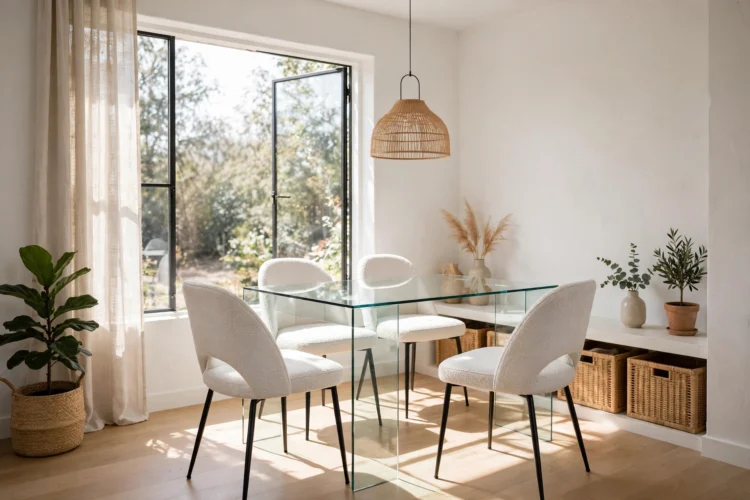
A glass dining table visually disappears in a tight dining room, so the space feels larger than it is. These 11 ideas cover glass types, bases, and honest cleaning tips.
A solid wood table can fill a small dining room before anyone sits down. A glass dining table does the opposite: light passes through the top, the floor stays visible, and the room feels larger than it is. That visual trick makes glass the smartest table material for tight dining rooms, small apartments, and open-plan spaces where the dining area needs to stay light. The 11 glass dining table ideas below cover the glass types, base styles, and chair pairings that work in real homes, plus the honest cleaning routine that keeps a glass top looking clear instead of cloudy.
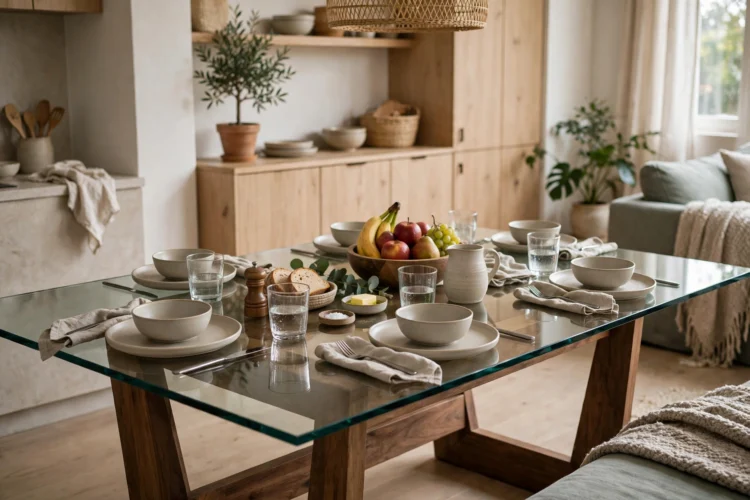
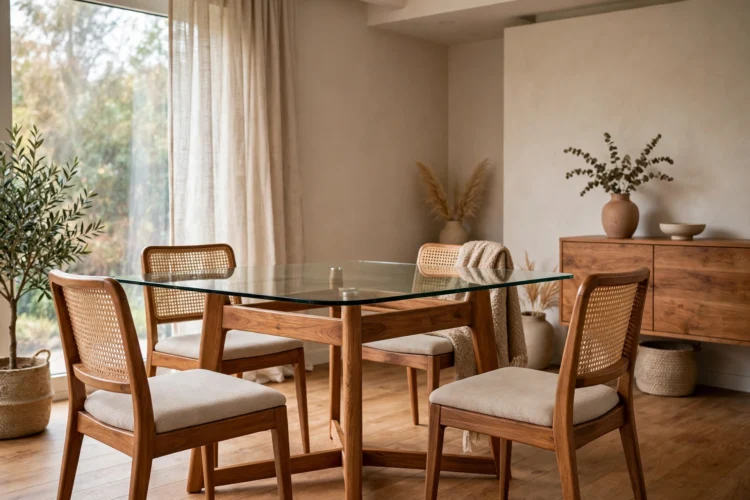
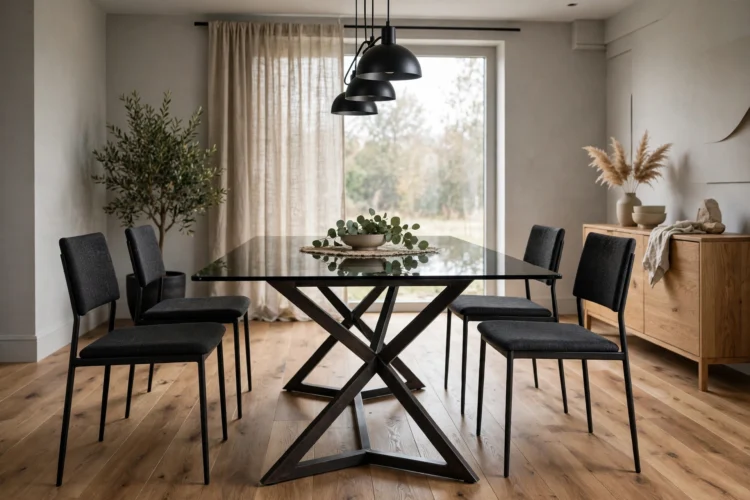
A clear glass top on a wood base gives you the lightness of glass and the warmth of timber in one table. The wood base anchors the room, while the glass top keeps the table from feeling heavy. Choose a base with a simple, strong shape, a trestle, a pedestal, or four tapered legs, since a fussy base will fight the clean look of the glass. The glass should be at least 12 mm thick for a table of this size, and tempered for safety. A glass top dining table shows everything underneath, so keep the base tidy and the floor beneath the table clean: what sits under the glass becomes part of the look.
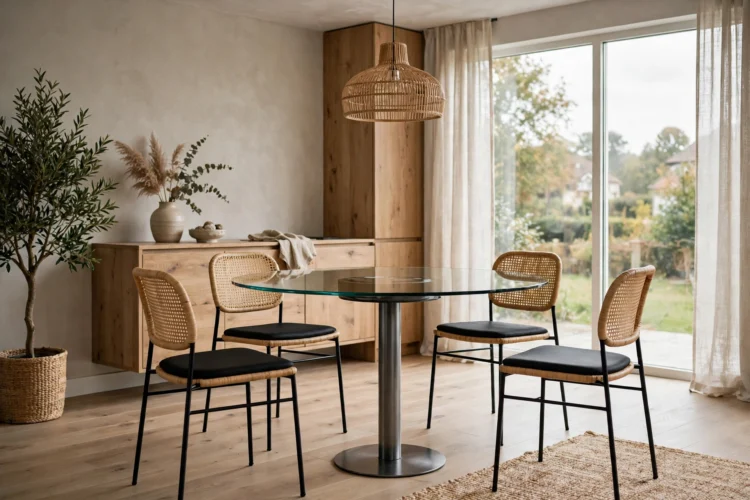
A metal pedestal base suits a glass top because the slim column keeps the table visually light from every angle. Chrome reads cool and modern, matte black reads industrial, and brushed brass warms the room without adding bulk. The pedestal also clears legroom at every seat, since no legs crowd the corners. Check the base weight before you buy: a glass top is heavy, and a light base will wobble when someone leans on the edge. Look for a base with a wide foot and a bolted connection to the glass, not suction cups alone. A metal pedestal glass table suits small rooms where every centimeter of legroom counts.
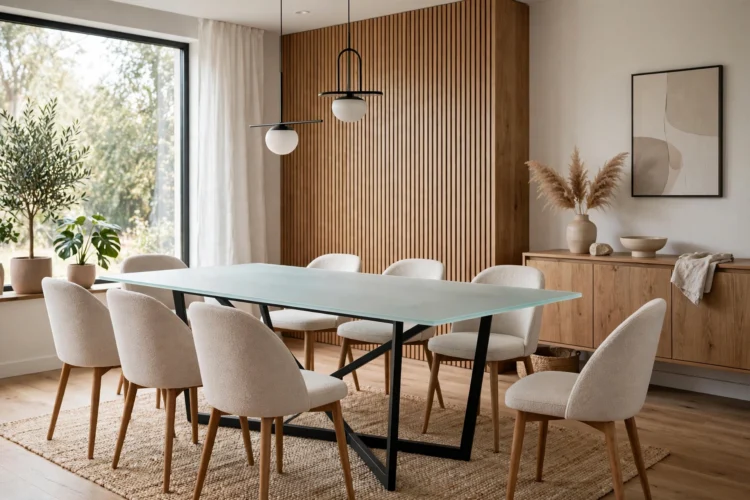
Frosted glass hides fingerprints, smudges, and water rings far better than clear glass, which makes it the practical choice for families. The matte surface diffuses light instead of passing it straight through, so the table still feels light but the top reads as a solid surface. Frosted glass suits modern and Scandinavian rooms, and it pairs well with light wood or white metal bases. The trade-off is visibility: you lose the see-through effect that makes clear glass feel weightless. If you love the frosted look but want more light, choose a lightly frosted top rather than a fully opaque one. Clean it with a damp microfiber cloth and skip glass cleaner, which can leave streaks on a matte surface.
Smoked glass tints the tabletop gray or bronze, which softens the look of a glass table and hides dust better than clear glass. The tint adds a quiet, elegant tone that suits moody dining rooms, dark walls, and brass or black metal bases. Smoked glass still lets light through, so the room keeps the airy feel of a glass table without the starkness of a clear top. The tint also hides the table base slightly, which can be a plus when the base is not the prettiest part of the table. Pair smoked glass with warm wood chairs to balance the cool tone of the glass, and keep the rest of the room light so the tint does not darken the space.
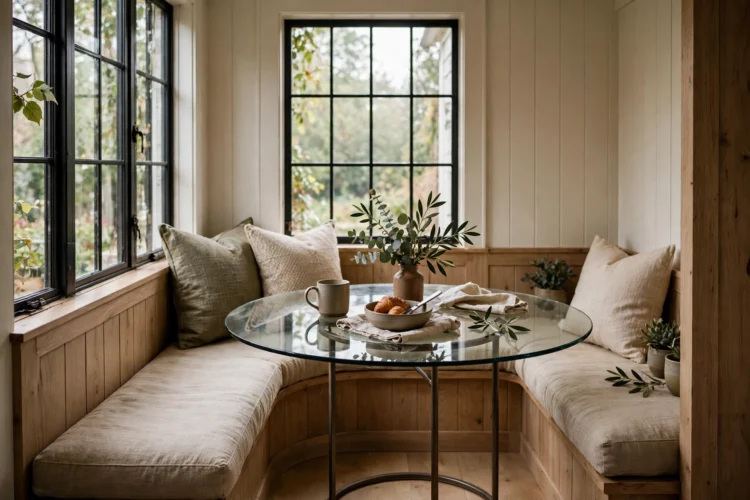
A round glass table is the smallest-looking table you can put in a tight corner. The round shape has no corners to catch a hip, and the glass top lets the floor show through, so the table takes up almost no visual space. A round glass dining table seats four comfortably in a space where a square table would feel cramped. For any glass dining table small space plan, keep the chairs light and armless, and it suits breakfast nooks, small apartments, and rooms where the dining area shares space with the living room. Choose a pedestal base so chairs slide in without bumping legs, and keep the chairs light and armless. These round dining table ideas show more shapes that work in the same tight spaces.
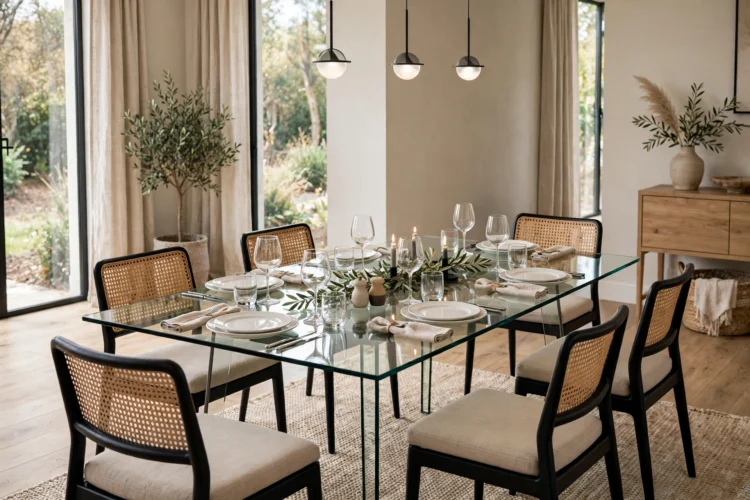
A rectangular glass table seats six in a small dining room without the bulk of a wood table the same size. The straight sides line up neatly against a wall or a sideboard, and the glass top keeps the room feeling open even when all six chairs are pulled out. Choose a table about 160 cm long for six seats, and check that the glass overhangs the base by at least 15 cm on each side so plates sit flat. A rectangular glass top shows the base clearly, so pick a base you like looking at: a simple trestle or a pair of panel legs both work. Keep the chairs slim so the setting stays light.
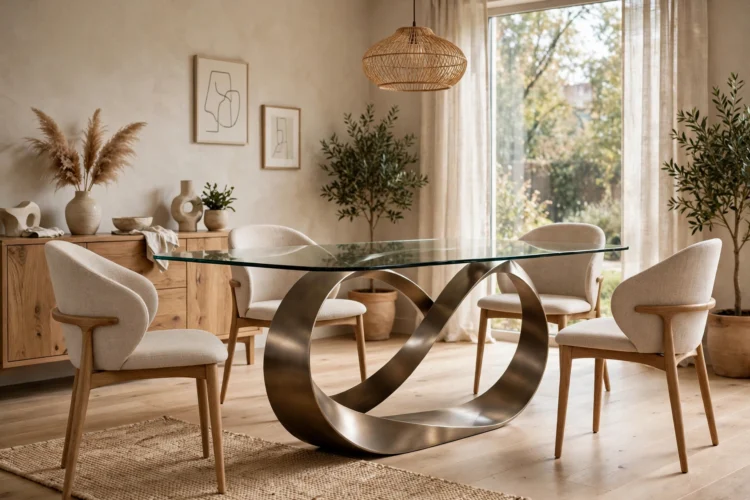
When the top is clear glass, the base becomes the star of the table. A sculptural base, a curved metal form, a carved wood shape, or a stacked stone column, turns the table into a piece of art that you see through the glass. This works best in rooms where the table is the main feature and the rest of the furniture stays quiet. Keep the chairs simple so they do not compete with the base, and leave the floor under the table clear so the base reads cleanly. A sculptural base adds cost, but it also means the table needs no centerpiece: the base is the decoration. Check the base for stability, since artistic shapes can tip more easily than a plain pedestal.
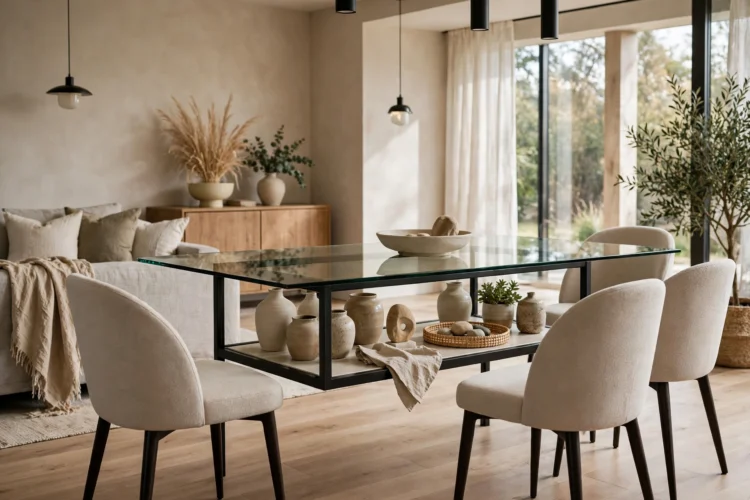
A glass top over a display base turns the space under the table into a showcase. Some tables hide a shallow shelf or a tray under the glass, where you can set shells, books, dried flowers, or a collection of small objects. The display stays dust-free under the glass and changes with the seasons, so the table always looks fresh. Keep the display low and flat so it does not block the view across the table, and avoid anything fragile that would break if the glass is lifted for cleaning. A display base suits eclectic and coastal rooms, where the objects under the glass add personality without adding clutter to the tabletop.
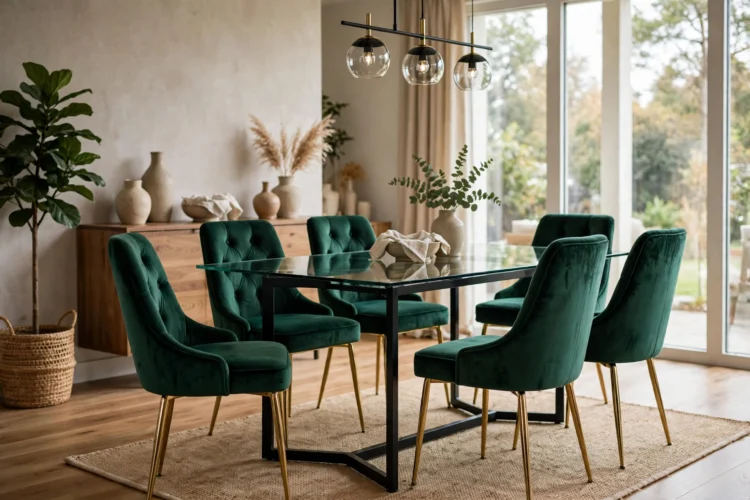
A glass table is a neutral stage, so it lets bold chairs shine. Bright velvet chairs, patterned upholstery, or sculptural wood chairs all look stronger against a clear glass top than they would against a heavy wood table. The glass stays quiet while the chairs carry the color and character of the room, which makes this pairing ideal for people who love statement furniture but fear a busy room. Keep the chair count to four or six so the bold shapes do not crowd the table, and repeat one chair color in a cushion or a piece of art nearby to tie the room together. A pendant light above the table adds a second focal point without competing with the chairs.
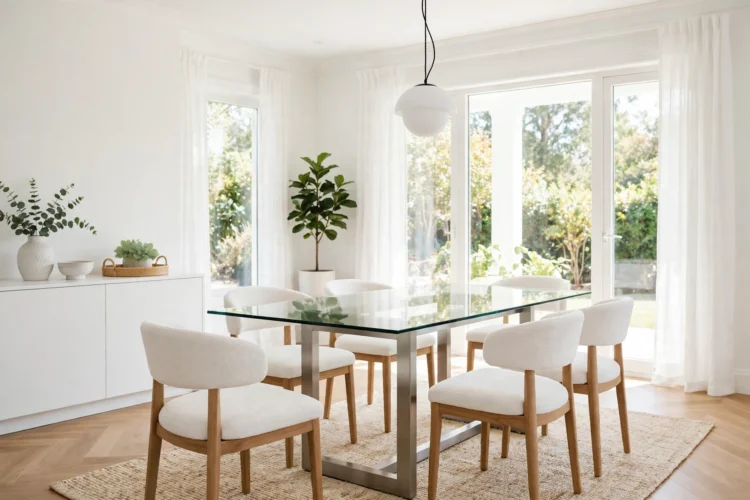
A glass table in a bright white room doubles the light. White walls bounce daylight onto the glass, the glass passes it through, and the whole room feels larger and airier than the same room with a wood table. This pairing suits small apartments and north-facing rooms that need every bit of light they can get. Keep the chairs pale too, white, light wood, or clear acrylic, so the setting stays light from every angle. The risk is a room that feels cold, so add warmth with a woven rug under the table, wood chair legs, or a linen table runner. These small kitchen ideas use the same light-and-glass logic to open up tight spaces next door.
Daily use is where a tempered glass dining table proves itself. Thick tempered glass, 15 mm or more, handles hot plates, heavy serving dishes, and the occasional dropped mug without chipping. Tempered glass is also the safe choice: if it ever breaks, it shatters into small blunt pieces instead of sharp shards. Ask the seller for the glass thickness and the tempering certificate before you buy, and check the edges for a polished finish, since a rough edge chips easily. Clean the top daily with a damp microfiber cloth and weekly with a drop of dish soap, and skip abrasive pads that scratch the surface. A kitchen chandelier above the table finishes the setting, and the glass top will reflect its light across the room at dinner.