Physical Address
304 North Cardinal St.
Dorchester Center, MA 02124
Physical Address
304 North Cardinal St.
Dorchester Center, MA 02124

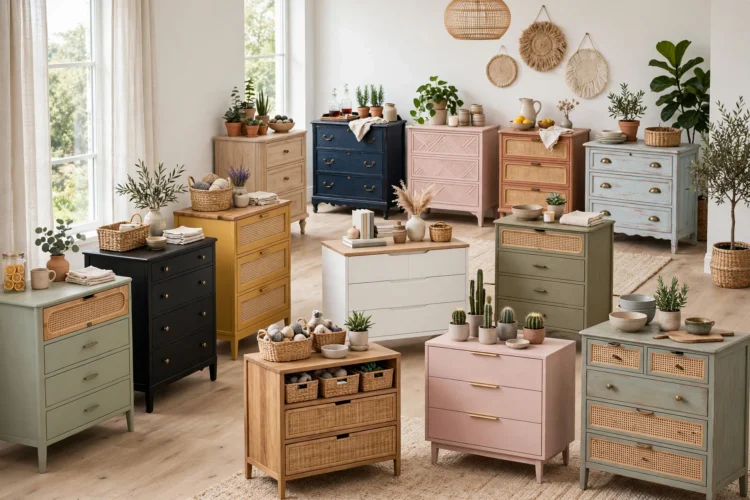
A dresser does not have to stay in the bedroom. With a few changes, the same piece can hold a television, sort craft supplies, or serve as a potting bench in the garden.
Most dressers end up at the curb when a bedroom gets a new look, which is a shame, because the piece itself is usually solid. The drawers glide, the frame is square, and the top is a work surface waiting for a new job. These upcycled dresser ideas move that sturdy box into rooms where it can earn its keep for years.
The trick is to match the dresser to the job before you pick up a paintbrush. A wide, low dresser suits a television. A tall, narrow one suits a craft station. Check that the drawers slide smoothly and the back panel is firm, since a wobbly frame will not improve with paint. Then choose one of the projects below and give the piece a second life.
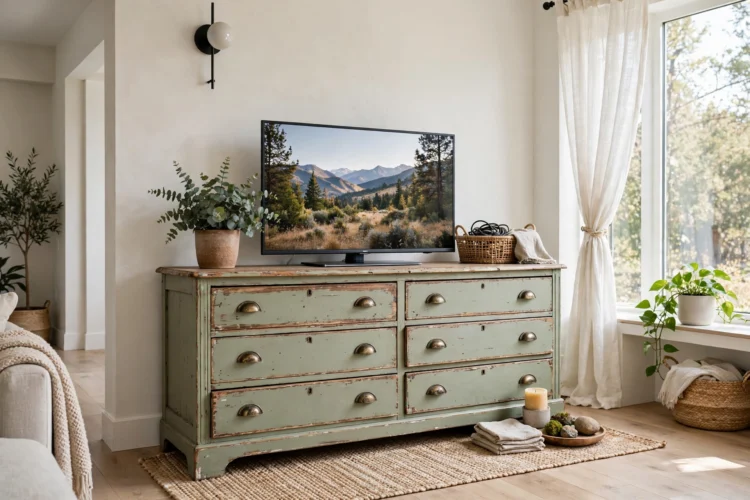
A low dresser already has the right shape for a television: wide, stable, and deep enough for a cable box. Remove the top drawers or leave them in place for storage, drill a hole in the back panel for cables, and set the television on top or mount it on the wall above. The drawers hold remotes, game controllers, and chargers that used to live on the coffee table.
A dresser media console looks best when the television and the dresser share a similar width. If the dresser is much wider than the screen, add a lamp or a stack of books on one side to balance the top. Paint the piece a dark color so it recedes behind the screen, or stain it to match other wood in the room. If you enjoy hunting for pieces to redo, these thrift store furniture flips show what a secondhand dresser can become with a weekend of work.
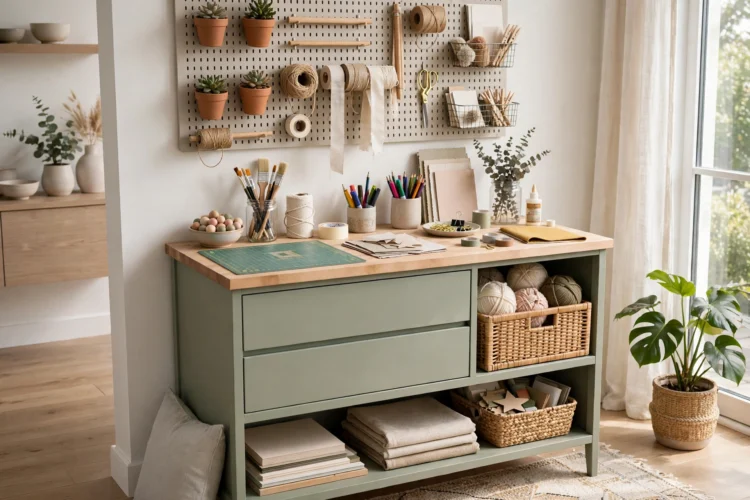
Craft supplies need shallow drawers and a work surface, and a dresser provides both. Take out the top drawer and fit a hinged board in its place that folds down into a worktop and folds up to hide the mess. The remaining drawers sort paper, fabric, thread, and tools by type, so every supply has a home.
A dresser craft station works best near good light, so place it by a window if you can. Add small jars or tins inside the drawers to keep beads and buttons from mixing, and screw a strip of cork or pegboard to the inside of the drop-down board for scissors and rulers. When the worktop folds up, the whole station looks like an ordinary dresser again, which keeps a shared room tidy.
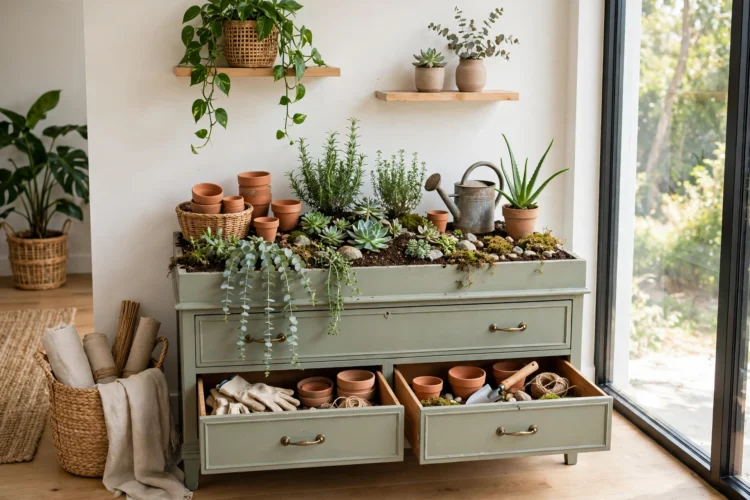
A dresser with a missing drawer or a stained top makes a fine potting bench, since garden work is messy by nature. Remove the top two drawers to create an open work shelf, keep the lower drawers for pots and twine, and seal the whole piece with exterior polyurethane so rain and soil do not rot the wood. A piece of wire mesh or a slatted board across the open shelf lets soil fall through into a bucket below.
A dresser potting bench earns its place beside the back door when everything you need sits within reach. Hang hand tools from hooks on the sides, keep a bag of potting mix in the bottom drawer, and set small terracotta pots along the back edge. Move the bench under cover in winter if you can, since even sealed wood lasts longer out of standing snow and rain.
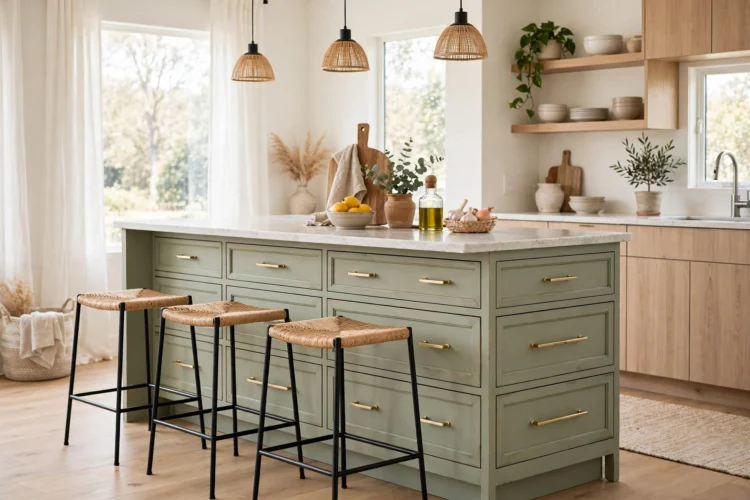
A sturdy dresser with a flat top becomes a kitchen island with one big change: a new top. Screw a butcher block slab or a thick plywood top to the dresser, letting it overhang by a few inches on one side so stools can tuck underneath. The drawers hold dishtowels, baking tools, and the gadgets that never fit in the kitchen drawers.
Paint the base a color that matches your cabinets and seal the top with a food-safe oil or polyurethane finish. If the dresser is tall, cut the legs down so the top lands at counter height, which keeps prep work comfortable. A second idea uses the same piece as a breakfast bar: turn the dresser against a wall, add two stools, and the top becomes a morning coffee spot with storage built in.
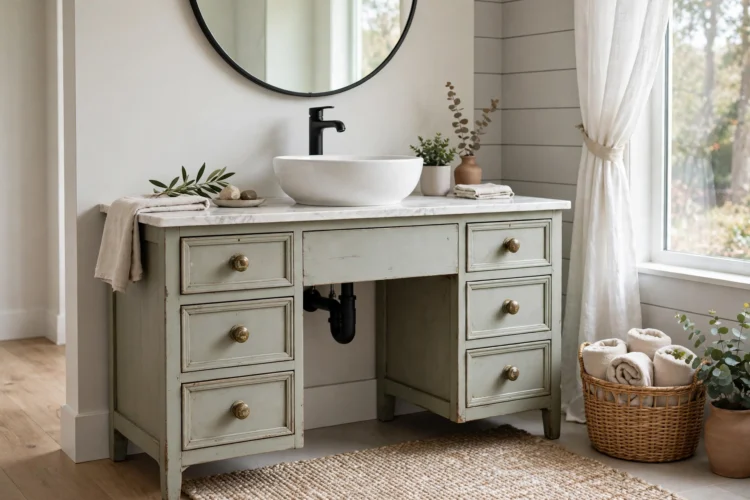
A dresser with a vessel sink on top turns an ordinary bathroom into a custom one. Cut a hole in the top for the drain, set the vessel sink in place, and fit the plumbing through the back of the drawer boxes. Shorten the top drawer or cut a U-shape into it so the pipes have room, and keep the lower drawers for towels and toiletries.
An upcycled dresser vanity needs a finish that handles steam and splashes. Sand the top smooth, seal it with marine varnish or a waterproof topcoat, and wipe up standing water when you see it. Choose a dresser that fits the room with space to open the drawers fully, since a vanity that blocks the door helps no one. The result looks like a piece made for the room, not a piece that wandered in.
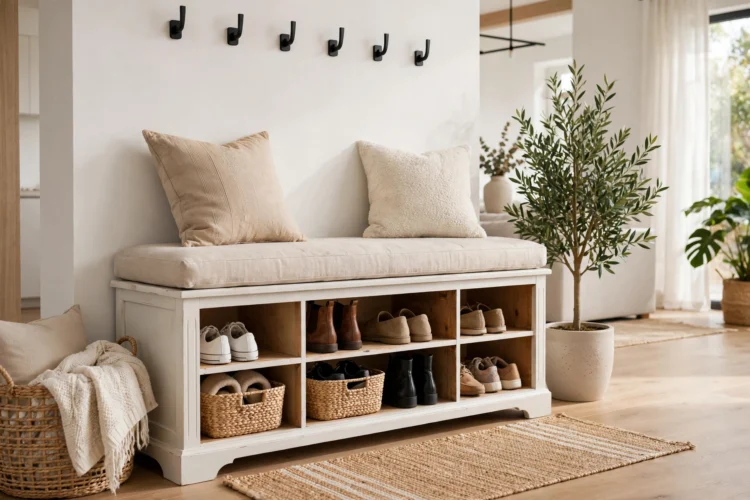
Remove the top drawers of a low dresser, add a cushion to the top, and you have an entryway bench with storage underneath. The remaining drawers hold shoes, hats, and gloves, while the cushion gives everyone a place to sit while they lace up. Screw coat hooks to the wall above or to a board mounted on the back of the dresser.
A second entryway idea turns a tall dresser into mudroom cubbies. Take the drawers out entirely, add a vertical divider inside the frame, and slide baskets into each opening for each family member. Label the baskets so shoes and scarves land in the right place without a daily reminder. If your entryway sees wet boots, line the bottom cubby with a boot tray that catches drips.
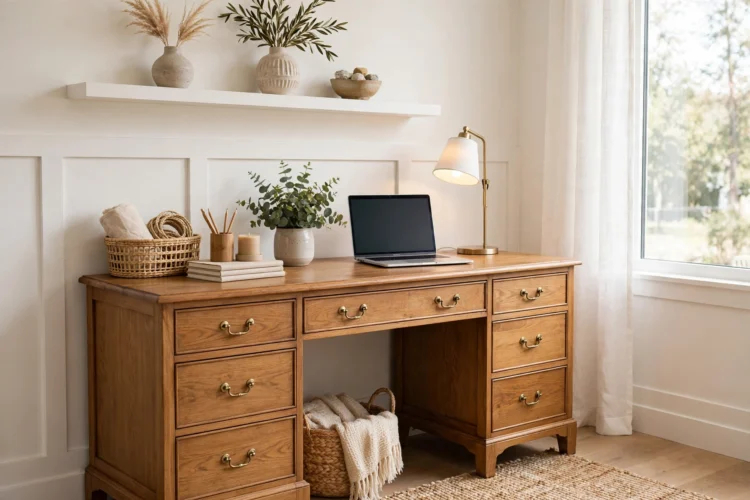
A dresser with a deep top drawer removed becomes a desk with a keyboard tray and storage in one piece. Take out the top drawer, slide a keyboard shelf into the opening, and keep the lower drawers for files, chargers, and office supplies. Drill a hole in the back for cables and set a monitor or laptop on top.
The same dresser can become a sewing table with a different tweak. Remove a middle drawer, fit a plywood platform at the right height for a sewing machine, and use the remaining drawers for fabric, patterns, and thread. These weekend furniture makeover projects use the same approach: one structural change, then paint, and the piece takes on a new job in two days or less.
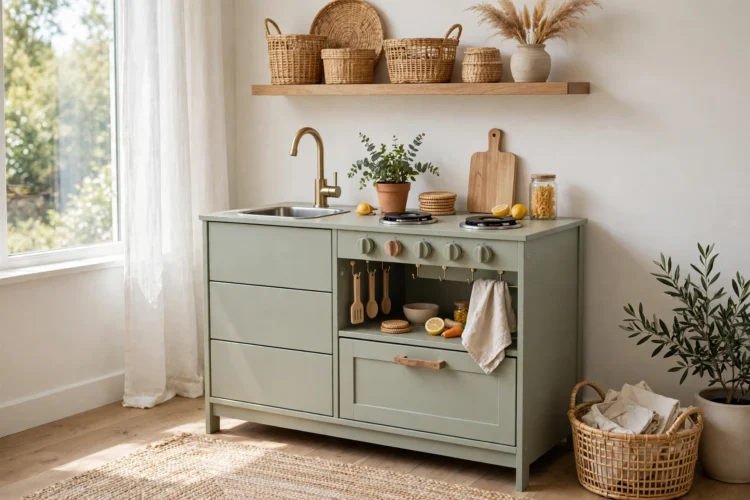
A small dresser makes a convincing play kitchen with a little imagination and a few hardware store finds. Paint the top a cheerful color, screw a small metal bowl into the top as a sink, and add a row of knobs across the front to suggest stove burners. A piece of dowel or a towel bar on the side holds play dish towels, and the drawers store play food and pots.
Keep the piece low enough for a toddler to reach the sink and knobs while standing. Round over sharp corners with sandpaper and choose a washable paint, since play kitchens collect fingerprints and the occasional marker stroke. If you want the piece to last through several kids, pick a solid wood dresser rather than a flat-pack one, since it survives being climbed on far better. These no-power-tool DIY projects include simple builds like this one that need little more than a screwdriver and sandpaper.
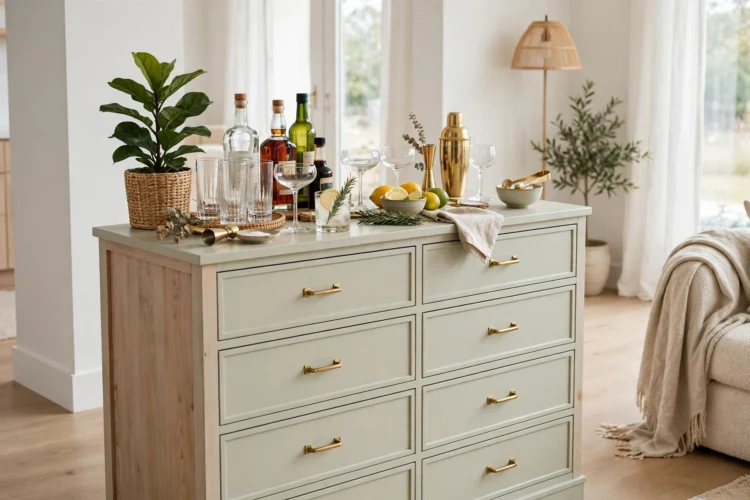
A dresser with a deep top drawer becomes a bar station when you remove that drawer and fit a shelf for bottles inside the opening. The top holds glasses and a small tray, the drawers hold bottle openers, napkins, and cocktail tools, and a strip of LED lights under the top shelf makes the bottles glow in the evening. Add a wine glass rack under the top board if the dresser has an overhang.
The same piece works as a coffee bar with a simpler setup. Set the coffee maker on top, keep mugs in the top drawer, and store beans, filters, and sugar in the drawers below. A small chalkboard on the side lists the drinks of the week, and a tray catches drips. For styling help once the piece is built, these bedroom dresser styling ideas show how to arrange objects on a dresser top so it looks curated instead of cluttered.
Before you buy a new piece of furniture, walk through your home and ask what each room is missing. Chances are a dresser you already own can fill the gap with a few hours of work. Pick the project that fits your space, gather your paint and hardware, and start the makeover this weekend.