Physical Address
304 North Cardinal St.
Dorchester Center, MA 02124
Physical Address
304 North Cardinal St.
Dorchester Center, MA 02124

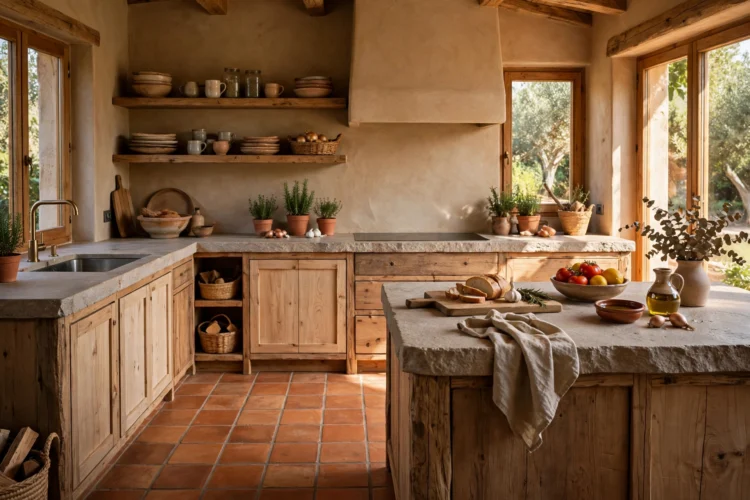
Clay, wood, and stone bring a grounded, organic feel to the kitchen. These eleven ideas show how to use them in balance.
An earthy kitchen feels calm the moment you walk in. Clay, wood, and stone do the work, not bright color or busy pattern. These earthy kitchen ideas build a grounded palette from terracotta, sand, olive, and raw wood, and they show how to bring nature tones in without turning the room into a log cabin. The trick is balance. Pick two or three earthy materials, repeat them in small doses, and leave enough pale surface for light to move around. The ideas below work one at a time or together, and most of them need no full renovation.
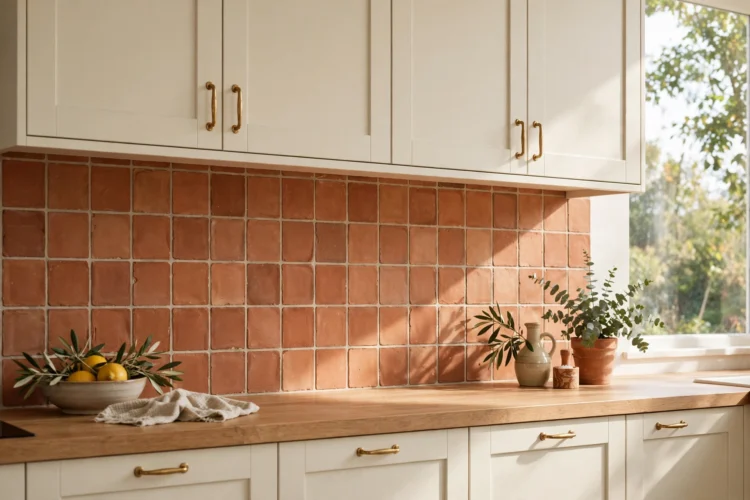
A terracotta tile backsplash is the fastest way to set an earthy tone. The warm clay color sits between orange and brown, so it reads as warm without shouting. Handmade-look tiles with slight color variation beat flat, factory-perfect ones here, because the uneven glaze is what makes the wall feel crafted rather than printed. Keep the grout close to the tile color so the surface reads as one warm field instead of a grid.
Terracotta pairs well with cream cabinets and a pale countertop, which keep the wall from closing the room in. If your kitchen is small, run the tile only between the counter and the upper cabinets and stop there. A full wall of terracotta can feel heavy in a tight space, but a single band gives you the color and the texture in the right dose. For more tile inspiration, see these zellige tile backsplash ideas that use handmade texture in a similar way.
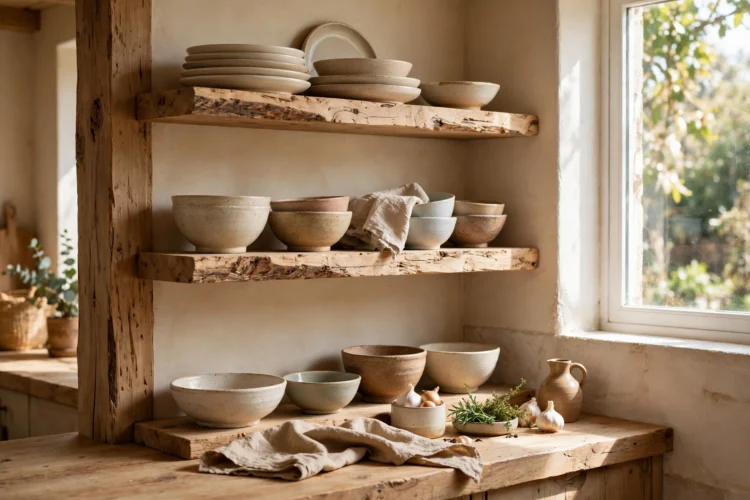
Open shelves in raw or lightly oiled wood soften a kitchen full of hard surfaces. The grain adds pattern without a printed design, and the warm tone ties the room to the floor and the table. Use shelves for the things you reach for daily, like plates, bowls, and glasses, so they stay in rotation and never gather dust as decoration. Two shelves on one wall are usually enough. A whole wall of open shelving looks good in photos and gets tiring to keep tidy in real life.
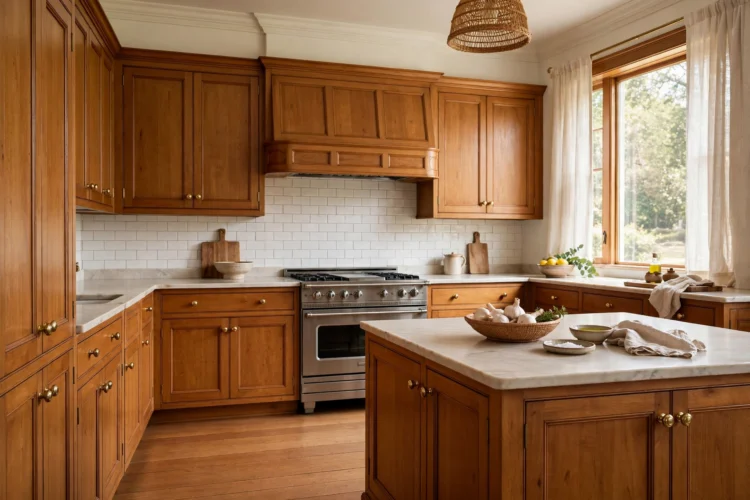
Choose a wood tone that matches something already in the room, such as the floor or a cutting board collection, so the shelves feel planned rather than added. If your cabinets are painted, wood shelves break up the painted surface and stop the room from feeling flat. These wood kitchen cabinet ideas show how the same warm tones work across a full cabinet run.
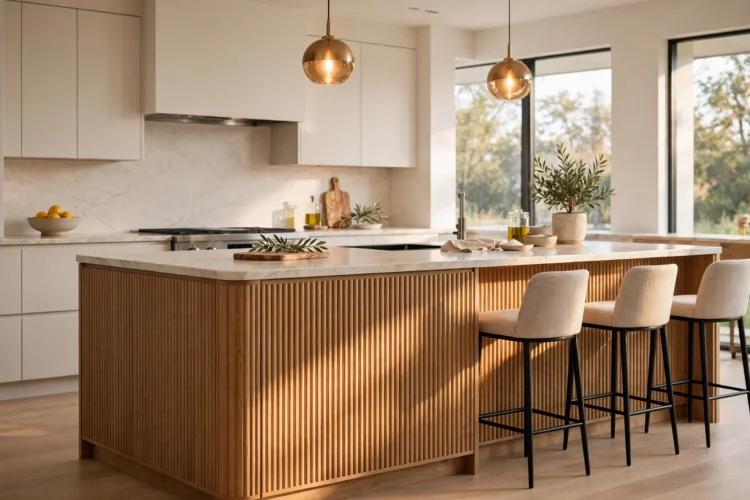
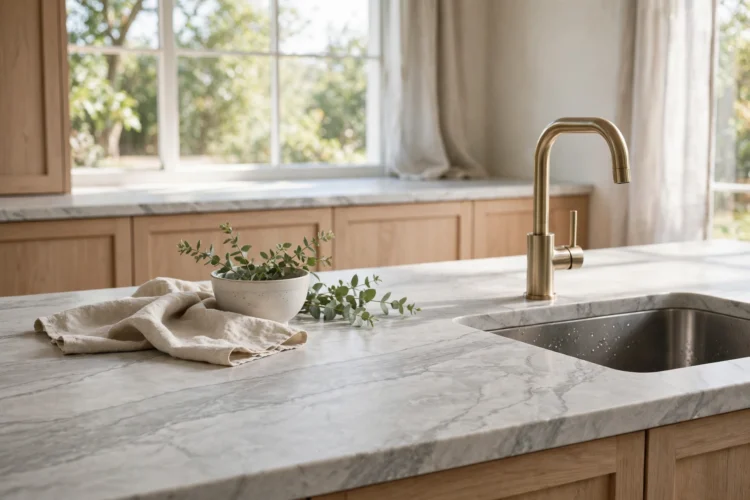
A stone countertop with clear veining brings the outdoors in without adding a single color. Gray, beige, or soft brown veins on a pale stone slab give the eye something to follow, and the surface stays practical for daily cooking. Honed finishes feel more earthy than polished ones, because they soften the shine and show the stone texture. A honed surface also hides small marks better, which matters on a counter that gets used every day.
Keep the rest of the palette quiet when the stone is the star. Cream cabinets, a simple faucet, and plain hardware let the veining carry the visual weight. If a full stone slab is out of reach, a stone-look surface or a thick wooden counter can give a similar grounded feel. These butcher block countertop ideas show how a warm wood counter plays the same grounding role.
Paint is the cheapest way to test an earthy palette. Clay, sand, and warm greige tones wrap the room in warmth without committing you to new cabinets or tile. A matte or eggshell finish suits these colors best, because a glossy wall fights the soft, mineral feeling you are after. Paint one wall first and live with it for a week before you commit to the whole room, since earthy paint shifts a lot between morning and evening light.
Warm wall colors need warm white trim, not bright white, or the contrast will look cold and accidental. If your cabinets are already white, a clay wall behind them creates a gentle frame instead of a stark edge. Add one darker element, such as a wood shelf or a black faucet, so the room keeps some contrast and does not blur into one beige wash.
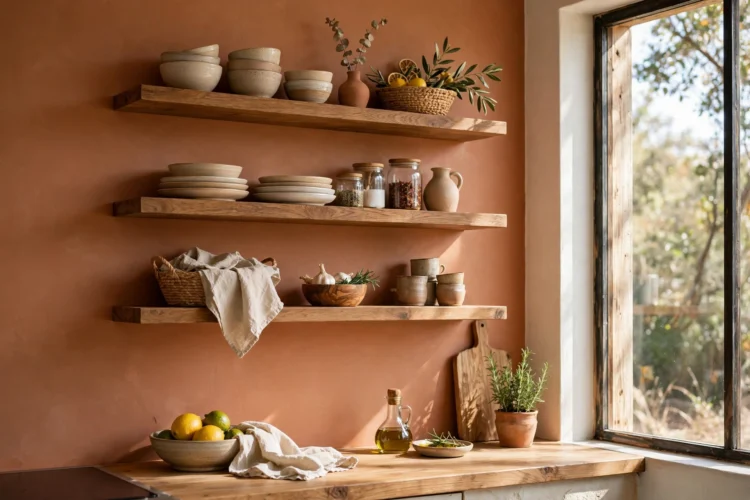
Olive green lower cabinets ground a kitchen the way a dark floor does, but with more character. The color reads as a plant tone rather than a paint color, so it sits naturally next to wood and stone. Pair olive lowers with pale uppers or open wood shelves so the room keeps its light. Brass or bronze hardware warms the green further, while black hardware pushes it toward a more modern look.
Olive works in both small and large kitchens because it is a mid-tone, not a dark one. It hides cooking marks better than white and feels less severe than charcoal. If you want to see how green behaves across a whole cabinet run, these green kitchen cabinet ideas from sage to forest cover the full range from soft to deep.
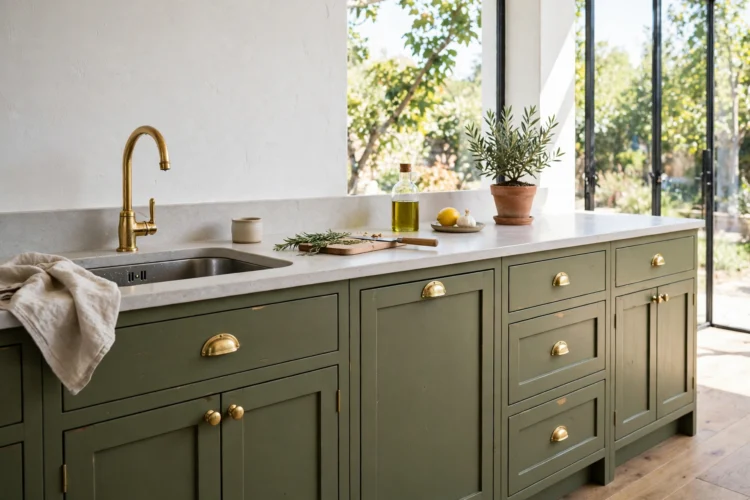
A stone floor sets the earthy tone from the ground up. Slate, limestone, and travertine each bring their own texture, and all three age well because small marks blend into the natural surface. Large format tiles with few grout lines keep the floor calm, while smaller tiles with visible grout feel more cottage-like. Pick the scale that matches the rest of the room.
Stone floors feel cold underfoot in winter, so a washable runner in a flat weave adds warmth where you stand most, usually in front of the sink and the stove. A jute or cotton runner also softens the sound of a hard floor. If real stone is not practical, a stone-look tile with a matte finish gives most of the feeling at a lower cost and with easier upkeep.
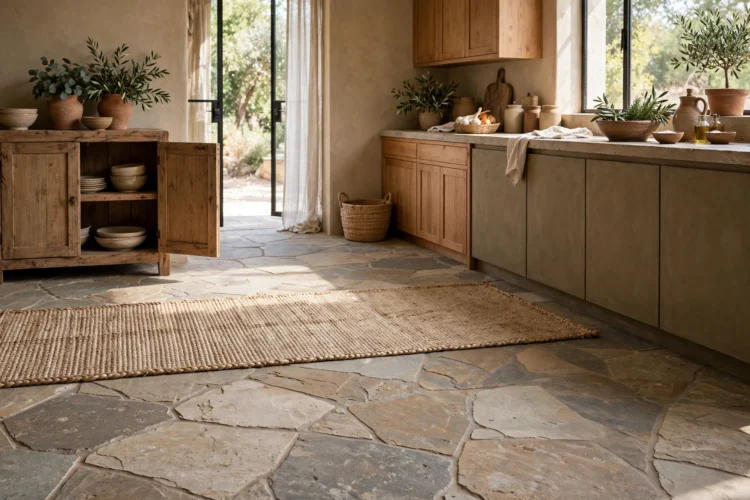
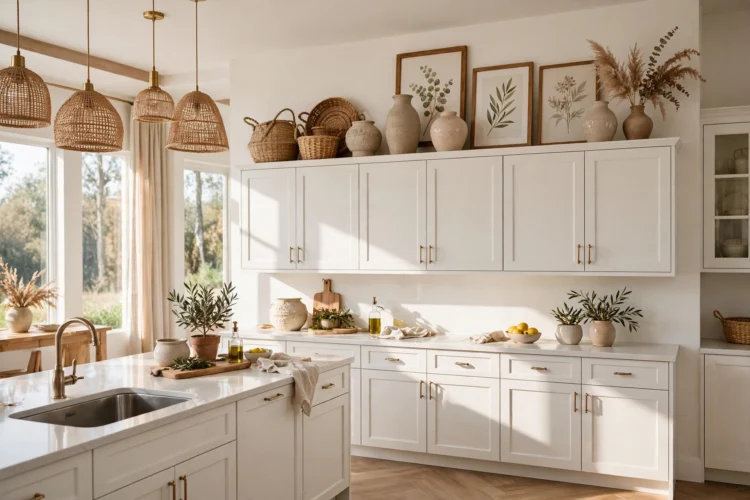
Soft materials stop an earthy kitchen from feeling like a showroom of hard surfaces. Linen curtains, a jute runner, and woven baskets add the texture that stone and tile cannot. Keep the colors in the same warm family as the rest of the room, such as oatmeal, sand, and undyed cotton, so the textiles blend in rather than compete. One woven pendant shade over the island can do the same job as a whole set of accessories.
Textiles also let you change the room with the seasons. Swap a heavy runner for a light cotton one in summer, or trade linen towels for a thicker weave in winter. Because these pieces are cheap and easy to move, they are the safest place to experiment before you commit to a bigger earthy change like new cabinets or a stone floor.
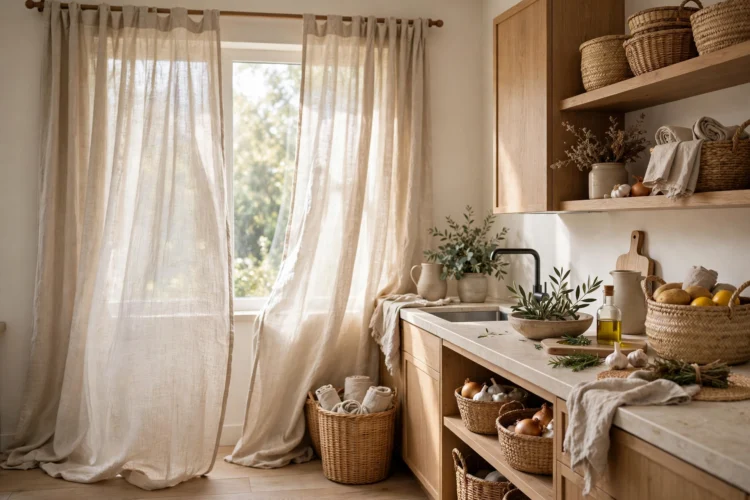
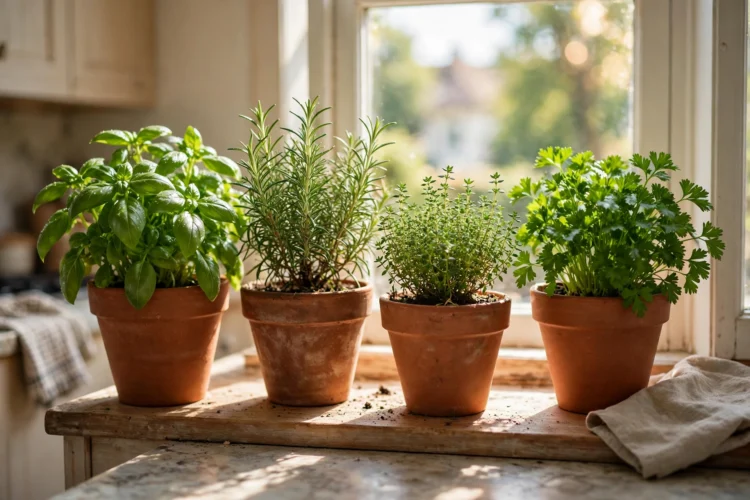
Clay pots are the smallest earthy gesture and one of the most effective. A row of terracotta pots with basil, parsley, and mint on a windowsill adds living green and warm clay color at the same time, and the herbs earn their place by going straight into dinner. Unglazed pots look best in this palette because their matte surface matches stone and raw wood.
Group pots in odd numbers and vary the heights so the sill reads as a small arrangement rather than a line of identical containers. A single large olive or fig tree in a clay pot can anchor a bare corner, while a hanging planter keeps the counter clear in a small kitchen. Water herbs in the sink and let the pots drain fully, since standing water stains both the pot and the sill beneath it.