Physical Address
304 North Cardinal St.
Dorchester Center, MA 02124
Physical Address
304 North Cardinal St.
Dorchester Center, MA 02124

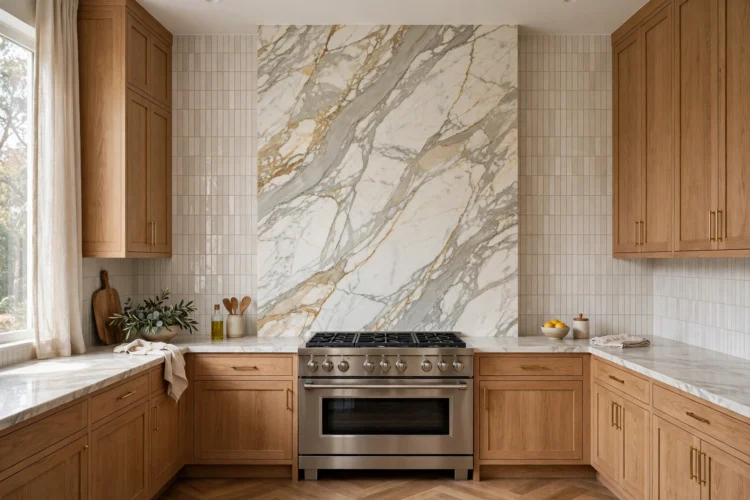
Seven backsplash ideas that run all the way to the ceiling, making kitchens feel taller and more finished, from marble slabs to antiqued mirror.
Most backsplashes stop at the bottom of the upper cabinets, which leaves an awkward painted strip that collects grease and never quite looks finished. Taking the tile all the way to the ceiling erases that strip and changes the whole proportion of the room. A backsplash to ceiling treatment pulls the eye upward, makes standard eight-foot ceilings feel taller, and gives the kitchen a tailored, intentional look. It works in galley kitchens, behind open shelving, and especially well on the range wall. Here are seven ways to do it, from full-height stone to full-height brick.
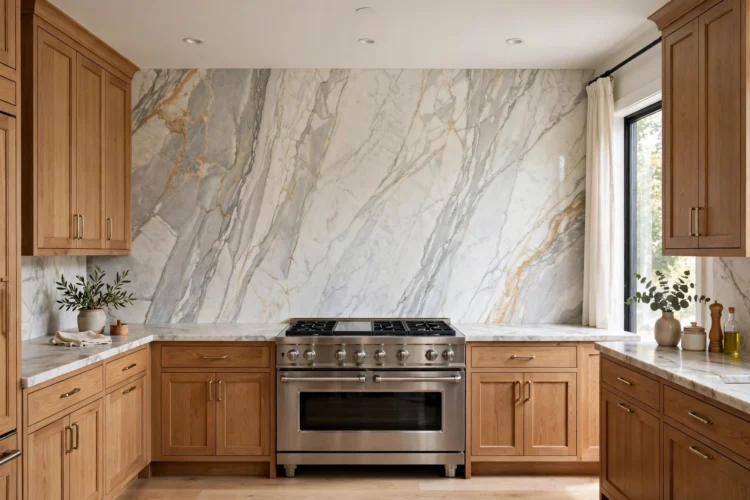
Nothing says finished like a single marble slab running from counter to ceiling. Without grout lines or cabinet breaks, the stone reads as one continuous surface, and the veining becomes the artwork. Book-matched slabs, where two panels mirror each other, create a symmetrical pattern that looks deliberate and high-end. This is the priciest option on the list, since large slabs need professional templating and installation, and the wall behind them must be perfectly flat. The result, though, is a range wall that needs no art, no decor, and no apology. Keep the surrounding palette quiet so the stone carries the room.
Pair the slab with a simple stainless or integrated hood so nothing competes with the stone. If real marble is out of reach, large-format porcelain panels now mimic veining convincingly and resist etching from lemon and tomato splashes that would mark natural stone.
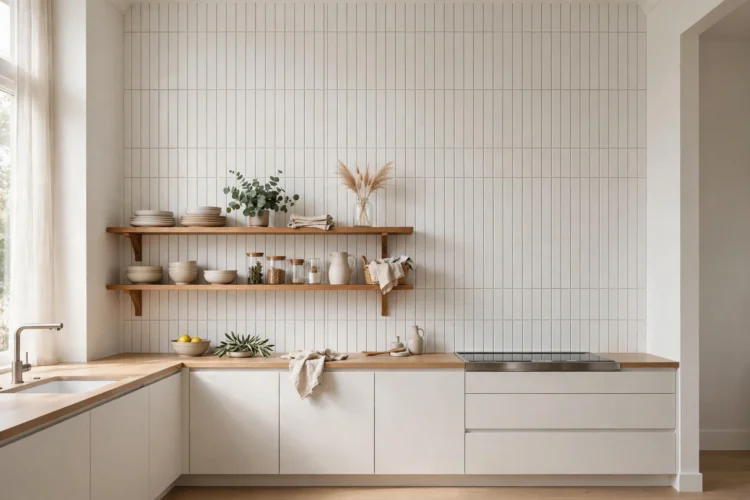
Standard subway tile, stacked vertically instead of offset horizontally, is the budget-friendly way to go full height. The vertical lines emphasize height, which is the whole point, and the familiar 3-by-6 tile keeps material costs low. Run it behind open shelving so the tile becomes the backdrop for dishes and glassware, or take it up the entire range wall for a clean column of texture. A handmade-look subway with slight glaze variation adds warmth that flat machine-made tile lacks. Grout in a matching white keeps it calm; a contrasting gray grout turns each tile into a graphic element.
For renters who cannot retile, peel-and-stick subway panels in a vertical stack deliver a similar look for a season or two. They will not fool anyone up close, but from across an open-plan room the vertical lines still do the height trick.
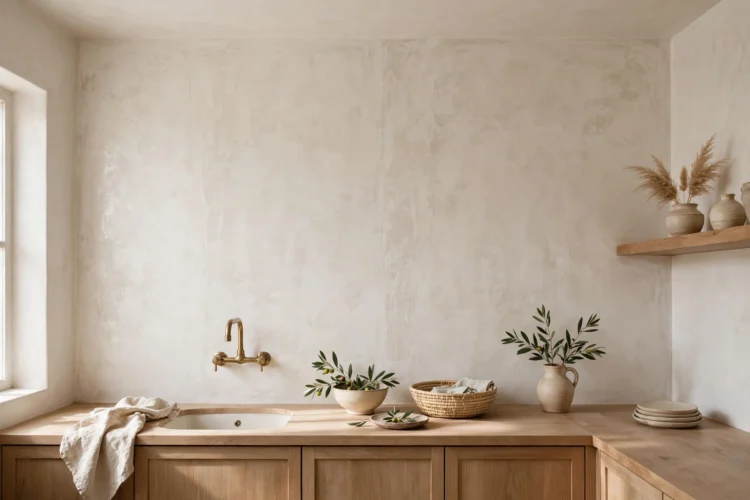
Tadelakt, the waterproof Moroccan plaster, and its simpler cousin limewash both create a seamless, hand-troweled wall from counter to ceiling. There are no grout lines at all, just soft movement in the finish that catches light beautifully. This is the right choice when you want texture without pattern. A warm white or pale greige plaster keeps a white kitchen cohesive while adding the depth flat paint cannot. Hire a plaster specialist rather than a general tile setter. The application technique is specific, and a bad trowel job shows at full height. Sealed properly, the surface wipes clean like tile.
Color-wise, plaster takes pigment beautifully. A soft sage or warm clay wash adds color without pattern, and the tonal variation keeps it from reading flat. Avoid pure bright white plaster behind a range, since cooking haze shows faster on it than on tile.
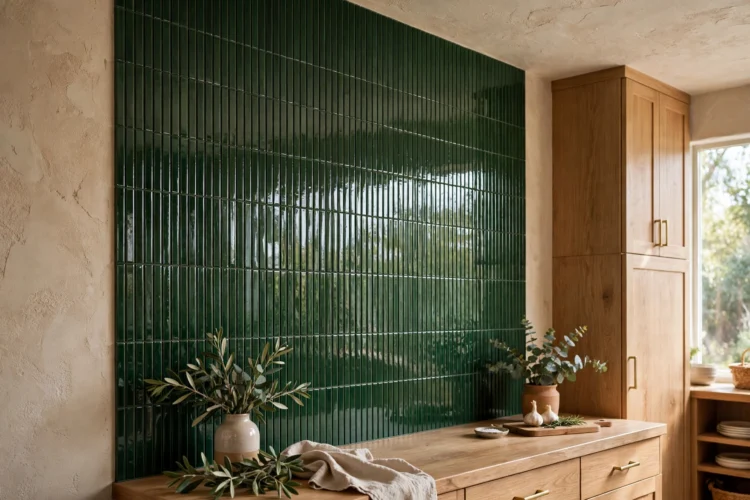
Kit-kat tile, the slim finger mosaic that comes on mesh sheets, looks made for full-height installations. The narrow vertical strips naturally draw the eye up, and at ceiling height the texture reads almost like fabric. Install it in a straight vertical stack for maximum height emphasis, or rotate the sheets ninety degrees for a horizontal ribbed effect that feels more retro. Glossy finishes in deep green, ink blue, or warm putty bounce light around and keep the tall wall from feeling heavy. Because the sheets are small, this tile forgives slightly uneven walls better than large-format options do.
Grout choice changes the whole effect. A matching grout lets the ribs read as texture, while a contrasting grout turns every finger into a stripe. In small kitchens, matching grout keeps the tall wall calm. For a dramatic feature wall, go contrast.
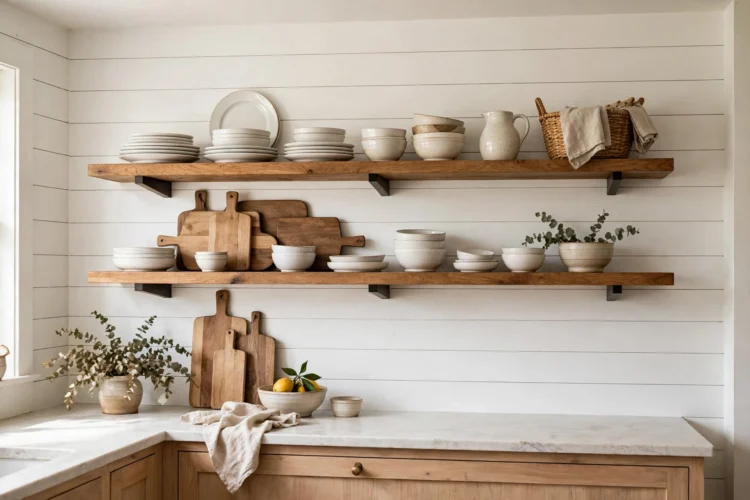
Painted shiplap taken to the ceiling brings farmhouse warmth to the full-height trend at a fraction of tile cost. The horizontal grooves add shadow lines that give the wall dimension, and a coat of scrubbable satin paint makes it practical behind a range. Run the boards behind floating shelves so dishes and cutting boards layer over the texture. One caution: building codes in some areas restrict combustible materials near gas ranges, so check local rules or use a tile or stone section directly behind the cooktop with shiplap everywhere else. The mixed-material look is often better anyway.
Wider boards, six to eight inches, look more current than narrow beadboard-style planks, and they collect less dust in the grooves. Paint the shiplap the same white as the cabinets for a seamless built-in feel, or go one shade deeper for subtle definition.
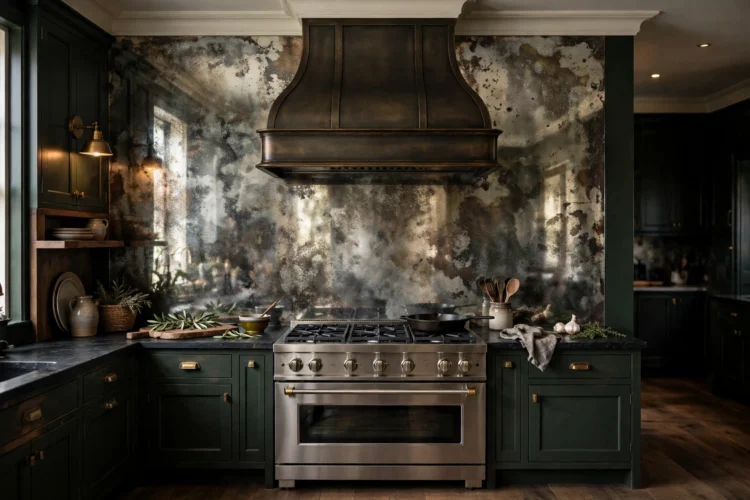
A full-height smoked mirror or antiqued glass backsplash does two jobs at once. It protects the wall and it visually doubles the kitchen by reflecting light and space. In a small or dark kitchen, this is the single most transformative option on the list. Antiqued mirror, with its foxed and mottled patina, hides splatter and fingerprints far better than clear mirror, which shows everything. Have it cut in as few panels as possible and sealed at the edges against moisture. Pair it with simple cabinetry and let the reflection be the decoration. It is dramatic without adding a single new color.
Tempered glass is the safer pick behind a gas range, since it handles heat better than standard mirror. Ask the glass shop for low-iron glass if you want the truest reflection without the green edge tint that standard glass carries.
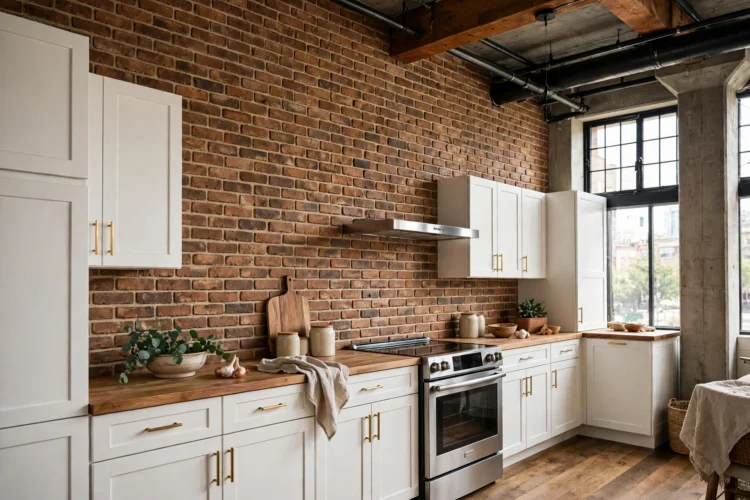
Real thin brick veneer run to the ceiling gives a kitchen the bones of an old loft, even in new construction. The texture is unmatched, and the warm reds and browns play beautifully against white or sage cabinets. Real brick needs sealing to resist grease, and the mortar joints collect dust, so this is a higher-maintenance pick. Brick-look porcelain panels offer the same texture with a wipeable glazed surface and no sealing. Either way, full height is what sells it. A brick strip that stops at cabinet height reads as an accent. Brick that keeps climbing reads as architecture.
Whitewashing the brick softens the rustic edge for transitional kitchens. A German schmear finish, where mortar is smeared across the brick face, lightens the wall while keeping the texture. Both finishes still need a sealer in the splash zone behind the range.
Full-height tile uses roughly twice the material of a standard backsplash, so measure the wall and price it before you fall in love. Then order one box of your top choice, lean it against the wall, and step back to the farthest corner of the room. That is the view you are designing for. If the budget is tight, tile the range wall full height and keep the side walls standard. The tall focal wall delivers most of the drama for half the tile.