Physical Address
304 North Cardinal St.
Dorchester Center, MA 02124
Physical Address
304 North Cardinal St.
Dorchester Center, MA 02124

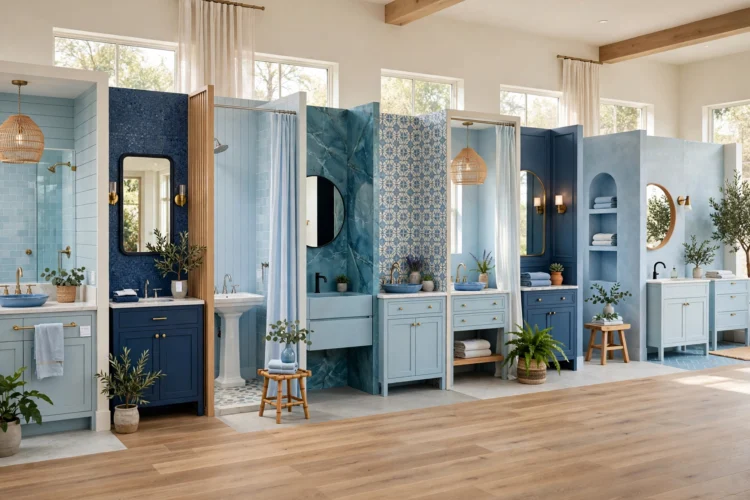
Blue reads calm and fresh in a room built around water. These ten ideas pair navy, powder blue, and pale tile with the whites, woods, and brass that keep it warm.
Blue is the color most people reach for in a bathroom, and for good reason: it reads clean, calm, and fresh in a room built around water. These blue bathroom ideas cover the full range, from pale blue tile that brightens a windowless room to a navy vanity that anchors a big one. The trick is pairing the blue with the right partners, white to keep it fresh, wood to keep it warm, and brass to keep it from feeling cold. A blue bathroom can feel like a spa or a seaside cottage depending on the shade you pick, and these ten ideas show how to get the version you want. Start with the shade, then match the fixtures to it.
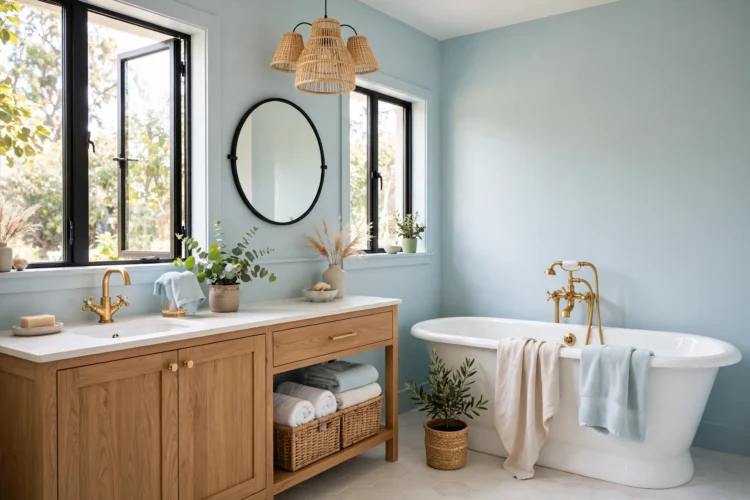
A pale blue wall is the gentlest way into a blue bathroom, and it works in almost any light. The color reads fresh without feeling cold, and it makes white fixtures look brighter by contrast. Pick a pale blue with a warm gray base for north-facing rooms, where cool light can turn a blue wall icy, and a cleaner sky blue for sunny rooms. Test a large swatch at morning and evening light, since blue shifts more than any other color as the light changes.
A moisture-resistant bathroom paint in eggshell or satin handles the steam and wipes clean after splashes. For more shades that suit a small room, these bathroom paint color ideas cover pale greens, warm whites, and other calm colors that keep a bathroom feeling fresh. Pale blue is the blue to start with if you are new to color, and it is the hardest one to regret.
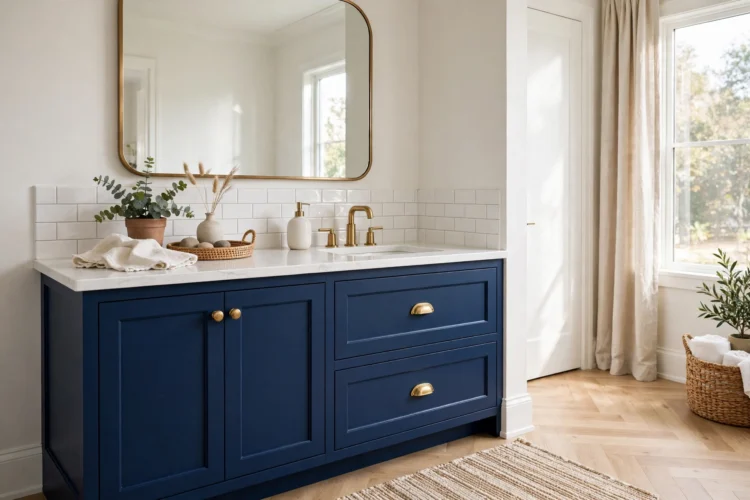
A navy vanity is the boldest move on this list, and it works because the color sits low in the room where it grounds the space instead of closing it in. Paint the vanity in a satin or semi-gloss finish so it wipes clean, and pair it with a white countertop and a pale wall so the navy has room to breathe. Brass pulls warm the navy up, while matte black hardware keeps it modern. A navy blue bathroom built around the vanity needs only that one strong piece, and the rest of the room can stay quiet.
If the vanity is the only navy in the room, repeat the shade once more in a towel or a small rug so the color feels intentional. A blue bathroom vanity is a weekend paint project with a renovation-level payoff, and it costs a fraction of replacing the cabinet. Hang one of these bathroom mirror ideas above it, a slim brass frame or a simple arch, and the vanity wall becomes the focal point of the room.
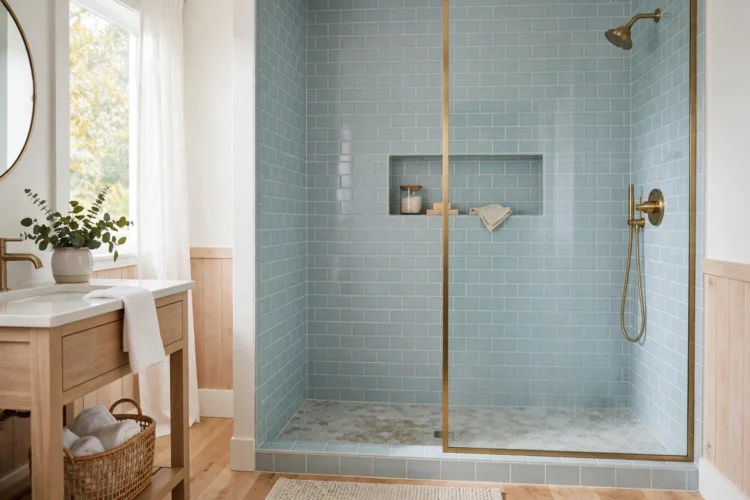
Pale blue tile in the shower gives the room a blue heart without painting every wall. A glossy pale blue subway tile reflects light and makes a small shower feel brighter, while a matte finish reads softer and more handmade. Run the tile to the ceiling so the blue reads as a deliberate field of color, and keep the floor tile pale so the room stays grounded. Light blue bathroom tile also survives steam better than paint, since tile never peels.
For pattern ideas that work in a small shower, these subway tile bathroom ideas show brick, stacked, and herringbone layouts. Keep the grout sealed and choose a grout color close to the tile so the field reads as one calm surface.
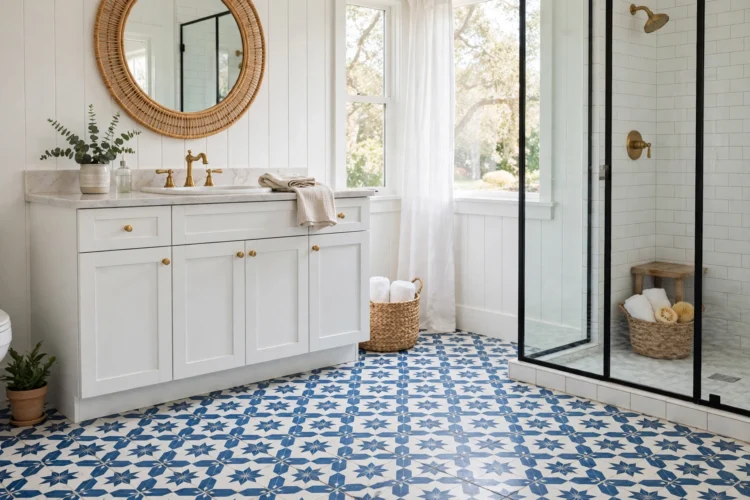
A patterned blue floor gives the bathroom a foundation that the pale walls can sit on. Encaustic-look tiles in blue and white add pattern without adding a second color family, and the pattern hides dust and water spots between cleanings. Keep the walls pale and the fixtures white so the floor stays the star, and repeat the blue once on the wall in a towel or a soap dish so the room feels connected. A patterned floor suits small bathrooms best, since the pattern reads as one rug-like field underfoot.
For more floor patterns that suit a wet room, these bathroom tile floor ideas cover checkerboard, herringbone, and large-format looks. Choose a tile with a matte finish and a high slip rating for the floor, since a wet bathroom floor has to be safe as well as pretty. The pattern costs no more than a plain tile, and it is the easiest way to make a small bathroom feel designed.
Blue turns cold fast when it meets chrome, so warm brass is the metal that keeps a blue bathroom feeling welcoming. A brass faucet, a brass-framed mirror, and brass towel bars add enough warmth to balance even a deep navy, and the metal picks up the warm tones in the wood and the towels. Use the same brass finish across the room, and keep it unlacquered if you like a patina that deepens over time.
If brass feels too traditional, brushed gold or a warm copper gives the same effect with a softer shine. These brass fixture bathroom ideas show how the metal works with blue, green, and white tile alike. The rule is simple: the deeper the blue, the warmer the metal should be.
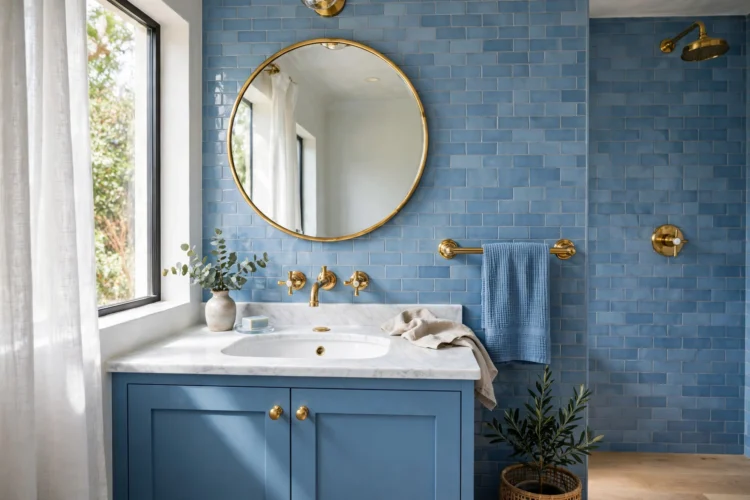
White shiplap and blue paint are a natural pair, and together they read like a coastal cottage without a single seashell in sight. Paint the lower walls a soft blue and cap them with white shiplap above, or reverse it with blue shiplap below and a pale wall above. The horizontal lines of the shiplap stretch a narrow bathroom wider, and the white keeps the room bright even when the blue goes deep. This is the classic blue and white bathroom combination, and it has stayed popular because it is hard to get wrong.
Use moisture-resistant shiplap or a PVC version in the shower zone, since real wood swells in constant steam. Keep the grout and the fixtures white so the blue and the shiplap stay the focus. The combination suits a guest bathroom especially well, since it reads clean and welcoming the moment someone walks in.
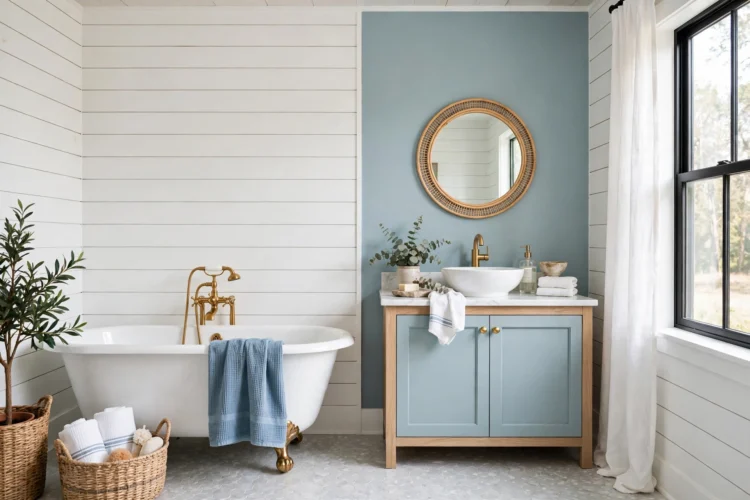
A blue shower curtain is the cheapest way to test whether blue belongs in your bathroom, and it takes five minutes to try. A solid navy curtain adds drama to a white room, while a pale blue curtain softens a room that feels too stark. If the curtain works, repeat the shade in towels and a bath mat; if it does not, swap it back and you have lost nothing. The curtain also softens the hard edges of tile and glass, which makes the room feel less like a laboratory.
Choose a fabric curtain with a liner rather than a plastic one, since fabric hangs better and looks like a deliberate choice. Wash it regularly to prevent mildew, and keep a second curtain in a different shade so you can change the room with the seasons. A shower curtain is the lowest-commitment idea on this list, and it is the best one to try first.
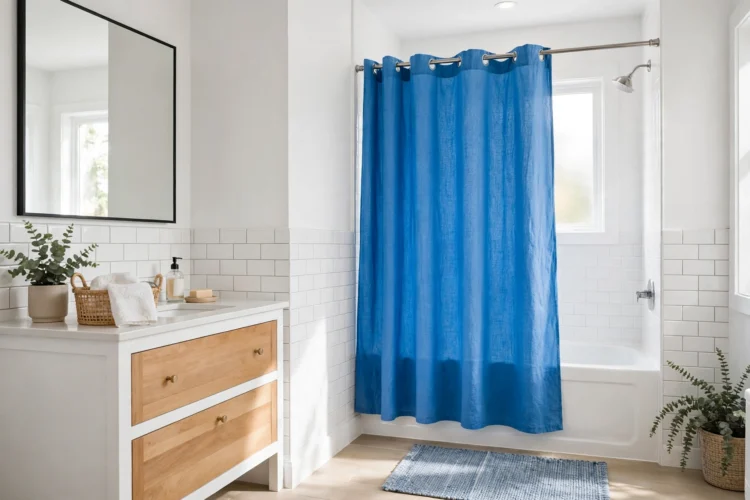
Two blues in one bathroom work when one is deep and one is pale, and they share the same cool base. Try navy on the vanity with powder blue on the walls, or a navy shower curtain against a pale blue tile. The contrast gives the room depth without adding a second color family, and the eye reads the two shades as one calm story. Keep the metals and the wood consistent so the room has one warm thread running through it.
Test the two shades side by side on a large board before you commit, since blues that look close in the store can clash on the wall. If the pair feels wrong, drop the paler shade and let the navy carry the room alone. Mixing blues is the most advanced idea here, and it rewards the extra testing with a bathroom that looks designed rather than decorated.
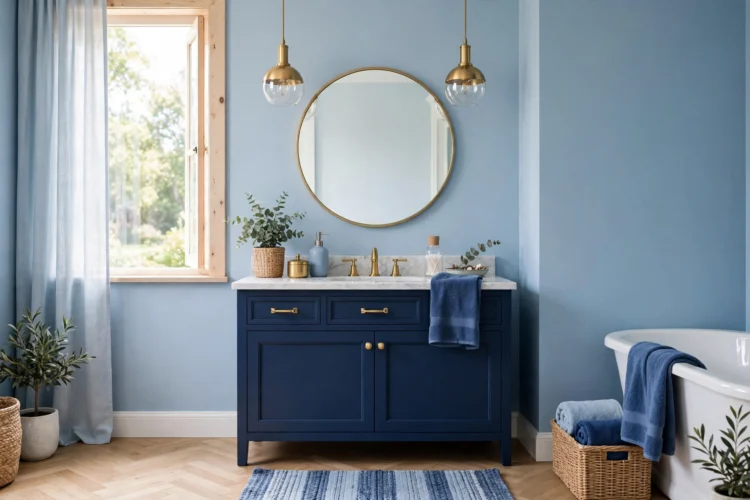
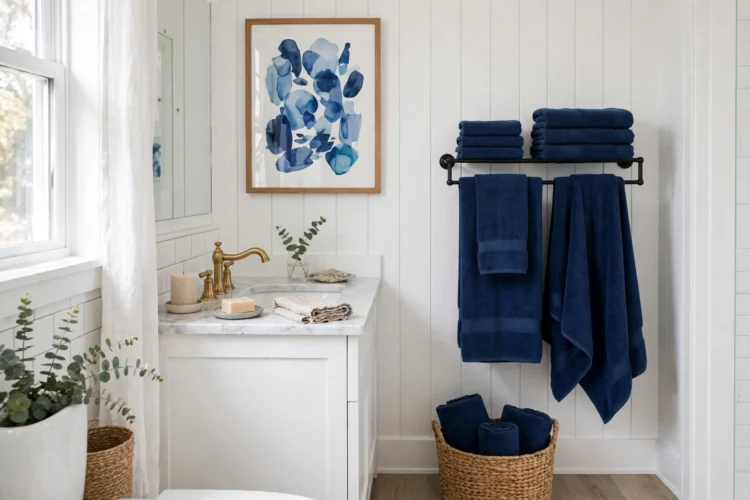
If paint and tile feel like too much commitment, let towels and art carry the blue. A stack of navy towels, a blue bath mat, and one framed print with a blue sea or sky give the room a blue story that you can change in an afternoon. Choose towels in one blue shade and repeat it in the mat and the shower curtain so the color feels planned. Natural materials help too: a wooden bath mat, a stone soap dish, and a woven basket all sit comfortably next to blue.
Hang the art where it stays dry, away from the direct shower spray, and choose a frame that matches the metal in the room. This is the lowest-cost idea on the list, and it is the best one to try first if you are still deciding how much blue you really want. A bathroom that starts with towels can grow into a full blue room one piece at a time.
A white ceiling is the quiet partner that makes every blue in the room work harder. It reflects light down onto the blue walls and tile, so the room stays bright even when the blue goes deep. Paint the ceiling in a flat white finish to avoid glare from the vanity lights, and keep it white even if the walls go navy. The contrast between a deep blue wall and a white ceiling is what keeps the room feeling fresh rather than dark.
If the ceiling already has a tint from an old paint job, a fresh coat of white is a one-hour fix with an outsized payoff. White ceilings cost nothing extra, and they are the easiest way to make a blue bathroom feel calm and fresh. Start with the ceiling, then build the blue downward from there.
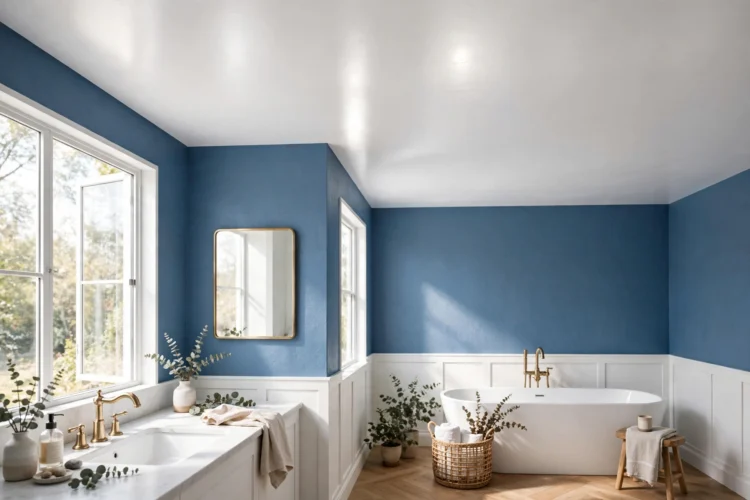
Pick your blue first, then let the metal, the wood, and the fixtures follow it. Pale blue is the safe start, navy is the bold move, and a mix of the two gives the room depth. Test the shade in your own light, live with a swatch for a week, and the bathroom will tell you whether the blue belongs there.