Physical Address
304 North Cardinal St.
Dorchester Center, MA 02124
Physical Address
304 North Cardinal St.
Dorchester Center, MA 02124

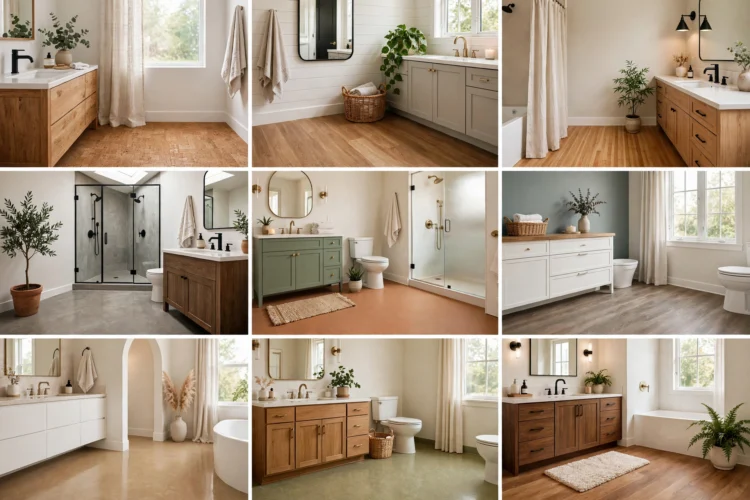
Tile is not the only floor that can handle a wet bathroom. These nine alternatives bring warmth, grip, and style without a single grout line to scrub.
Most bathroom floors are tile for a good reason: tile shrugs off water. But tile is cold under bare feet, hard on dropped bottles, and the grout lines collect grime no matter how often you scrub. These non tile bathroom flooring ideas prove you can skip tile without inviting water damage. Each option below handles steam, splashes, and wet feet, and each one brings something tile cannot, from the warmth of cork to the seamless look of poured concrete. Before you pick, check the product rating for wet areas and plan how water will drain away from the floor. A floor that looks good on day one still needs the right underlay and sealing to last.
Tile earned its place in bathrooms, but it is not the only floor that can survive daily splashes. The best non tile bathroom flooring ideas start with the same question tile answers: how does this floor handle standing water, steam, and wet feet? A good answer needs a sealed wear layer, tight seams, and a subfloor that stays dry, and that is what good waterproof bathroom flooring comes down to. Skip any product rated only water resistant for a full bath with a shower, and save it for a powder room instead. Measure the room, check the slip rating, and budget for the underlay and sealant, not just the surface. Get those basics right and the floor you pick will look good long after the first year.
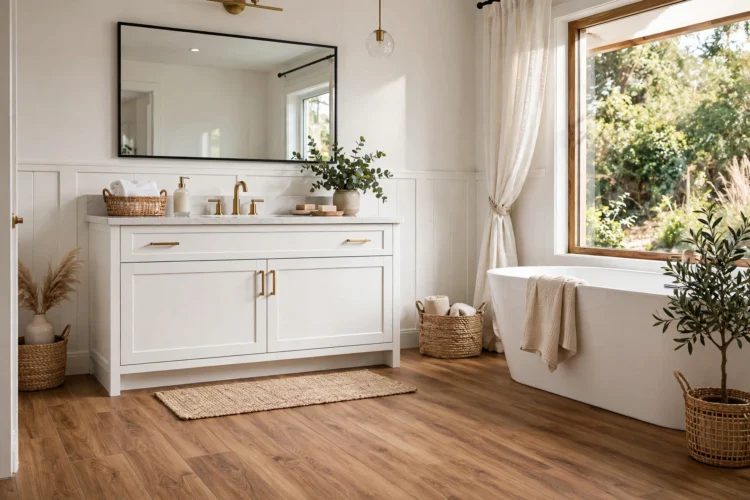
A vinyl plank bathroom floor is the closest thing to a direct tile replacement. The planks click together, the core does not swell when wet, and the wear layer shrugs off shampoo, toothpaste, and dropped bottles. Pick a plank rated fully waterproof, not just water resistant, and look for a wear layer of at least 12 mil for a family bathroom. The wood and stone looks are convincing from standing height, and the floor feels warmer than tile on cold mornings. Install it over a flat, level subfloor, leave the expansion gap the maker specifies, and seal the edges around the tub and toilet with silicone. In a wet room bathroom, run the planks wall to wall and let the shower drain handle the rest.
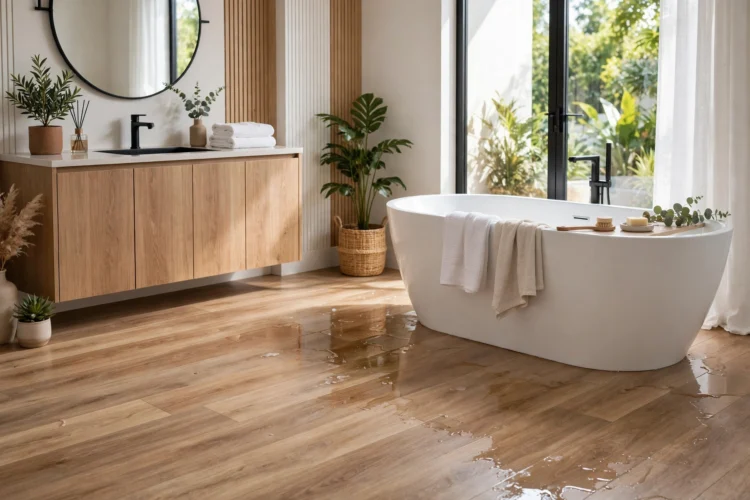
Sheet vinyl is the budget pick that hides its price well. One sheet covers most bathrooms with no seams at all, which means nowhere for water to sneak through. Modern prints copy wood, stone, and encaustic tile so well that guests rarely guess the material, and the cushioned backing feels soft under bare feet. Choose a felt-backed or fiberglass-backed sheet rated for wet areas, and have it coved a few inches up the wall behind the tub for extra protection. A single sheet also installs fast, often in half a day, which keeps labor costs low. Keep a spare offcut in the closet: if a corner ever tears, a patch blends in better than you would expect.
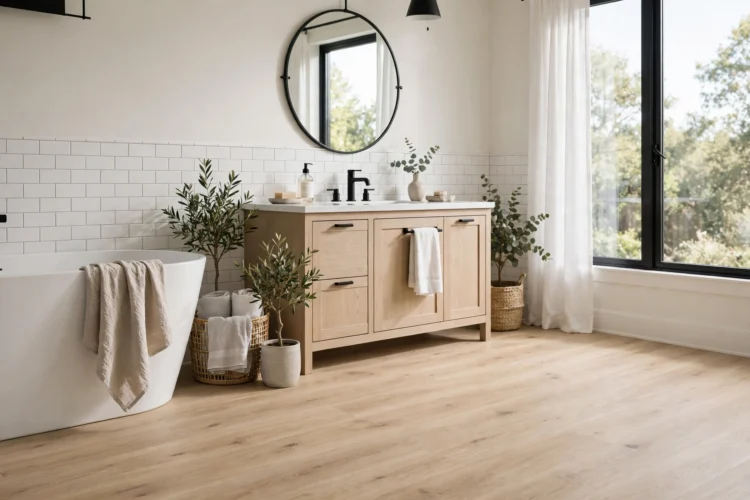
Laminate used to be a bad idea near water, but waterproof laminate changed the rules. The boards have sealed edges and a water-resistant core that can handle splashes and steam, and the wood grain prints run from pale oak to dark walnut. It suits a guest bath or a powder room best, and it works in a full bath if you wipe up puddles and keep the shower spray contained. Compare the look with patterned bathroom tile floors before you commit, since tile still wins on texture up close. Seal the perimeter with silicone, use a waterproof underlay, and skip the mop bucket: a damp cloth is all this floor needs.
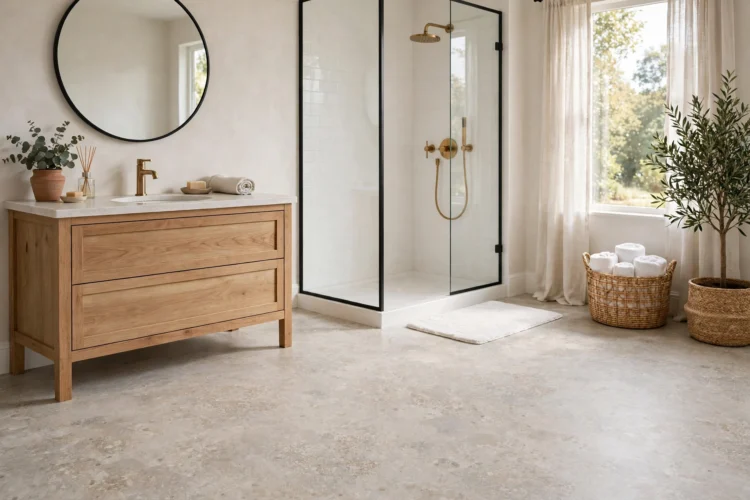
If your bathroom sits on a concrete slab, the floor is already there. Grind it smooth, stain it a warm gray or soft brown, and seal it with a penetrating sealer topped by a matte finish coat. The result is one continuous surface with no grout and no seams, and it handles water without a second thought. Add a fine slip-resistant additive to the sealer, since polished concrete gets slick when wet. Concrete feels cold, so pair it with a rug at the vanity or radiant heat mats under the surface if the budget allows. Reseal every two to three years and the floor will outlast every other finish in the room.
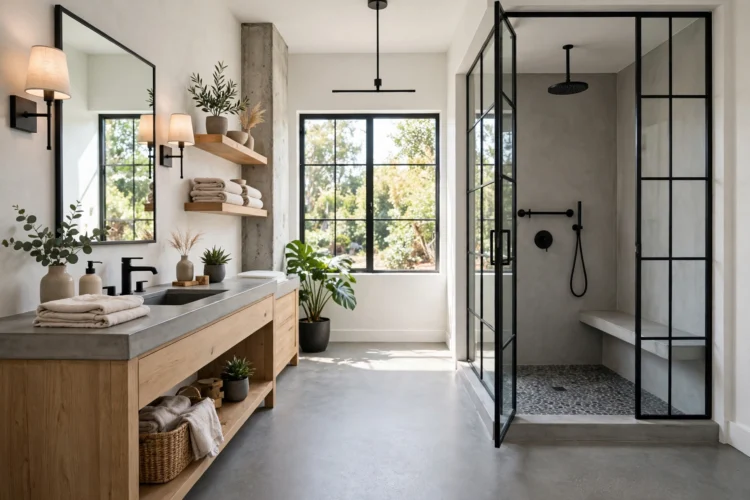
Cork is the warmest floor on this list, literally. It insulates, cushions each step, and stays comfortable on winter mornings without any heating underneath. Cork tiles made for bathrooms come pre-sealed with a waterproof finish, and the natural pattern hides water spots well. The catch is maintenance: reseal the surface once a year and wipe up standing water instead of letting it sit. Pair cork with simple bathroom storage ideas that keep bottles off the floor, since heavy furniture can dent the surface over time. In a low-traffic guest bath, cork can look good for a decade with basic care.
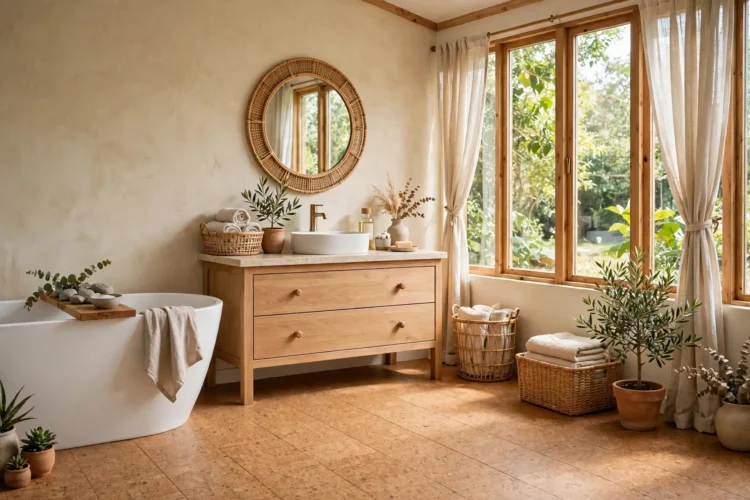
Real wood in a bathroom sounds risky, and it is, unless you pick the right product and treat it well. Engineered wood with a thick veneer and a factory-applied waterproof finish can work in a well-ventilated bathroom where the shower is enclosed and splashes get wiped up fast. Choose a species that tolerates humidity, like white oak or teak, and finish the edges and end grain during installation. Keep a small towel by the tub for drips, run the fan for twenty minutes after every shower, and never let water pool at the baseboards. In the right room, wood brings a warmth that no printed floor can copy.
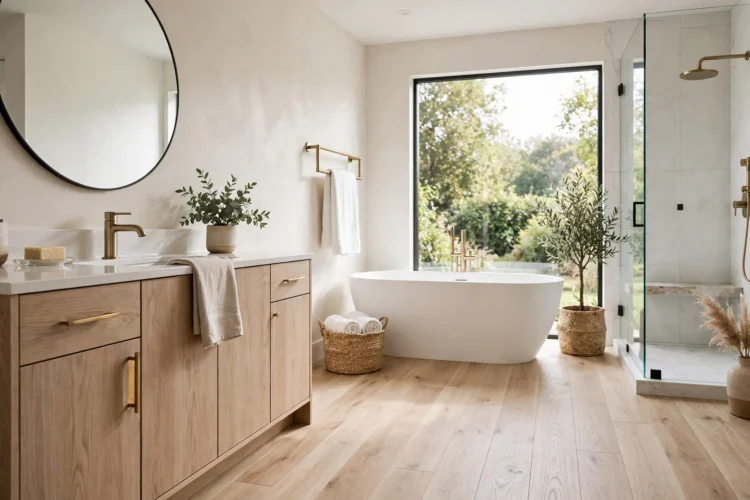
Rubber flooring is common in gyms for a reason: as a non slip bathroom floor it grips when wet, cushions falls, and shrugs off water completely. In a bathroom, rubber sheets or large tiles give the same benefits in a softer, quieter package. The look runs from speckled black to muted earth tones, and it suits a family bathroom or a laundry-bath combo where function matters more than form. Seams weld or butt together tightly, and the surface cleans with a damp mop. Test a sample with wet feet before you commit, and check the thickness: a 3 to 4 millimeter sheet feels firm, while thicker tiles feel almost springy underfoot.
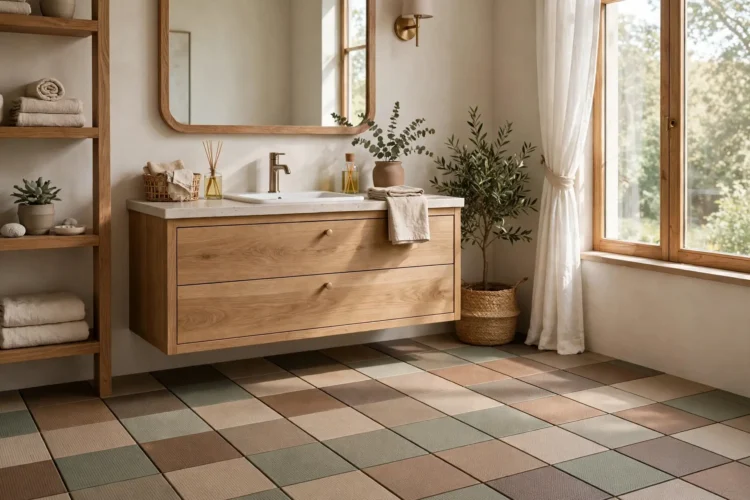
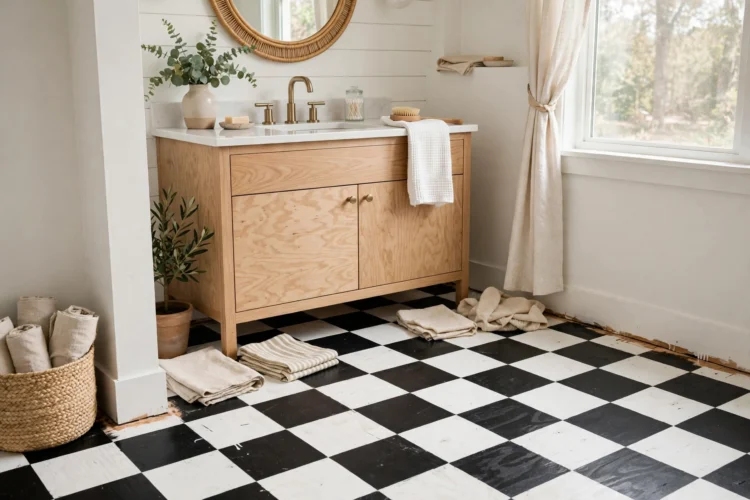
When the budget is tiny and the floor underneath is sound, paint can carry the whole project. Sand the plywood or old vinyl smooth, prime with a bonding primer, and paint a checkerboard or stripe pattern with porch and floor paint. Two coats of water-based polyurethane on top protect the design from splashes and scuffs. Floor cloths offer the same idea in removable form: a painted canvas rug that you can lift, wash, and replace. Both options cost a fraction of a new floor and take a single weekend. They will not last as long as vinyl or concrete, but they buy you a fresh look while you save for the real thing. If the layout still feels cramped after the refresh, these small bathroom layouts show how to free up floor space without moving a wall.
Tile will always have its fans, and for good reason. But these bathroom flooring alternatives prove a wet room can be warm, quiet, and waterproof without a single tile in sight. Pick the option that matches how your bathroom gets used, check the waterproof rating before you buy, and seal every edge. Do that, and your non-tile floor will handle the wettest mornings without a complaint.