Physical Address
304 North Cardinal St.
Dorchester Center, MA 02124
Physical Address
304 North Cardinal St.
Dorchester Center, MA 02124

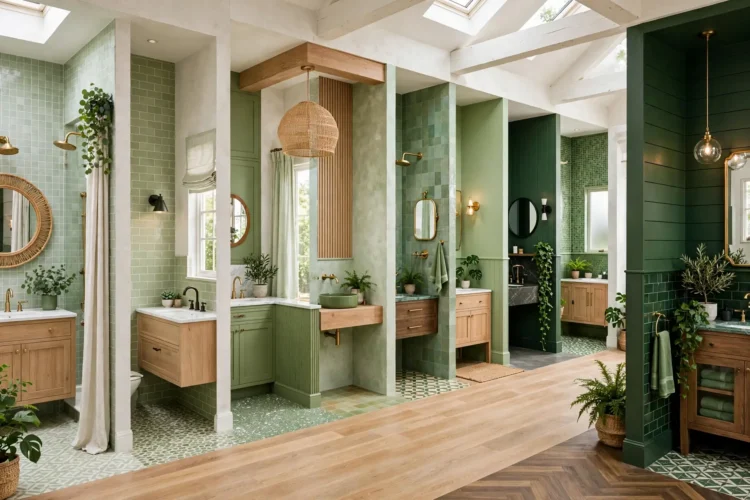
From pale sage tile to deep forest paint, green suits bathrooms better than almost any other color. These twelve ideas show how to use it without feeling cold.
Green is the easiest color to live with in a bathroom because it already belongs there: plants, water, and stone all carry it. These green bathroom ideas work through one color family in depth, from pale sage tile to deep forest paint, so you can pick the shade that fits your light. You will find greens for tile, paint, and cabinetry, plus the metals and woods that keep each shade from feeling cold. A small bathroom can take a dark green if the light is right, and a big bathroom can stay calm with a pale sage. Start with the shade, then match everything else to it.
Sage is the safest green for a bathroom because it reads calm in any light and pairs with almost every metal. A sage paint on the walls softens white fixtures without competing with them, and it makes the room feel like a garden room. Pick a sage with a warm gray base for north-facing rooms, where cool light can turn green-gray paint chalky, and a cooler sage for sunny rooms. Test a large swatch in morning and evening light first.
A moisture-resistant bathroom paint in eggshell or satin handles the steam and wipes clean after splashes. For more colors that suit a small room, these bathroom paint color ideas cover pale blues, warm whites, and other fresh shades. Sage is the green to start with if you are new to color, and it is the hardest one to regret.
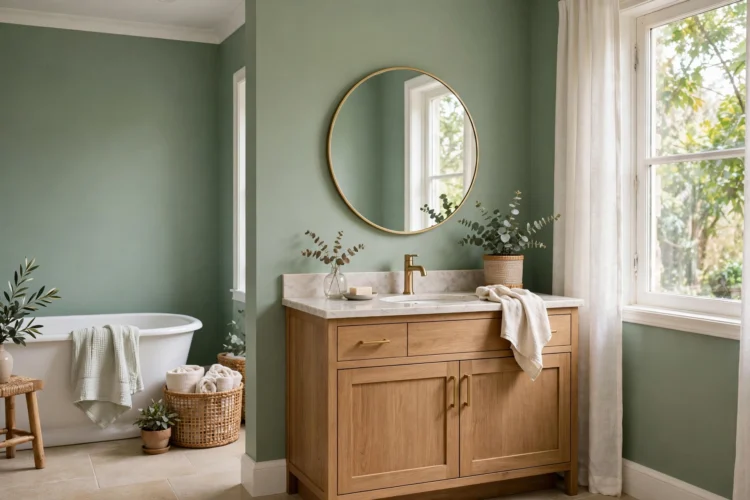
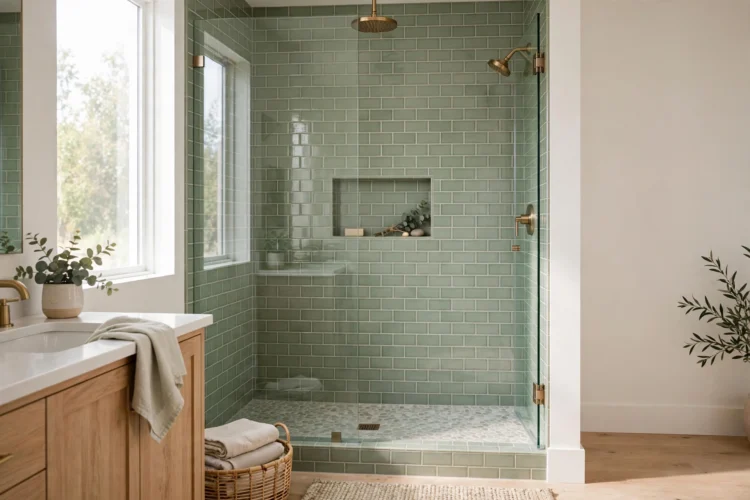
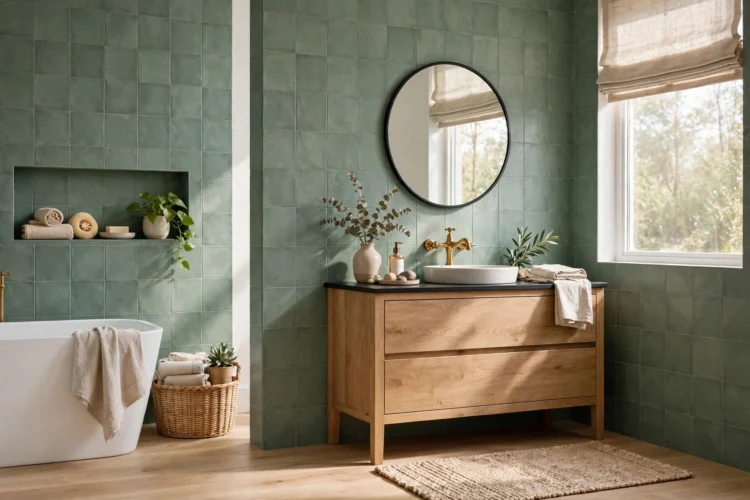
Sage tile in the shower gives the room a green heart without painting the walls. A matte sage subway tile with pale grout reads soft and handmade, while glossy sage tile reflects light and makes a small shower feel brighter. Run the tile to the ceiling so the green reads as a deliberate field of color, and keep the floor tile pale. A sage green bathroom built on tile rather than paint also survives steam better, since tile never peels.
For pattern ideas that work in a small shower, these subway tile bathroom ideas show brick, stacked, and herringbone layouts. Keep the grout sealed and choose a grout color close to the tile so the field reads as one calm surface.
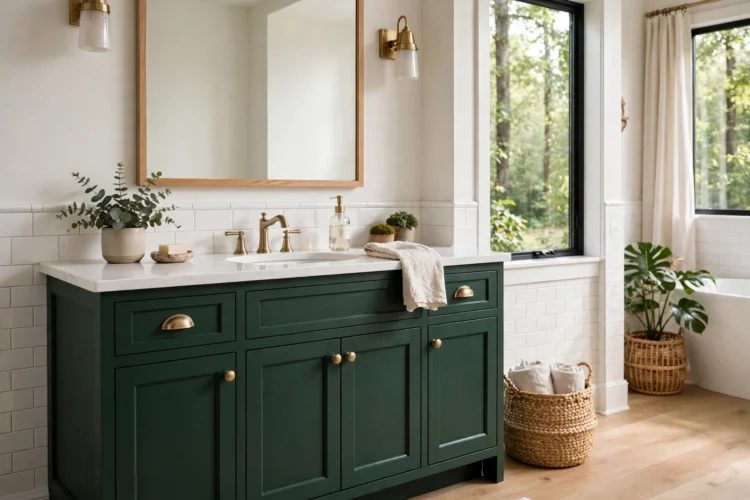
A deep forest green vanity is the boldest move on this list: the color sits low in the room, where it grounds the space instead of closing it in. Paint the vanity in a satin or semi-gloss finish so it wipes clean, and pair it with a white countertop and a pale wall. Brass pulls or knobs warm the green up, while matte black hardware keeps it modern. A forest green bathroom built around the vanity needs only that one strong piece, and the rest of the room can stay quiet.
If the vanity is the only green in the room, repeat the shade once more in a towel or a small plant so the color feels intentional. The same deep green works on kitchen cabinets, and these green kitchen cabinet ideas show how the shade moves from sage to forest. A forest green vanity is a weekend paint project with a renovation-level payoff.
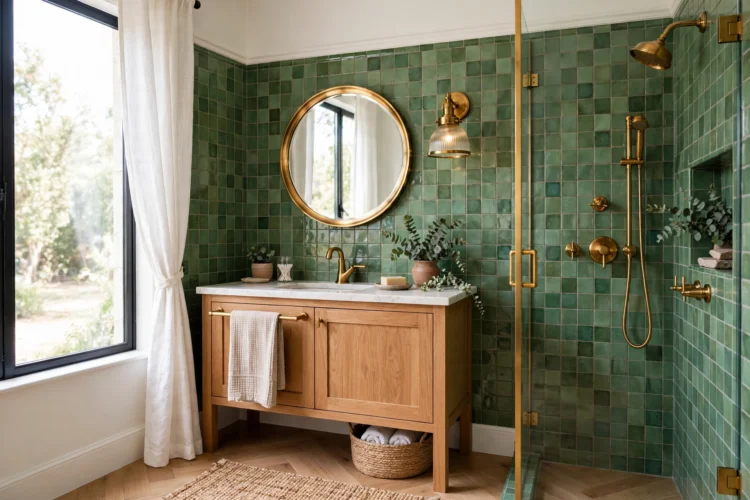
Green tile turns cold fast with chrome, so warm brass is the metal that keeps a green bathroom welcoming. A brass faucet, a brass-framed mirror, and brass towel bars add enough warmth to balance even a deep green tile, and the metal picks up the yellow tones in sage and olive. Use the same brass finish across the room, and keep it unlacquered if you like a patina that deepens over time.
If brass feels too traditional, brushed gold or warm copper gives the same effect with a softer shine. These brass fixture bathroom ideas show how the metal works with green, blue, and white tile alike. The rule is simple: the deeper the green, the warmer the metal.
Painting or tiling only the lower half of the walls gives you the green without committing the whole room. A green wainscot or a tile dado at chair-rail height adds color where the eye rests and leaves the upper walls pale so the room stays bright. This split suits small bathrooms best, since the pale top half keeps the ceiling high while the green bottom half adds character. A white chair rail caps the split and protects the paint from chair bumps.
Pick a green one shade deeper than you think you want, since the lower wall reads darker in the shadow of the vanity and the tub. Beadboard painted green adds texture and hides the bumps flat drywall shows.
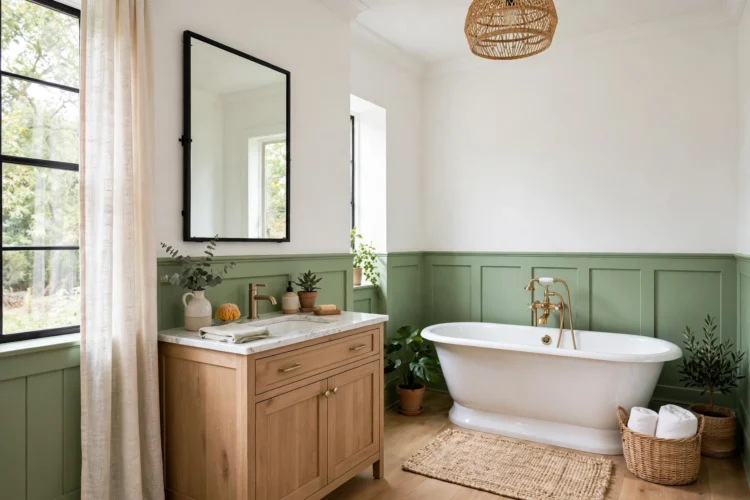
A dark green ceiling sounds risky, but in a bathroom it works like a canopy, pulling the room together and making white fixtures pop. It suits rooms with good light and a pale upper wall, where the dark ceiling reads as a deliberate lid rather than a cave. Paint the ceiling matte to avoid glare from the vanity lights, and keep the walls pale so the contrast stays crisp. The effect is strongest in a small bathroom.
If a full dark ceiling feels too bold, paint just the ceiling of the shower area or the alcove over the tub. This is the spot for dark green bathroom paint at its most dramatic, and it costs a single can of paint. Live with it for a month, since a ceiling color reads very differently at night than in daylight.
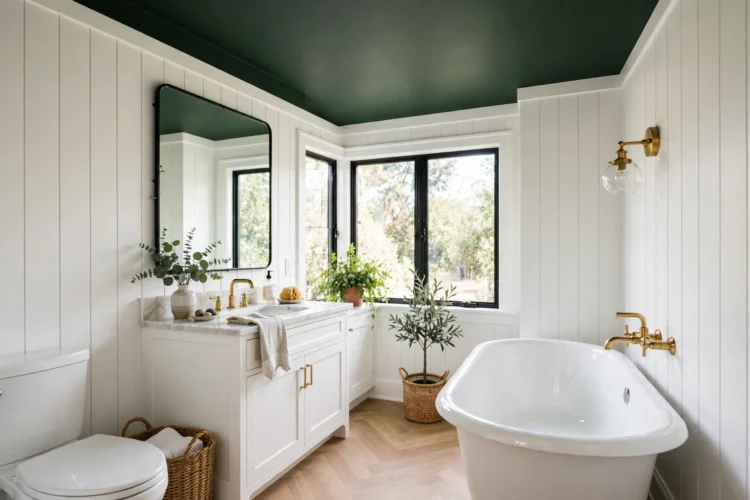
If paint and tile feel like too much commitment, let plants and towels carry it. A trailing pothos on a high shelf, a snake plant by the tub, and a stack of sage towels give the room a green story you can change in an afternoon. The plants love the humidity, so they grow fast and fill the room with life. For more ways to make a bathroom feel calm without a remodel, these spa-like bathroom ideas pair greenery with soft lighting.
Choose towels in one green shade and repeat it in a bath mat and shower curtain so the color feels planned. Natural materials help too: a wooden bath mat, a stone soap dish, and a woven basket all sit comfortably next to green. This is the lowest-cost idea on the list.
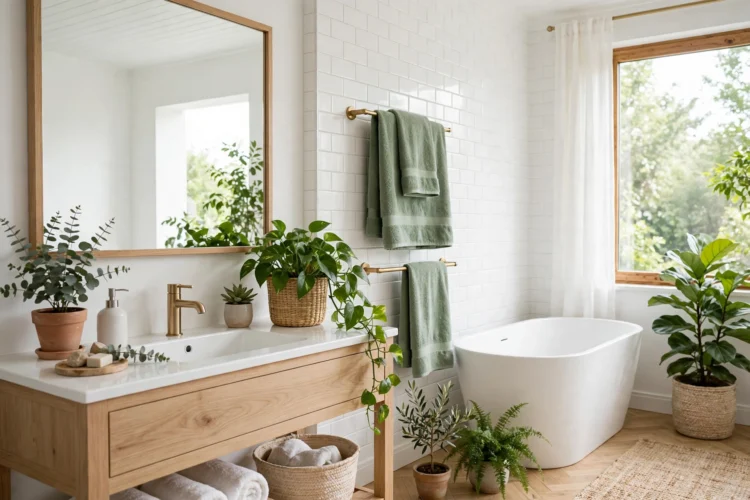
Two greens in one bathroom sound busy, but they work when one is pale, one is deep, and they share the same warm or cool base. Try sage on the walls with a forest green vanity, or pale green tile with a deep green painted door. The contrast gives the room depth without adding a second color family. Keep the metals and the wood consistent so the room has one warm thread running through it.
Test the two shades side by side on a large board before you commit, since greens that look close in the store can clash on the wall. If the pair feels wrong, drop the paler shade and let the deep green carry the room alone. Mixing greens rewards the extra testing with a bathroom that looks designed rather than decorated.
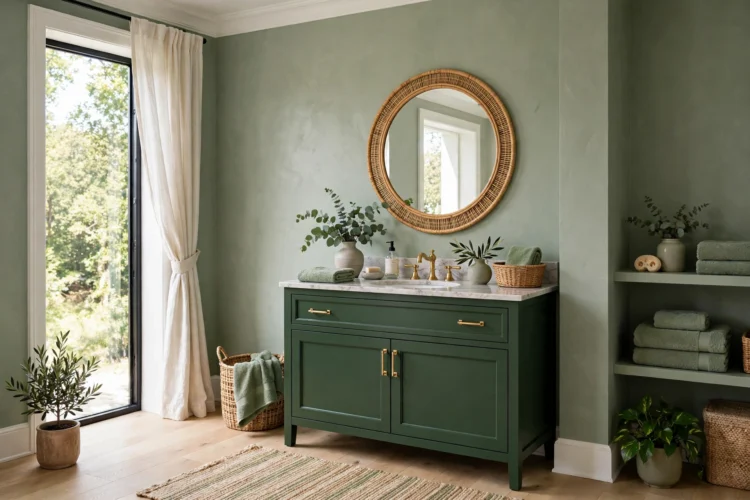
Matte green bathroom tile absorbs light instead of reflecting it, which gives the bathroom a soft, chalky calm glossy tile cannot match. It suits large-format floor tiles and subway tiles in the shower, and it hides water spots better than a glossy finish. Pair matte tile with a honed stone countertop and a flat-paint wall so the whole room shares one quiet texture. The result reads expensive even when the tile is not.
Matte tile needs sealing more often than glossy tile, since the porous surface stains faster. Seal the grout as well, and wipe the tile dry after showers in hard-water areas to prevent mineral marks. The maintenance is small, and the soft finish is worth it for a restful bathroom.
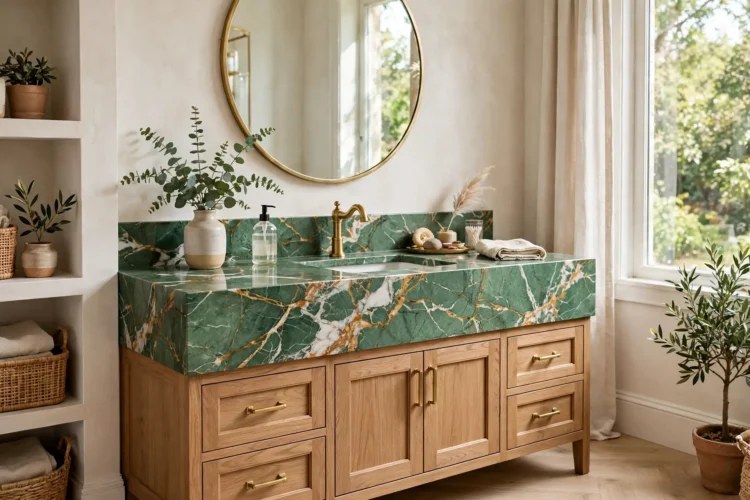
Green marble brings the color in through nature, with veins of white, gold, and dark green in each slab. Use it on the vanity top or as a shower accent wall, where the pattern becomes the art. Because no two slabs match, the marble guarantees a bathroom nobody else has, and the green veins tie the room to the plants and towels around it. Seal it well, since marble stains more easily than quartz or porcelain.
If real marble is out of budget, a porcelain tile that mimics green marble gives the same look for a fraction of the price and needs no sealing. Use the marble-look tile on one wall only, so the pattern stays a feature. A little green marble goes a long way.
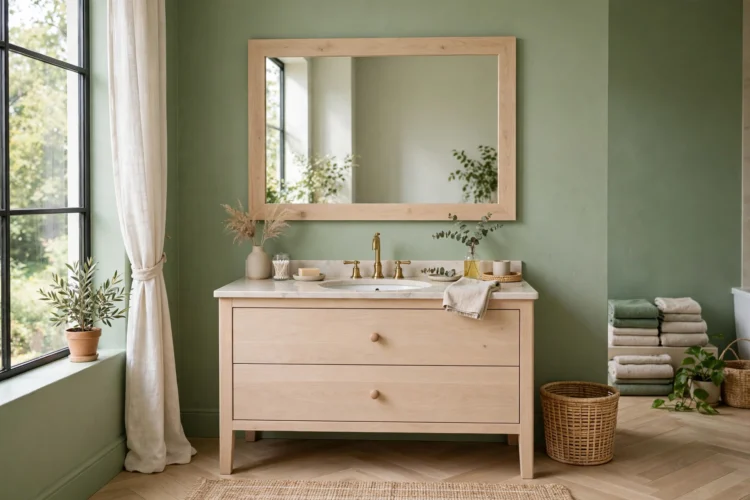
Pale wood keeps a green bathroom from feeling cold. A white oak vanity, a light wood mirror frame, or a wooden bath mat adds warmth that green tile and green paint cannot supply on their own. The wood also connects the bathroom to the rest of the house. Keep it sealed against steam, and choose a matte finish so it reads natural.
If the bathroom has no wood at all, start small: a wooden stool, a teak bath mat, or a simple oak shelf. The warmth shows up immediately, and the green reads richer for it. Pale wood and green are a natural pair in every shade from pale sage to deep forest.
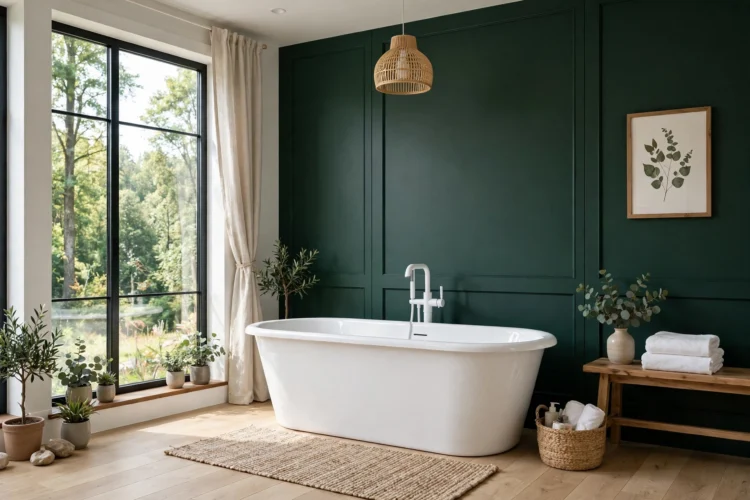
Deep green walls or tile need white fixtures, so keep the tub, the toilet, and the sink a clean white. The contrast makes the green read as a color choice, and the white fixtures reflect light back into the space. A white freestanding tub against a forest green wall is the strongest version of this idea, and it needs nothing else to look finished.
Avoid colored fixtures with a deep green, since two strong colors fight for attention and the room loses its calm. If the fixtures are already white, you are halfway there, and the green can go as deep as you like. White fixtures are the easiest to refresh, so the green stays the star for years.
Pick your green first, then let the metal, wood, and fixtures follow it. Sage is the safe start, forest green is the bold move, and a mix of the two gives the room depth. Test the shade in your own light and live with a swatch for a week.