Physical Address
304 North Cardinal St.
Dorchester Center, MA 02124
Physical Address
304 North Cardinal St.
Dorchester Center, MA 02124

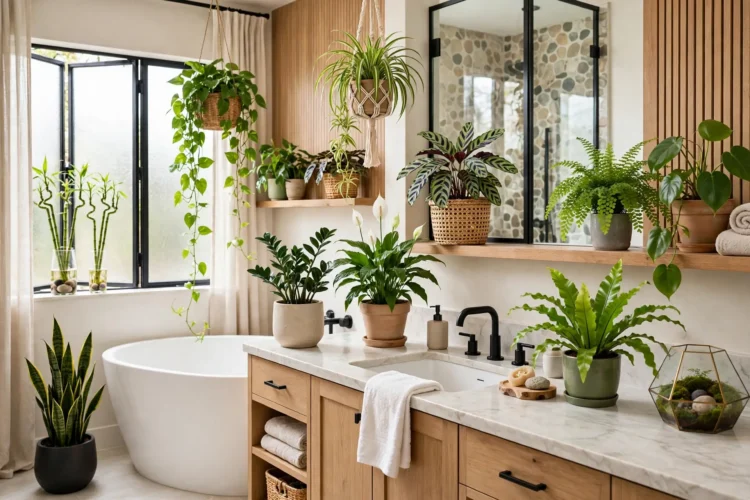
Steam, warmth, and low light suit more plants than you would think. These eleven picks thrive in bathroom conditions with almost no extra care.
Bathrooms run warm, steamy, and dim, which sounds like bad news for plants until you pick the ones that actually like those conditions. The best bathroom plant ideas start from what the room already offers: humidity from every shower, steady warmth, and soft light filtered through frosted glass or a small window. Match the plant to those conditions and it will grow with almost no help from you. These eleven picks cover high shelves, hanging planters, the floor by the tub, and the dampest corner of the shower. Each one includes where to put it and how much care it needs.
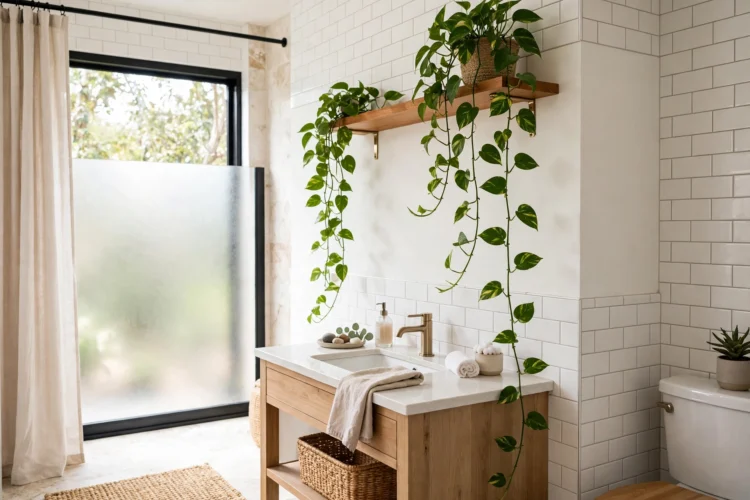
Pothos is the safest first plant for a bathroom because it tolerates low light, forgives missed waterings, and actually grows faster in humidity. Set the pot on a high shelf where the vines can trail down the wall, and water it when the top inch of soil feels dry, usually every week or two. The leaves stay glossy in steam, and a golden pothos adds a warm streak of color to a room that is mostly tile and white. If a vine gets too long, snip it and root the cutting in a glass of water for a second plant.
Keep the pot out of the direct splash zone so the soil never sits soggy, and wipe the leaves once a month so dust does not block what little light reaches them. For more ways to show plants off the floor, these indoor plant display ideas cover shelves, ledges, and wall-mounted planters that work in small rooms.
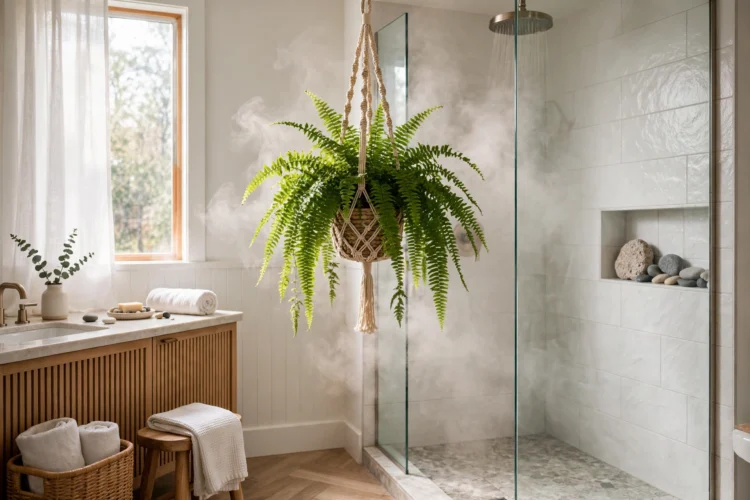
Boston ferns love the exact conditions most houseplants hate: warm air, constant moisture, and indirect light. Hang one near the shower, out of the direct spray, and the steam does most of the watering work. Check the soil twice a week in summer and mist the fronds if the tips start to brown, which usually means the air dried out between showers. A full fern softens hard tile edges and turns a plain bathroom into a room that feels like a spa-like bathroom without any renovation.
Give the fern room to spread, since a happy one grows wide as well as long. A hanging basket keeps it off the floor and lets the fronds arc down toward the light. If fronds drop, it is almost always too little water or a cold draft, so move it away from the vent and soak the pot for ten minutes.
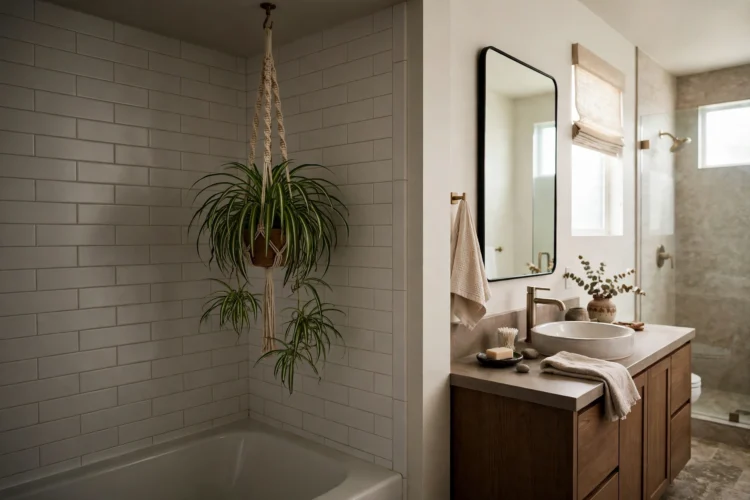
Spider plants handle the dim corner by the toilet or the wall opposite the window better than almost any other hanging plant. They grow in low light, need water only when the soil dries out, and produce baby plantlets on long stems that you can snip and pot. Hang the basket from a ceiling hook or a wall bracket at eye level so the striped leaves catch whatever light the room gets. The plant also tolerates the temperature swings of a bathroom that heats up with every shower and cools down overnight.
Brown leaf tips usually mean too much direct sun or chemicals in tap water, so let water sit out overnight before you use it. Among low light bathroom plants, the spider plant is the most forgiving, and it droops slightly when thirsty.
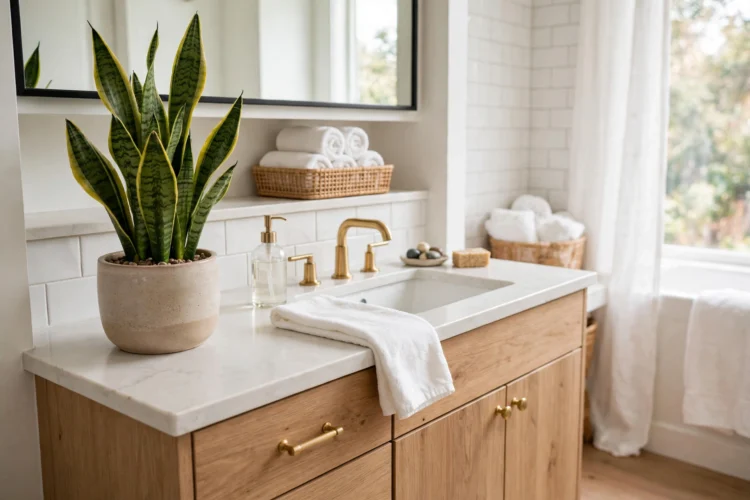
Snake plants stand upright, take almost no floor space, and survive the low light beside a vanity without complaint. They store water in thick leaves, so they need watering only every two or three weeks, and they tolerate the dry air between showers better than ferns. A tall snake plant in a simple ceramic pot adds a vertical line next to the vanity that balances the horizontal mirror above it. Pick a pot with a drainage hole and empty the saucer after watering, since standing water rots the roots fast.
Keep it out of the shower spray and away from heater vents. The plant grows slowly, so buy the height you want. If a leaf flops, cut it at the base and root the cutting in water.
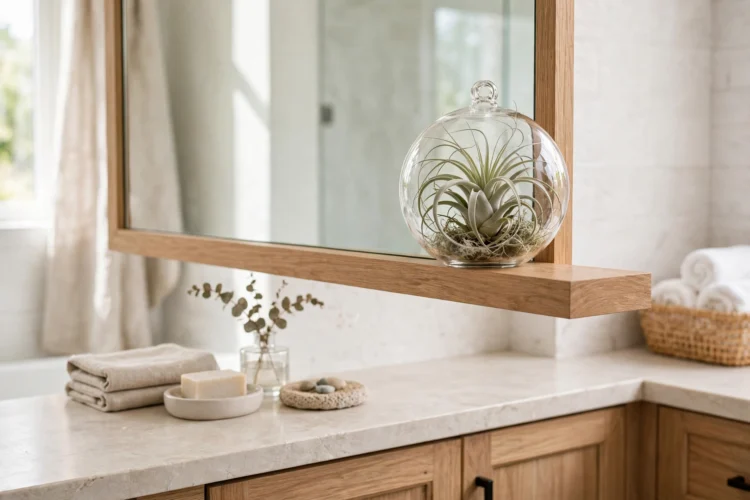
Air plants need no soil at all, which makes them perfect for the mirror frame, a wall-mounted toothbrush holder, or a small dish on the vanity. They drink through their leaves, so a weekly soak in a bowl of water for twenty minutes plus the daily shower steam keeps them happy. Set one in a glass orb or a small piece of driftwood near the mirror where it catches morning light, and it becomes a living detail instead of another bottle on the counter.
After each soak, shake the plant gently and let it dry upside down for a few hours so water never pools in the center and causes rot. Air plants come in dozens of shapes, from spiky stars to soft curls. They are the lowest-commitment way to test whether plants suit your bathroom before you buy pots and soil.
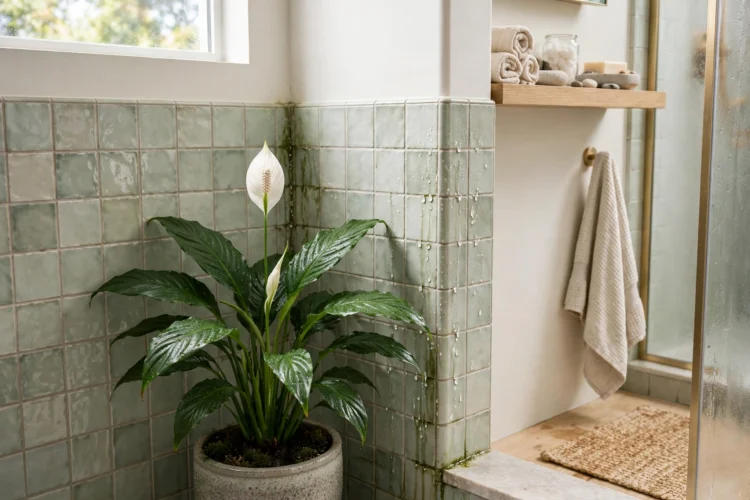
Peace lilies flower in low light, which is rare, and they thrive on the humidity that collects in the dampest corner of the bathroom. A white bloom against dark green leaves looks calm next to tile, and the plant droops visibly when it needs water, so you never have to guess. Water when the leaves start to sag, usually once a week, and keep the plant out of direct sun, which scorches the leaves. Wipe the leaves with a damp cloth now and then to keep them glossy.
Peace lilies prefer a pot that drains well and soil that stays moist but never soggy. If the leaf tips brown, flush the soil with plain water once a month to clear fertilizer salts. Note that peace lilies are toxic to pets if chewed, so keep them out of reach if a cat or dog shares the bathroom.
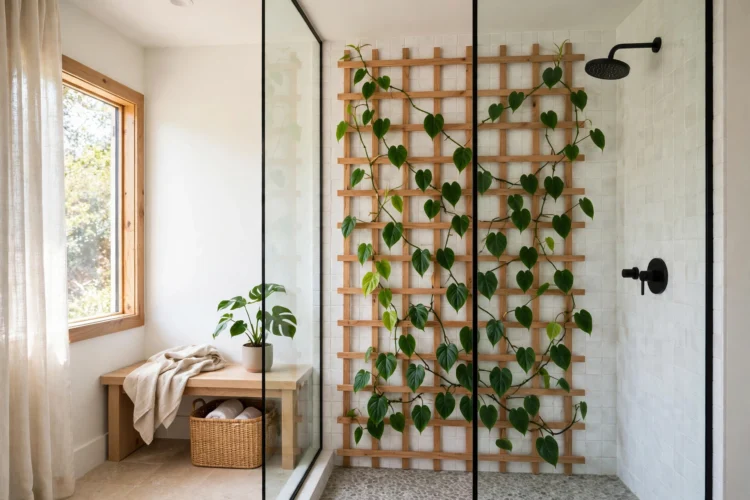
A climbing philodendron turns a blank shower wall into a green one, and it loves the steam and warmth. Mount a small trellis or a few clear adhesive hooks on the wall outside the direct spray, and guide the vines upward as they grow. Heartleaf philodendron handles low light well, and its leaves stay a deep green in humidity. Water when the top inch of soil dries, and trim the vines back in spring if they outgrow the space.
For larger rooms, a philodendron can climb a plant room divider or a tall shelf unit to split the bathroom from a dressing area. These are classic hanging bathroom plants in the sense that they climb and trail, so give them something to hold onto rather than letting them sprawl across the floor.
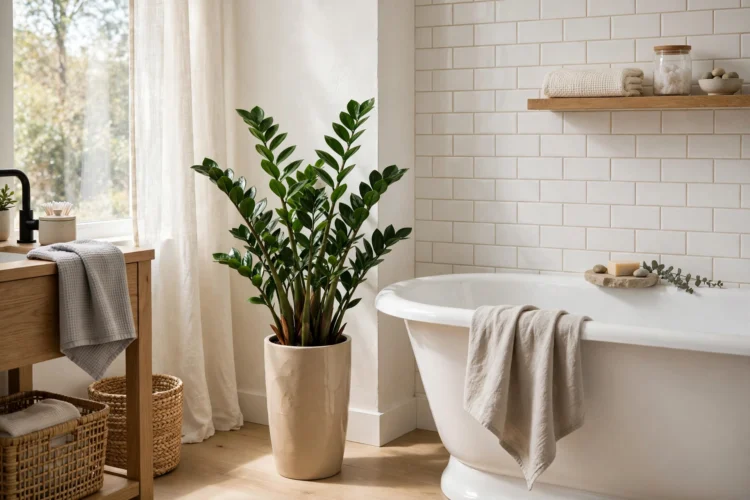
ZZ plants store water in thick underground rhizomes, which makes them nearly impossible to kill by underwatering, and they grow fine in the low light beside a tub. A ZZ plant in a tall pot fills an empty floor corner without demanding attention, and its glossy leaves reflect what little light the room gets. Water every two to three weeks and let the soil dry out completely between waterings, since rot from overwatering is the only real risk.
Choose a sturdy pot, since a mature ZZ plant gets top-heavy and can tip on a slick tile floor. A DIY plant stand lifts it off the cold floor and keeps the pot from sitting in splashed water after a bath. If a stem yellows, cut it at the base and check that the pot drains, since yellow almost always means the roots stayed wet too long.
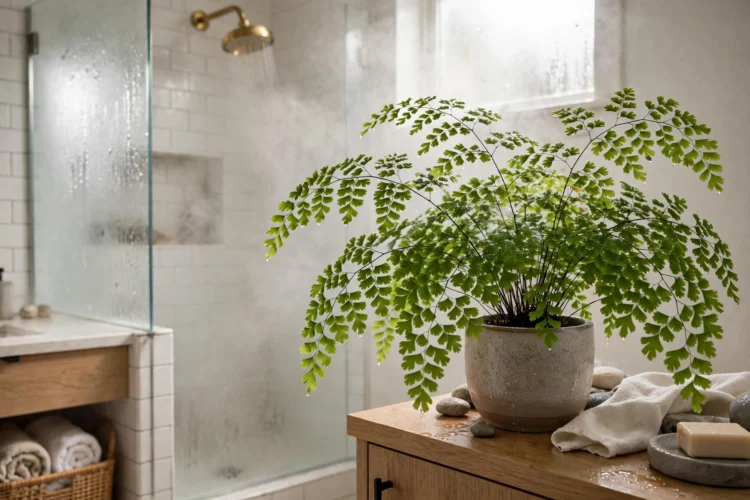
Maidenhair ferns are fussy about dry air but adore the constant steam of a hot shower, which makes a warm bathroom one of the few indoor spots where they truly thrive. Their delicate, lacy fronds need steady humidity and no cold drafts. Water often enough that the soil never dries out, and mist the fronds on days when nobody showers. The payoff is the prettiest fern you can grow indoors.
If the fronds crisp at the edges, move the plant closer to the shower and check that the heating vent is not blowing dry air across it. These are the classic plants for steamy bathrooms, and they reward the extra attention with growth that no other fern matches indoors.
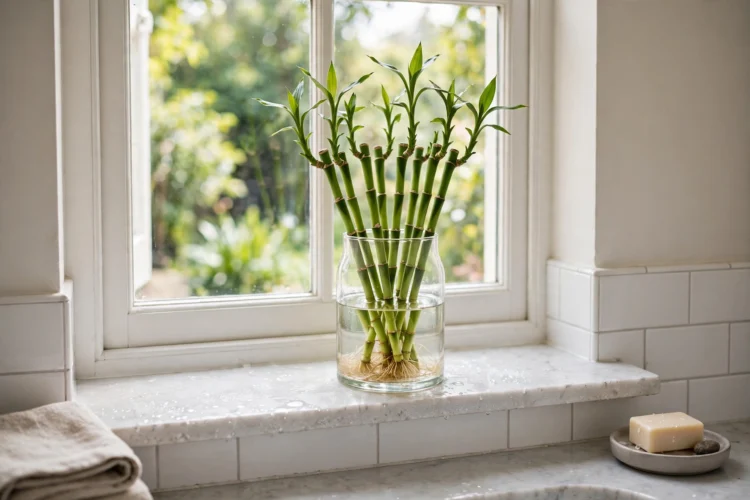
Lucky bamboo grows in water alone, so a simple glass vase on the windowsill is all it needs. It tolerates low light, handles the humidity, and needs only a water change every week or two to stay green. Keep the water level above the roots and use filtered or rested tap water to avoid brown tips. A few stalks tied together with a ribbon make a neat vertical accent on a sill that is too narrow for a pot.
If the stems yellow, change the water and move the vase out of direct sun, which heats the glass and stresses the roots. Add a drop of liquid houseplant fertilizer once a month for faster growth. It is the easiest plant on this list to keep alive, and the glass vase doubles as decor.
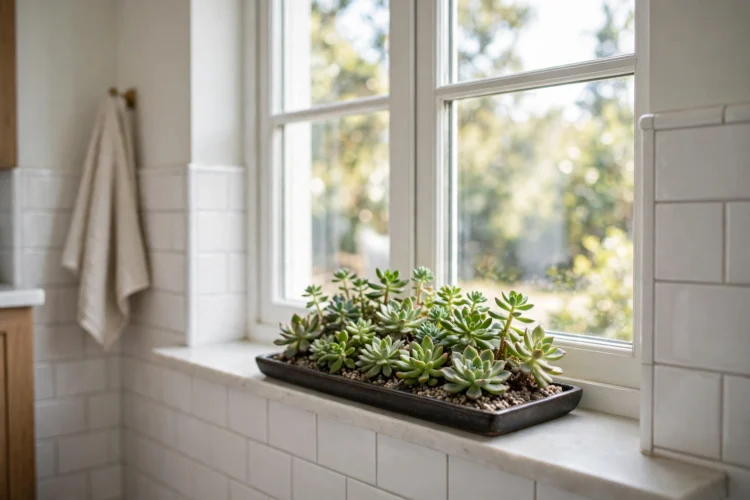
Succulents need more light than most bathroom plants, so they only work in the brightest spot in the room, right on or beside the window. A cluster of small echeveria or haworthia in a shallow tray looks tidy on a wide sill and needs water only when the soil is fully dry. Never put succulents in the steamy corner by the shower, since constant humidity rots their leaves. The window is their one safe spot in a bathroom.
Choose a pot with a drainage hole and gritty cactus soil, and wipe the leaves dry if shower steam reaches them. If the plants stretch tall and pale, they need more light than the window gives, so move them to a brighter room and swap in a pothos. Succulents are the exception on this list, and knowing where they fail keeps the rest of your humidity loving bathroom plants thriving.
Start with one plant that matches the light and steam your bathroom already has, then add more once the first one settles in. A pothos on a high shelf or a snake plant by the vanity is the easiest test, and both will tell you quickly whether the room suits them. Get the placement right and the bathroom starts watering the plants for you.