Physical Address
304 North Cardinal St.
Dorchester Center, MA 02124
Physical Address
304 North Cardinal St.
Dorchester Center, MA 02124

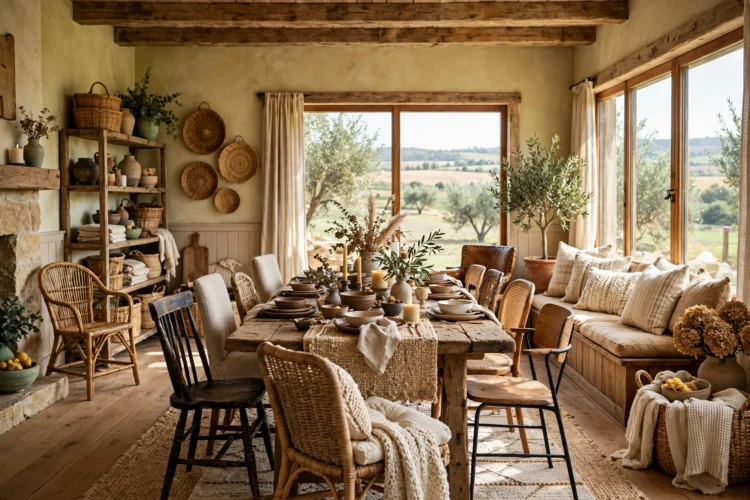
Farmhouse dining is about more than a table. These 11 ideas layer slipcovers, beadboard, vintage finds, and linens into a room that feels gathered over time.
Farmhouse dining room ideas work best when the room feels gathered over time, not bought in one trip. A farmhouse dining room is built from texture: wood with a story, fabric that softens the edges, and pieces that look like they have been used and loved. The style is forgiving, which is part of its charm. A chipped hutch, a mismatched chair, and a faded rug all belong here. These 11 ideas cover the whole room, from the table to the walls to the linens, so you can build a farmhouse dining room that feels warm on an ordinary Tuesday, not just on holidays.
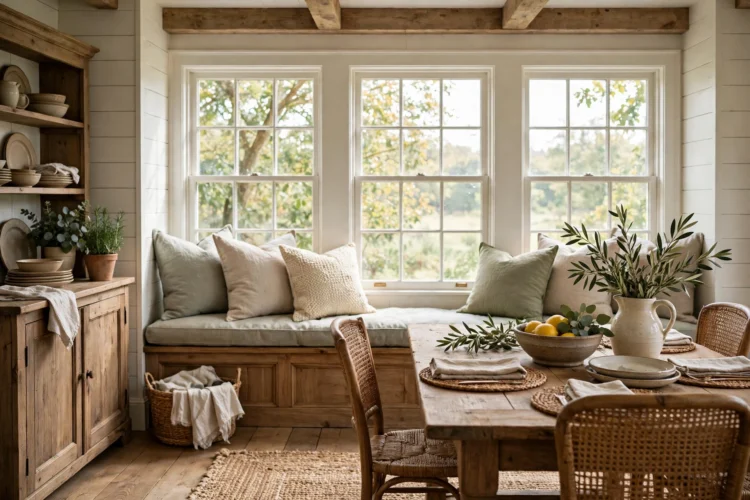
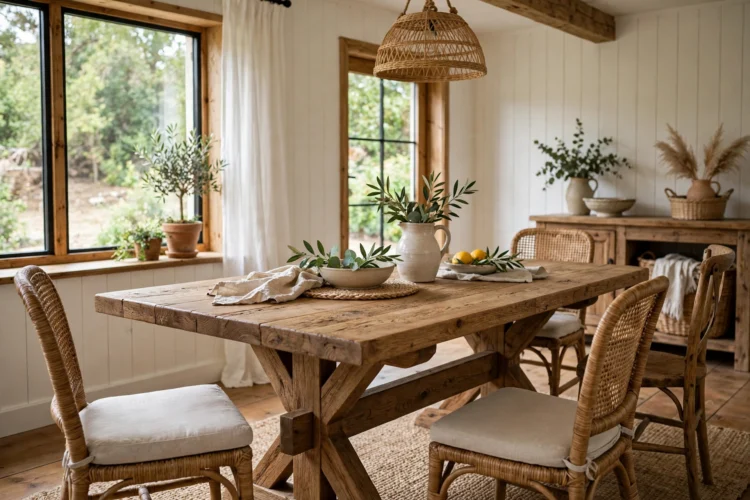
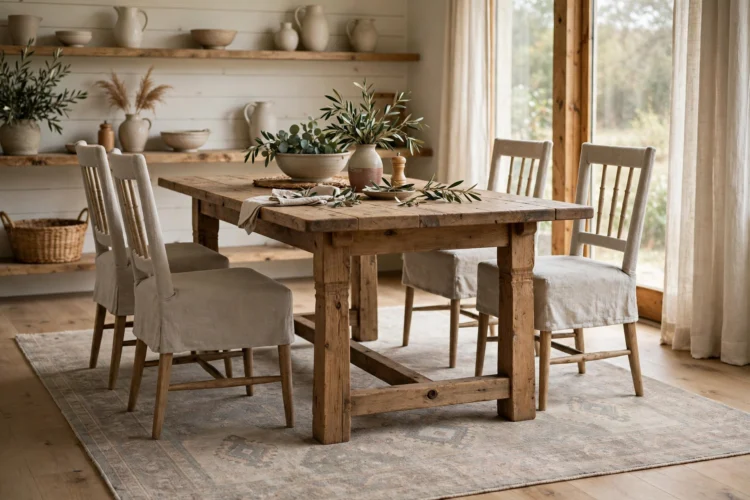
The table is the heart of a farmhouse dining room, and the wood should show its history. Look for a table with visible grain, knots, and a finish that is matte rather than glossy, since a worn surface feels honest and hides daily wear. A trestle base or turned legs suits the style, and a longer table leaves room for extra chairs when family visits. If a new table is out of reach, sand and re-oil an old one: a fresh coat of hardwax oil revives dry wood without hiding the grain. Keep the table mostly bare between meals, with a simple runner or nothing at all, so the wood itself is the decoration. A farmhouse table earns its scratches, and the marks become part of the room.
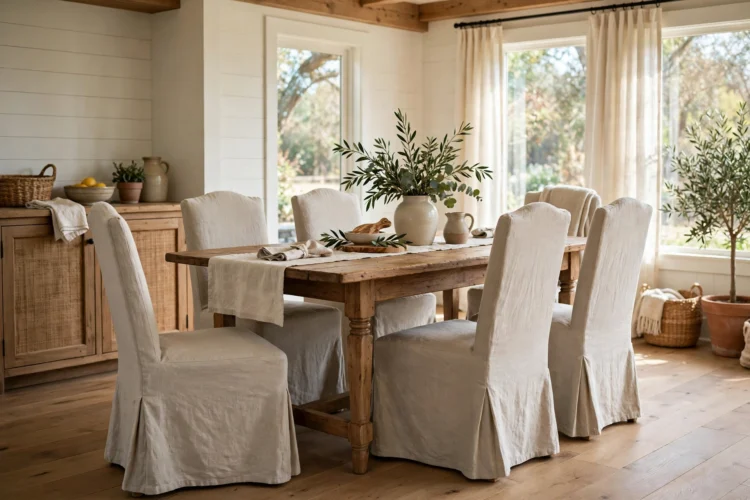
Slipcovered chairs are the farmhouse answer to dining with kids, pets, and red wine. A washable cotton or linen slipcover turns a chair into something you can live with, since a spill becomes a laundry cycle instead of a stain. Choose a neutral color, a warm white or natural flax, and keep the fit relaxed rather than tailored, since a slightly loose slipcover reads more farmhouse than a tight one. Tie details at the back add a soft, handmade touch. The chairs underneath can be mismatched or secondhand, since the slipcovers unify them. Wash the covers before the first use, since cotton shrinks, and keep a spare set so the chairs are never bare while one set is in the wash.
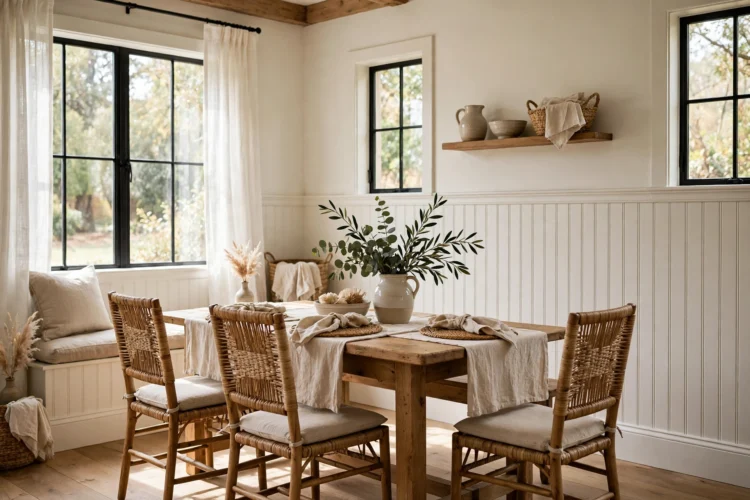
Beadboard is the fastest way to give a plain dining room farmhouse character. A beadboard wainscot, painted in a warm white or soft sage, adds rhythm to the wall and protects it from chair scuffs at the same time. Run it to chair-rail height, about 36 inches, and cap it with a simple trim piece. Paint it the same color as the wall above for a quiet look, or a shade darker for definition. Beadboard also works on a single accent wall behind the table, where it frames the room without overwhelming it. The vertical lines make a low ceiling feel taller, and the texture catches light in a way flat drywall never does. It is a weekend project with a big visual return.
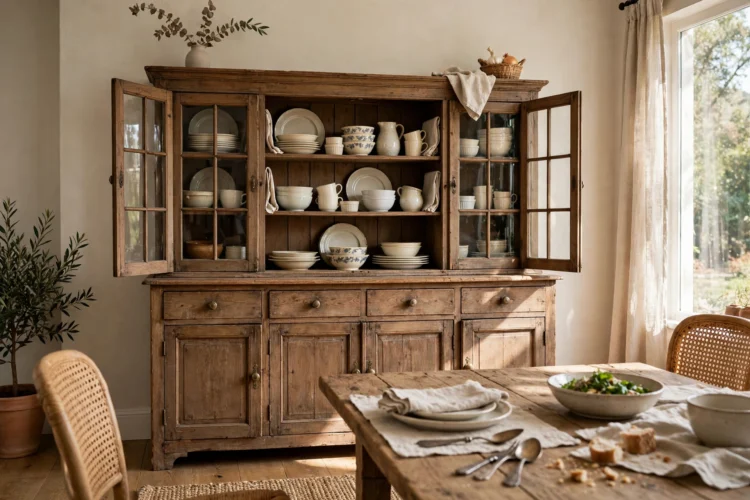
A vintage hutch is the workhorse of a farmhouse dining room. It stores dishes, displays the pretty pieces, and anchors the wall with a piece that has real age. Look for a hutch with glass doors on top and solid doors below, so the display and the storage stay separate. Paint it if the wood is damaged, or leave it natural if the patina is good. Fill the top shelves with everyday dishes, not precious ones, since a hutch that holds daily pieces gets used instead of admired from a distance. These plate rack ideas that turn everyday dishes into decor can help you arrange the shelves so the dishes themselves become part of the room. Leave one shelf a little empty, since a hutch packed to the edges looks like storage, not a display.
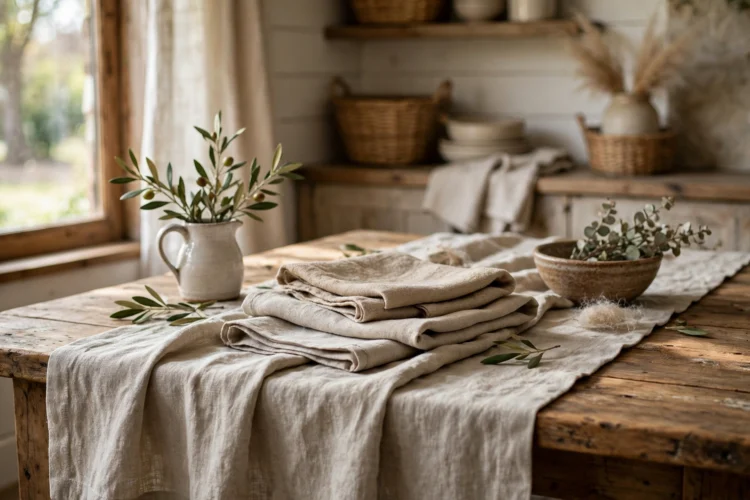
Layered linens give a farmhouse table its softness. Start with a runner in natural linen, add placemats in a contrasting weave, and finish with cloth napkins in a muted stripe or check. The layers should look collected, not matched: different weaves and close tones beat a matching set. Linen wrinkles, and that is fine, since the relaxed texture is the point. Keep a stack of napkins in a basket on the sideboard so setting the table takes a minute. For holidays, add a second runner crosswise or a folded throw at the center, but keep the everyday table simple enough to clear in one pass. Washable fabrics matter here, since a table that is used daily needs linens that survive the laundry.
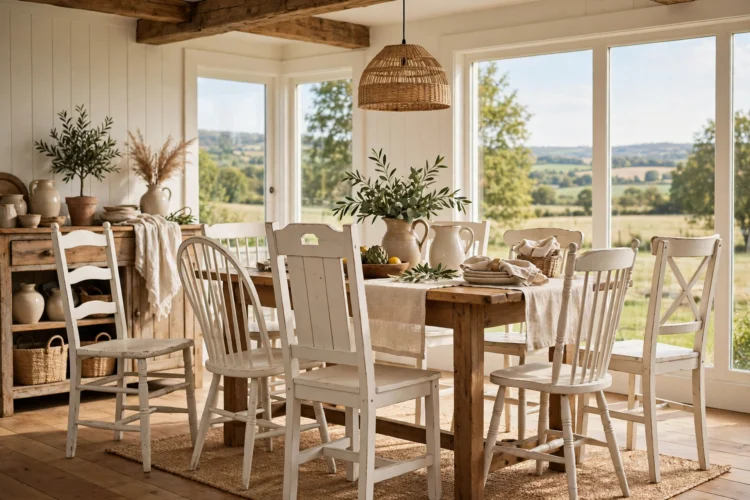
Mismatched chairs are a farmhouse signature, but they need a thread that ties them together. Paint them all the same color, a warm white or soft black, and let the shapes differ: a ladder back here, a Windsor there, a bench on one side. Or keep the wood tones the same and let the chair styles vary. The trick is to repeat one element, color or wood, so the set reads as intentional rather than accidental. Put the two most comfortable chairs at the ends of the table, where the hosts sit, and keep the lighter chairs on the sides for easy moving. A bench on one side adds flexibility for kids and extra guests. If the mix still feels chaotic, add matching seat cushions in a single fabric to pull the set together.
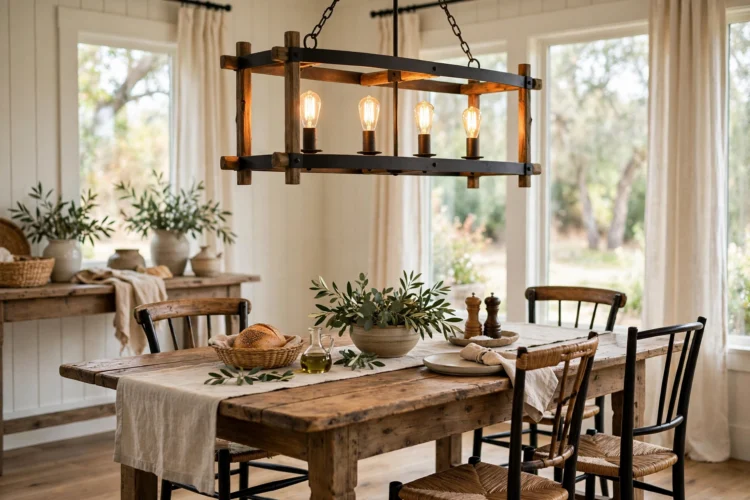
Farmhouse lighting should feel handmade, not polished. A chandelier in blackened iron or aged wood, hung over the center of the table, sets the tone for the whole room. Choose a fixture with visible bulbs or seeded glass, and put it on a dimmer so the room can shift from bright family dinner to a quiet evening. The fixture should be about one half to two thirds the width of the table, hung 30 to 36 inches above the surface. Add a pair of small sconces on the wall or a lamp on the sideboard for a second layer of light. Warm bulbs, around 2700K, keep the glow cozy. If the room runs dark, these ways to brighten a dark kitchen without painting the cabinets include ideas that work just as well in a dining room.
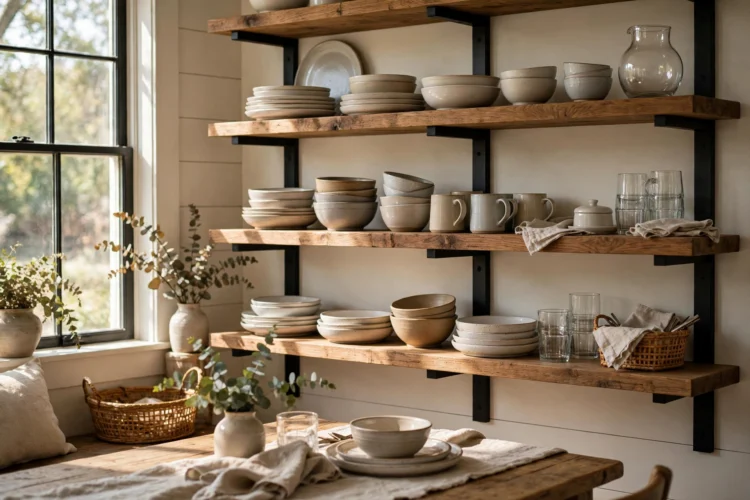
Open shelving in a farmhouse dining room puts the everyday dishes on display and keeps them within reach. A pair of wood shelves on the wall beside the hutch holds plates, bowls, and pitchers in a loose stack, and the display changes naturally as dishes get used. Keep the shelves to two or three, and leave breathing room between stacks so the display reads as curated rather than crowded. Use the same wood tone as the table or the hutch to tie the room together. Open shelves also work as a home for cookbooks, a small plant, and a few vintage finds. Dusting is the trade-off, so keep the shelves for pieces you use weekly, and store the rest behind the hutch doors.
A rug under a farmhouse table should be muted, durable, and washable. Look for a flatweave or low-pile rug in faded tones, a soft red, a muted blue, or a warm neutral, with a pattern that hides crumbs. Size it so the chairs stay on the rug when pulled out, at least 24 inches beyond the table on every side. A washable rug is worth the search, since dining rooms take spills, and a rug you can toss in the wash stays fresh far longer than one you have to spot clean. Layer a smaller rug over a larger jute base if you want extra texture. The rug also deadens sound, which matters in a room where a full table talks over dinner. Keep the pattern simple so it does not fight the wood grain of the table above it, which keeps the rustic dining room decor calm.
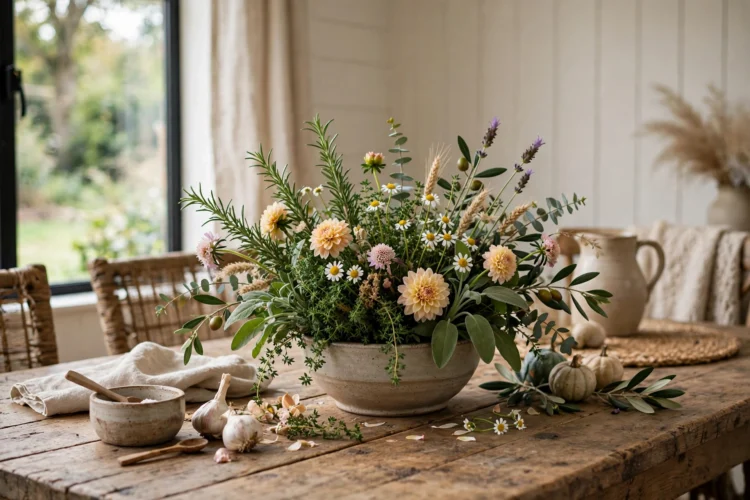
A farmhouse centerpiece should look like it came from the garden, not the store. A low wooden box, a ceramic pitcher, or a simple tray holds whatever is in season: fresh herbs in spring, wildflowers in summer, apples or pumpkins in fall, and pine branches in winter. Keep the centerpiece low, under 12 inches, so people can see across the table. Change it with the seasons, and let the kids add to it, since a centerpiece that grows and changes feels alive. A few candles in glass hurricanes add warmth in the evening without competing with the natural materials. The centerpiece is also the easiest place to use color in the room, so let it carry the seasonal accent while the rest of the room stays neutral.
A window seat in the dining room turns the room into a place for slow mornings, not just meals. A built-in bench under the window, with a cushion in a durable fabric and a few pillows in mixed patterns, invites coffee, reading, and conversation. Add storage under the seat for table linens or board games, and a small shelf nearby for books. The window seat also gives the room a second seating option for large gatherings, when the table overflows. If the dining room shares space with the kitchen, these eat-in kitchen ideas show how a small eating spot can feel like a real dining space. Keep the window seat simple, a cushion, a throw, and a clear view, and it will become the most used seat in the house.