Physical Address
304 North Cardinal St.
Dorchester Center, MA 02124
Physical Address
304 North Cardinal St.
Dorchester Center, MA 02124

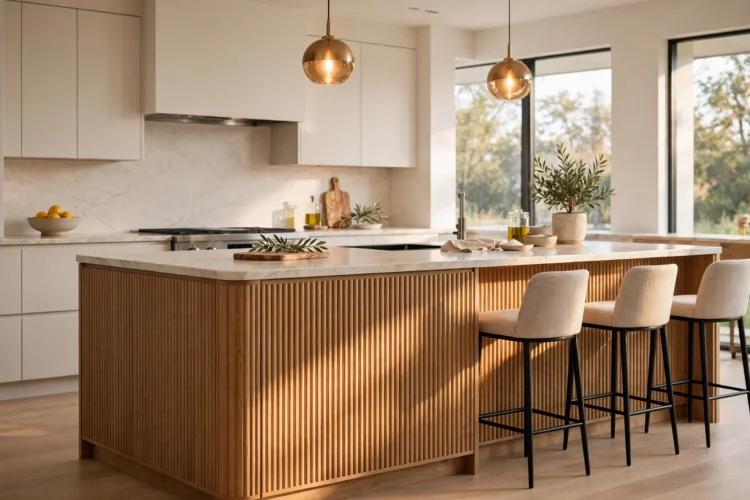
Thin vertical grooves give a flat cabinet door light, shadow, and rhythm without any ornament. These eight ideas show where fluting works, which finishes show it best, and how to keep it clean.
Fluted cabinet ideas start with a simple observation: a flat door can feel blank, and a raised panel can feel fussy. Fluting sits between the two. Thin vertical grooves run down the door, catching light and shadow in a rhythm that changes as you move through the room. The grooves add texture without adding ornament, which is why fluted fronts keep showing up in kitchens that want warmth without clutter. These eight ideas cover where to use fluting, which finishes show it best, and what it takes to keep grooved doors clean in a room full of grease.
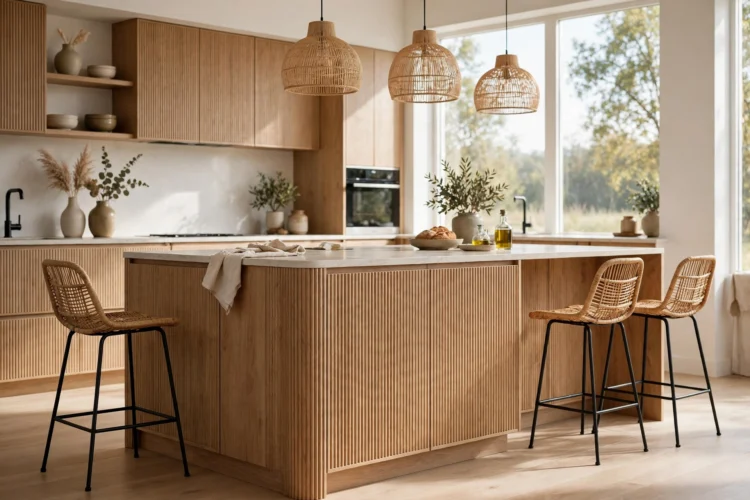
The island is the safest first step into fluting. It is the biggest piece of furniture in most kitchens, it is visible from every side, and it does not carry the wall cabinets that do the daily work. A fluted kitchen island gives the room a clear focal point without committing every door in the kitchen to the same texture. If you tire of the look in a few years, you have one piece to change, not a whole wall.
Keep the island fluting in a wood tone or a painted finish that matches the rest of the kitchen, and let the grooves run vertically from the countertop to the floor. Horizontal grooves collect dust on their lower edges and read as siding rather than furniture. These kitchen island ideas for every size of kitchen show how the island can carry a strong feature while the wall cabinets stay quiet.
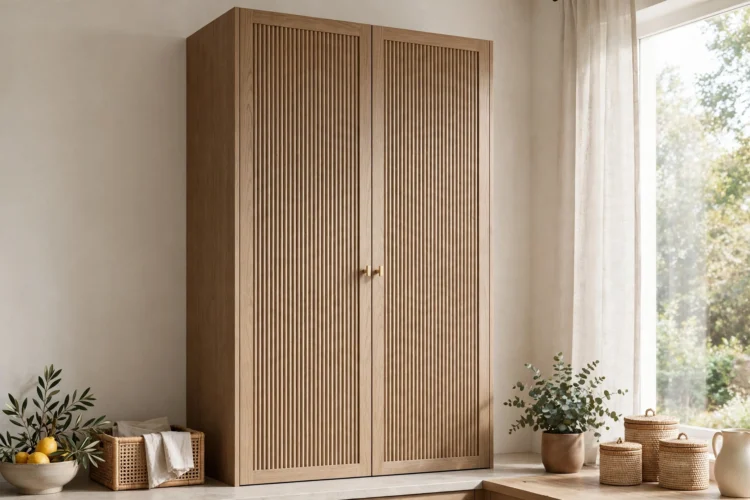
A tall pantry door or a freestanding hutch is the second-best home for fluting, because the grooves make a tall, narrow door look taller. The vertical lines pull the eye upward, which suits a pantry wall or a hutch that runs from the counter to the ceiling. Reeded cabinet doors work here for the same reason a striped shirt works: the lines stretch the shape they cover.
On a hutch, fluting also hides what a flat door cannot. A tall door shows every warp and every uneven gap, while grooves break up the surface and forgive small imperfections. Keep the hardware simple, a small knob or a short pull, so nothing competes with the lines. If the hutch holds glassware, pair the fluted doors with a clear glass panel in the center, so the texture frames the display instead of hiding it.
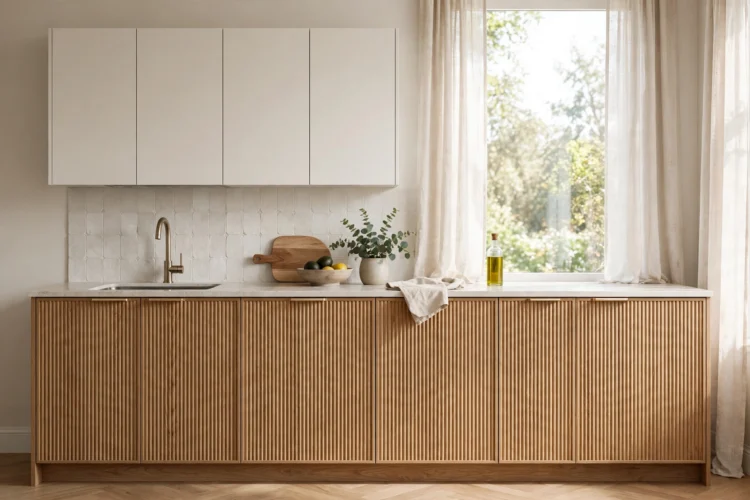
Fluting a full run of wall or base cabinets is the boldest move in this list, and it works best in a small kitchen where the run is short. A galley kitchen or a one-wall layout gets a wall of texture that reads as one intentional surface, and the grooves give the room a rhythm that plain doors cannot. The key is to keep everything else in the room plain: flat counters, a simple backsplash, and hardware that disappears.
In a large kitchen, a full run of fluting can feel like too much of a good thing. The grooves repeat across ten or twelve doors and the pattern starts to dominate the room. If your kitchen is large, flute one run and leave the rest flat. The contrast between the two is what makes the fluted run read as a feature instead of a default.
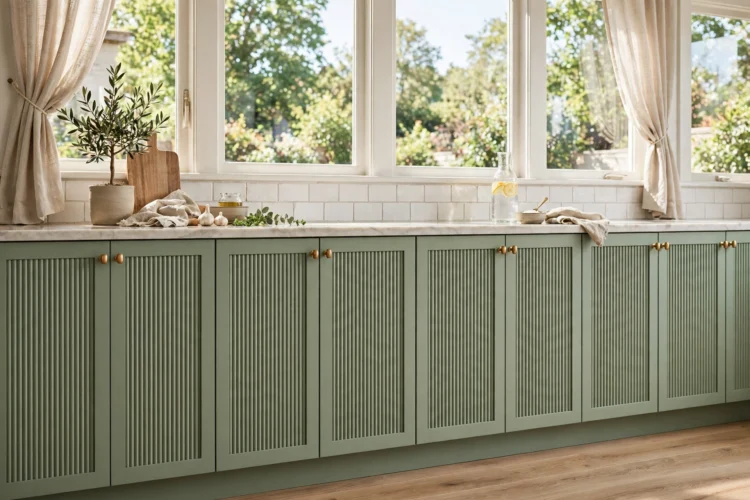
The most reliable combination in this list is fluted lowers with flat slab uppers. The lowers carry the texture where hands and eyes spend the most time, and the uppers stay smooth and quiet at eye level. The mix also solves a practical problem: flat uppers are easier to wipe clean, while the fluted lowers sit below the worst of the cooking steam.
This pairing works with any finish, but it looks best when the two doors share a color. A sage fluted lower and a sage flat upper read as one kitchen with two textures. Two different colors on the two door styles can look like two kitchens sharing a room. If you want contrast, let the countertop or the backsplash supply it instead. These wood kitchen cabinet ideas show how a single warm tone can tie two different door styles together.
Paint can hide fluting if it pools in the grooves, so the finish matters as much as the door. A sprayed finish lays down evenly and keeps the grooves crisp, while a brushed finish can fill the low spots and soften the lines. If you are painting over existing doors, ask the painter how they will spray the grooves, and look at a sample door in daylight before the whole kitchen is done.
Stain is the safer choice for showing the texture, because it follows the wood instead of covering it. A mid-tone stain on oak or ash makes the grooves read clearly from across the room, while a very dark stain can swallow them. Very light paint, like a soft white, also works, because the shadows in the grooves supply the contrast. Avoid high gloss on grooved cabinet fronts, since the shine reflects across the grooves and turns the texture into glare.
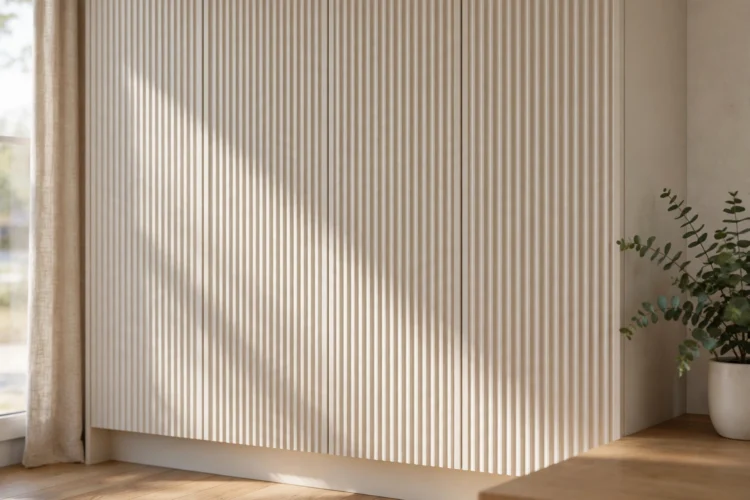
Fluted fronts feel at home in transitional, modern cottage, and soft contemporary kitchens, where the room already mixes clean lines with warm materials. They sit naturally next to a butcher block counter, a plaster range hood, or a simple tile backsplash. The grooves add craft to a room that might otherwise feel too plain.
They feel less at home in an ultra-minimal kitchen, where every line is supposed to disappear, and in a heavily traditional kitchen, where raised panels and carved details already fill the visual space. In those rooms the fluting competes with the style instead of completing it. If you are unsure, try fluting on one piece first, an island or a hutch, and live with it for a month. The rest of the kitchen will tell you whether the texture belongs.
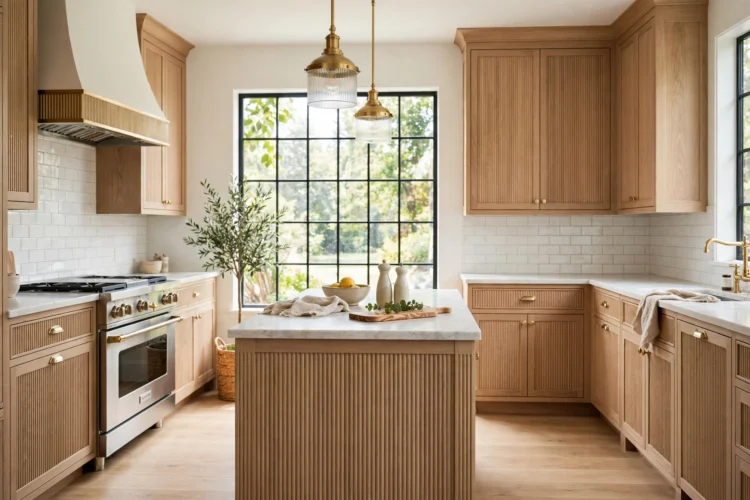
Grease rises with cooking steam and settles in the grooves, which is the real cost of textured cabinet doors. A flat door wipes clean in one pass. A fluted door needs a soft brush, an old toothbrush for the tight spots, and a degreasing cleaner that can sit in the groove for a minute before you wipe it out. It is not a hard job, but it is a slower one, so plan on it.
The routine that works is a quick wipe once a week with a damp microfiber cloth, following the grooves from top to bottom, and a deeper clean once a month with a brush and a mild degreaser. Wipe across the grooves and you push grease into them. Wipe along the grooves and you pull it out. Doors near the range need the monthly clean most. Doors on the far wall can often wait longer, which is another reason to keep fluting away from the stove wall if you can.
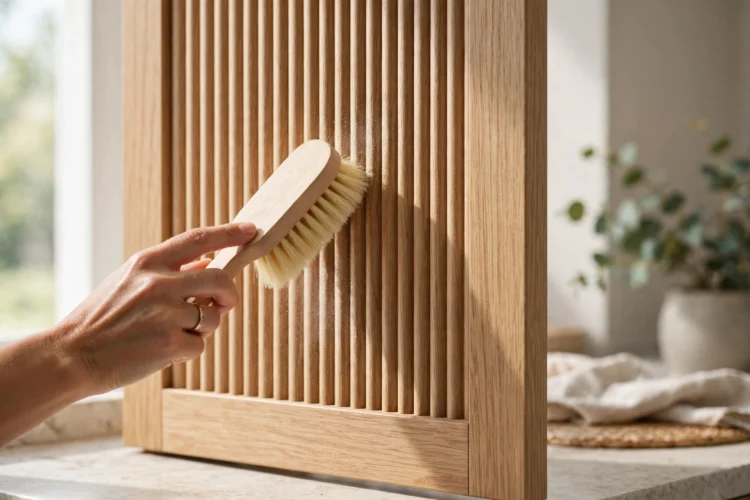
Fluted doors cost more than flat slab doors and less than fully custom inset cabinetry, and the gap depends on how the grooves are made. A door with grooves routed into solid wood or MDF costs more than a flat door but lasts as long as the kitchen. A door with applied molding strips glued onto a flat front costs less, but the strips can loosen in steam over time. Tambour, a flexible sheet of narrow wood slats, is a third option, and it suits curved islands better than flat doors.
Before you order, get a quote for the same kitchen in flat slab doors so you can see the real premium. Then decide where the fluting earns its money. One island or one run of lowers gives you the look for a fraction of the cost of fluting the whole kitchen, and the money you save can go to the finish or the hardware that makes the grooves look finished. Compare the door styles side by side in these shaker cabinet ideas, which show how a simple frame door can balance a textured one, and these butcher block countertop ideas, which pair naturally with grooved wood fronts.
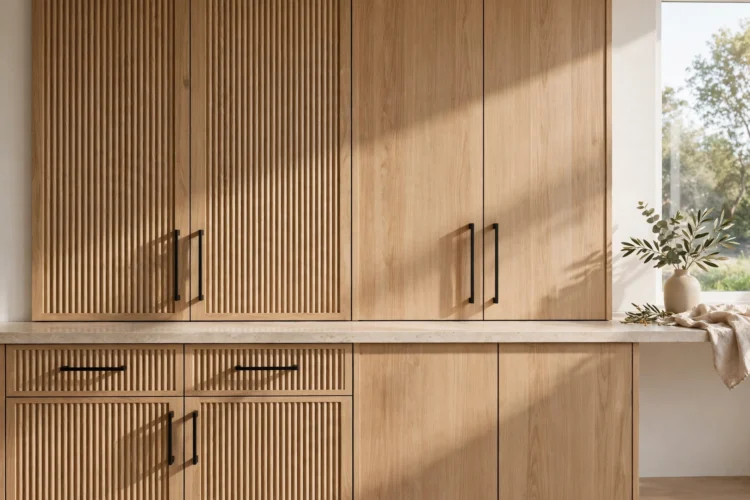
Fluting is a texture, not a theme. Use it where the light hits, keep the rest of the kitchen plain, and clean along the grooves instead of across them. The doors will look crafted for years, and the kitchen will still feel like a kitchen.