Physical Address
304 North Cardinal St.
Dorchester Center, MA 02124
Physical Address
304 North Cardinal St.
Dorchester Center, MA 02124

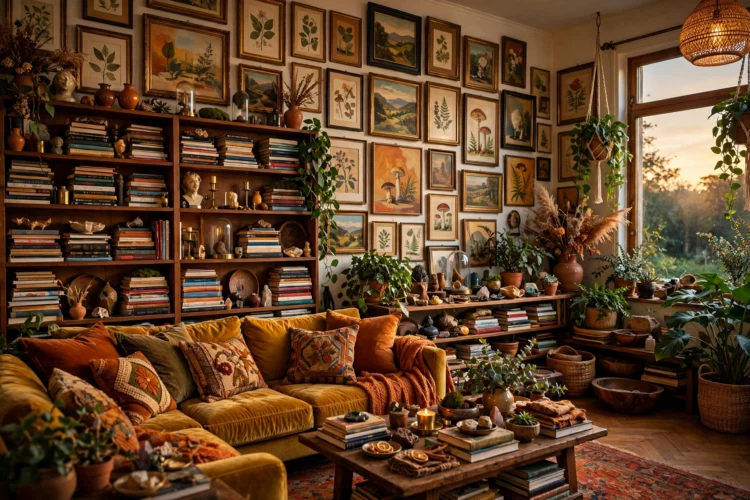
Layering collections, pattern, and color with editing rules that keep maximalism joyful instead of cluttered. Ten ideas for collectors who love a full, warm home.
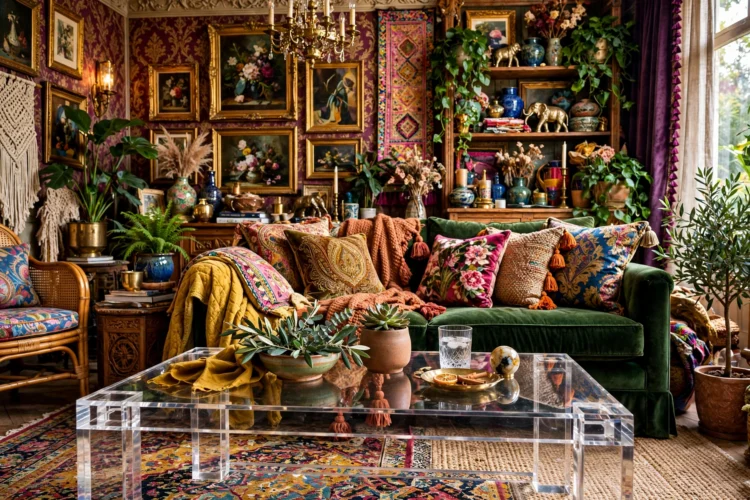
Maximalism has a reputation for chaos, but the best maximalist home decor is not messy. They are layered on purpose. Cozy maximalist styling works when collections, pattern, and color follow a few editing rules, so the room feels joyful and full instead of crowded. These 10 cozy maximalist styling ideas for collectors show how to layer what you love and still find the sofa.
Start with what you already collect, not what a shop tells you to buy. Books, pottery, postcards, plants, records, textiles. A collection you built over years has a story, and that story is what makes a maximalist room feel personal instead of staged.
The first rule of cozy maximalist decor is simple: only display what you genuinely love. If an object does not make you smile when you see it, it does not earn wall space, no matter how expensive or trendy it is. A room full of things you love feels warm. A room full of things you bought to fill space feels like a shop.
Walk your home and pick the ten objects you would save in a fire. Those are the core of your style. Build the room around them and let everything else support them. When you buy something new, ask whether it belongs with those ten. If it does not, leave it in the shop.
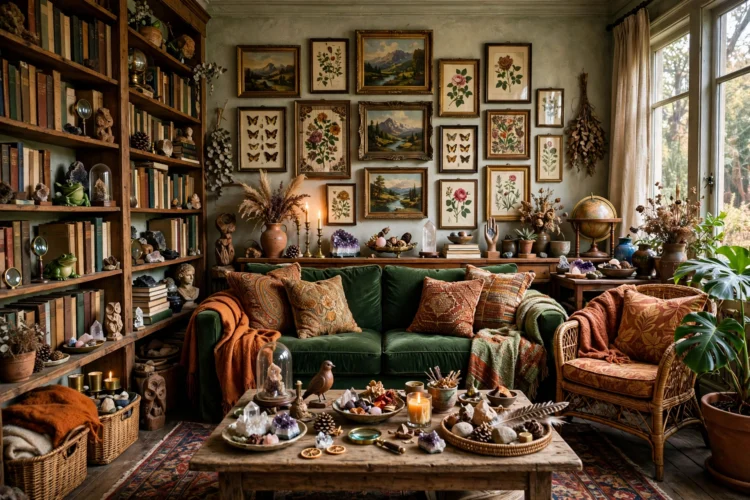
Grouping by color is the fastest way to make a large collection look intentional. Blue and white pottery together, warm wood objects together, brass and gold together. The eye reads the color group as one unit, so twenty objects look like one display instead of twenty separate things.
Try it on a shelf first. Styling collections at home starts with sorting by color: pull everything off, sort, and put back only one color group per shelf. Leave the other groups for another shelf or another room. The collection will look bigger and tidier at the same time. For shelves that hold mixed collections well, these living room bookshelf styling ideas show how to mix books with objects and leave breathing room.
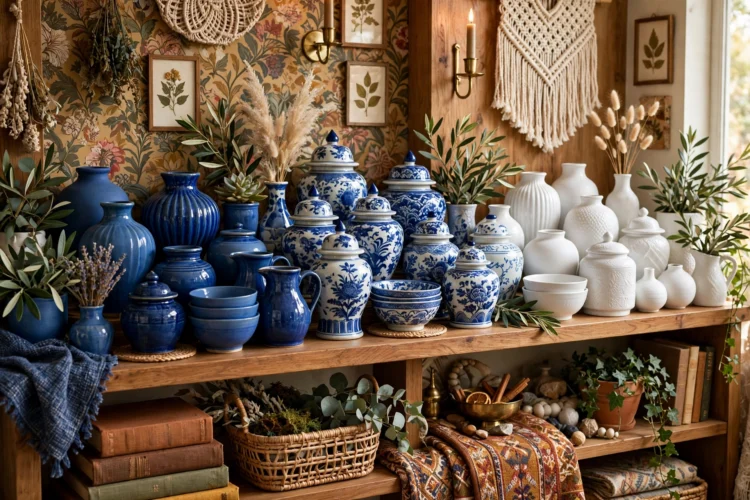
Pattern is the engine of maximalism, and it works best at three scales: one large pattern, like a bold rug or curtains, one medium pattern, like a floral cushion or a striped throw, and one small pattern, like a tiny geometric print on a lamp shade. Three scales keep the eye moving without confusion.
Keep the patterns in the same color family so they argue less. A large-scale floral, a medium stripe, and a small dot in the same three colors will always work together. If a pattern feels too loud, shrink it. A loud pattern on a cushion is charming. The same pattern on a whole sofa is a commitment.
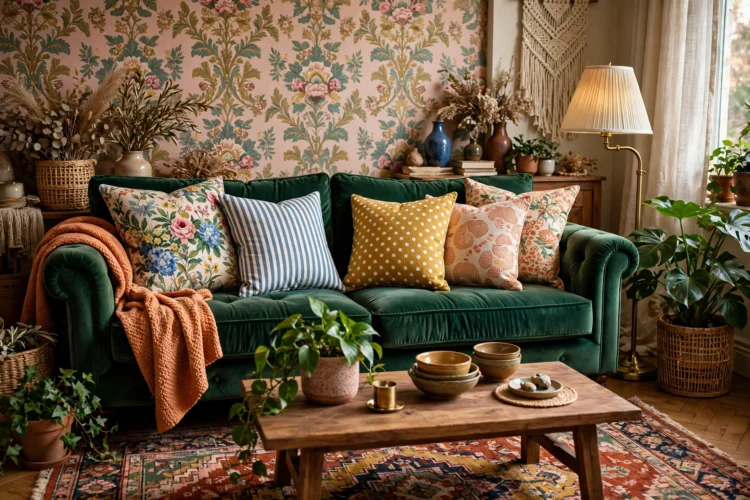
Maximalist walls are not empty. Gallery walls, stacked frames, plates, mirrors, and textiles can cover a wall from floor to ceiling, and the result feels rich rather than crowded if the frames share something: the same wood tone, the same mat color, or the same spacing. That one shared element holds the whole wall together.
Start from the center and work outward, or start from the floor and build up. Either way, lay the arrangement on the floor first. Photograph it, then hang it. These gallery wall layout ideas cover the spacing and balance that keep a full wall from looking random.
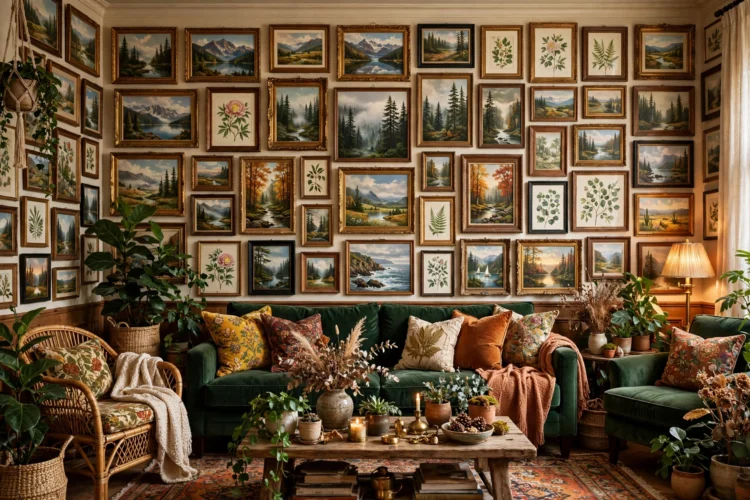
A shelf of only new things looks like a shop display. A shelf of only old things looks like an antique stall. Mix them. A vintage vase beside a new ceramic bowl, an old book under a new plant, a thrifted frame holding a new print. The contrast is what makes a maximalist shelf feel collected over time.
One old piece per shelf is enough to set the tone. Let it be the most interesting object on that shelf, and let the newer pieces support it. If you buy vintage, check for damage and smell before you bring it home. A chipped vase still works. A musty one will make the whole shelf smell old.
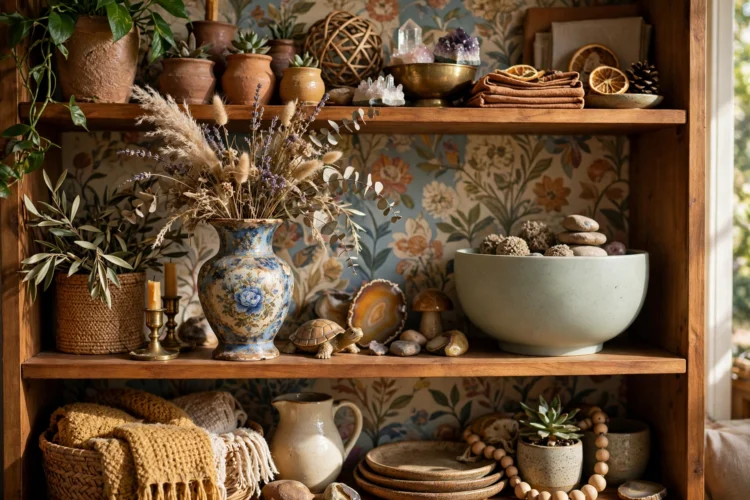
A maximalist room needs one bold color that repeats everywhere, in small doses. Deep green, oxblood, mustard, or navy. It shows up on a cushion, in a piece of art, on a book spine, and in a vase. That repeat is the thread that stops a room full of color from falling apart.
Pick the bold color from something you already own and love, like a rug or a painting. Then repeat it in five places, each one smaller than a cushion. If the room still feels chaotic, the bold color is probably appearing in too many shades. Narrow it to one exact tone and the room will settle.
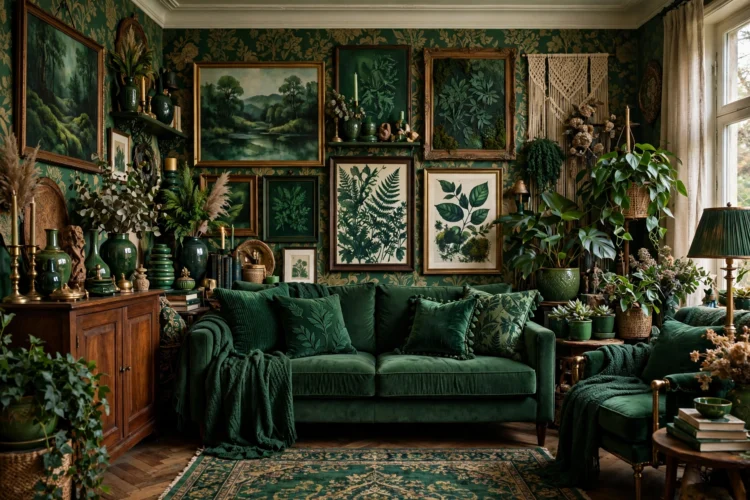
Books are the easiest maximalist material. They add color, height, and texture, and they are useful. Stack them horizontally on coffee tables, vertically on shelves, and in small piles on the floor beside a chair. A stack of three books makes a perfect riser for a candle or a small plant.
Sort book stacks by color or by size, not by subject, when they are used as decor. A rainbow shelf looks joyful. A shelf sorted by height looks calm. Either way, keep the stacks stable. No stack should be taller than it is wide, or it will topple the first time someone reaches for a cup. For more on styling shelves with books and objects, these floating shelf styles show how to build shelves that hold real weight.
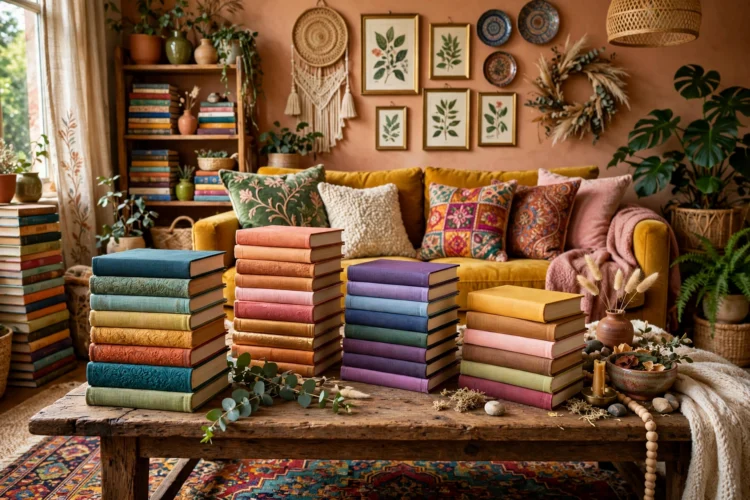
Plants are the peacemaker in layered home decor and in any maximalist room. Green sits between every color and softens hard edges. A trailing plant on a high shelf, a large leafy plant in a corner, and a small succulent on a stack of books give the eye a rest between patterns. Plants also add a living texture that no fabric can match.
Choose plants you can actually keep alive. A dead plant in a maximalist room reads as clutter. Start with hardy ones like pothos, snake plants, and ZZ plants, and add fussy ones only when you know your light. Group plants in odd numbers, three or five, for a natural look.
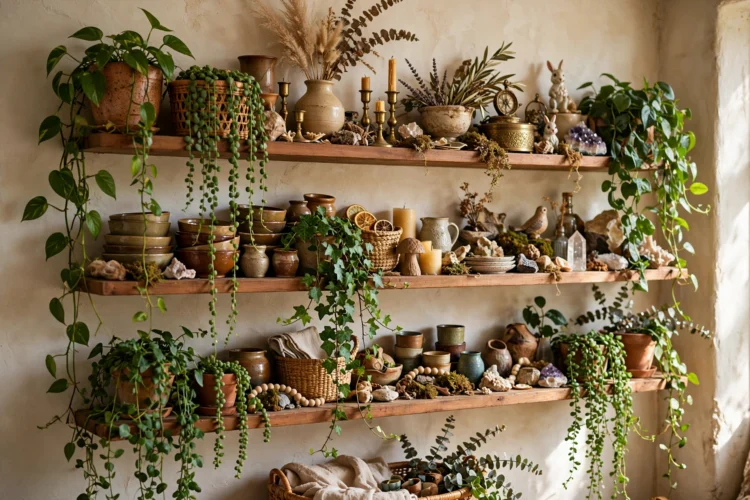
Maximalism needs editing more than minimalism does, because there is more to drift. Once a season, remove one thing from every shelf and every wall. Just one. The room will breathe, and you will see which objects you actually miss. The ones you do not miss can move to another room or leave the house.
Keep a swap box for the pieces you remove. If you want one back within a month, it was a mistake to remove it. If the box stays closed for a season, donate it. This habit keeps a collector’s home joyful instead of crowded, and it leaves room for the next thing you fall in love with. A tidy collector’s corner also benefits from good light, so these living room lighting layers help every object in the room show its best side.
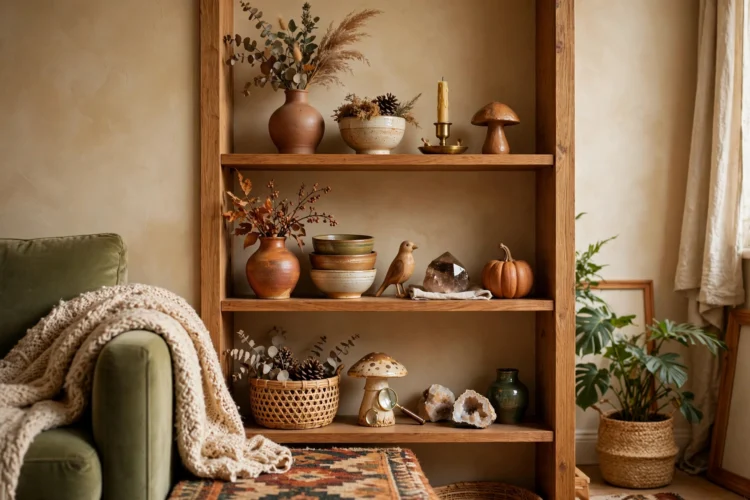
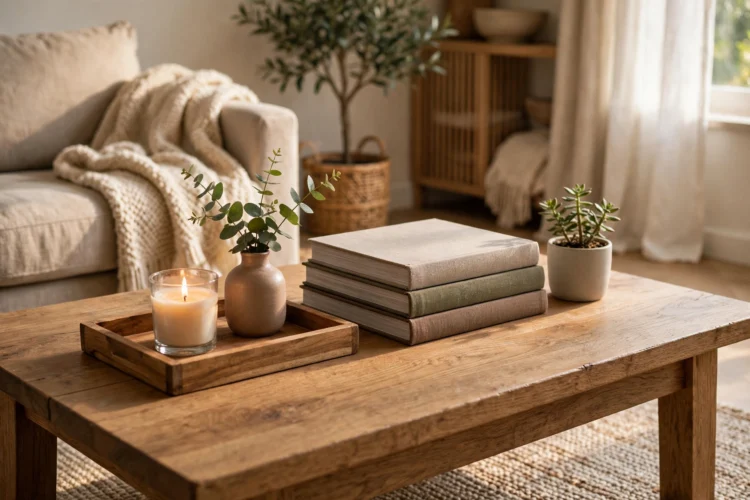
Every maximalist room needs one empty surface. A clear coffee table, an empty stretch of counter, or a bare nightstand. That empty space is where the eye rests, and it makes the full shelves around it look intentional instead of overwhelming. Without it, the room has nowhere to breathe.
Protect that surface. When mail, keys, and cups start landing there, clear it every evening. One empty surface is also practical: it is where you put down a drink, a book, or a bag. A room that works is a room you keep loving, and a single clear spot is what makes the layers around it feel like a choice instead of an accident.