Physical Address
304 North Cardinal St.
Dorchester Center, MA 02124
Physical Address
304 North Cardinal St.
Dorchester Center, MA 02124


Cold air slips in through gaps you can barely see, but the fixes can look like finish details. These twelve upgrades seal drafts without making the room look patched up.
A cold draft finds the gap you forgot about, and most of those gaps sit in plain sight: under the front door, along a window sash, behind the trim. The fix does not have to look like a fix. These draft proofing ideas treat door sweeps, window film, and caulk lines as finish details, so the room stays warm and still looks finished.
The gap under a front or back door is usually the biggest single leak in a house, and it is also the easiest to see: daylight shows under the door. A door sweep closes it. Pick a sweep that matches the door. A brush sweep in a dark bronze or black finish disappears against a dark door, while a clear or white sweep suits a painted door, and either one looks intentional when the screws line up and the ends sit flush with the door edges.
Fit matters more than the brand. Measure the gap at both ends of the door, because floors are rarely level and a sweep cut for the narrow end leaves the wide end open. Hold the sweep against the door, mark it, cut it with a hacksaw, and test it by sliding a sheet of paper under the closed door. If the paper slides freely, the sweep is too high. If it tears, the sweep drags, and it will wear out in a season.

Door weatherstripping earns its bad reputation from the foam tape that peels off by spring and the rubber strips that yellow in the sun. The paintable kind avoids both problems. V-strip, a folded strip of metal or plastic that springs open against the door or sash, paints over cleanly and lasts for years. Foam tape with a painted cover, or a silicone bulb seal tucked into a routed groove, does the same job on a door that gets painted every few years.
Install it on a warm day when the adhesive bonds properly, and press it into place along the full length of the stop, not just the middle where the gap looks worst. Run your hand around the closed door on a windy day and feel for air; a strip that misses a corner by a quarter inch leaks almost as much as no strip at all.

Window film gets dismissed as the cloudy plastic people tape up in a panic, but the better kits go on smooth and stay nearly invisible. A clear window insulation film stretched tight with a hair dryer reads like a second pane of glass from across the room, and it adds a still layer of air that cuts the chill coming off a single-pane or aging double-pane window.
The trick is in the edges. Clean the frame, stick the tape to the trim rather than the glass, and trim the film so it lands flat with no wrinkles at the corners. A wrinkled corner catches the light and gives the whole job away. When spring comes, the film peels off without marks, which makes it a good fit for rented rooms and windows you only need to seal for the cold months. For windows that are awkward in other ways too, these window treatment ideas for tricky windows cover shapes and placements where a standard curtain falls short.

Caulk is the cheapest draft fix there is, and the messiest looking when it is rushed. A good caulk line looks like part of the trim. Cut the nozzle small, smaller than you think, and lay a thin bead where the window casing meets the wall or where the baseboard meets the floor. Smooth it with a wet finger in one pass, wipe the excess right away, and paint over it once it cures so the line matches the trim.
Use the right caulk for the spot. Paintable acrylic latex suits interior trim and window casing, while silicone belongs around tubs and sinks where water sits, and it will not take paint. Outdoors, a polyurethane or siliconized acrylic caulk handles movement and weather without cracking. A cracked bead is worse than no bead at all, because it hides the gap it was meant to seal. Our guide to baseboard styles shows how trim profiles meet the floor, which helps you spot the gaps worth caulking first.

A door draft stopper, the fabric tube that sits against the bottom of a door, works well and looks like a stuffed toy left on the floor. The better versions look like something you bought on purpose. A heavy linen tube in a color that matches the rug, a leather-wrapped stopper, or a slim weighted bar in brushed metal all do the same job without announcing themselves as a draft fix.
Make one to fit instead of buying a generic length. Fill a tube of sturdy fabric with rice, dried beans, or sand, sew the ends shut, and size it a half inch longer than the door so it covers both corners. A stopper that is too short leaves the corners open, and the corners are where the cold air comes in fastest. Keep one by the front door and one by any interior door that leads to an unheated room, and move them with the season.

Most window drafts do not come through the glass. They come through the thin gap between the window frame and the rough opening, hidden behind the casing. On a cold day, hold the back of your hand along the casing and feel for the chill. If the casing feels cold, the gap behind it is open, and caulking window gaps from the surface will not reach it.
The fix is low-expansion foam. Pull the casing off carefully, spray foam into the gap in a thin bead, let it cure, and trim the excess flush before the casing goes back on. Low-expansion foam matters here: the standard kind swells hard enough to bow a window frame out of square. While the casing is off, check the sill too, since the joint under the sill leaks in many older windows. Paint the casing to match when it goes back, and the whole repair disappears.
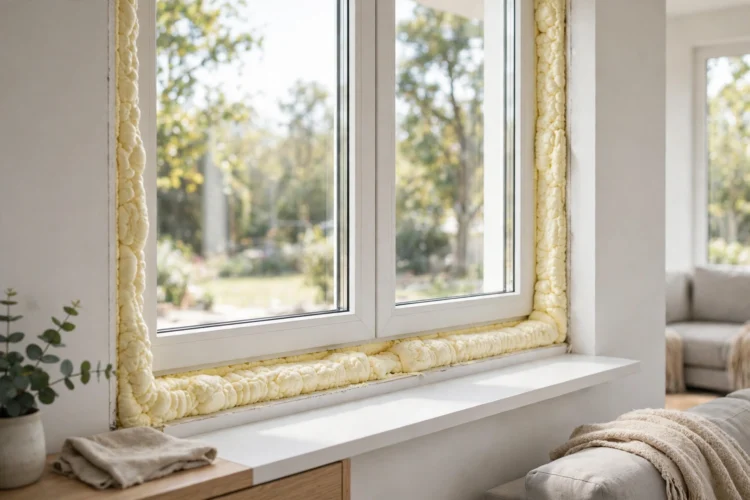
Outlets and light switches on exterior walls leak air through the box and around the cover plate, and the draft feels odd because it comes out of a flat wall. Foam gaskets made for outlet boxes slide behind the cover plate and seal the gap in about a minute per outlet. They cost little, they are invisible once the plate is back on, and they make a real difference on a wall that faces the wind.
Turn off the breaker for that circuit before you remove a cover plate, even though the job looks too small to bother. Check the box for gaps where the drywall meets the box, and seal those with a small bead of caulk or foam while the plate is off. Put the plate back snug and the wall stops breathing cold air into the room.
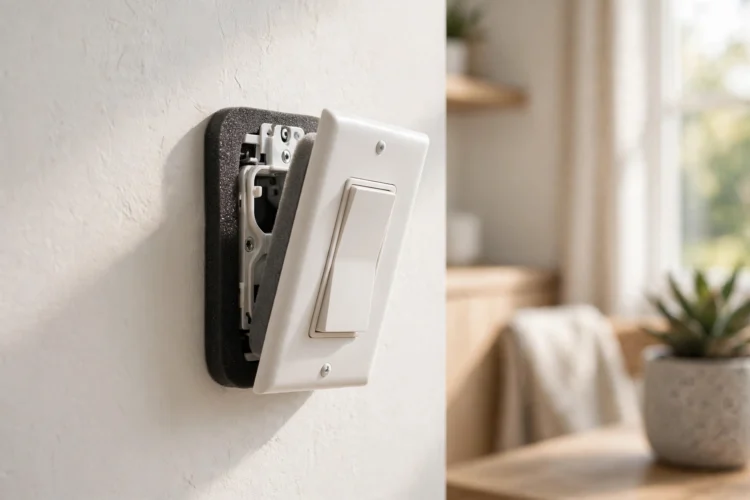
A fireplace with an open flue pulls warm room air straight up the chimney all winter, even when no fire is burning. A flue cover or chimney balloon plugs the flue and stops that pull. Fit it above the firebox, inflate it until it holds snug, and mark it with a bright tag that hangs into the firebox so nobody lights a fire with the balloon in place.
If the fireplace sees regular use, a glass door set does the same job with less fuss. Glass doors close the opening when the fire dies down, and they keep sparks in the box while the fire burns. Either way, check the damper first: a damper that does not close fully is often the real leak, and a warped damper plate is a job for a chimney specialist rather than a tube of caulk.

Warm air rises, so the attic hatch is often the biggest leak in the house, and it hides above your head where nobody looks. A hatch that sits loose in its frame leaks heat all winter. Weatherstrip the frame, add a layer of rigid foam to the back of the hatch panel, and fit a latch or a simple hook that pulls the hatch tight against the seal.
A basement door that leads to an unheated stairwell pulls cold air up into the hallway every time it opens, and leaks around its edges the rest of the time. Treat it like an exterior door: a sweep at the bottom, weatherstripping on the stops, and a tight latch. If the door is thin, a sheet of rigid foam glued to the basement side adds insulation without changing how the door looks from the hall.
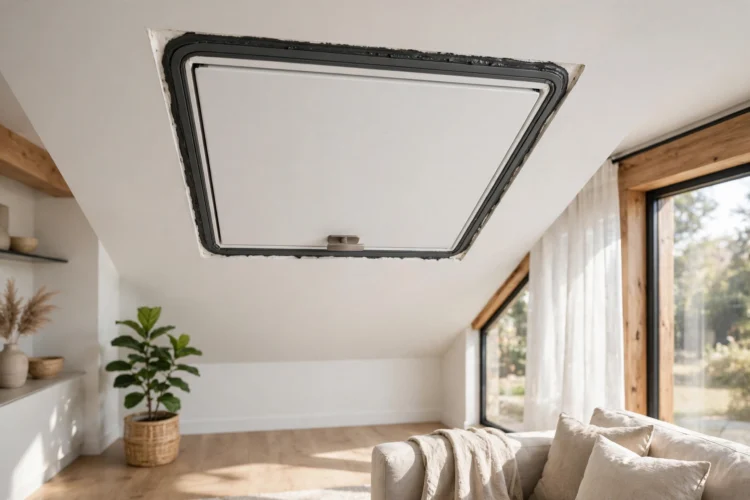
Small openings leak more than their size suggests because the air moves fast through a narrow gap. A mail slot with a loose flap whistles on a windy night, and a pet door with a worn flap does the same.
Fit a brush strip or a magnetic flap inside the mail slot so letters still pass through while air does not. The brush version is quieter, the magnetic version seals tighter, and either one beats a slot that hangs open a crack all winter.
Replace a warped or stiff pet flap with a new one that sits flat in its frame, and add a second flap on the inside if the door allows it. Two flaps with a small air pocket between them cut the draft far better than one, and the pet still passes through without a fight.
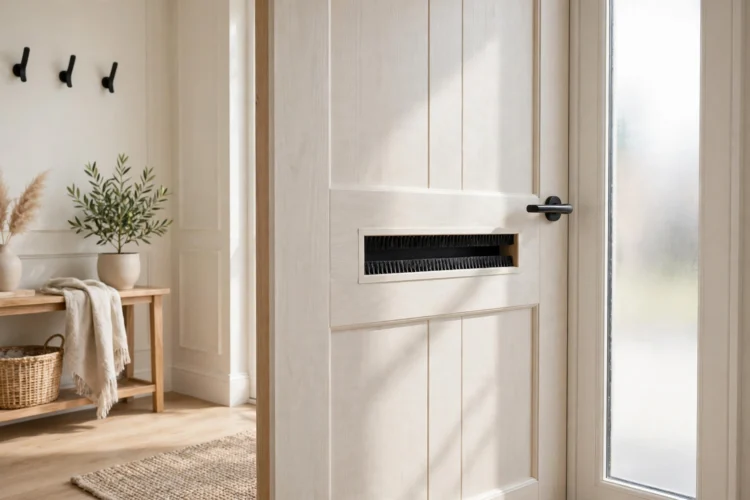
Draft proofing works best as a round, not a single weekend project. Start with the door sweep and the window film, then work through the trim, the outlets, and the small openings one room at a time. Each fix is small on its own, and together they add up to a house that holds its heat. For rooms that need a cheap refresh once the drafts are sealed, these small-budget home facelifts show how to spend a little and change a lot. And if a radiator sits under the draftiest window, our guide on how to disguise ugly radiators and vents helps you hide the hardware without blocking the heat.