Physical Address
304 North Cardinal St.
Dorchester Center, MA 02124
Physical Address
304 North Cardinal St.
Dorchester Center, MA 02124

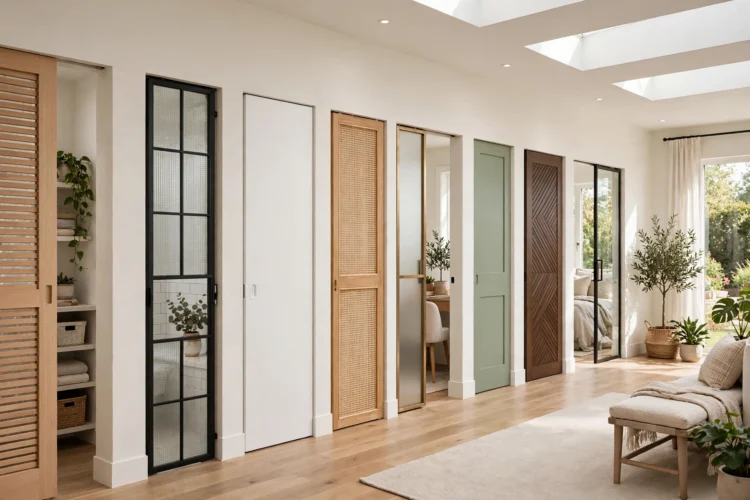
A pocket door slides into the wall and hands the swing space back to the room. Here are eight places where that trade pays off, plus the spots where a barn door or a curtain wins instead.
A hinged door needs a full arc of clear floor to swing open, and in a small room that arc eats the best part of the plan. A pocket door slides into the wall instead, so the floor it would have claimed stays free for a vanity, a desk, or a clear path to the bed. These pocket door ideas cover the rooms where that trade pays off, the spots where a barn door or a curtain does the job better, and what to check before you cut into a wall.
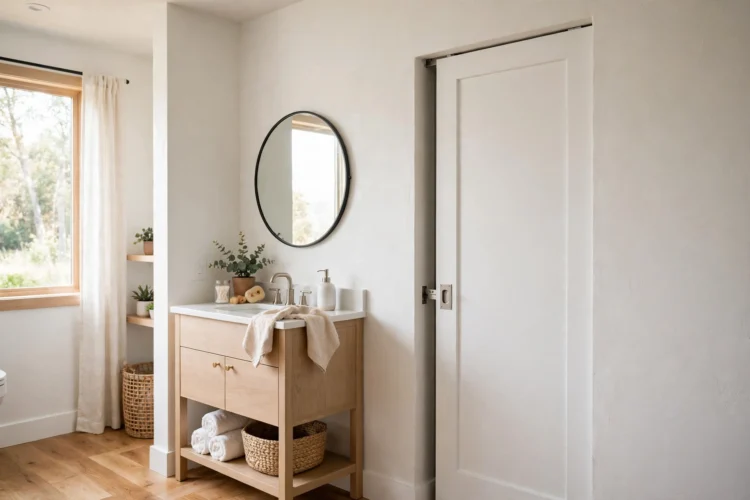
The bathroom is where a pocket door earns its keep fastest. A standard hinged door swinging into a five-by-eight bathroom can block the toilet, clip the vanity drawer, or trap you against the tub while you try to close it. Slide that same door into the wall and the whole room opens up. You can stand at the sink with the door shut, reach the towel bar without sidestepping, and fit a wider vanity into the space the swing used to claim.
Pick solid-core slab doors for bathrooms, not hollow ones. They block more sound, feel heavier in the hand, and hold up better in damp air. Add a privacy latch made for pocket doors, the kind with a small thumb turn and an emergency release on the outside, so nobody gets locked in by accident.
Watch the plumbing before you commit. The wall that holds the pocket cannot also hold pipes, a vent stack, or a recessed medicine cabinet. Map the studs and the pipe runs first, and if the only free wall is taken, the door belongs on the other side of the room or not at all.
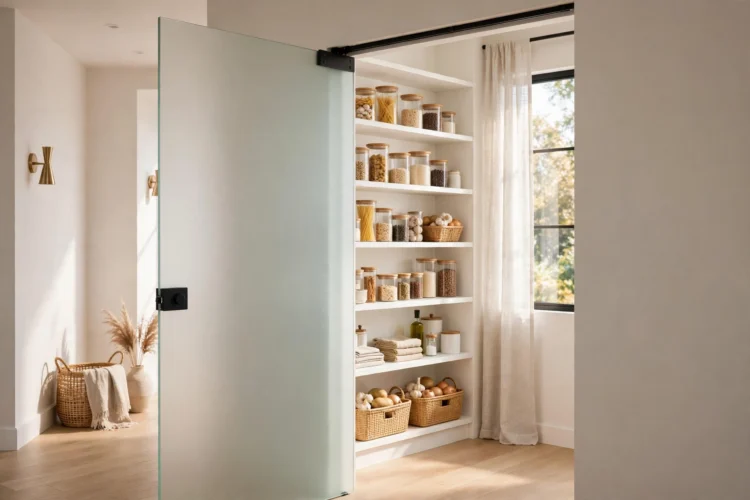
A pantry door that swings out into a kitchen aisle turns every trip for flour into a small traffic jam. A pocket door solves it by vanishing into the wall, so you can walk in with both arms full of groceries and back out with a cutting board under one arm. The opening stays clear, the aisle stays clear, and the pantry reads as part of the kitchen instead of a separate closet.
Glass changes the math here. A frosted or reeded glass pocket door lets light from the kitchen spill into the pantry while keeping the shelves out of sight, and it marks the pantry as a finished part of the room rather than a storage afterthought. For more pantry door ideas, from barn doors to glass panes, see our guide to pantry door ideas and compare the styles side by side before you pick one.
Size the opening for real use. A 24-inch pantry door feels cramped when you carry a tray through it, so aim for 30 inches or wider if the wall allows. A pull recessed into the edge of the door beats a knob that sticks out and catches on the pocket, and a soft-close track stops the door from slamming into the frame when your hands are busy.
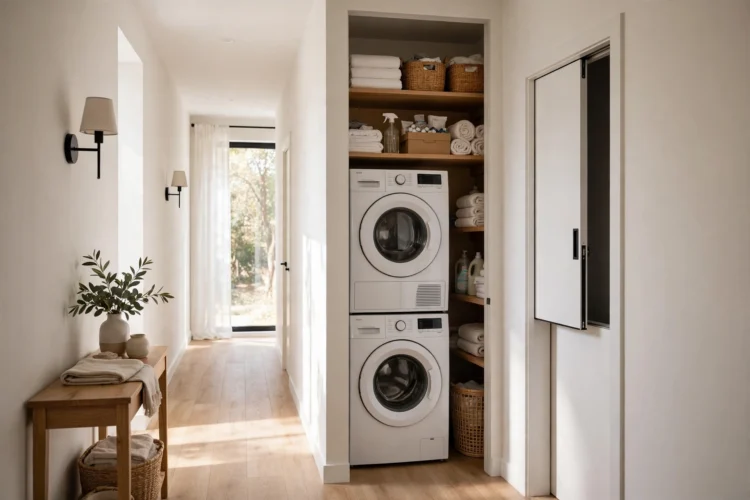
Laundry closets usually sit in the worst spot in the house: a hallway, a mudroom, or the narrow end of a bedroom. A hinged door there swings straight into the walkway, so you end up holding the door open with one hip while you load the washer with the other hand. A pocket door takes the door out of the equation entirely. Slide it open, load the machine, slide it shut, and the hall stays a hall.
Ventilation matters more than looks in this spot. Washers and dryers throw off heat and moisture, so leave a gap at the bottom of the door or fit a louvered panel into the slab. That small slot of airflow keeps the closet from turning damp, and it costs nothing in floor space. If the dryer vents through the same wall as the pocket, check the duct run first, since a vent pipe and a pocket frame cannot share the same cavity.
A fold-down shelf on the inside wall opposite the pocket gives you a folding surface that disappears when the door closes.
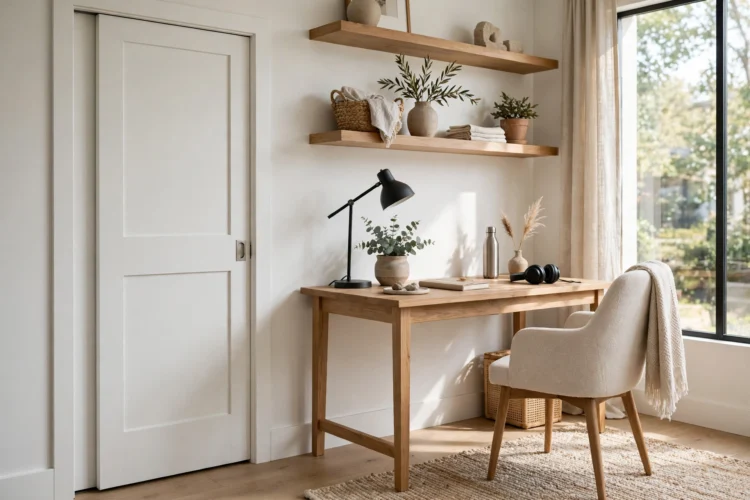
A home office carved out of a spare bedroom or a corner of the living room needs a door you can close fast when a call starts, and open again just as fast when it ends. A pocket door does that without stealing a square foot from either room. There is no swing to plan around, so the desk can sit close to the doorway and the chair can roll back without hitting anything.
Sound is the weak point, so treat it honestly. A pocket door will never seal like a solid hinged door in a jamb, because it needs a small gap to slide. A solid-core slab, a brush seal along the top and sides, and a heavy curtain on the office side of the opening close most of that gap. Together they cut enough noise for calls and focused work, even if they will not make the room silent.
If the office shares a wall with the living room, hang the pocket on the office side of the wall and keep the track accessible. Sliding door hardware wears out, rollers get gritty, and a track you can reach through a removable trim piece is a track you will actually maintain.
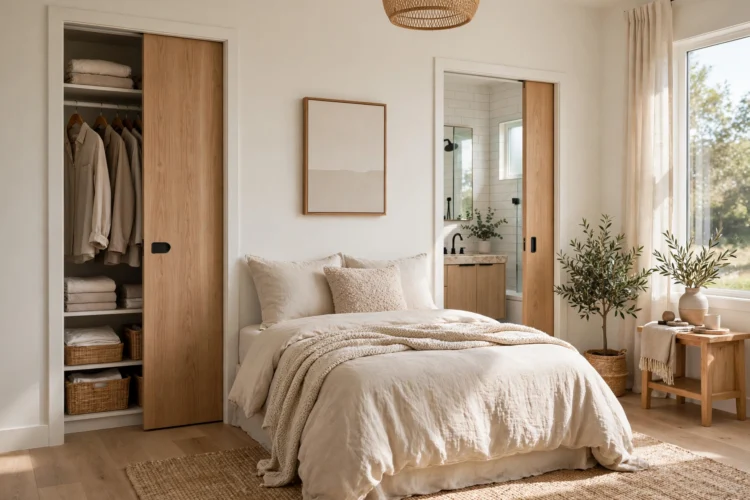
Small bedrooms often stack a closet and an ensuite bathroom on the same wall, and two hinged doors on that wall fight each other for swing space. Pocket doors end the fight. Both doors slide into the same wall cavity, the bedroom floor stays open for the bed and a nightstand, and you can open the closet and the bathroom at the same time without the doors colliding.
Use the freed floor space on purpose. A dresser that used to sit against a clear wall can move closer to the closet, and a full-length mirror can hang on the wall where the door swing used to be. The room feels bigger because the furniture finally sits where it belongs instead of where the door allowed it to sit.
Paint the pocket doors the same color as the wall and they all but disappear when closed. For paint colors that make a door stand out instead, our roundup of interior door paint colors shows which shades work on slab doors and which ones fight the trim.
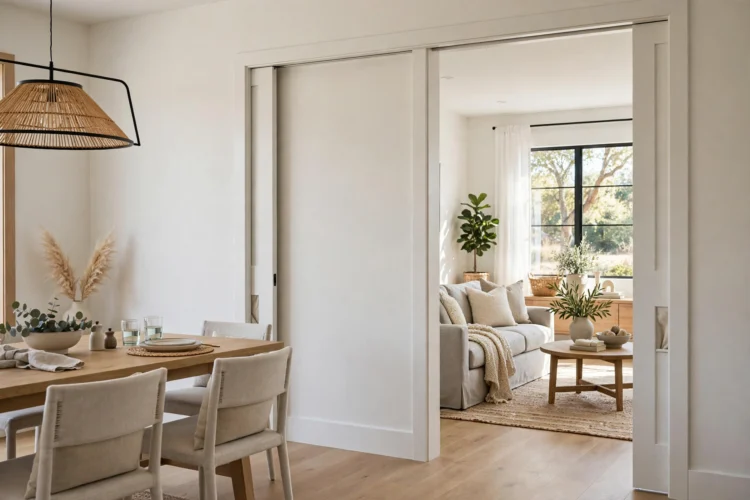
Two pocket doors meeting in the middle turn a wide opening into a flexible wall. Open them both and a dining room flows into the living room for a dinner party. Close them and the same rooms become a quiet den and a separate dining space. The opening can run six feet wide or more, which is far wider than any single hinged door, and it costs no floor space on either side.
Keep the meeting point simple. A pair of flush pulls and a small magnetic catch hold the doors together without a lock that nobody will use.
Double pocket doors also fix the awkward wide cased opening that many older homes have between the front room and the back. Instead of living with a permanently open hole in the wall, you get a door you can actually close, and the trim around the opening stays exactly as it was.
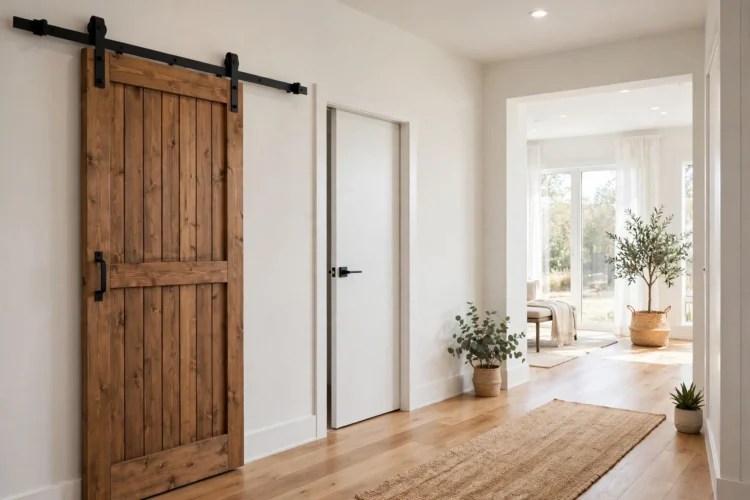
A pocket door is not the answer everywhere, and knowing where to stop is half the point. A barn door beats a pocket door when the wall is load-bearing, full of pipes, or too thin to hold a pocket frame. It hangs on a rail on the face of the wall, so it needs no cavity at all, and it installs in an afternoon with basic tools. The trade is that it never seals: light and sound slip around all four edges, and it needs a clear stretch of wall beside the opening for the door to park against.
A curtain beats both of them when the opening is temporary, oddly shaped, or rarely closed. A linen curtain on a ceiling track softens a dressing area, hides a storage nook, and costs a fraction of any door. It will not block sound or lock, so it suits spaces where privacy is a courtesy rather than a need. For doors that need a fresh look without a full replacement, our list of interior door upgrade ideas covers paint, hardware, and trim fixes that work on the door you already have.
Use this rule of thumb: pick a pocket door when you need a real door and the wall can take it, a barn door alternative when the wall cannot, and a curtain when the opening only needs a soft boundary. The wrong choice in the wrong spot costs more than the right choice in the right one.
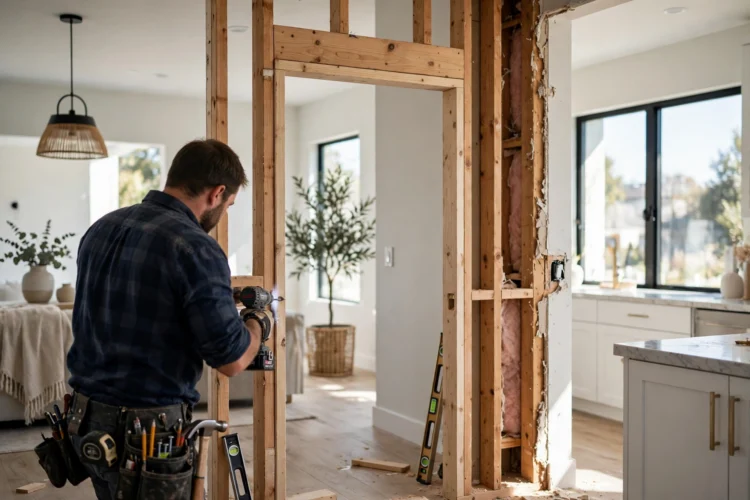
Retrofitting a pocket door into an existing wall is a bigger job than hanging a new hinged door, so a pocket door retrofit needs four checks before you buy the kit. First, the wall: pocket frames need a cavity about twice the width of the door, and the studs inside that cavity come out. Load-bearing walls can still work, but they need a header and a carpenter who knows how to carry the load above. Second, the services: electrical wires, plumbing, and ductwork cannot run through a pocket cavity, so open the wall and look before you order anything.
Third, the floor: the track sits in the floor at the opening, so uneven floors and thick tile transitions need leveling first or the door will bind. Fourth, the trim: the pocket frame gets its own jamb and casing, and the finished look depends on trim that matches the rest of the house. Mismatched casing around a new pocket door draws the eye straight to the one spot you wanted to disappear.
Budget a weekend for the first one and a day for the second. The first pocket door teaches you the kit, the framing, and the track; after that the work goes much faster. Small space doors reward the effort the most, so start with the tightest floor plan in the house and see how much floor you get back. For more ways to make a small room feel larger once the door is out of the way, these small apartment living room ideas show how to spend the space you just freed.