Physical Address
304 North Cardinal St.
Dorchester Center, MA 02124
Physical Address
304 North Cardinal St.
Dorchester Center, MA 02124

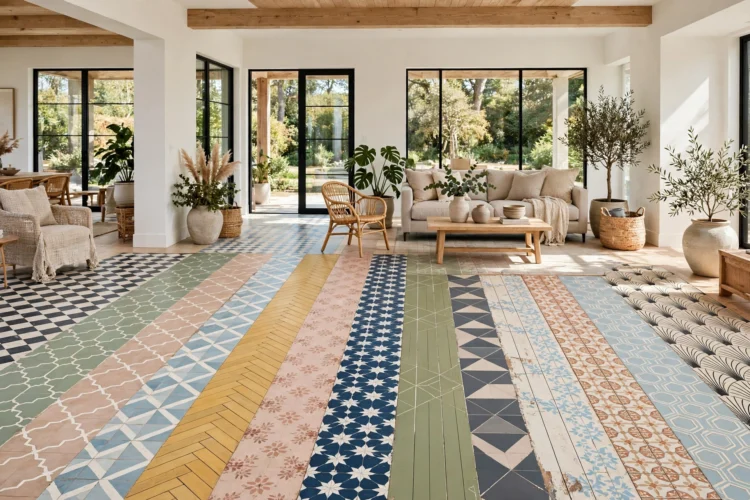
Give tired tile and wood a fresh finish with solid color, stencils, and painted rugs. These 13 ideas include prep steps that stop peeling and a seal that holds up to daily wear.
A floor can look tired long before it is worn out. Scuffed wood, yellowed tile, and grout that never looks clean again can make a whole room feel dated, even when the furniture and walls are fine. These painted floor ideas give those surfaces a second life without a full replacement, and they work best when the prep is done right the first time.
Paint is not a shortcut that hides damage. It is a finish that needs a clean, dull, and dry surface to grip. With porch and floor paint, the right primer, and a clear seal, a painted floor in a hallway, kitchen, bathroom, or entry can last for years. The 13 ideas below cover solid color, stencil patterns, painted rugs, borders, and color zones.
Peeling usually starts with a surface that was not ready for paint. Grease in a kitchen, soap film in a bathroom, and wax or polish on old wood all stop paint from bonding. Prep takes more time than the first coat, and it decides whether the floor still looks good next year.
Sweep, vacuum, and mop with a degreasing cleaner, then rinse and let the floor dry fully. Pay extra care to corners, grout lines, and the area near the stove or sink, where residue builds up. If water beads on the surface, clean it again. Paint sticks to a clean floor, not to a film of old cleaner.
Scuff glossy tile and sealed wood with fine sandpaper until the shine is gone, then vacuum the dust and wipe with a damp cloth. Use a bonding primer made for tile or wood, and let it cure for the time on the label. For tile, choose a primer rated for slick surfaces. For wood, choose one that seals tannin and old stain. Do not rush the cure time. A primer that feels dry may still be soft underneath, and paint laid over it can lift in sheets.
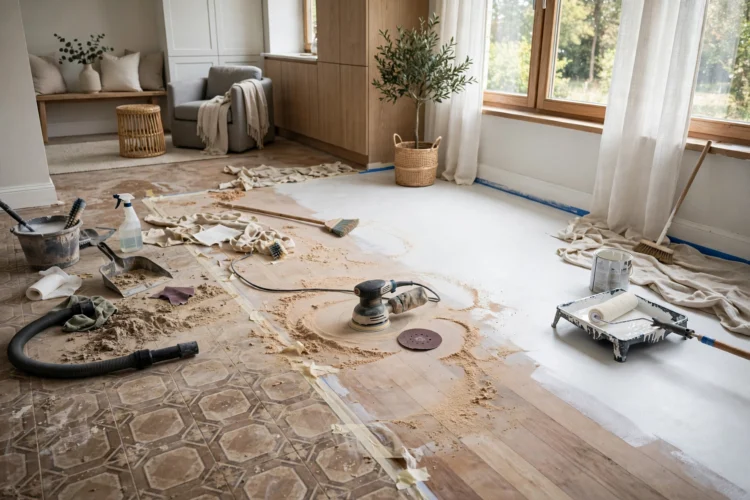
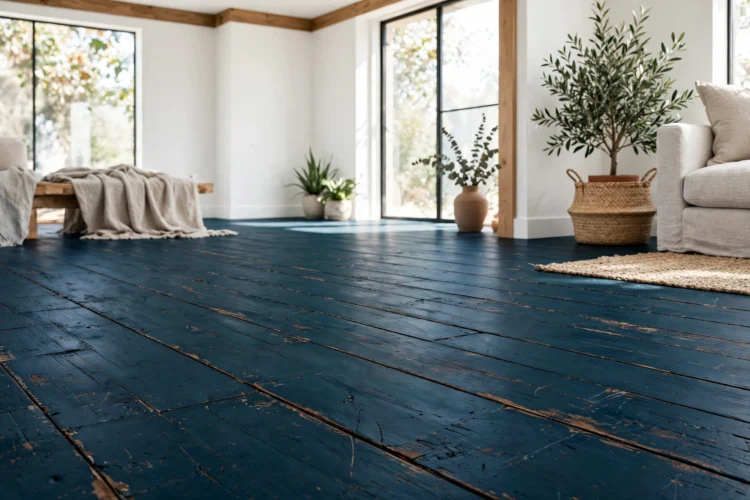
A single solid color is the fastest way to make worn wood look planned instead of patched. It hides uneven tone, old stain marks, and small scratches, and it sets a calm base for rugs and furniture. Painted wood floors in a deep tone can ground a light room, while a pale tone can make a small room feel wider.
Charcoal, deep navy, or dark green works well on wood with heavy wear. These tones hide scuffs and make pale walls and light furniture stand out. Use two thin coats of porch and floor paint rather than one thick coat, and let each coat dry fully. Thin coats level better and resist scuffs from shoes and chair legs.
If you like the look of wood but not the orange or yellow tone it has now, try a pale wash in warm white or soft gray. Brush it with the grain, and test it on a spare board first. The grain stays visible, the color feels fresh, and the room keeps a natural texture. The same paint techniques that add depth to flat walls can guide your color choice here, because a floor color should work with the wall tone, not fight it. Read more about paint techniques that add depth to flat walls before you pick a shade.
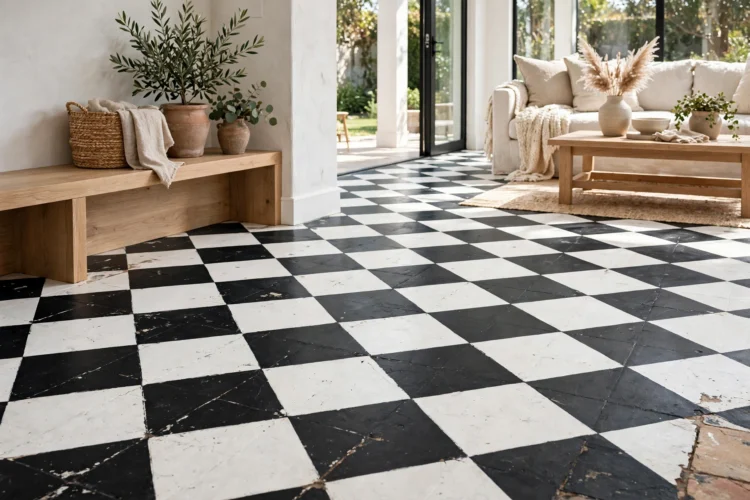
Simple geometry suits floors because it reads well from across a room and forgives small flaws. Checkerboard and stripes need careful taping, but they need no special skill with a brush. Measure from the center of the room, not from a wall.
Black and white checkerboard is a strong choice for a kitchen or bathroom with plain tile. Paint the lighter squares first, let them dry, then tape and paint the darker squares. Keep the squares large in a small room, around 12 inches, so the pattern feels calm rather than busy.
Stripes laid along the long side of a room make a narrow hallway or galley kitchen feel longer. Use painter tape, a level, and a pencil line before you start. Alternate a solid color with the base color, or use two close tones for a softer look. Remove the tape while the second color is still slightly tacky for a clean edge.
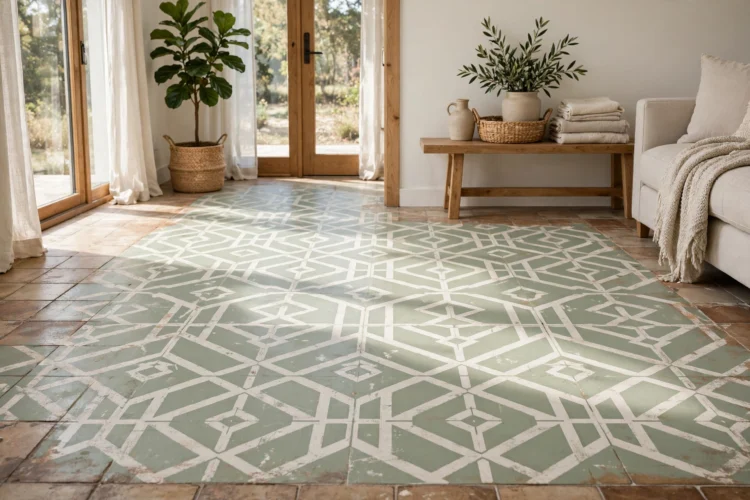
A stencil pattern breaks up stains, chips, and uneven tile color better than solid paint. The repeat draws the eye to the pattern, not to one bad tile. Plan the layout so a full motif lands in the center.
Floor paint for tile works best with a stencil that has open, simple shapes. Tape the stencil down, load a dense foam roller with a small amount of paint, and roll off the excess before you touch the floor. Too much paint bleeds under the stencil and blurs the edge. Work in rows, and clean the stencil every few repeats. This is a good fit for a bathroom, where a stencil floor pattern can add interest without new tile. For more tile pattern inspiration, see these bathroom tile floor ideas with pattern and texture.
On wood, a small floral or dot stencil in a tone close to the base color gives a quiet, handmade feel. It suits a bedroom or a reading corner, where the floor is seen up close. Use one accent color, keep the motif small, and leave plain space between repeats so the floor does not feel crowded.
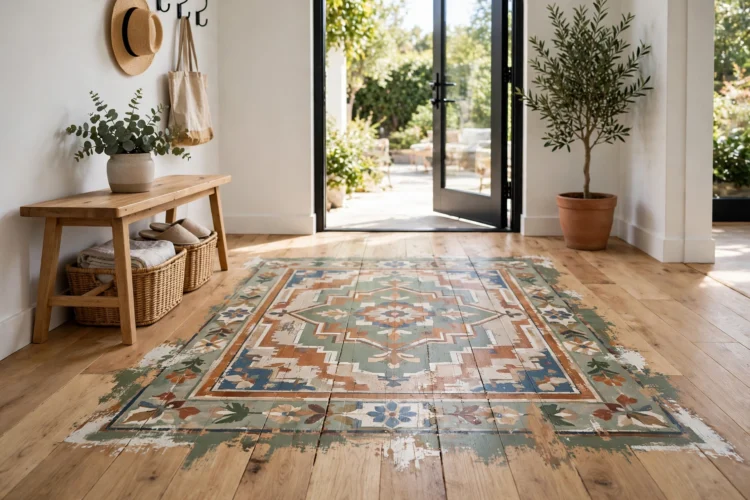
A painted rug gives you the look of a rug with no pile to trap dust and no edge to trip on. It works in entries and halls where a real rug would slide or wear fast.
Tape a large rectangle on the entry floor, add a border in a second color, and fill the center with a simple motif or a solid tone. A painted rug marks the entry zone and gives guests a clear place to pause. Use floor paint for tile or wood, then seal it well, because an entry takes rain, grit, and daily foot traffic.
A runner in a hall can be a single band of color with a thin border, or a repeat of small diamonds down the center. Keep the width narrow enough to leave plain floor on each side. That frame of plain floor makes the runner look neat and keeps the hall from feeling closed in.
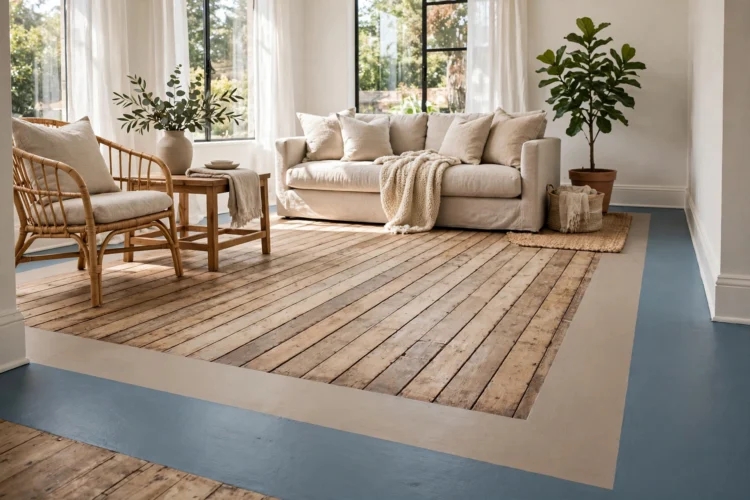
A border frames the room, hides worn edges near walls, and makes a plain floor look finished.
Paint a band of color around the edge of the room, about 6 to 10 inches wide, with a thin line in a second color inside it. This works on both wood and tile, and it suits rooms where the center of the floor is covered by a rug or table. A border in a deep tone can also hide scuffs near baseboards, where shoes and vacuum cleaners leave marks. If you want more low cost updates to pair with it, these small budget home facelifts room by room show how one change per room adds up.
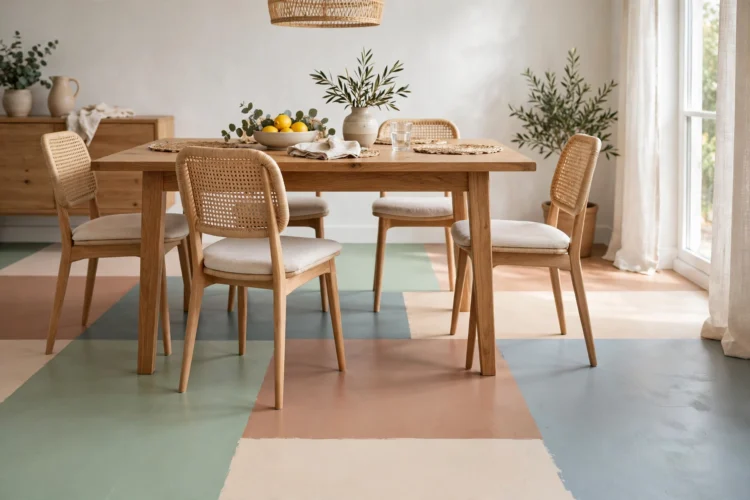
Open rooms often need a visual cue to show where one area ends and another begins. A color zone under a table makes the layout clear.
Paint a large rectangle or soft edged block under the dining table in a tone that contrasts with the rest of the floor. It anchors the table, hides chair scuffs, and makes the dining area feel set apart from the living area. Choose a color that repeats in the room, such as a cushion or curtain tone, so the block feels linked to the decor. Spray paint makeover ideas for dated decor can help you match small pieces to the new floor zone, and you can browse spray paint makeover ideas for dated decor for pieces that sit on or near the floor. Measure the zone with the chairs pulled out, so no chair sits half on and half off the paint.
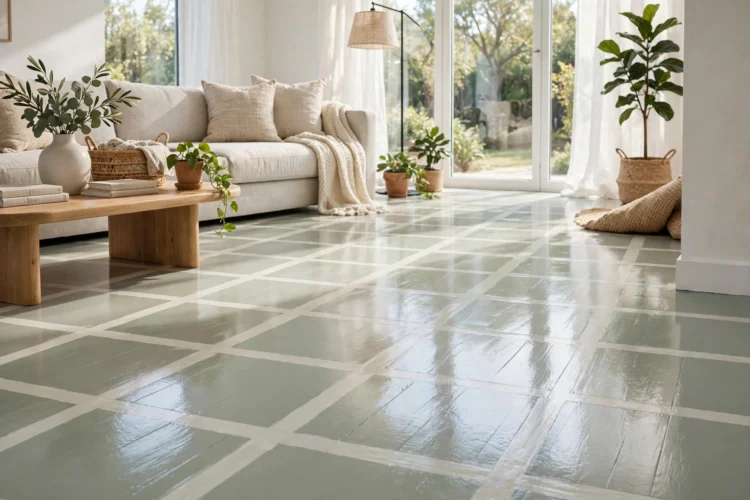
A topcoat protects the color from water, grit, and chair legs, and a simple care routine keeps the seal intact.
Apply two thin coats of water based polyurethane topcoat over the dry paint, with a light scuff between coats if the product calls for it. Use a topcoat made for floors, and let it cure fully before you move furniture back. Place felt pads under chair and table legs, use a rug pad under area rugs, and sweep grit often so it does not grind into the finish. Clean with a damp mop and a mild floor cleaner. Recoat the topcoat when you see wear in the main traffic path, before the paint itself starts to thin.
Pick one idea that fits the room you use most, prep the surface well, and give each coat time to dry and cure. A painted floor will not fix a floor that moves, cracks, or holds water, but for sound tile and wood that just looks dated, paint buys you years of use and a room that feels new again.