Physical Address
304 North Cardinal St.
Dorchester Center, MA 02124
Physical Address
304 North Cardinal St.
Dorchester Center, MA 02124

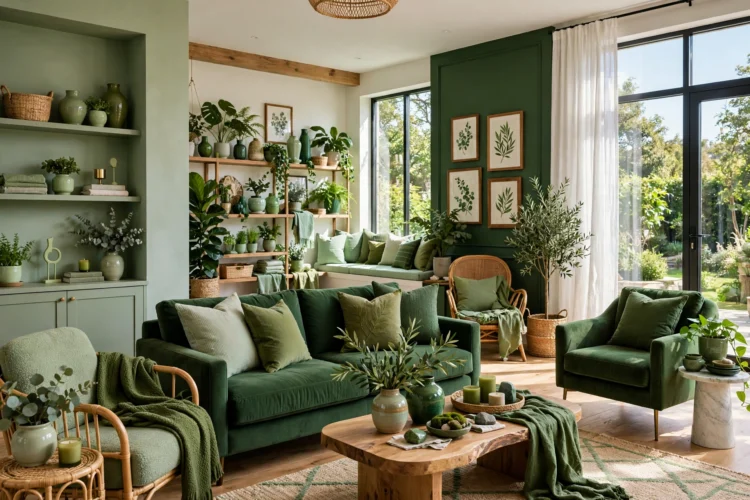
Twelve green living room ideas that walk the full range from pale sage to deep emerald, with shade and pairing tips for each.
Green living room ideas cover a wider range than most colors, from pale sage that calms a sunny room to emerald that turns an evening room dramatic. Green is also the easiest bold color to live with, because it sits in the middle of the spectrum and pairs with wood, brass, white, and black without a fight. This guide walks the whole range, one shade at a time, so you can pick the green that fits your light, your furniture, and how much drama you actually want.
The shade matters more than the amount of green. Paint a large swatch on the wall and watch it for two days, because green shifts with the light more than most colors. A sage that looks soft in the morning can turn gray by evening, and an emerald that looks rich at noon can go nearly black at night. Green living room ideas work when the shade matches the room’s light, so north-facing rooms need warmer greens and sunny rooms can handle cooler ones. Buy a sample pot, not a full gallon, and test it on the wall that gets the least light first.
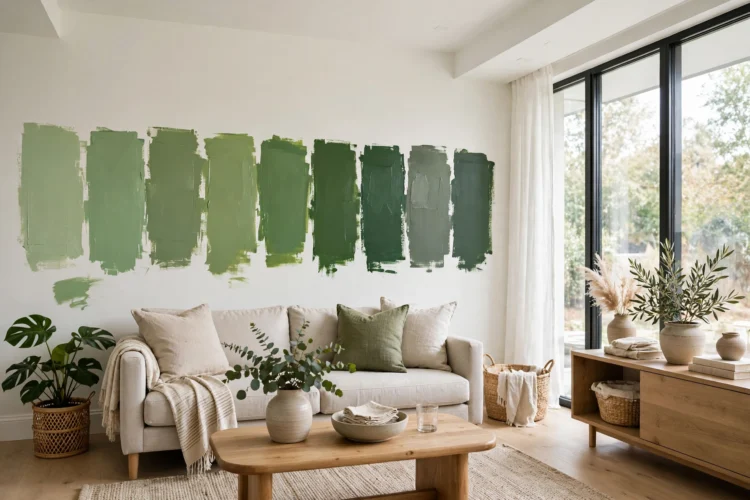
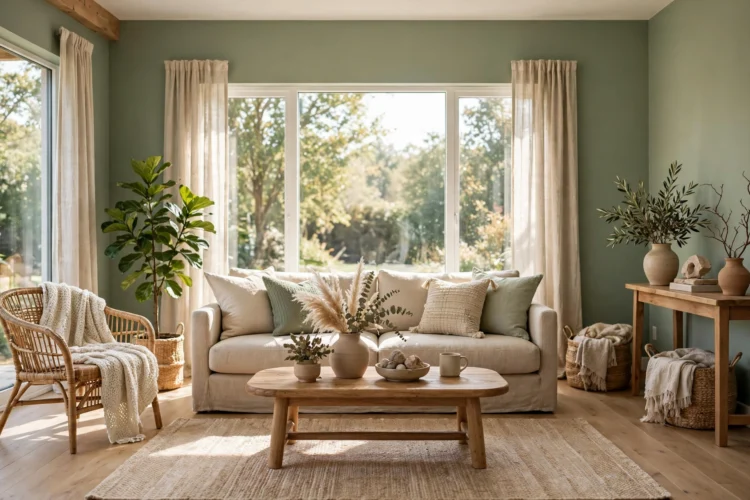
Sage is the quietest green, and it suits rooms that get strong daylight. The gray undertone keeps it from looking minty, and it pairs with pale wood, linen, and cream without any tension. A sage green living room feels calmest when the sofa is pale and the rug is cream, because the soft wall color has quiet furniture to sit beside. Paint all four walls sage and the room feels like a garden room, or paint one wall and keep the rest white for a softer effect. Sage works with plants, because the leaves and the walls share a family without matching exactly. Add black or dark bronze hardware so the room keeps a little edge.
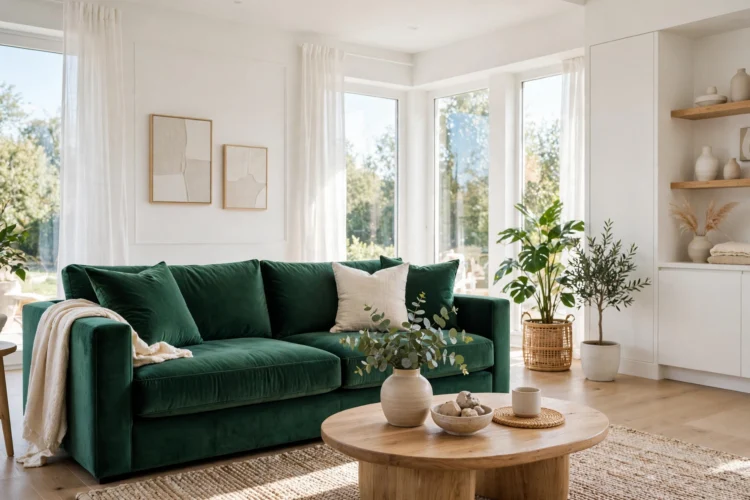
An emerald sofa is the fastest way to make a living room feel designed. One bold piece does the work, so the walls can stay white and the rug can stay plain. Velvet makes the emerald look richer, because the pile catches light in different directions, while a flat weave keeps it calmer. An emerald green living room needs only that one sofa to feel designed, so keep the pillows in cream, rust, or a lighter green, and avoid matching the sofa with emerald curtains, which would double the drama. An accent chair in a pale fabric balances the sofa, so the room has one star and one supporting piece.
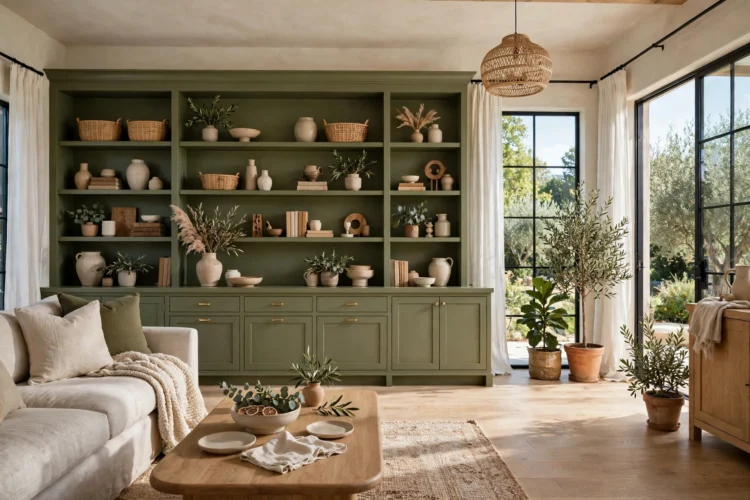
Olive green built-ins look like part of the architecture instead of furniture. Paint the shelves, the wall behind them, and the trim the same olive, and the whole unit reads as one quiet block. Books, ceramics, and plants stand out against the dark green, which is the point. This works best in rooms that already have built-ins, because painting them is cheaper than building new ones. If you are styling the shelves, our guide to bookshelf styling covers the spacing and grouping that keeps a dark shelf from looking cluttered.
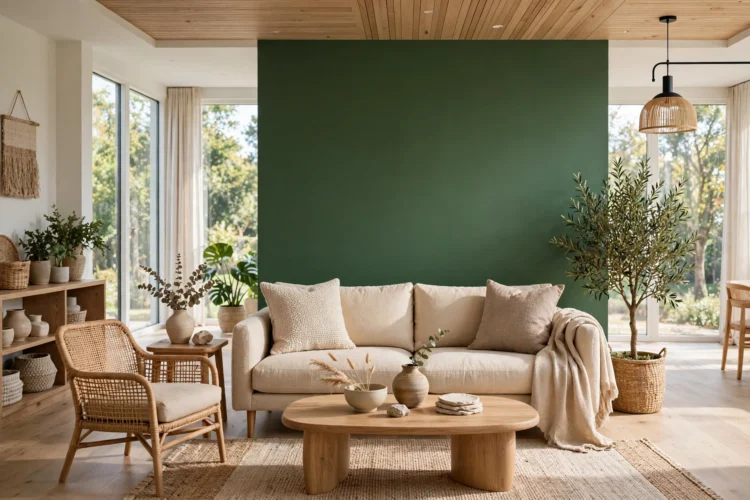
One forest green wall gives a room depth without the commitment of painting everything. Dark green living room walls suit rooms that are used mostly in the evening, because the color deepens as the light drops and the lamps take over. Pick the wall the sofa faces, so you see the color when you sit down, not the wall behind you. The rest of the walls stay white or pale, and the green wall becomes the backdrop for art or a mirror. Forest green pairs well with brass lamps and warm wood, because the warm metals keep the dark color from feeling cold. This is a good first step into dark green, because repainting one wall is a weekend job if you change your mind.
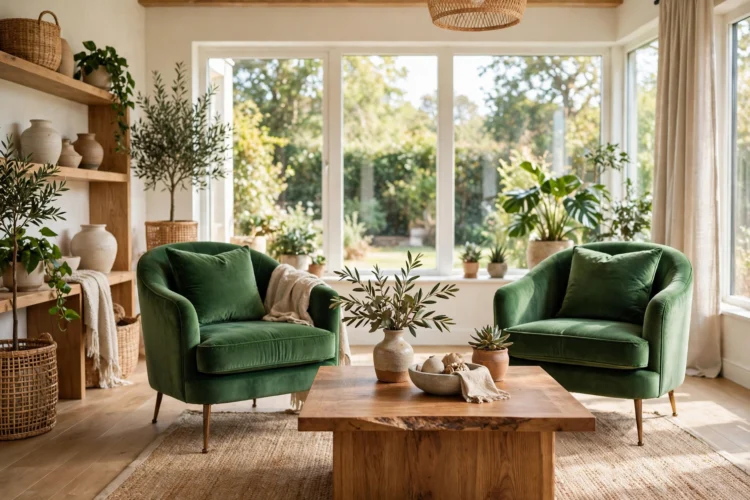
Green velvet chairs and warm wood are a natural pair, because the soft fabric and the hard grain balance each other. A pair of green chairs beside a walnut coffee table or a wooden media unit creates a small conversation zone inside a larger room. The wood tone matters: honey oak keeps the green fresh, while dark walnut makes it moody. A green sofa living room works when the rug stays light and the walls stay pale, so the sofa has room to be the star. Keep the rug light so the chairs stand out, and add one brass floor lamp to tie the warm tones together. Two chairs are enough, because four green velvet seats would turn the room into a lounge.
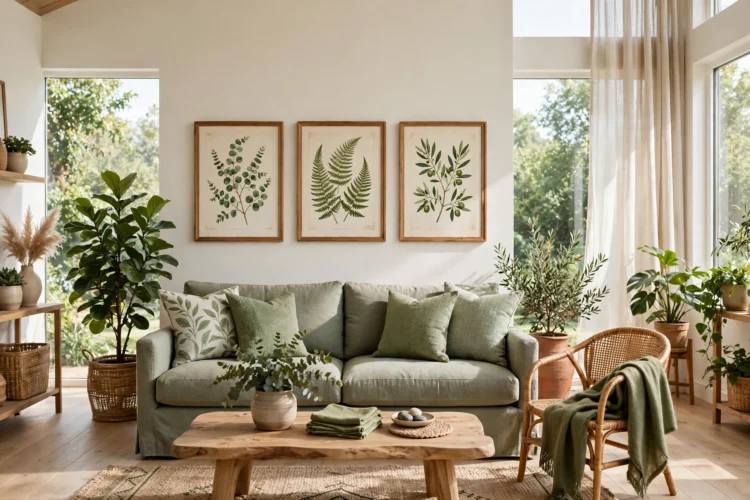
Botanical prints are the easiest way to tie green furniture, green walls, and green plants into one palette. A large framed print above the sofa can carry two or three greens at once, and the room borrows those tones for pillows and throws. The print does not have to match the wall exactly, because plants in art and plants in pots are allowed to differ. A gallery wall with one botanical print among black and white photos works too, because the single green image becomes the accent. Keep the frames consistent so the wall reads as one piece.
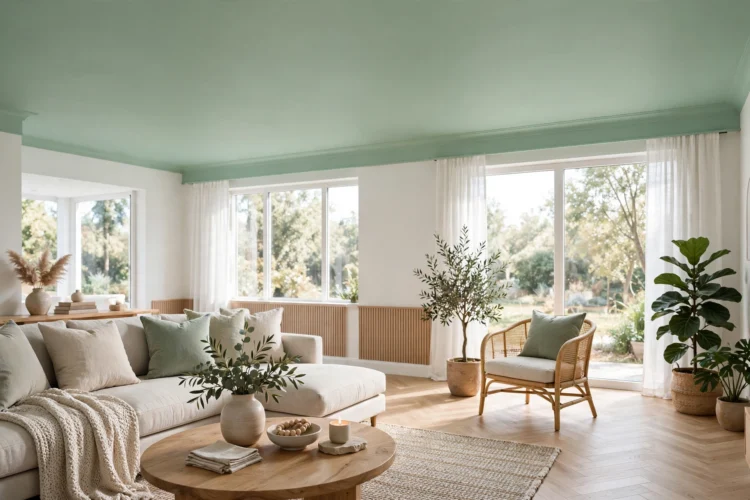
A mint ceiling sounds risky, and it is, but in the right room it works beautifully. The trick is the rest of the room: white walls, pale furniture, and plenty of daylight. The mint reads as sky, not as a color choice, and the room feels taller because the ceiling has a tone of its own. This suits rooms with high ceilings and large windows, where the ceiling is visible from the sofa. If the room is dark or the ceiling is low, skip it, because mint in shadow turns gray and the effect disappears.
Deep green and brass belong together in rooms used mostly at night. The brass catches lamplight and warms the green, so the room glows instead of going dark. A brass floor lamp, brass picture frames, and one brass tray are enough, because too much metal turns the room into a jewelry box. Pair the combination with a dark rug and a leather chair, and the room becomes the place everyone gathers after dinner. This palette suits a cozy living room that hosts long evenings, because the colors reward low light instead of fighting it.
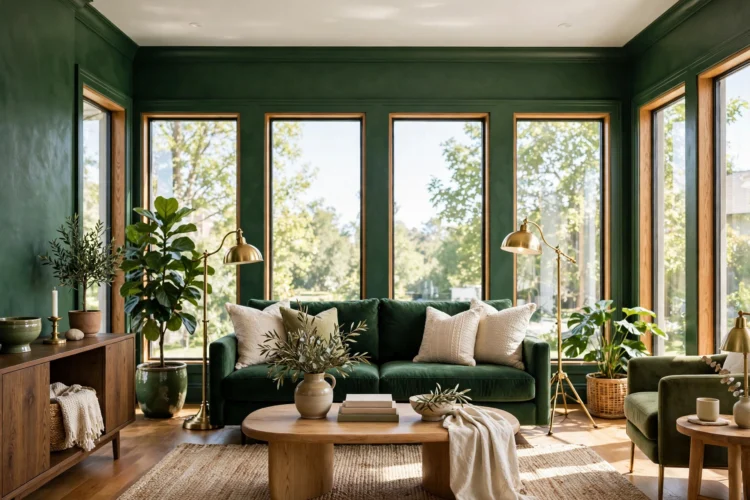
Matching greens exactly is almost impossible, and it is not necessary. Layer three greens that sit near each other, sage, olive, and forest, and the room will look richer than a single matched shade. The rule is to keep the undertones consistent: warm greens with warm greens, cool greens with cool greens. Mix them across different materials, a sage wall, an olive throw, a forest pillow, so the eye reads texture instead of color blocks. One green in a single material, like three sage pillows in a row, looks flat by comparison.
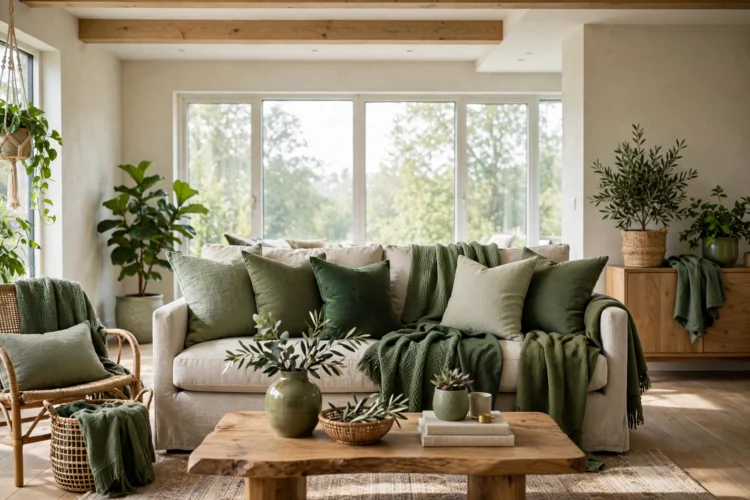
Renters can go green without touching the walls. A sage slipcover, an emerald throw, and three plants in different sizes add as much green as a painted wall, and all of it moves out when you do. Plants do the heavy lifting here, because a tall fiddle leaf or a trailing pothos adds green at three heights for the price of one pot. If the room has a bay window, the plants get the light they need and the window becomes the greenest spot in the room. Swap the throw with the seasons and the room changes without any paint.
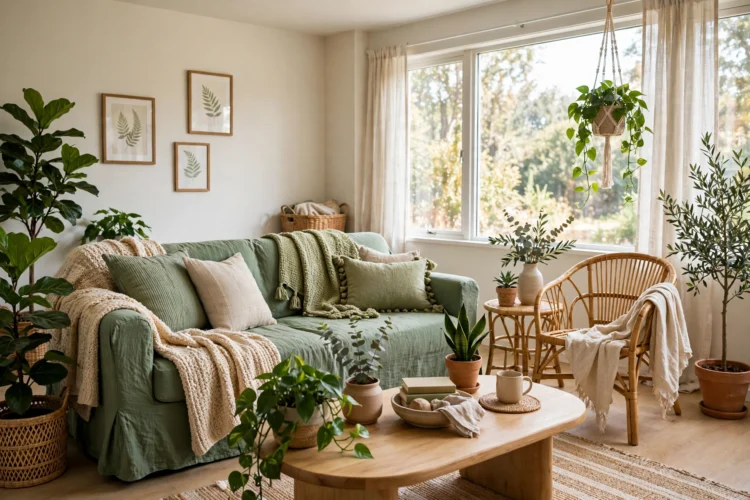
Green is easy to overdo, because every new plant and pillow feels harmless on its own. The stop sign is when the room has green on the walls, the sofa, the rug, and the curtains at the same time. At that point, no single green piece stands out, and the room reads as one color instead of a palette. Remove one green element, usually the rug or the curtains, and replace it with cream or natural wood. The remaining greens will look stronger for the contrast. A room with restraint feels designed, and a room with green everywhere feels like a theme.
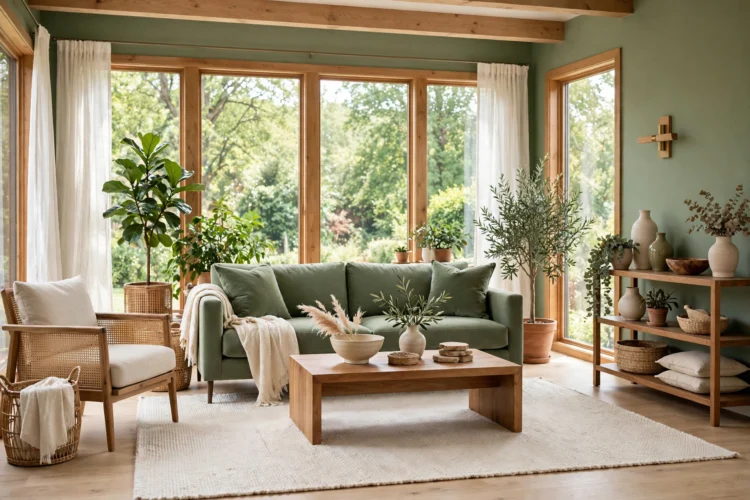
Pick one shade and one place to use it, then live with it for a month before adding more. Green rewards patience, and the room will tell you whether it wants sage calm or emerald drama.