Physical Address
304 North Cardinal St.
Dorchester Center, MA 02124
Physical Address
304 North Cardinal St.
Dorchester Center, MA 02124

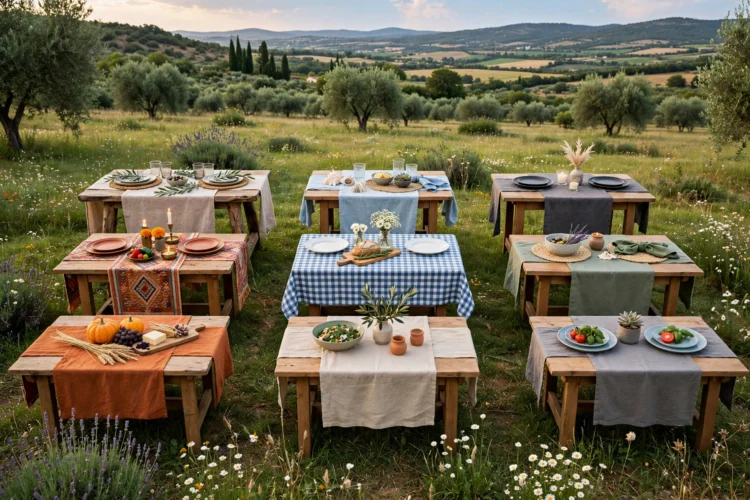
Nine relaxed place-setting ideas that make a casual dinner party feel special without any formality, from layered plates to a handwritten menu card.
A casual dinner party lives or dies by the table. Guests should feel looked after the moment they sit down, but nobody wants to eat off a table that feels like a formal restaurant. These table setting ideas for casual dinners sit in the middle: a little care, no stiffness. Layered table linens, mixed glassware, and a small personal touch at each place do most of the work. Everything below can be done with things you already own, in the time it takes the oven to heat up.
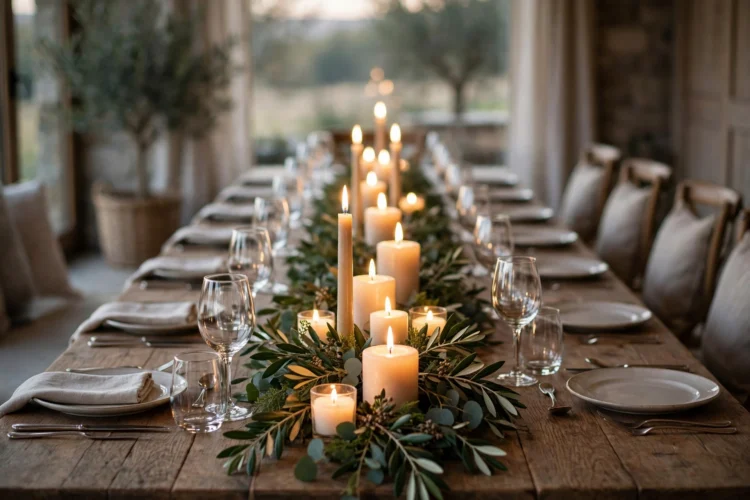
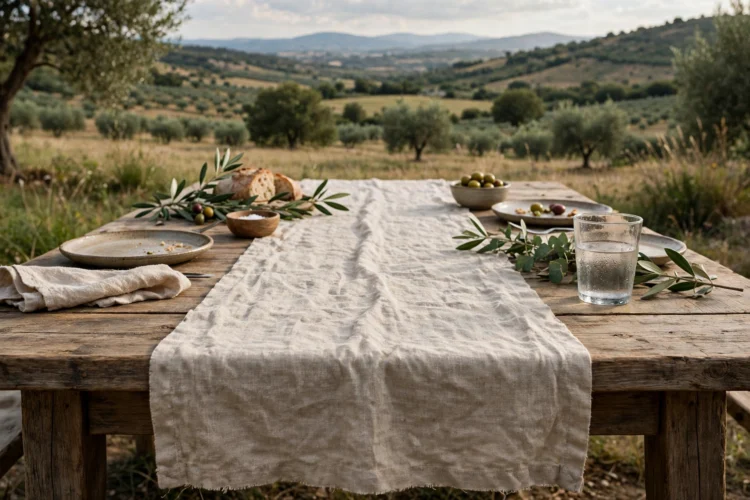
A full tablecloth says formal dinner. A linen runner down the centre says someone cared, but relaxed. It protects the middle of the table where the serving dishes go, adds a layer of colour, and leaves the wood visible at the edges, which keeps the whole table feeling casual. Choose a runner in a washed, natural fabric rather than anything stiff or shiny. Linen wrinkles, and that is fine. The wrinkles are part of the look.
Let the runner hang a little past each end of the table rather than stopping exactly at the edge. That small overhang softens the line of the table and looks intentional. If the table is round, fold the runner in half and lay it across the centre, or skip it and use large round placemats instead. Either way, the runner is doing the same job: a band of colour that ties the settings together.
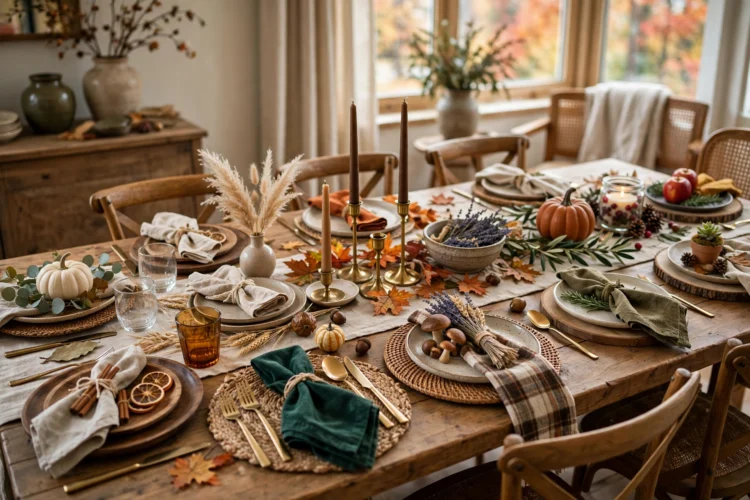
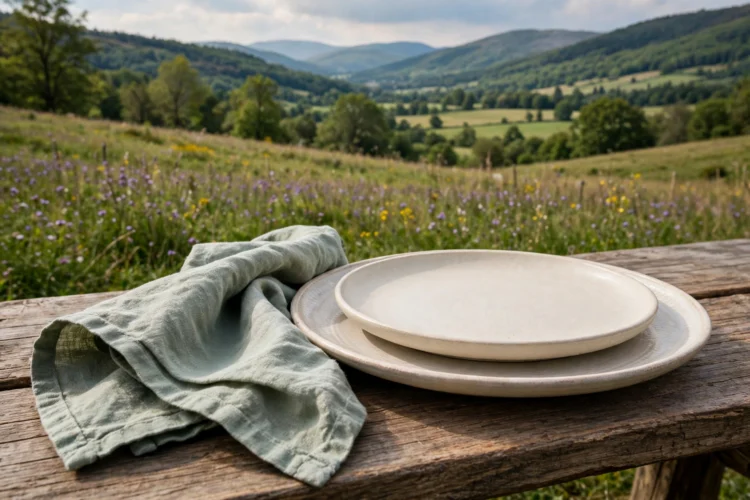
Two plates stacked at each place make the table look finished before any food arrives. Put a larger plate underneath, dinner plate or charger, and a smaller one on top for the first course or salad. The layering adds height and colour without any extra shopping, because most kitchens already own two sizes of plate. Mismatched plates work here too. A plain white plate under a patterned one looks deliberate, not accidental.
Keep the stack centred on the chair, about a thumb’s width from the edge of the table. If the plates slide on a polished table, put a small linen napkin or a round placemat under the bottom plate. That also protects the table and stops the clatter when someone sets a plate down. This one change, two plates instead of one, is the fastest way to make a weeknight table look like a party table.
Nobody owns twelve matching glasses, and a casual table does not need them. A mixed glassware table looks collected rather than careless when the mix has a pattern to it. Use the same shape for water across all settings, then vary the wine glasses, or use one colour of glass throughout and vary the shapes. The eye reads the repetition as a choice. Two different glasses at each place, one for water and one for wine, is enough.
Put the water glass above the knife, on the right, and the wine glass just beside it. Guests find them without thinking, and the table stays tidy. If you only own one kind of glass, use it for everything and add a small jug of water in the middle of the table so people can help themselves. A dining bench along one side of the table makes refills easy, because people can slide along it to reach the jug without standing up.

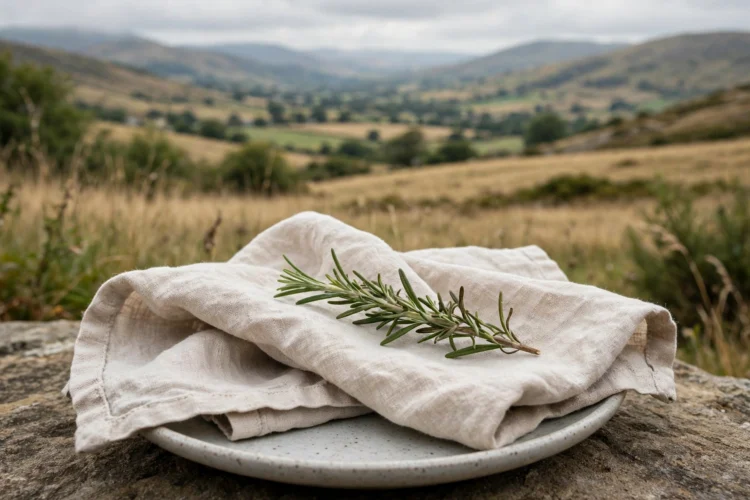
Cloth napkins are the cheapest upgrade on this list. A stack of plain cotton napkins costs less than one takeaway dinner and lasts for years. Fold each one loosely, in quarters or rolled, and lay it on top of the smaller plate. The loose fold matters. A stiff, starched fold belongs at a wedding. A soft fold that someone can shake open with one hand belongs at a dinner party. Wash them with the regular laundry and do not iron them.
If you want a little extra, tuck a sprig of rosemary or a single flower stem into the fold. It costs nothing if it comes from the garden, and it gives each guest something pretty to notice when they sit down. Keep the napkin on the plate rather than under the fork. On the plate it is the first thing a guest sees, and it frames the layered plates underneath it.
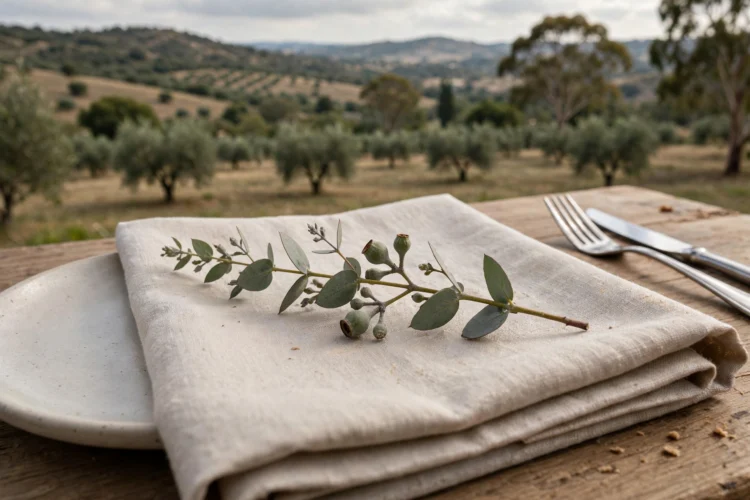
A single stem at each place setting turns a table of plates into a table for guests. It does not need to be a flower. A sprig of eucalyptus, a stem of lavender, a short piece of olive branch, or a few leaves from the garden all work. Lay it across the napkin or stand it in a tiny bud vase beside the plate. One stem per person keeps the table from looking crowded, and it costs a fraction of a shop bouquet.
Cut the stems short so they lie flat and do not poke anyone in the arm. If you use flowers with a strong scent, keep them small, because a heavy perfume competes with the food. Herbs are a safe choice for this reason, and guests often pick them up and smell them, which starts a conversation. This small touch is what makes a dining chair feel like a reserved seat rather than just a chair pulled up to a table.
Family-style serving suits a casual dinner party better than plated courses. Put the food in the middle of the table in serving bowls and let people help themselves. It keeps the host at the table instead of in the kitchen, and it lets guests take as much or as little as they want. The serving dishes become part of the table decoration, so choose bowls and platters you like looking at, not the ones with the faded pattern you hide at the back of the cupboard.
Leave a clear space in the centre for the dishes before anyone sits down, and put a folded towel or a wooden board under hot dishes to protect the table. Set out serving spoons with every dish so nobody has to ask. Second helpings happen naturally when the food is within reach, and the meal stretches out in the good way, with people lingering instead of waiting for the next course to arrive.

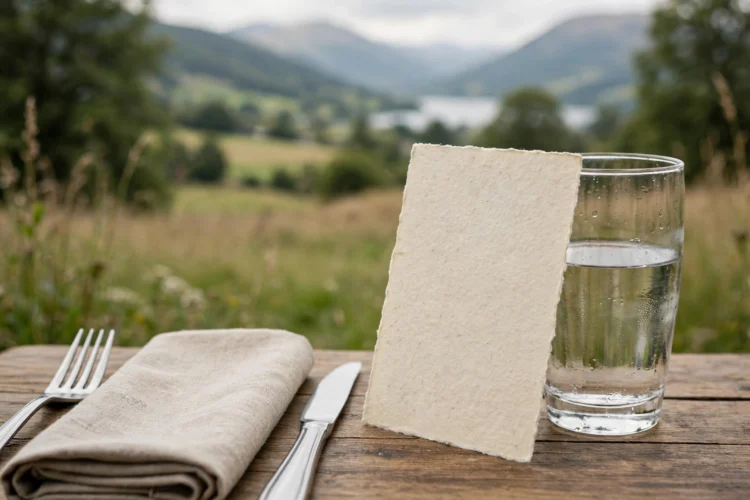
A handwritten menu card at each place tells guests what is coming and makes the evening feel planned without making it formal. Write the dishes in a few words, one line each, on a small piece of card. It also helps guests with allergies or food preferences, because they can see what is in each course before it arrives. Nobody has to ask the host awkward questions across the table.
Use plain card and a pen you like writing with. The card can lean against the water glass, sit on top of the napkin, or lie flat beside the plate. Add the drinks if you are serving a set drink with each course, but keep the whole card to four or five lines. A long menu reads like a restaurant, and a short one reads like a friend who cooked something nice. This idea pairs well with a farmhouse dining table, where the rough wood and the paper card suit each other.
The best test of a table setting is whether you would use it on a Tuesday. If an idea only works for a party, it will sit in a drawer. A casual dinner party table setting that works on a Tuesday is the real test, and the relaxed place setting ideas in this article pass it because they are simple enough for a normal evening. A runner, two plates, a cloth napkin, and a sprig of greenery take five minutes. That is short enough to do on a weeknight and good enough that the family notices.
Keep a small box of table things together: the runner, the napkins, the bud vases, and a few candles. When everything lives in one place, setting a nice table stops being a project and becomes a habit. Start with one or two ideas from this list and add another each time you cook for friends. The table improves a little each time, and nobody ever has to know it started with a folded napkin and a sprig of rosemary.
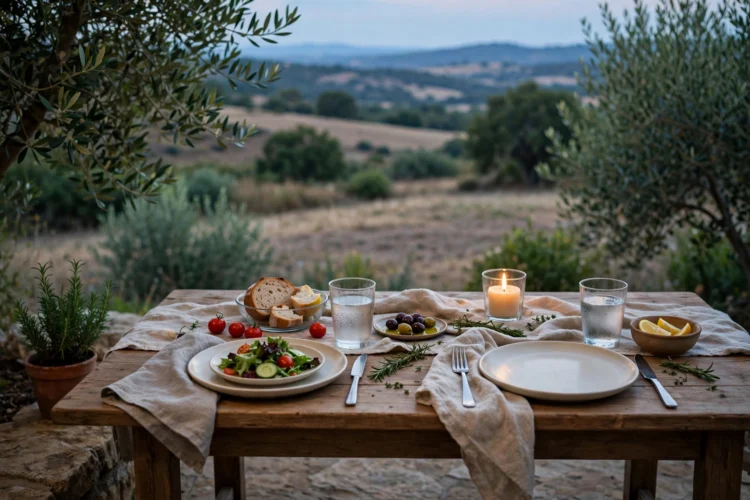
Candles do more than light the table. They change the whole room. Light them fifteen minutes before guests arrive, not when everyone sits down, so the room has time to warm up and the light settles. Two or three candles down the centre of the table are enough. More than that, and the table starts to look like a shrine. Keep the flames short and steady, and keep them clear of the menu cards and the greenery.
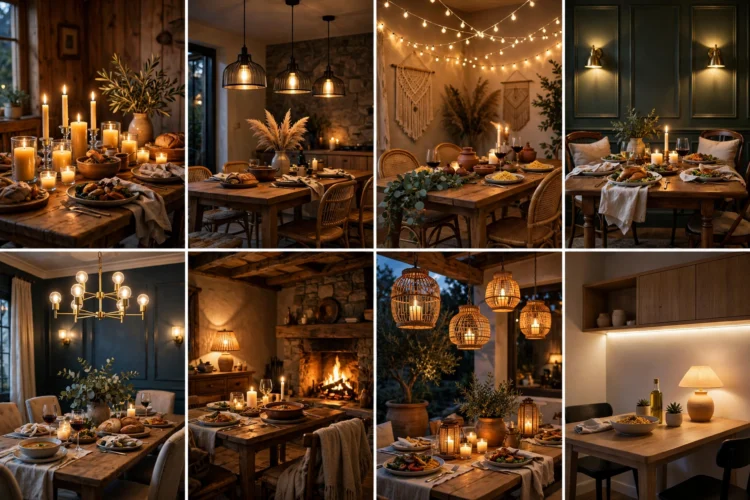
Use unscented candles at the table. Scented candles fight with the smell of the food, and the food should win. Pillar candles in glass holders are the safest choice because the flame sits inside the glass. Battery candles work in houses with children or pets, and the better ones are hard to tell from the real thing at arm’s length. Dim the overhead light a little once the candles are lit, and the dining room chandelier above the table drops to a soft glow that flatters everyone at it.