Physical Address
304 North Cardinal St.
Dorchester Center, MA 02124
Physical Address
304 North Cardinal St.
Dorchester Center, MA 02124

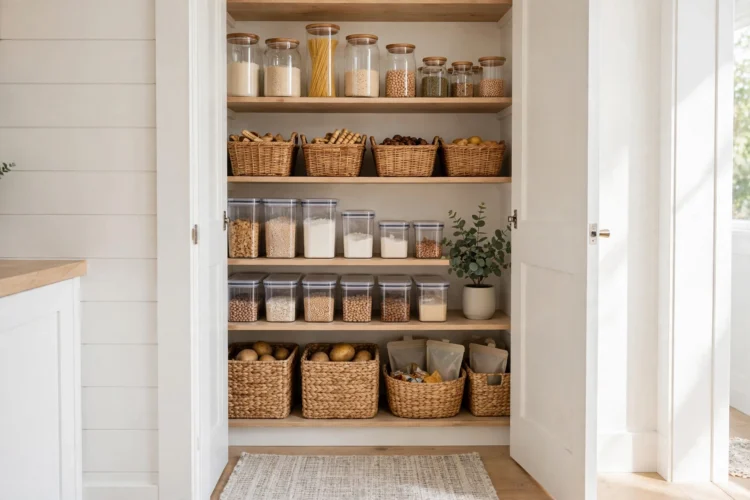
Decant, zone, and use the door back to make a closet pantry hold twice as much. These ten ideas fit a small pantry without adding a single shelf.
Small pantry organization sounds like a tidy-up job, but it is really a capacity job. A closet pantry that holds twice as much food does not need a bigger room. It needs decanting, zoning, and storage on the door back, so every centimeter earns its keep. The ten ideas below use those three moves to double what a small pantry holds, without a single new shelf board.
Start with the containers, then the zones, then the door. Work through the list in order and the pantry gets easier to use at every step, because each idea builds on the one before it.
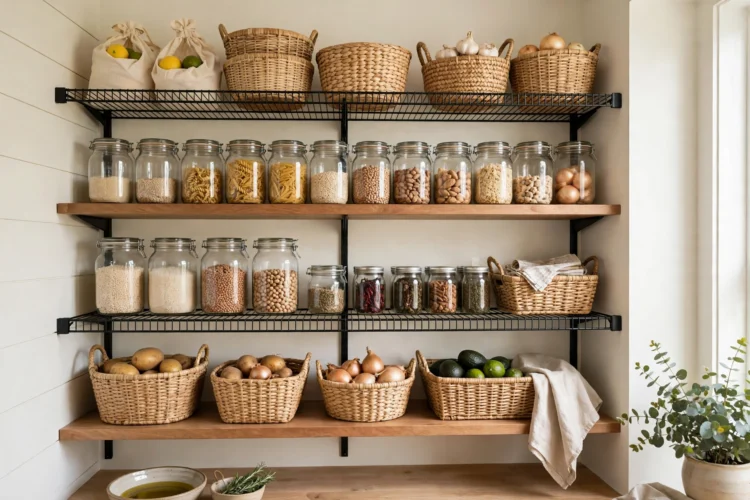
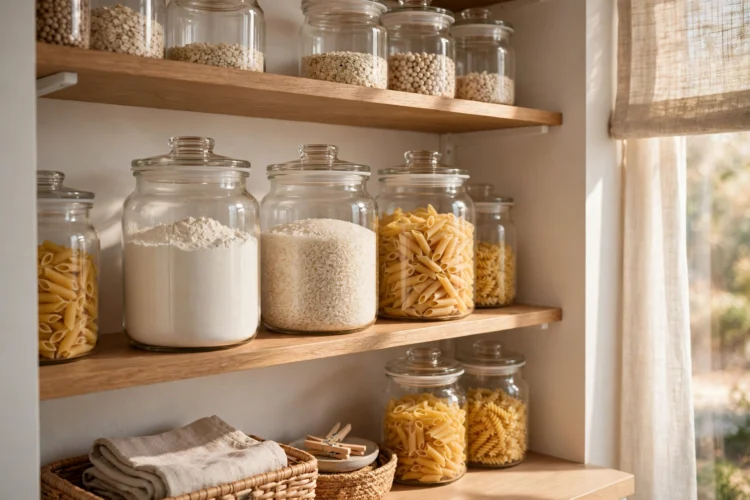
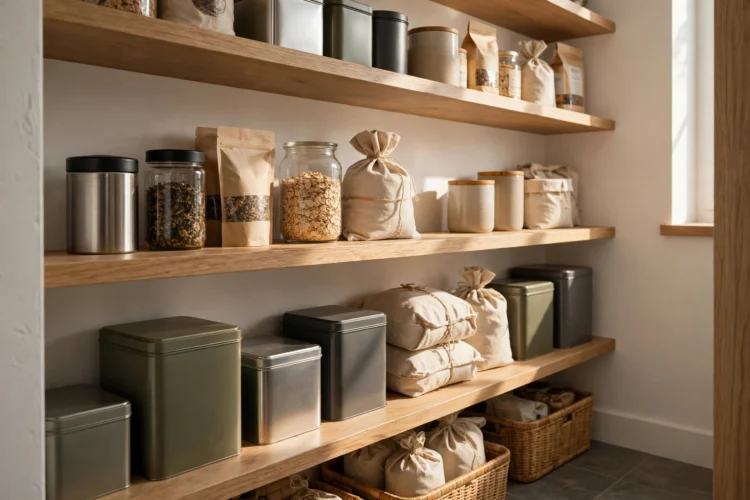
Decant dry goods into clear containers that match the shelf, not the packet. Flour, rice, pasta, oats, and sugar all pour better from a jar with a wide mouth, and the clear walls show the level at a glance, so you never run out mid-recipe. Small pantry storage starts here, because matching containers stack neatly and waste no space between odd packet shapes.
Keep the containers airtight and label the front with the contents and the date you opened it. One size for grains, one for pasta, and one for baking goods is enough. Three sizes keep the shelves calm, and anything more turns the pantry back into a puzzle.
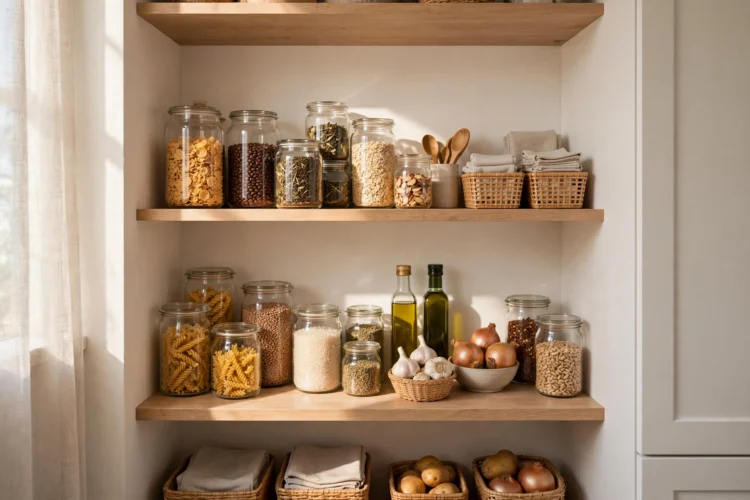
Most pantries group food by type: all the tins together, all the pasta together. That looks tidy and cooks badly, because a single meal pulls from five different zones. Pantry zoning works better by meal: breakfast in one zone, weeknight dinners in the next, baking in another, and snacks in the last. Each zone holds everything its meals need, so one reach gathers the whole recipe.
Put the breakfast zone at eye level, because it gets used every morning, and the dinner zone just below it. Baking and snacks can live higher, since they get used less often. When the zones follow your week instead of the supermarket aisle, the pantry starts to feel designed around your cooking.
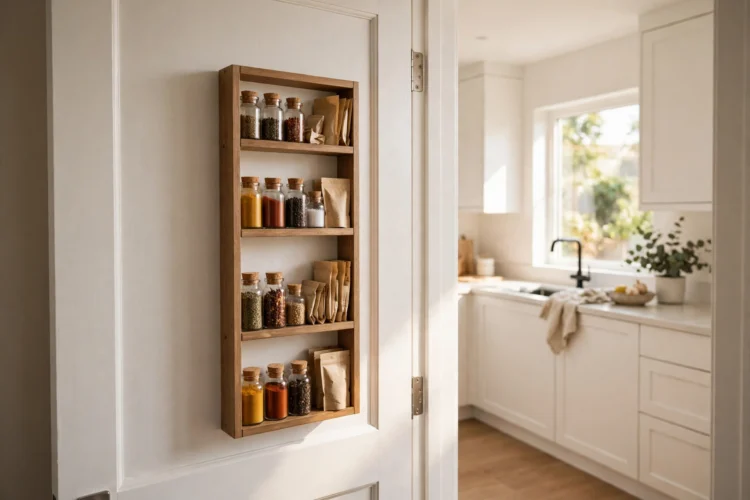
The back of the pantry door is the most wasted surface in a small kitchen. A slim rack there holds spices, small jars, and sachets that would otherwise crowd the shelves, and everything stays visible the moment you open the door. Pantry door storage like this can free a whole shelf, which is a lot of space in a closet pantry.
Keep the rack shallow, about 8 to 10 cm deep, and store the lightest items there so nothing drops when the door swings. Tiny kitchen storage ideas often hide on surfaces like this, and the door back is the easiest one to add in a single weekend afternoon.
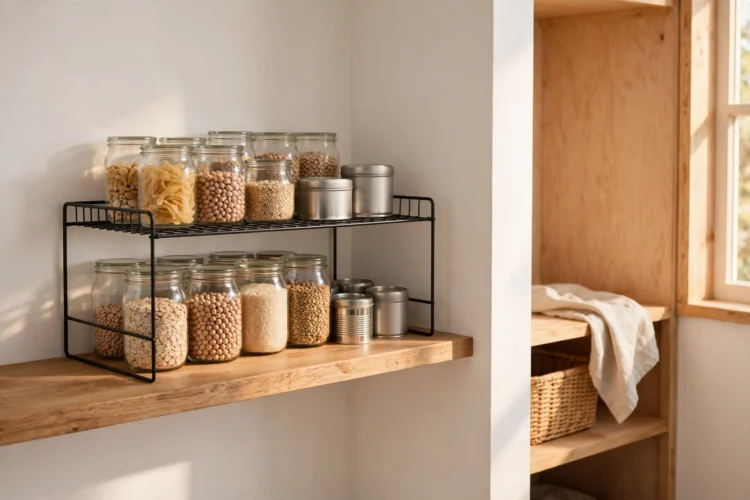
Most closet pantries have shelves spaced for the tallest item, which leaves a hand of empty air above the short ones. A half shelf, a stackable riser, or a small shelf insert fills that gap, and suddenly the same shelf holds two layers of jars instead of one. Measure the tallest jar on each shelf first, then fit the extra layer to what is actually there.
Risers work best for tins and small jars, because you can see the back row over the front one. A simple wire riser costs little and needs no tools, and it doubles the usable surface of the shelf it sits on. Two risers on two shelves can hold a whole extra week of groceries.
Gravity is a pantry rule. Heavy tins, bulk rice, and big bottles of oil go on the lowest shelves, where they are easy to lift and cannot fall on anyone. Daily items live at eye level: coffee, tea, cereal, and the oil you reach for every night. The top shelf takes the light, rarely used things: spare baking trays, the Christmas spices, and the extra stock.
This arrangement also protects the shelves, because the heaviest load sits closest to the floor. If a shelf bows under a row of tins, move the weight down a level and the problem usually goes away. Keep a small step stool nearby for the top shelf, and store it inside the pantry door so it is always in reach.
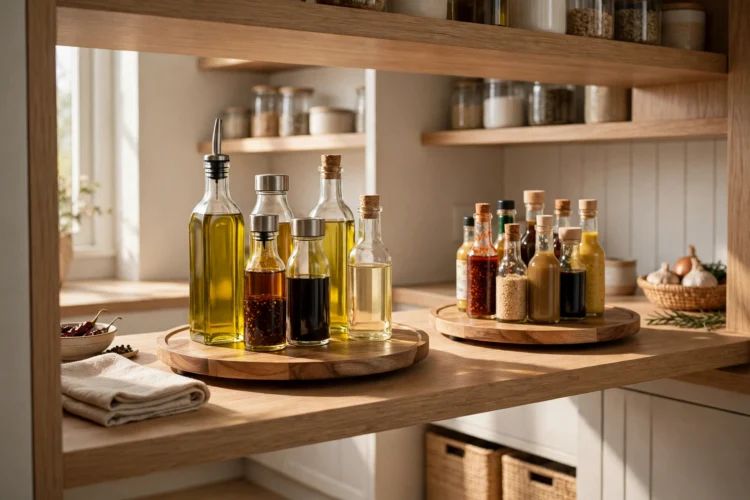
Oils, sauces, and condiments are the worst pantry hoarders, because every bottle is a different height and they all hide behind each other. A turntable on a shelf fixes that: one spin brings the soy sauce forward and sends the vinegar back, and nothing needs to be moved to find the bottle behind it. Put one turntable per shelf, and group the bottles by use, cooking oils on one, sauces on the next.
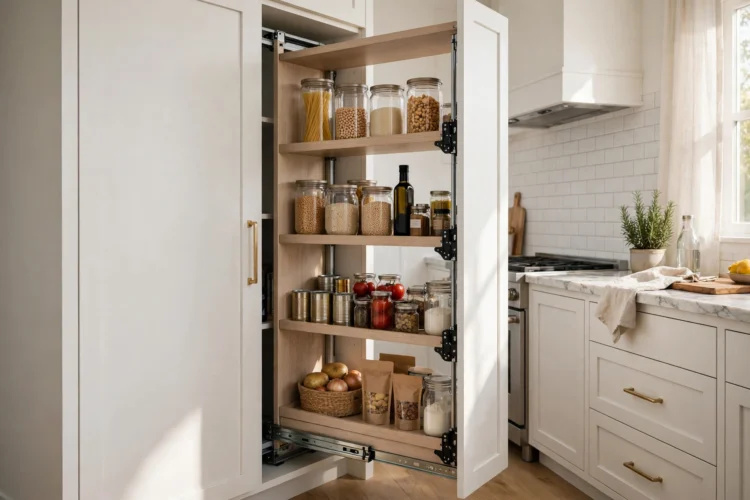
Choose a turntable with a low rim so tall bottles cannot tip, and measure the shelf height before buying, because a turntable plus a tall bottle needs more clearance than you think. The pull-out kitchen storage ideas that work in deep cabinets follow the same logic: bring the back of the shelf to you instead of reaching past everything in front.
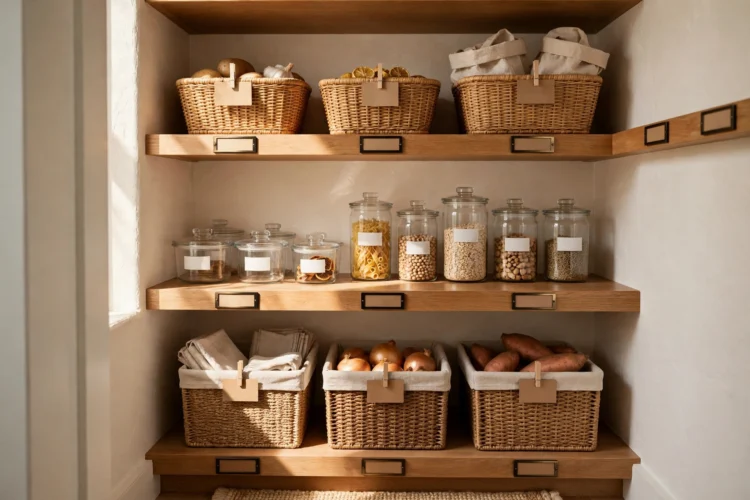
Labels are what keep a tidy pantry tidy. Without them, bins drift, categories blur, and the pantry is messy again within a month. Label the front of every bin with its category, and add a small label to the shelf edge where a zone starts and ends. The labels do the remembering, so nobody in the house has to guess where the pasta lives.
Use labels you can change, because zones change as your cooking changes. Chalk labels, clip-on tags, or a label maker all work, and the best one is the one you will actually update. A label that stays accurate beats a pretty label that lies about what is inside the bin.
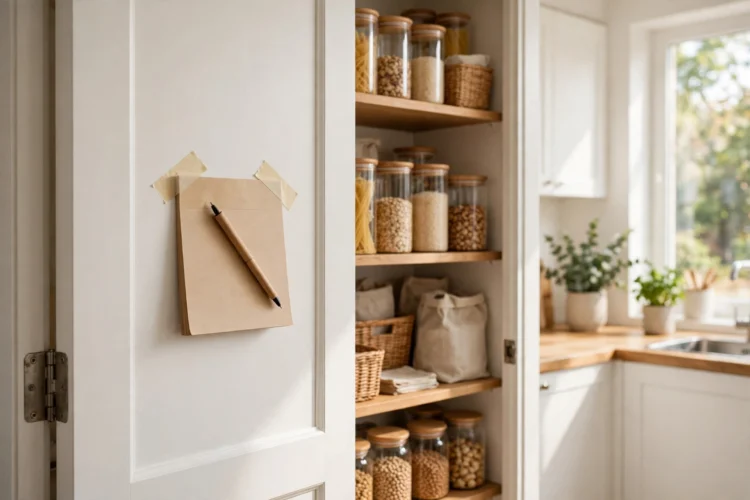
The pantry empties silently, one jar at a time, and the shopping list only helps if it gets written when you notice. Stick a small whiteboard or a notepad on the inside of the door, and write items down the moment they run out. The list builds itself while you cook, and the next shop starts from a list that is already complete.
Good kitchen organization ideas always include a habit, not just a product, and the door list is the habit that makes the rest of the system work. When the list lives where the food lives, nothing gets forgotten, and nothing gets bought twice.
Small packets are the first things to get lost: sachets, snack bars, spice refills, and the little bags that fall behind the big jars. A basket per category corrals them, and because the basket pulls out like a drawer, the whole group comes to you at once. One basket for snacks, one for baking extras, and one for the small packets that never seem to fit anywhere.
Choose baskets that fit the shelf with a little room to spare, and keep the front low enough to see inside without lifting the basket out. The same kitchen storage ideas that organize a deep cabinet apply here: group first, then give the group a container it can live in.
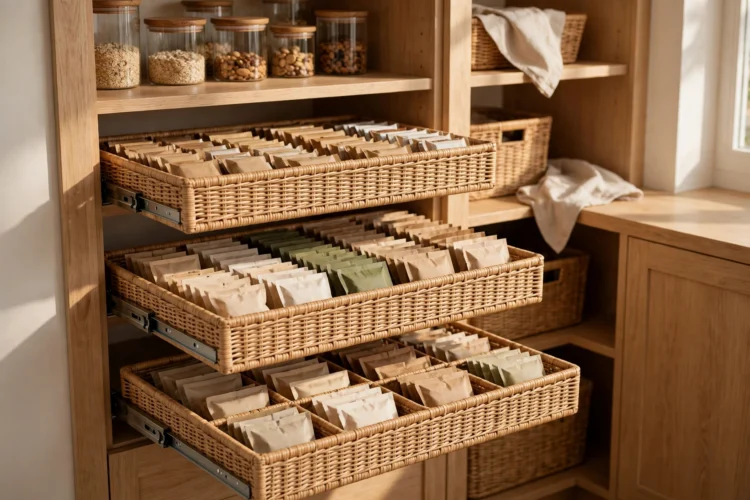
A pantry is not a set-and-forget project. Every season, take everything out, check the dates, and put back only what you will actually cook with. The audit takes an hour and usually frees a whole shelf, because half-used packets and forgotten tins have a way of piling up. Wipe the shelves while they are empty, and the pantry feels new again.
Small pantry organization works best as a habit, not a one-time project, because your cooking changes with the seasons: soups and stews in winter, salads and grilling in summer. A pantry that gets a small reset four times a year never needs a big rescue, and it keeps holding twice as much as the day you first organized it.
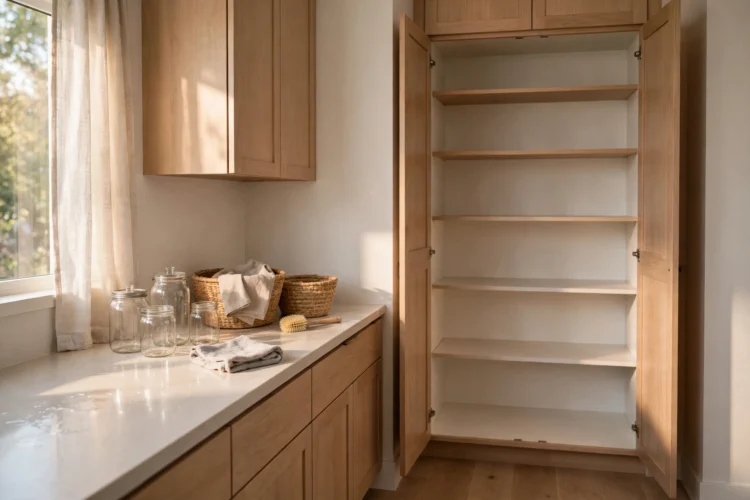
Decant first, zone second, and use the door third. Those three moves carry most of the extra capacity, and the rest of the list keeps it there. A small pantry that holds twice as much food does not need more room. It needs a system that fits the way you actually cook.