Physical Address
304 North Cardinal St.
Dorchester Center, MA 02124
Physical Address
304 North Cardinal St.
Dorchester Center, MA 02124

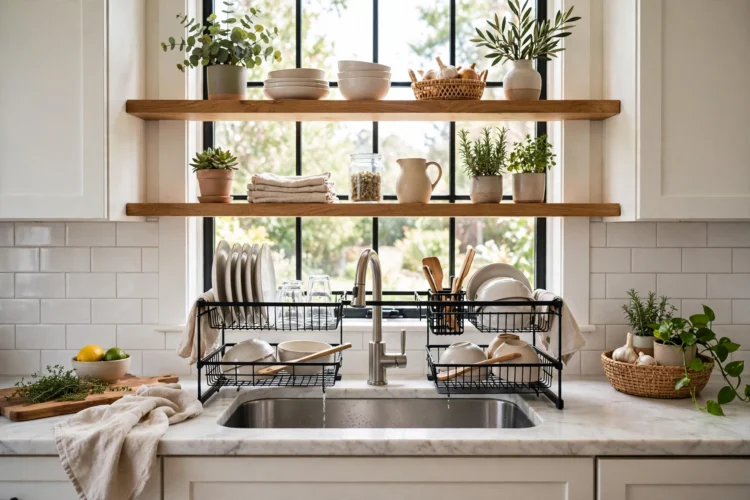
Eight ways to use the wall and air above your sink, from dish racks that drain into the basin to shelves, rails, and herb planters.
Over the sink storage uses the one vertical zone most kitchens ignore: the wall and air above the sink. The sink area already handles washing, rinsing, and drying, so stacking storage there keeps wet items where water belongs and frees counter space for actual cooking. A dish rack that drains into the basin, a shelf for soap and sponges, or a rail for mugs all work the same way: they move clutter up and off the counter. These 8 ideas fit renters and owners alike, and several install with no drilling at all. Pick the one that matches your sink layout, live with it for a week, and you will wonder why the space above the sink sat empty for so long.
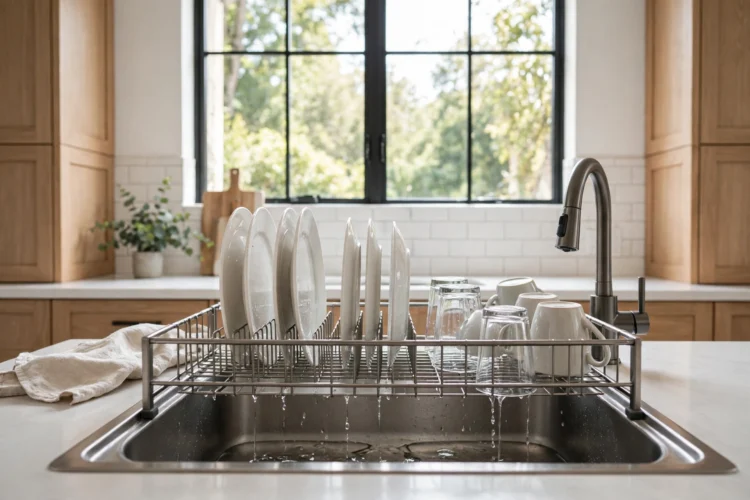
An over-sink dish rack sits across the sink and lets water drip straight into the basin, so dishes dry without a mat hogging the counter. An over sink dish rack works best when it spans your sink width and rests on the rim or on suction-mounted arms, depending on your sink style. Stainless steel resists rust better than coated wire, and a rack with a utensil cup keeps cutlery upright instead of flat. Leave space at one end for a cutting board or a large pan, since a rack that covers the whole sink blocks the faucet. When the rack is empty, fold it or roll it up and store it in a nearby drawer. This is the single fastest way to clear a small kitchen counter, and it costs less than most other storage upgrades. For more ways to keep the basin area tidy, see these kitchen sink organization ideas around the basin.
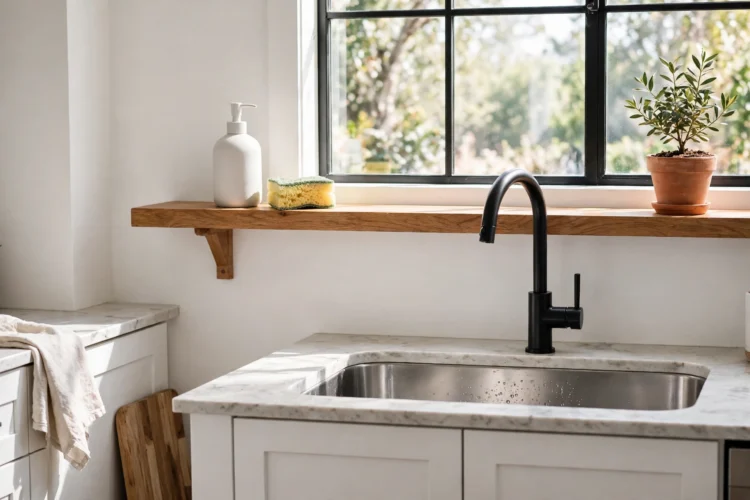
A shelf mounted above the sink holds the items you reach for while washing up: dish soap, hand soap, a sponge, and a small plant. A sink shelf organizer keeps soap, sponges, and brushes in one tidy row instead of scattered along the counter edge. Keep the shelf shallow, no deeper than 15 cm, so it never blocks the faucet or crowds the window. Wood suits warm kitchens, while metal or glass suits modern ones; whatever you pick, seal it against steam and splashes. Store only the daily items here. Anything you use weekly belongs in a cabinet, since a shelf above the sink should stay light and easy to wipe. A small LED strip under the shelf adds task light over the basin, which helps when you wash up after dark. If you rent, a suction-cup or tension-rod shelf gives you the same storage without holes in the tile. For more shelf inspiration, browse these open shelving kitchen ideas instead of upper cabinets.
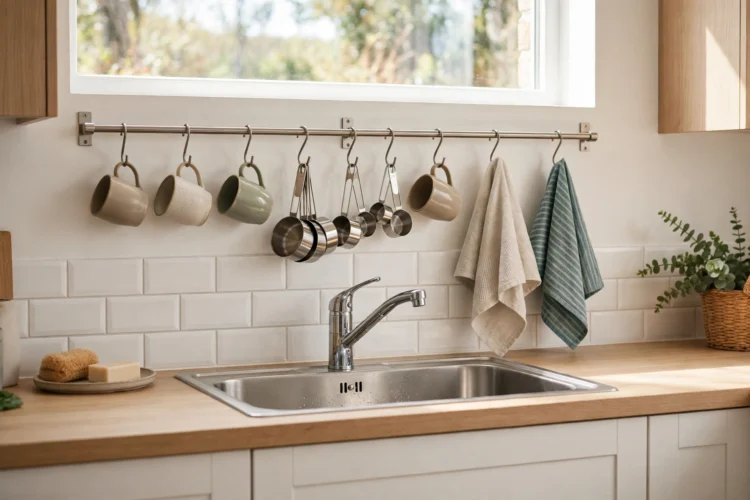
A wall rail with S-hooks turns the space above the sink into hanging storage for mugs, measuring cups, and dish towels. Mount the rail at a height where mugs clear the faucet and towels hang free of the splash zone. Hooks let you rearrange the layout in seconds, which beats fixed shelves when your collection changes. Hanging rail storage works best for light items you grab daily, so keep heavy pieces like cast iron off the rail. A rail also works on the side wall beside the sink if the space above holds a window. Pair it with a small shelf and the sink zone handles drying, storage, and display in one vertical strip. Stainless rails wipe clean, while brass or matte black rails double as a design feature, so pick the finish that matches your faucet. If your kitchen is short on wall space, these small kitchen ideas that make every inch count offer more ways to squeeze storage from tight spots.
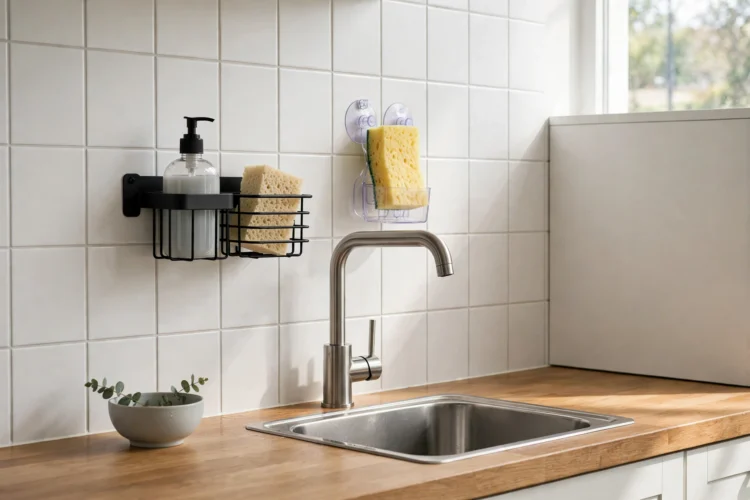
A caddy stuck to the wall or the sink edge keeps soap and sponges off the counter and lets them dry between uses. Suction-cup caddies suit smooth tile and renters, while adhesive or screw-mounted versions hold more weight. Pick one with drainage holes so sponges dry instead of sitting in a puddle. Keep the caddy within easy reach of the tap but clear of the main wash area, so it never blocks a large pot. Replace the sponge on a regular schedule and rinse the caddy weekly; a clean caddy keeps the whole sink area smelling fresh. A caddy with two compartments works well for households that keep separate sponges for dishes and for the sink itself. If suction cups keep falling off your tile, check that the surface is clean and dry first, since grease and grout lines break the seal.
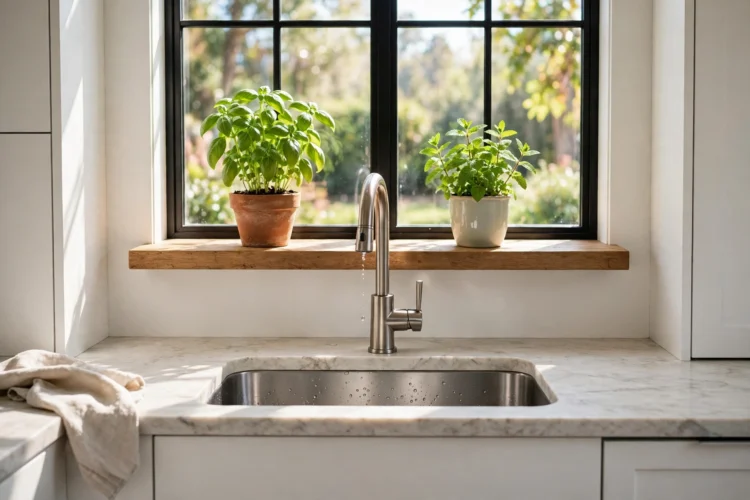
If your sink sits under a window, a narrow shelf across the sill holds herbs and small plants where they get light and water is close by. Basil, mint, and parsley thrive here, and you can snip what you need while you cook. Keep pots small and the shelf level, so water never pools near the window frame. A tension rod with hanging planters works when a shelf does not fit the sill. This idea adds life to the sink zone without taking a single centimetre of counter, and it turns a plain window into the prettiest spot in the kitchen. Label each pot with a small marker, since herbs look alike when they are young. Water them at the sink and let the pots drain there, so the shelf never drips onto the counter below.
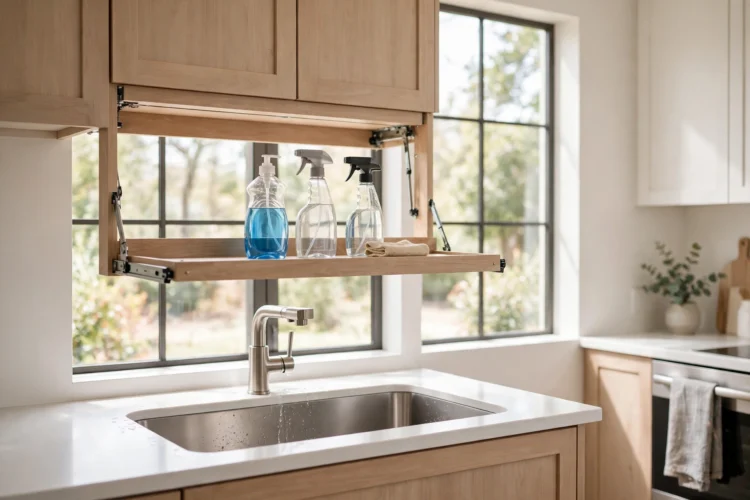
A pull-down shelf mounted above the sink brings stored items down to hand level and pushes them back up when you finish. It suits dish soap refills, cleaning sprays, and the sponge collection you want hidden but close. Install it at a height that clears the faucet when lowered, and check the weight limit before loading it with glass jars. This idea helps shorter cooks most, since it removes the reach-and-stretch routine at the sink. If a pull-down mechanism feels like overkill, a simple fold-down shelf gives you a temporary landing spot for a dish or a phone while you wash up. Test the mechanism with the shelf empty first, then load it gradually, since a shelf that drops too fast can splash water everywhere. For kitchens where every cabinet counts, these kitchen storage ideas for small spaces show how to find room you did not know you had.
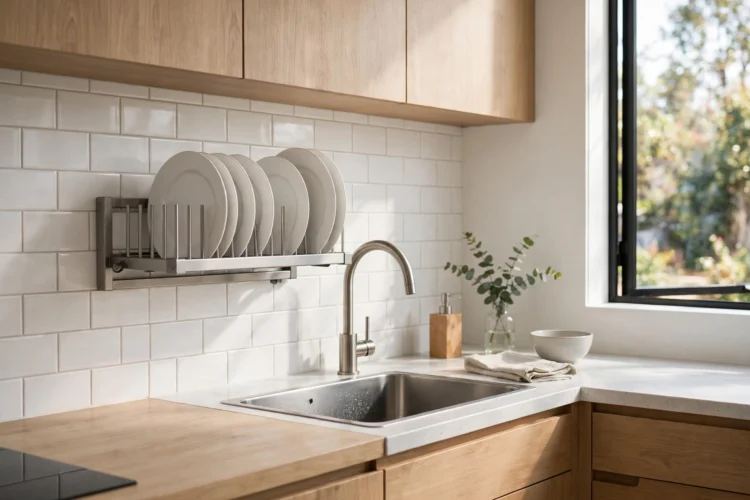
A wall-mounted drying rack beside the sink holds plates and cups upright while they air dry, and it folds flat when not in use. Mount it on the wall next to the sink rather than above it, so drips fall clear of the counter edge and you never bump it while washing. Look for a rack with spaced prongs that fit your plate sizes, and a drip tray underneath if the wall is not tiled. This idea suits kitchens with a single small sink, where an over-sink rack would block the faucet. Fold it away after drying and the wall looks bare again. A rack like this also works as a temporary drying spot for hand-washed wine glasses, which never fit well in a standard dish rack. Wipe the prongs dry after each use to stop water spots from building up on the metal.
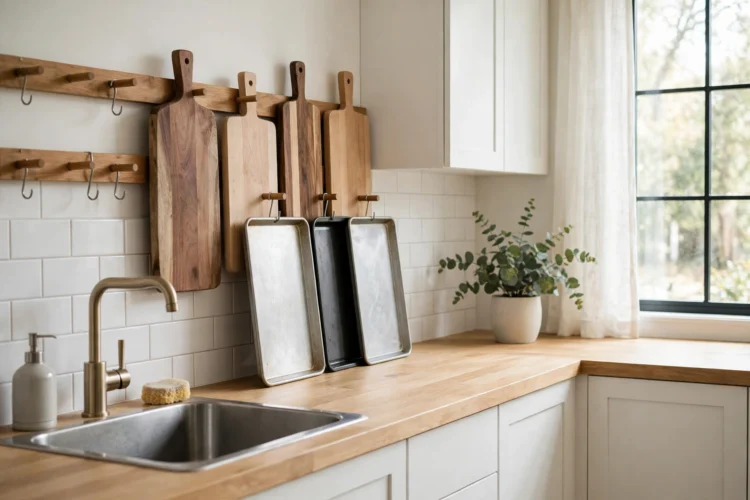
A peg rail above or beside the sink stores cutting boards and baking trays upright, where you can grab one without unstacking the rest. Wooden pegs suit boards, while metal hooks suit trays with a rim or a hanging hole. Mount the rail high enough that boards clear the faucet, and leave a gap at the end for the largest tray. This idea works best for the boards you use daily; store the rest in a cabinet. Pair the rail with the dish rack and the sink zone becomes a full drying and storage station instead of a single-purpose basin. A peg rail also gives baking trays a home that does not involve balancing them on top of the fridge. Check the rail fixings once a year, since a rail loaded with heavy boards puts steady pull on the wall.
Pick the idea that matches your sink layout: a rack for a small sink, a shelf for a window sink, a rail for a wall with space to spare. Install one, live with it for a week, then add the next. Over the sink storage turns that dead zone into working storage, and the counter space you win back is space you can actually cook on.