Physical Address
304 North Cardinal St.
Dorchester Center, MA 02124
Physical Address
304 North Cardinal St.
Dorchester Center, MA 02124

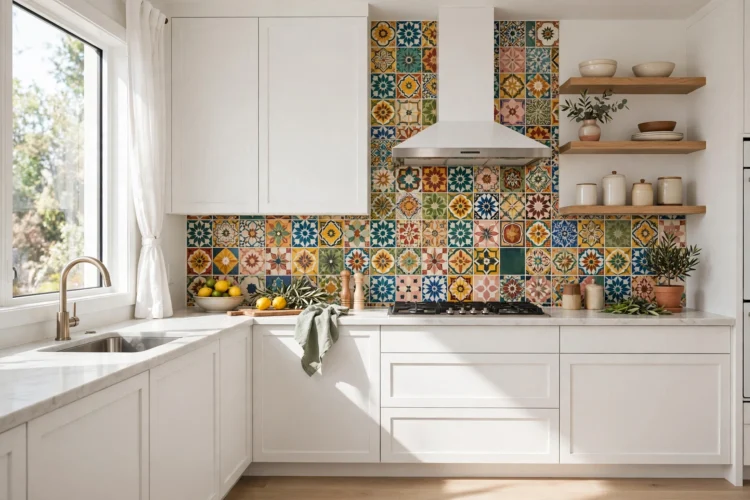
Ten bold backsplash ideas that turn a plain white kitchen into a colorful, personality-filled space, from cobalt zellige to sunset-hued tile.
A white kitchen is a clean slate, which is exactly why the backsplash matters so much. It is the one surface where color and pattern can live without overwhelming the room. A bold kitchen backsplash in an otherwise white space does not fight the calm palette. It gives the eye somewhere to land and keeps the room from feeling sterile. Below are ten ways to add that punch, from saturated handmade tile to full-wall mural panels, each one picked because it plays well against white cabinets and light countertops.
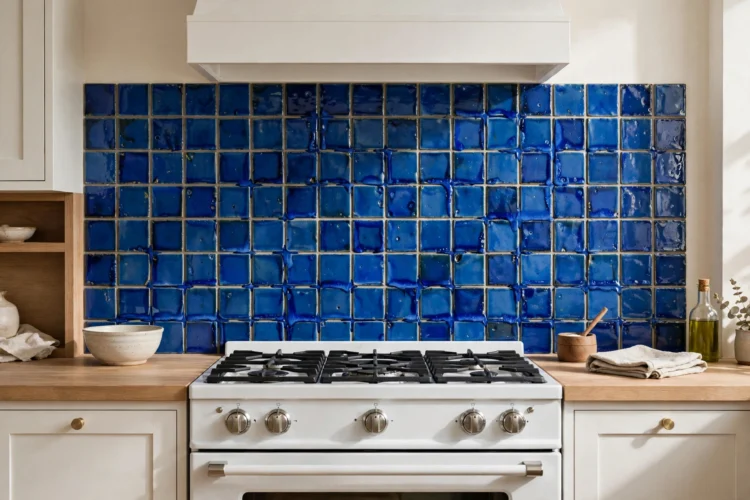
Cobalt blue against white cabinetry is one of the most reliable color moves in kitchen design. The cool saturation reads crisp rather than heavy, and the white around it keeps the blue feeling fresh instead of dark. Look for handmade-look ceramic tile where the glaze pools slightly at the edges. That small imperfection catches light differently across the wall and keeps a large blue field from looking flat. Pair it with brushed nickel or chrome hardware so the blue stays the star. If full cobalt feels like a lot, run it only behind the range as a framed panel and keep the surrounding walls in plain white subway.
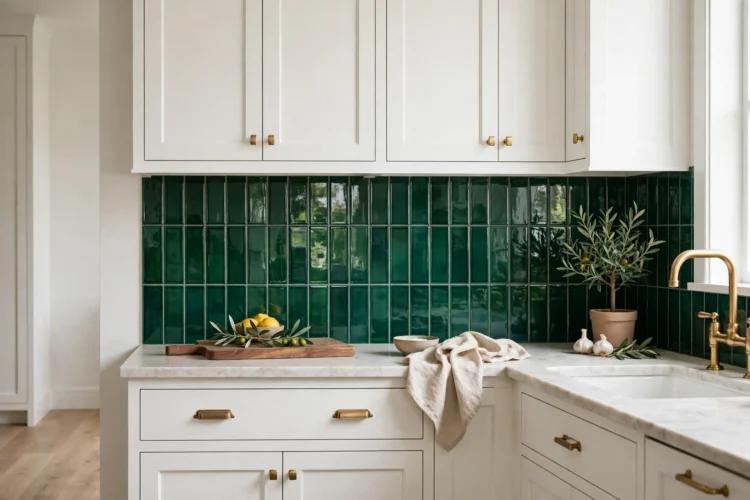
Emerald green subway tile in a glossy finish gives a white kitchen a jewel-box moment without any structural work. The classic 3-by-6 shape keeps the look familiar, while the color and shine do all the talking. A stacked vertical layout feels more current than the traditional offset brick pattern and makes standard eight-foot ceilings look a touch taller. Seal the deal with warm brass pulls. The green and brass combination reads rich against white shaker cabinets. For maintenance, glossy ceramic wipes clean with a damp cloth, so tomato splatter near the range comes off without scrubbing.
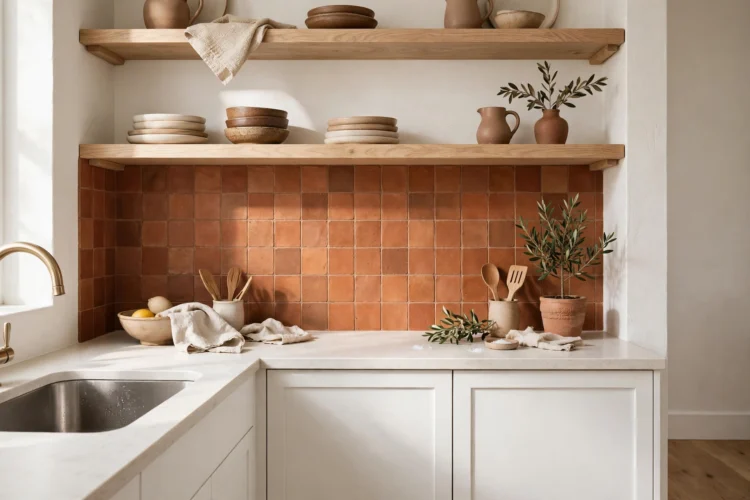
White kitchens can run cold, especially with quartz counters and stainless appliances. Terracotta, rust, and burnt sienna tiles warm the whole wall up in one move. Unglazed or matte terracotta adds an earthy texture that pairs beautifully with white oak open shelving and woven pendant lights. Because the tone is warm rather than bright, it bold without shouting. One practical note: natural terracotta is porous, so seal it with a penetrating tile sealer before the first spaghetti night. Resealing once a year takes about twenty minutes and keeps grease from staining the tile around the cooktop.
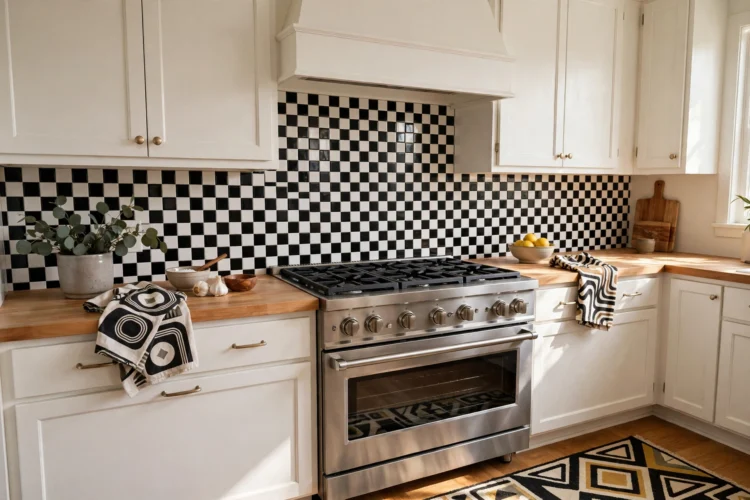
Checkerboard tile usually lives on floors, but run as a backsplash it turns a plain white kitchen into something with real graphic punch. The trick is scale. Small two-inch checks read playful and retro. Larger four-inch checks in matte black and warm white read sophisticated. Keep the grout color light gray so the pattern stays crisp, and limit the checkerboard to the main cooking wall. A full kitchen of checkerboard can feel busy. Behind the range and sink it acts like art. Black grout is tempting for a seamless look, but it hides the pattern, so skip it here.
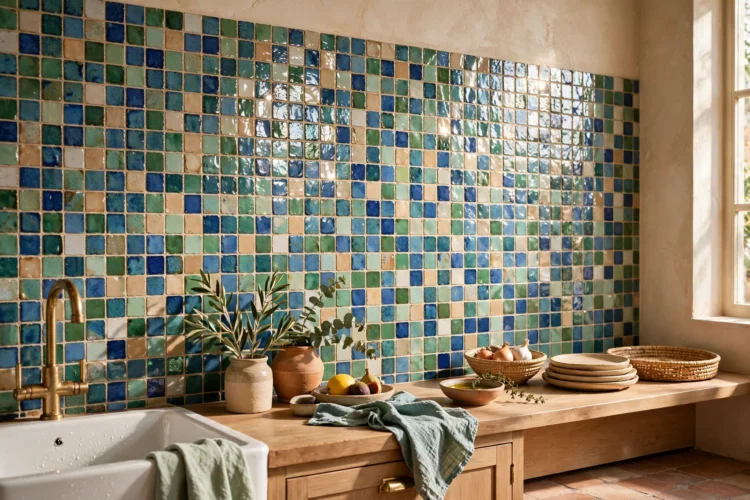
Zellige, the handmade Moroccan tile with its uneven glaze, is made for white kitchens. A multicolor blend of blues, greens, and sandy neutrals gives you a whole palette in one wall while the white cabinets keep the composition calm. Because no two zellige tiles match exactly, the wall shimmers as you move past it. This is a tile where the grout joint matters. A narrow joint in a warm white grout lets the tile edges show off. Budget-wise, zellige runs higher than machine-made ceramic, so many homeowners use it as a range accent and a simpler tile elsewhere to control cost.
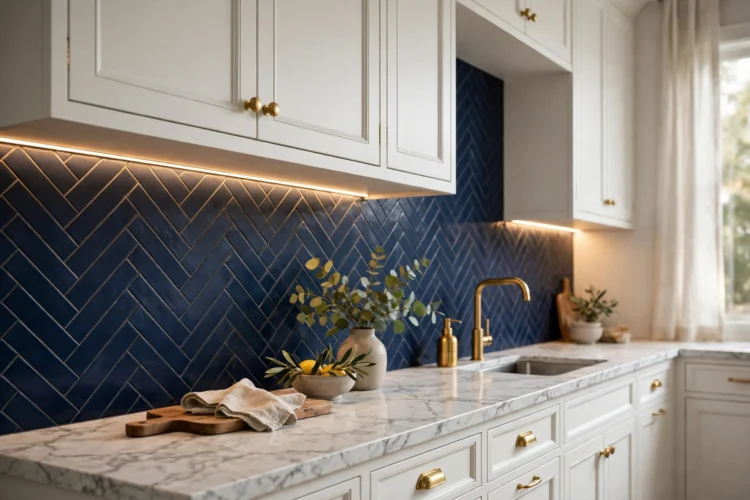
Navy is the bold color that behaves like a neutral. A deep navy backsplash grounds white upper and lower cabinets, and brass or unlacquered bronze hardware warms it right up. This combination works especially well in kitchens with marble-look counters, since the white veining echoes the cabinetry while the navy adds depth the stone lacks. For layout, try a herringbone or chevron pattern in a 2-by-8 tile. The angled lines add movement that a flat navy field would miss. Under-cabinet lighting is almost mandatory here. It keeps the dark tile from reading muddy after sunset.
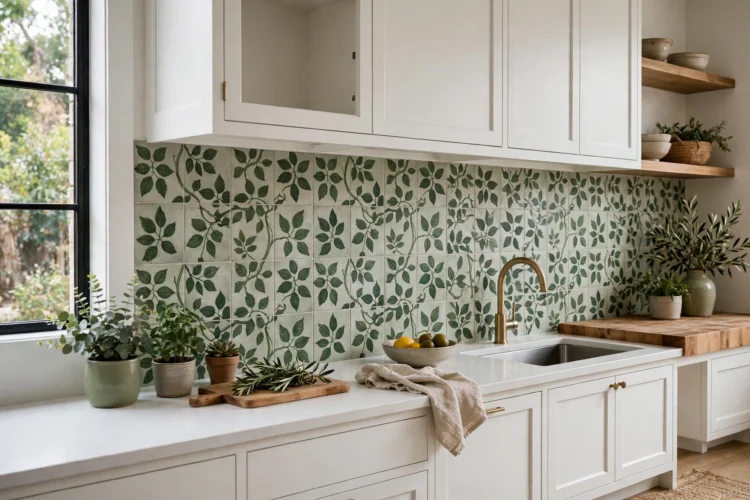
Patterned cement tile with leaf, vine, or floral motifs turns the backsplash into wallpaper you can wipe down. In a white kitchen, a botanical pattern in sage, forest green, and cream adds life without introducing a color that clashes with anything else in the room. Cement tile is thicker than ceramic, usually about five-eighths of an inch, so plan the edge trim where it meets the countertop. It also needs sealing, since cement stains easily. The payoff is a pattern with real depth. Printed ceramic imitations cost less and need no sealing, which makes them the practical pick for busy family kitchens.
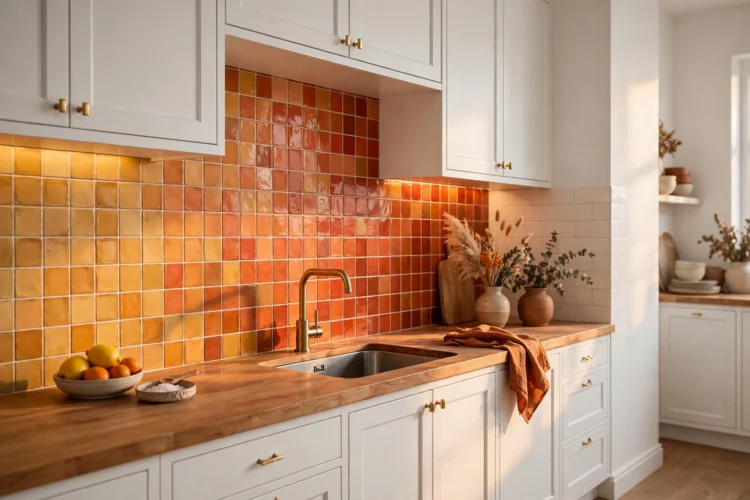
If your white kitchen faces north or gets little direct sun, warm sunset colors can fake the glow. Burnt orange, coral, and ochre tiles bounce warm light around the room in a way white tile never will. A gradient or ombre installation, deep at the counter fading lighter toward the cabinets, adds a handcrafted feel. Keep the rest of the palette quiet: white cabinets, light wood floors, simple black or bronze hardware. The warm tile is doing enough. This is also one of the most forgiving bold choices for resale-conscious owners, since warm neutrals photograph beautifully and feel welcoming in listings.
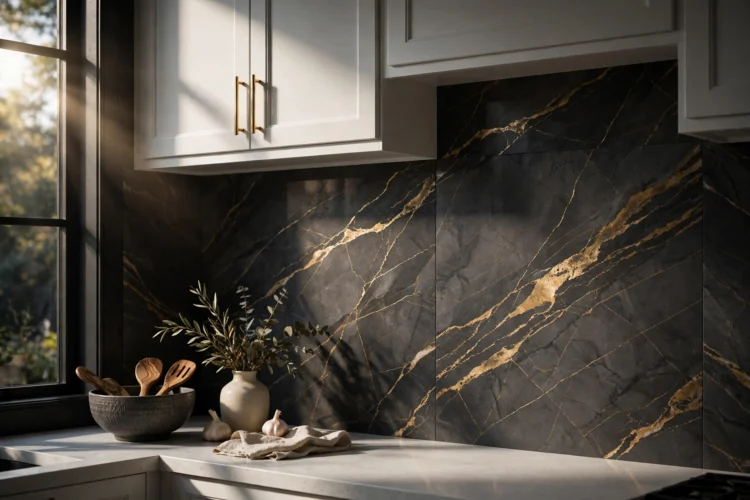
Charcoal gray tile threaded with gold or copper veining gives a white kitchen a moody, evening-ready character. It reads almost black from across the room, then reveals its metallic detail up close. Large-format tiles, 12 by 24 or bigger, keep grout lines minimal so the veining flows uninterrupted. This look loves contrast: bright white uppers, charcoal splash, light countertop. Because the tile is dark, plan your lighting carefully. A single row of under-cabinet LEDs makes the metallic veining glow and keeps the cooking zone bright enough for actual work.
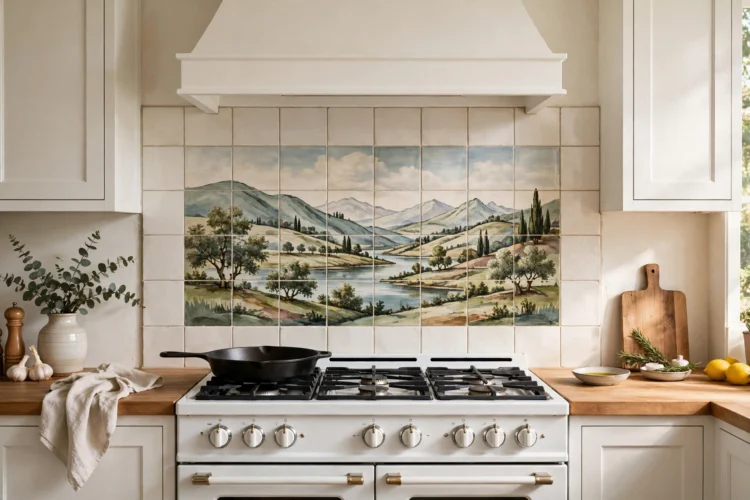
For the truly committed, hand-painted mural panels turn the backsplash into a permanent piece of art. Landscape scenes, abstract brushstrokes, or Delft-style blue-and-white motifs are the classic choices, and they sit beautifully against plain white cabinetry because there is no competing detail. Commission a local ceramic artist or buy pre-made mural panels from a tile studio. Either way, install the mural as one framed section behind the range, with simple field tile filling the remaining walls. Protect the investment with a clear, food-safe tile sealer, and clean it with non-abrasive spray only.
Start with the color that makes you happiest when you picture it every morning, then order three or four sample tiles before committing. Tape them to the wall and live with them for a week. Bold tile is a long-term relationship, and the samples will tell you which one you still love on day seven. Whichever you pick, the white around it will make the color work even harder.