Physical Address
304 North Cardinal St.
Dorchester Center, MA 02124
Physical Address
304 North Cardinal St.
Dorchester Center, MA 02124

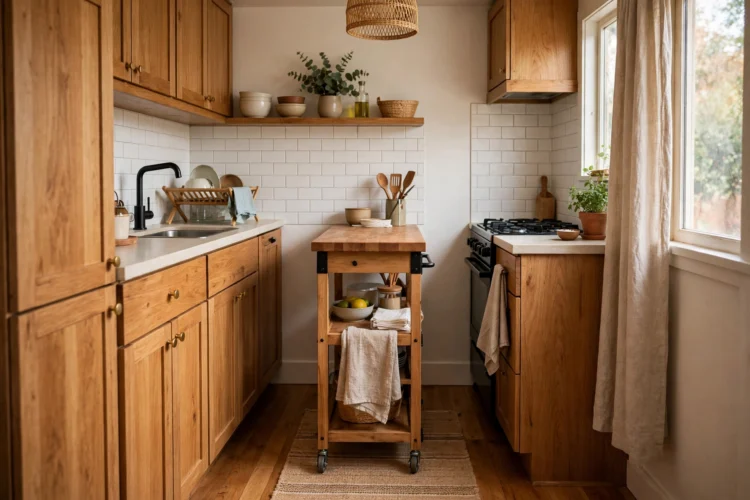
Nine small kitchen island ideas that fit tight floor plans, from 18-inch console islands and rolling carts to fold-down tables and storage towers.
A standard kitchen island is about 36 inches deep and four feet long, which is a non-starter when your whole kitchen is barely ten feet wide. But small does not have to mean island-free. These nine small kitchen island ideas add real prep space and storage to tight floor plans without blocking the path between the fridge, sink, and stove. The secret is going narrow, going mobile, or going vertical, and knowing the clearance math before you buy anything.
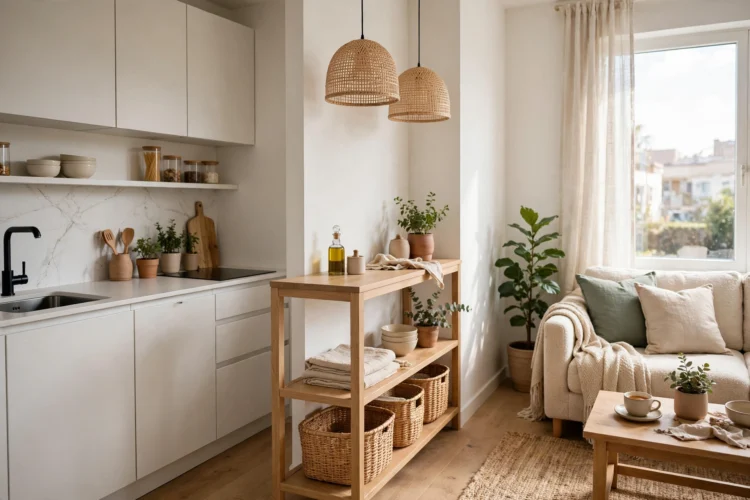
An 18-inch-deep console island is barely wider than a bookshelf, yet it changes how a small kitchen works. Place it as a divider between the kitchen and living area in an open studio, or float it parallel to the main counter with 36 inches of clearance on each side. The narrow top holds a cutting board, a fruit bowl, and not much else, which is the point. It gives you a landing zone without stealing the room. Choose one with a lower shelf for the microwave or the stand mixer to free counter space too.
Anchor it with a runner rug underneath to define the zone, and add a pendant light above so the slim island reads as intentional rather than improvised.
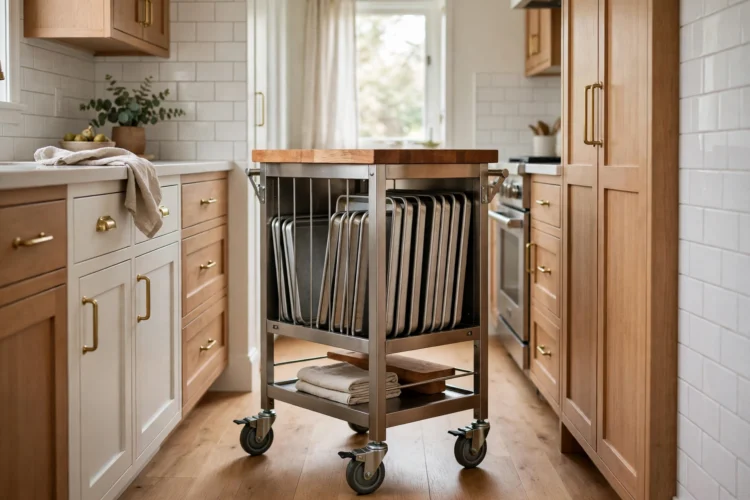
A cart on locking casters is the island you can make disappear. Roll it out for meal prep, lock the wheels, then push it into a closet or against the wall when guests arrive. Stainless steel carts with a wood top handle heat and knives, and the open frame underneath fits sheet pans and cutting boards vertically. Look for casters that lock both the wheel and the swivel, so the cart stays put on tile floors. For galley kitchens, a 30-inch-wide cart often fits the aisle better than anything built-in.
A towel bar on the side and S-hooks underneath turn the cart into a hanging station for utensils, freeing yet another drawer.
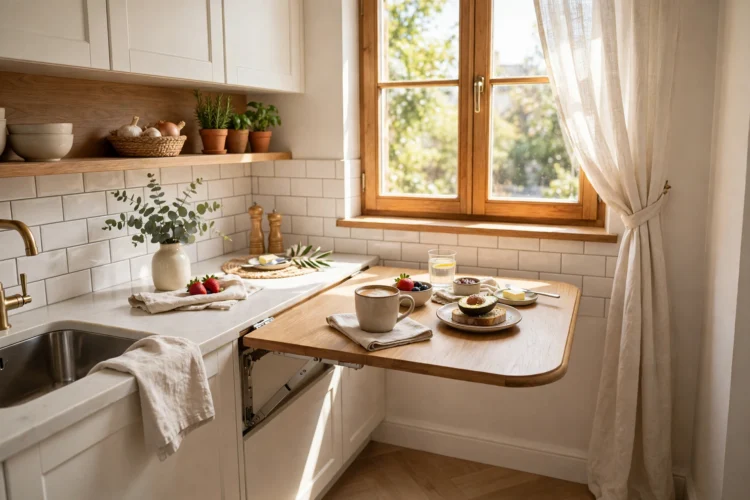
A peninsula anchored to the wall with a drop leaf gives you island function at half the footprint. Keep the leaf down for a slim 18-inch counter extension during the week, then raise it to a full 36-inch table when friends come over. Hinge it to a sturdy wall cleat and support the raised leaf with a folding bracket rated for the load. This works especially well under a window, where the peninsula becomes a sunny breakfast spot. Round the outer corners of the leaf so hips survive the tight quarters.
Paint the underside of the leaf a fun accent color. It flashes briefly every time the leaf drops, a small surprise for regulars.
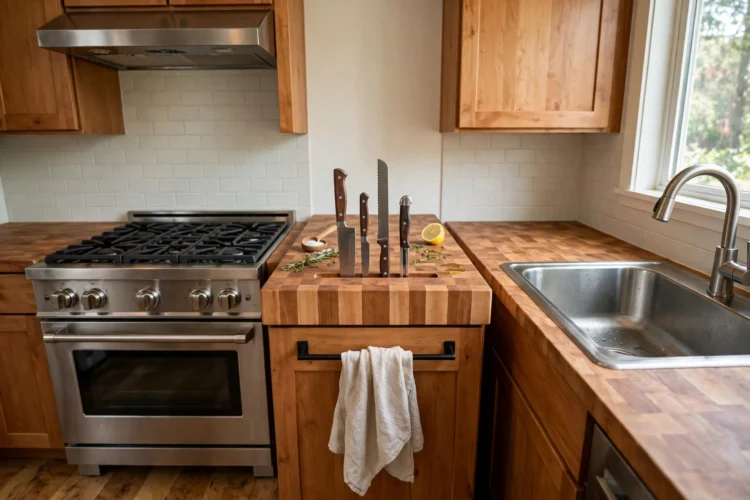
A dedicated butcher-block station, about 24 inches wide and 18 deep, is the prep island for serious cooks in small kitchens. The end-grain top is kind to knives, and the compact size forces an efficient workflow: chop here, slide into the pan there. Tuck it between the range and the sink to create a mini work triangle. Many versions include a knife slot and a towel bar on the side, small details that replace a whole drawer of organizers. Oil the top monthly with food-safe mineral oil to keep it from drying out.
Keep a bench scraper and a small bowl for scraps on the station at all times. The workflow stays clean when the tools never leave the block.
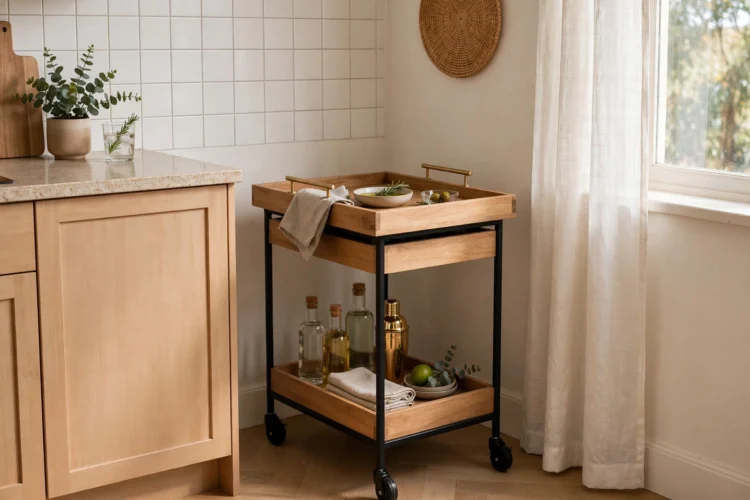
Open shelving makes a small island feel lighter than closed cabinets, and it puts everyday items within reach. A cart with three open shelves holds the daily dishes, the coffee setup, and the cooking oils without a single door swing to block the aisle. Style the shelves with intention, matching bowls, a small plant, folded linens, so the open storage reads as decor rather than clutter. The trade-off is dust, so keep the oiliest items in closed containers. In a white or light kitchen, a wood-shelf cart adds warmth without visual weight.
Line the shelves with washable shelf liner cut to size. It catches drips and pulls out for a quick rinse in the sink.
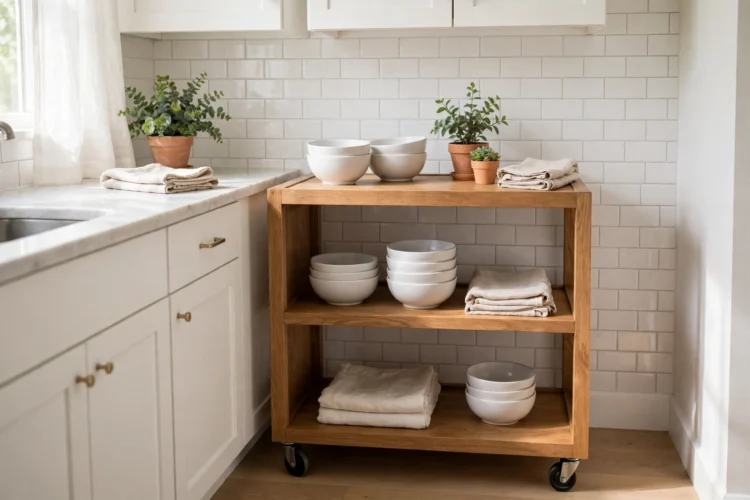
When floor space is truly zero, go vertical. A wall-mounted fold-down table gives you a 24-by-36-inch work surface that vanishes flat against the wall when you are done. Mount it at counter height, 36 inches, so it aligns with the existing counters and feels like a real extension of the kitchen. Heavy-duty folding brackets support surprising weight, enough for a stand mixer. This is a favorite in railroad apartments and tiny cottages where even a cart blocks the only walkway. Add a picture ledge above it for spices and the wall pulls double duty.
Add a magnetic knife strip to the wall beside it. Knives stay off the tiny surface and within arm’s reach while you chop.
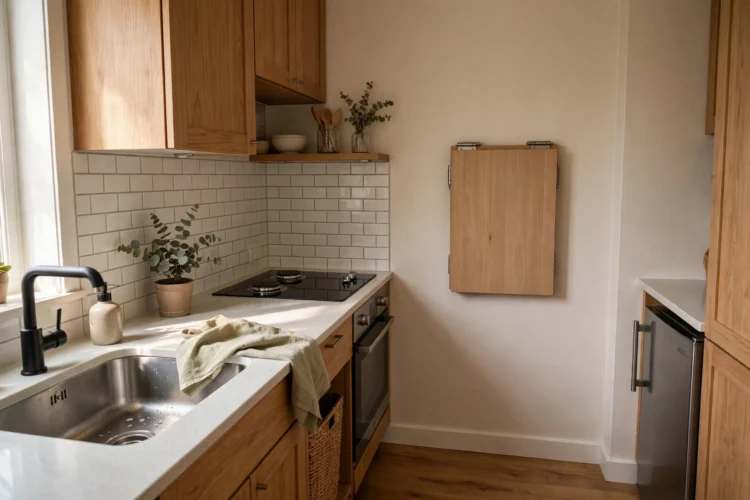
A small round pedestal table, 30 to 36 inches across, works as an island in kitchens where a rectangle would snag every hip. The single center pedestal means no corner legs to navigate, and the curve improves traffic flow around it. Use it as a prep surface with a large cutting board on top, then clear it for dining. A cast-iron or weighted base keeps it stable when you lean into kneading dough. In a breakfast nook or eat-in corner, this one piece covers both the island and the table.
A lazy Susan on top doubles the usable surface. Spin ingredients toward you instead of walking around the table.
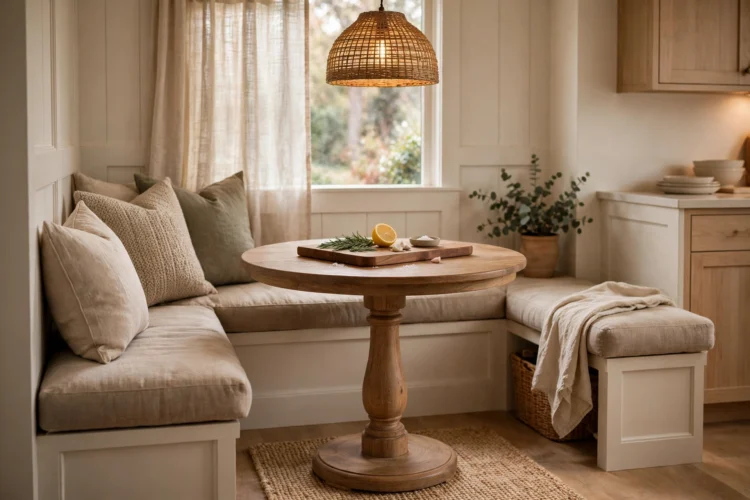
Think vertical instead of horizontal. A slim tower, 15 to 18 inches wide and counter height, slides into the dead space at the end of a cabinet run or beside the fridge. Inside, fit pull-out shelves for spices, canned goods, and baking supplies. The top becomes a narrow but genuinely useful landing spot for a coffee maker or a charging station. Because it is tall and narrow, anchor it to the wall or the adjacent cabinetry so it cannot tip. This is the island for kitchens that need storage more than they need prep space.
Label the pull-out shelves with a label maker. In a narrow tower, you cannot see what is behind the front row without labels.
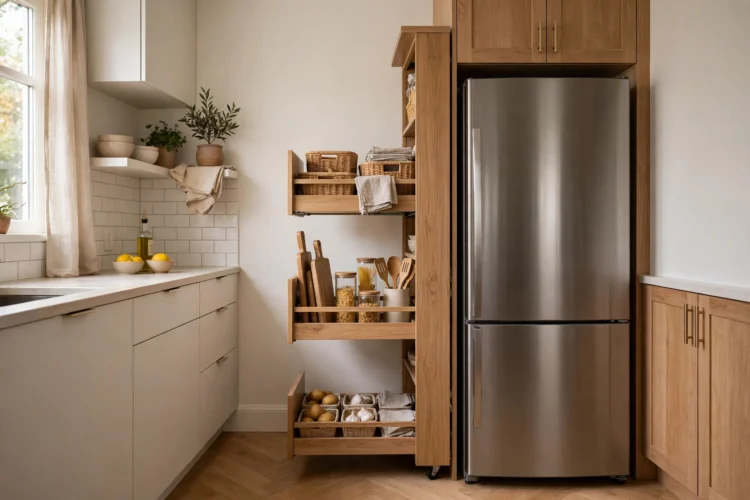
A two-tier trolley is the bar cart that grew up and got a kitchen job. The top tier at counter height holds the current project, chopping, mixing, plating, while the lower tier carries the tools. Roll it to the stove, to the table, or out to the patio for grilling season. Models with a removable top tray double as serving trays. For the smallest kitchens, a 16-inch-wide trolley threads aisles that nothing else can. It will not replace a real island for big cooking days, but for daily meals it covers most of what an island does.
Park it beside the stove as a landing pad for hot pans. A silicone trivet on the top tier protects the surface from scorch marks.
Before you commit, tape the island’s footprint on the floor with painter’s tape and live with it for three days. Walk the aisles, open the fridge and oven doors, and carry a laundry basket through. If the taped outline survives real life, the island will too.