Physical Address
304 North Cardinal St.
Dorchester Center, MA 02124
Physical Address
304 North Cardinal St.
Dorchester Center, MA 02124

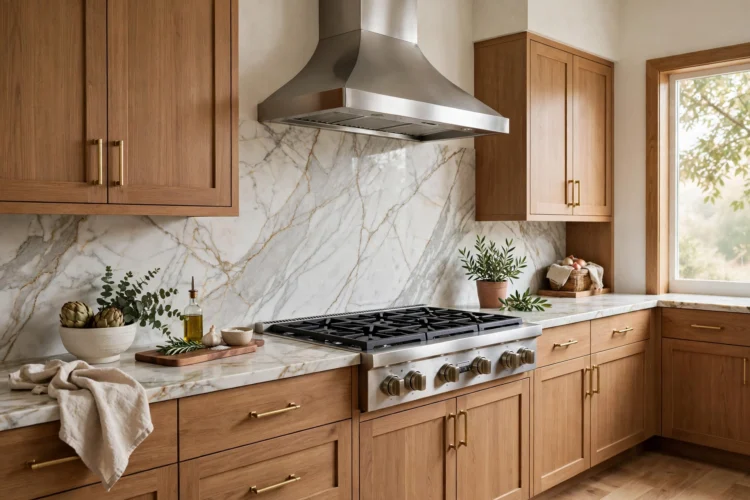
Twelve marble backsplash ideas for a seamless stone look, from full-height slabs and book-matched veining to honed finishes, dark marble, and low-maintenance porcelain.
A marble backsplash can make the wall behind your stove feel like one calm, continuous surface instead of a patchwork of tile. These 12 marble backsplash ideas focus on seamless stone, matched veining, and finishes that sit quietly with cabinets and counters. You will find full-height slabs, book-matched panels, soft honed looks, dark stones, low-maintenance porcelain, and two small details that change the whole composition.
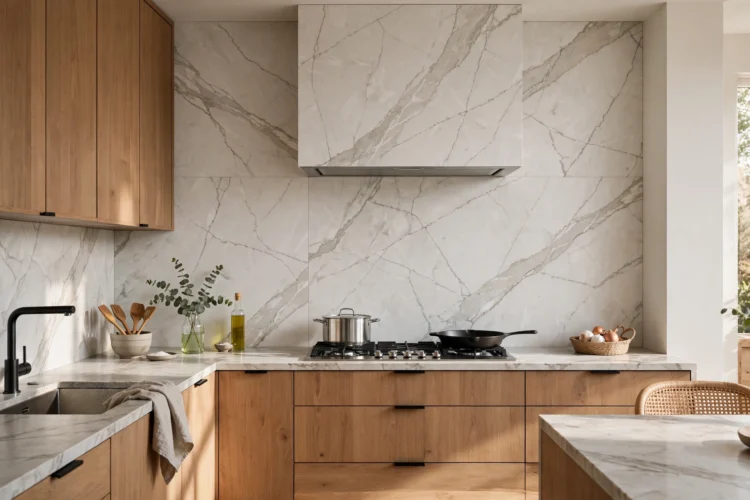
The fastest way to get that seamless look is to remove the usual stopping point. Instead of ending the stone at the bottom of the upper cabinets, let one slab cover the wall from counter to ceiling or across the whole cooking zone. The payoff is a wall that reads as cut from one block, not assembled from pieces.
Without grout lines, the eye follows the veining instead of a grid. Morning light slides across the surface and shows every soft mineral shift. At night, under-cabinet lighting turns the same wall into a low glowing panel. Keep nearby materials quiet: flat-front cabinets, simple hardware, and a counter with little pattern let the stone do the talking.
Choose a single slab wide enough to sit behind the range with no seams. A soft gray-veined Carrara keeps the area bright, while a bolder Calacatta-style vein pattern turns the cooking wall into the kitchen’s main artwork. Leave a little breathing room between the stone and open shelving so the slab reads as one deliberate panel.
Take the same idea higher. Running marble from the countertop all the way to the ceiling removes the awkward horizontal break where tile often stops. This works well with a tall range hood, because the stone and hood become one vertical column. In a small kitchen, the unbroken surface can make the wall feel taller.
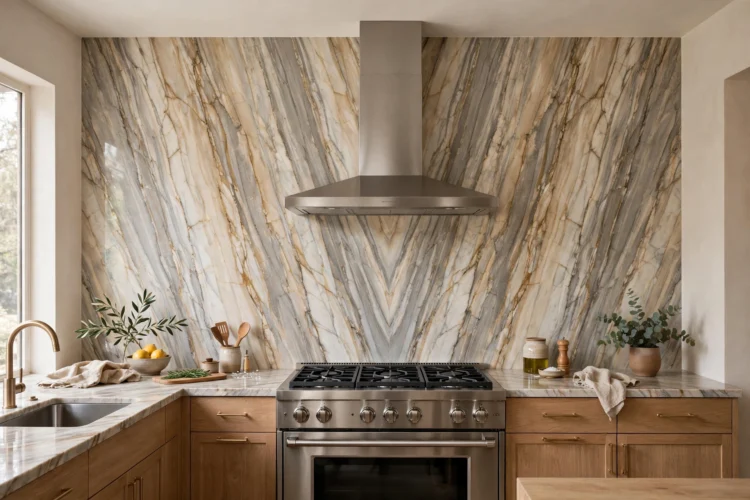
Book-matching uses two adjacent slab cuts placed like an open book, so the veining mirrors itself. Two halves meet at the center, and the veins continue across the joint like a reflection. The result looks intentional and almost drawn, especially behind a range.
This approach suits kitchens that already feel calm. White cabinets, pale oak, or soft gray walls give the mirrored pattern room to show. Because the symmetry is strong, keep the countertop simple and avoid busy flooring nearby.
Center the mirror line behind the cooktop. The veins spread outward like wings, which makes the range feel framed without adding trim. A polished finish sharpens the reflection and makes the pattern read clearly from across the room.
Repeat the mirrored pair across the whole backsplash wall. The pattern becomes rhythmic rather than loud, especially if the stone has fine gray veining instead of thick gold or black lines. This is a good choice for an open kitchen where the wall is visible from the living area.
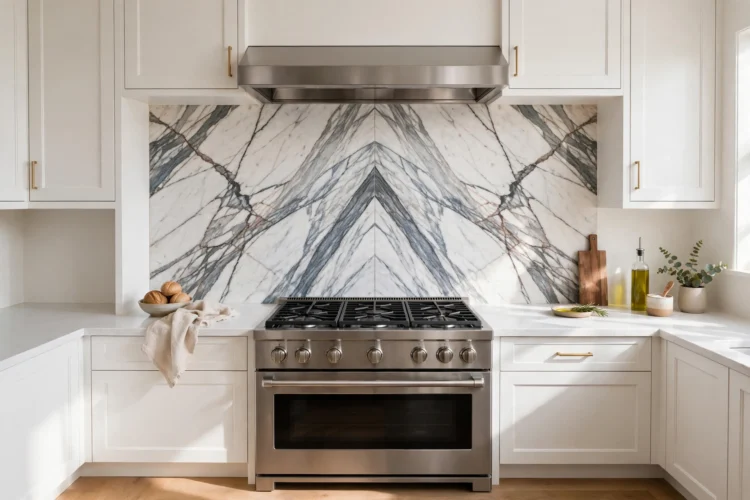
Honed marble has a matte surface that softens reflections. It feels softer and more natural than a glossy showroom wall, and it lets the veining sit low instead of flashing back at you.
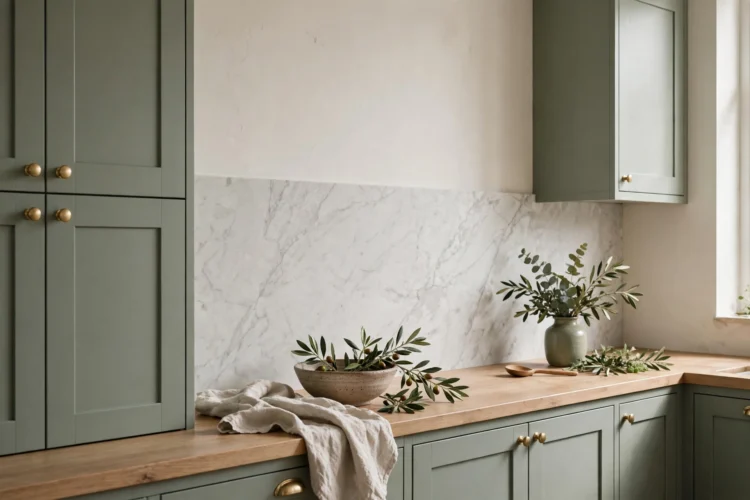
This finish pairs well with wood, brushed nickel, and painted cabinets in warm white or sage. It also hides small water spots better than a mirror-like polish, though natural marble still needs sealing and can stain or etch.
Carrara’s fine gray veining looks gentle when honed. Use it with shaker cabinets and a simple light counter for a clean, familiar kitchen. The matte surface keeps the wall from competing with stainless appliances.
A crema-style beige marble brings warmth without going yellow. It works with cream cabinets, light wood floors, and brass hardware. The soft background color makes the kitchen feel calm in the morning and cozy after dark.
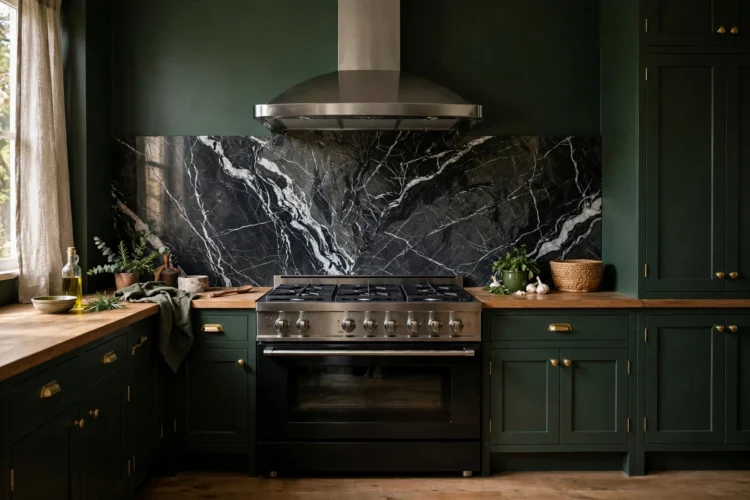
Dark stone changes the backsplash from background to anchor. It draws the eye and gives light cabinets something to lean against.
Balance matters. Keep the countertop lighter or choose open shelving so the dark wall does not close in the room. Good lighting is important, because a dark slab can look flat without it. A pale runner or light bar stools nearby also help the room stay open.
Black marble with crisp white veins reads graphic and modern. Pair it with white upper cabinets, black lowers, or warm wood for contrast. A polished finish makes the white veins pop, while honed black stone feels quieter and more textured.
Deep green marble has the richness of dark stone with a natural, leafy undertone. It sits beautifully beside white oak, cream cabinets, or unlacquered brass. Choose slabs with soft lighter veining if you want movement without high contrast.
If you love the veined look but not the maintenance, marble-look porcelain is the practical middle ground. It does not need sealing, and it resists stains and etching better than natural marble.
The best versions use large pieces and restrained grout. From a few steps away, the wall can read as stone. The difference shows only up close, in the repeat pattern and the cooler surface feel.
A large porcelain slab printed with marble veining gives you the seamless effect with fewer worries. Use it behind the range where splatter happens most. Keep the print restrained, because oversized imitation veins can look artificial in a small kitchen.
Large-format porcelain tile offers a similar look with easier installation. Choose the biggest tile your wall allows and match the grout closely to the background color. Fewer grout lines mean the veining flows more like real stone.
Sometimes the stone is not the whole story. A small functional or trim detail can make a familiar marble wall feel custom.
These ideas work with almost any marble type. They are especially useful when the slab itself is quiet and you want one thoughtful accent.
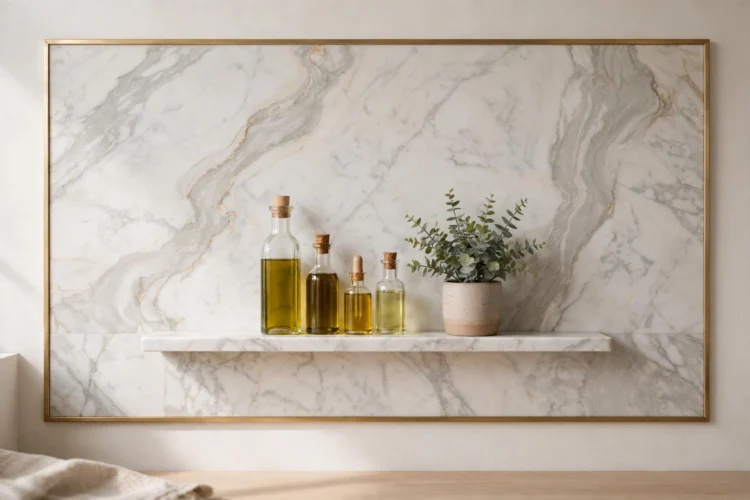
A slim marble ledge built into the backsplash holds olive oil, salt, or a small plant. It keeps the counter clearer and turns the wall into usable space. Match the ledge to the backsplash stone so it looks carved from the same piece.
A narrow brass trim around the marble panel adds a crisp edge. It works like a picture frame, especially behind the range. Keep the trim thin, because a heavy border can fight with the stone’s natural pattern.
Before you order, tape large paper templates to the wall and check them in morning and evening light. Veining can look soft at noon and stronger at night, and that shift will tell you whether to choose quiet Carrara, bold book-matching, or low-maintenance porcelain.