Physical Address
304 North Cardinal St.
Dorchester Center, MA 02124
Physical Address
304 North Cardinal St.
Dorchester Center, MA 02124

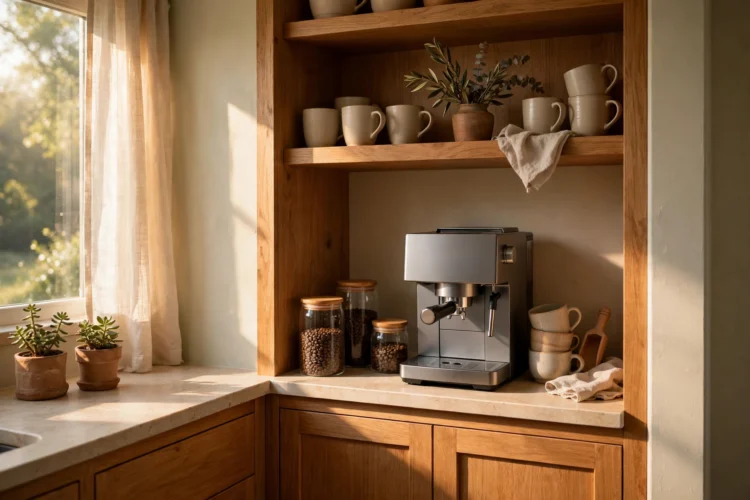
A built in coffee station keeps everything for your morning cup in one tidy spot. These 8 ideas borrow space you already have, from a pantry shelf to a dead corner.
A built in coffee station turns a rushed morning into a calm one. Instead of hunting for beans, filters, and your favorite mug across three cabinets, everything sits in one tidy spot, plugged in and ready. A coffee station small kitchen setup works even in the tiniest galley, because the best versions borrow space you already have: a pantry shelf, a dead corner, or the end of an island. The ideas below range from a simple shelf with an outlet to a full cabinet with pocket doors, and each one keeps the machine off the main counter so you still have room to cook. Pick the version that fits your kitchen, your machine, and how seriously you take your morning cup.
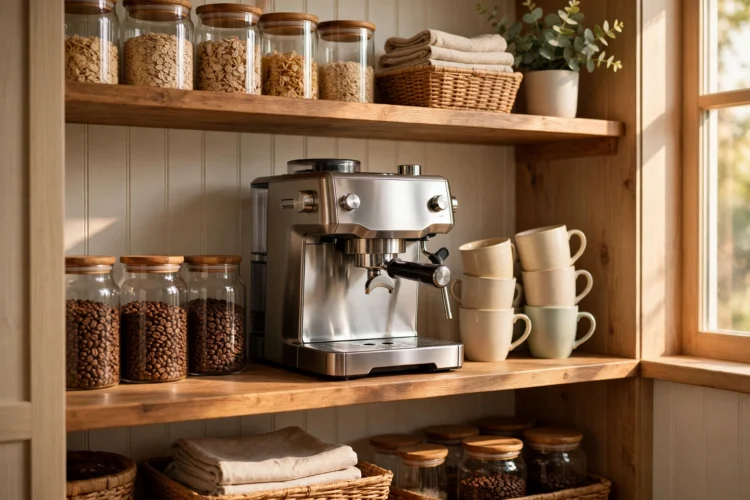
The easiest built in coffee station starts in the pantry. Clear one shelf at counter height for the machine, add a power outlet inside the pantry, and use the shelf above for mugs, beans, and filters. A pantry coffee nook like this keeps the mess contained: grounds stay in the pantry, and the counter stays clear for cooking. Leave the pantry door open while you brew, then close it and the whole station disappears. If your pantry has room to spare, these walk-in pantry ideas show how to zone shelves for food and gear so the coffee corner gets its own clear stretch. Add a small battery LED strip under the shelf above the machine so you can see what you are doing on dark mornings, and keep a small tray under the machine to catch drips.
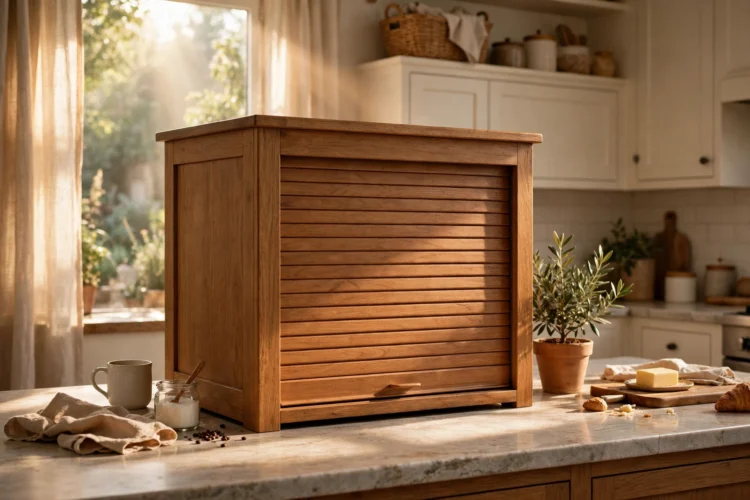
An appliance garage is a countertop cabinet with a door that rolls up or lifts away, and it makes a natural home for a coffee machine. The machine stays plugged in on the counter, and when you are done you pull the door down and the clutter is gone. This appliance garage coffee setup works best in a corner of the counter where the cabinet can sit against the wall without blocking your prep space. Leave a small gap behind the machine for steam to escape, and choose a garage tall enough that you can lift the water tank out without dragging the machine forward. A tambour door that rolls up takes the least space, while a lift-up door gives you a clean flat front when closed. Either way, the coffee gear lives where you use it, and the kitchen still looks tidy when guests walk in.
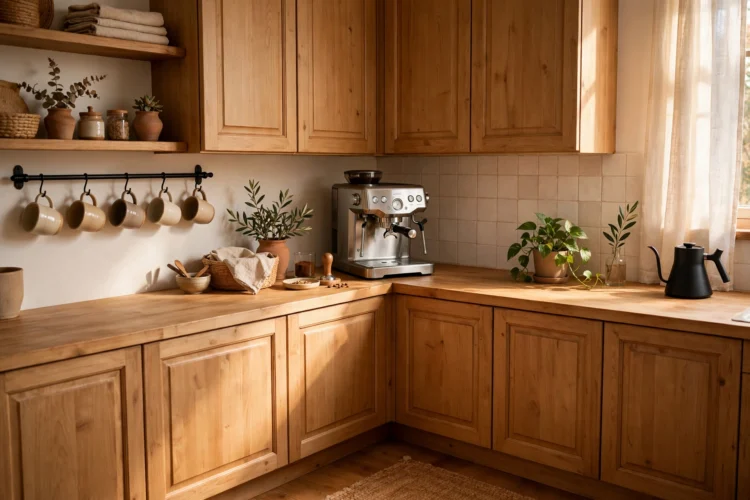
Every L-shaped kitchen has a dead corner where the two runs of cabinets meet, and that corner is prime real estate for coffee. Fit a triangular shelf or a small countertop extension into the angle, park the machine there, and hang mugs on hooks on the wall above. The machine sits out of the main work triangle, so it never blocks chopping or washing up, and the corner finally earns its keep. Measure the depth carefully: most machines need about 12 to 14 inches of counter depth, plus room to open the lid or pull out the water tank. A small wall shelf above holds beans and filters, and a rail with hooks keeps mugs within reach without taking shelf space. This is the cheapest idea on the list, and it suits renters too, since it needs no new cabinets.
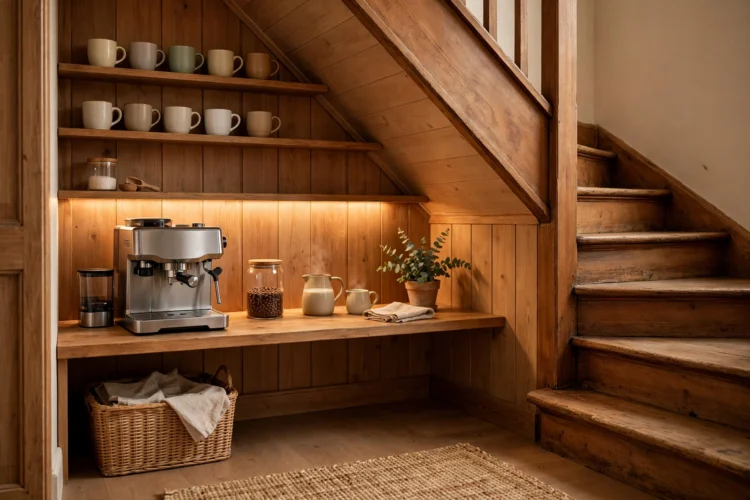
If your kitchen sits near a staircase, the closet under the stairs can become a proper coffee station. Fit a countertop at waist height across the closet, add open shelving above for mugs and jars, and tuck a small fridge underneath for milk and cream. The sloped ceiling is no problem, because the machine sits on the low side and the tall shelves go where the ceiling rises. Add an outlet or two, a bit of task lighting, and a wipeable backsplash behind the machine, and the odd little closet becomes the most used spot in the house. Keep the floor clear with a narrow rug or a mat, and leave the top shelf for the things you grab once a week, like the spare filters and the descaling solution.
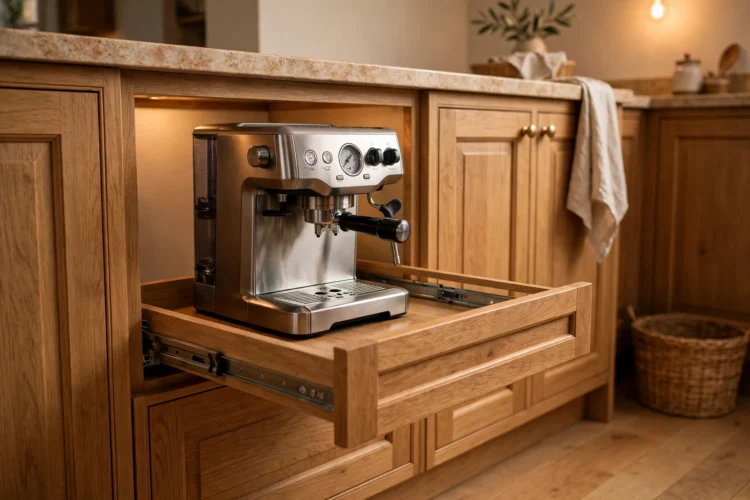
A deep drawer with a sliding shelf turns a base cabinet into a hidden coffee station. The machine sits on a pull-out platform: slide it out to brew, slide it back when you are done. You need an outlet at the back of the cabinet and a drawer strong enough to carry a full machine, so check the weight rating before you buy the hardware. This setup shines in kitchens where counter space is precious, because the machine only appears when you need it. Pair it with a drawer divider for pods, filters, and spoons, and keep mugs on the shelf right above so the whole routine happens in one cabinet. These small pantry organization ideas use the same thinking, with every item grouped by task so nothing wanders off to another cabinet.
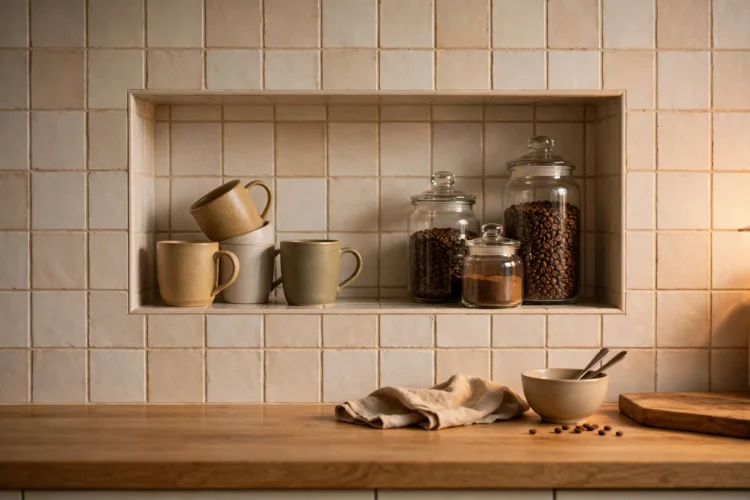
A shallow niche cut between the wall studs gives you a coffee shelf without stealing an inch of counter. The niche is usually 4 to 6 inches deep, which is plenty for mugs, jars of beans, and a row of syrups, while the machine stays on the counter directly below. Tile the back of the niche in the same tile as your backsplash and it looks like it was always part of the kitchen. This works best on an interior wall, where you can open the space between studs without hitting pipes or wiring, so have a contractor check first. Add a small LED strip at the top of the niche and the coffee corner glows in the morning. Good lighting matters here, and these under cabinet lighting ideas show how a simple strip light changes a dark corner into a workable spot.
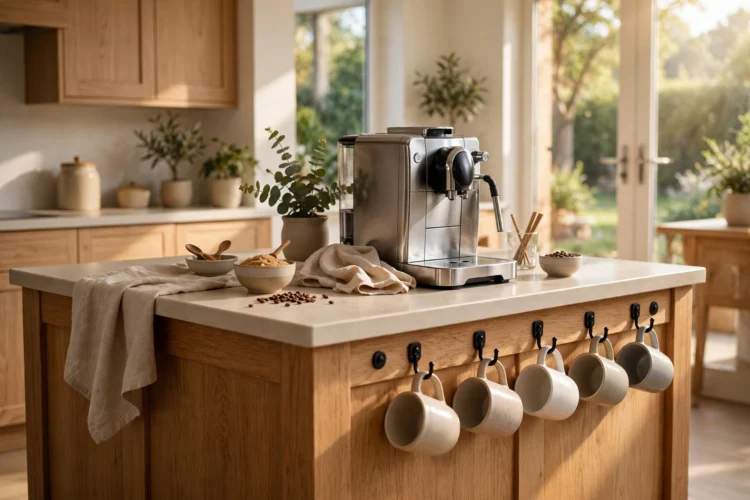
The end of a kitchen island is often wasted space, and it makes a handy coffee station. Add an open shelf or a small counter extension to the end panel, mount a couple of mug hooks, and put the machine there with its own outlet. Breakfast becomes a short walk: brew at the island end, sit down at the island seats, and the main counters stay free for cooking. This setup works best on islands with seating, because the coffee corner faces the room instead of the wall. Keep the shelf narrow so it does not stick into the walkway, and use a tray under the machine to protect the island top from drips and heat. If your island needs more storage to support the idea, these kitchen island storage ideas show how to hide supplies inside the base while the coffee gear stays on display.
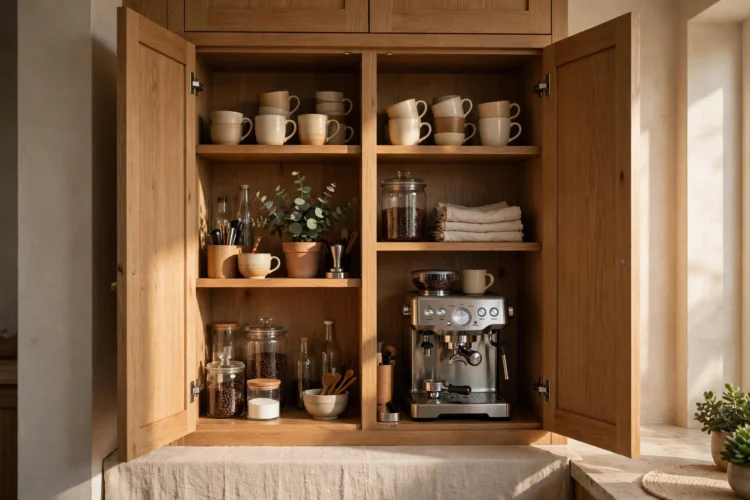
A tall cabinet with pocket doors is the most polished version of a built in coffee bar. The doors slide into the sides of the cabinet when open, so nothing swings into the walkway, and when you close them the station vanishes behind what looks like a pantry door. Inside, fit a countertop at a comfortable height, two or three outlets, and shelves for mugs, beans, and the grinder. Line the back with the same material as your backsplash so spills wipe clean, and add a small pull-out tray for the machine so you can slide it forward to fill the tank. This costs more than a shelf and a hook, but it is the one idea that hides a full coffee setup in a kitchen that looks completely calm. If you brew every day, the pocket door version is worth the splurge.
Start with the spot you already use every morning, then build the station around it. A pantry shelf and an outlet can be done in a weekend, while a pocket-door cabinet is a project to plan with a carpenter. Either way, the payoff is the same: the machine has a home, the counter stays clear, and the first cup of the day takes thirty seconds instead of five minutes of hunting.