Physical Address
304 North Cardinal St.
Dorchester Center, MA 02124
Physical Address
304 North Cardinal St.
Dorchester Center, MA 02124

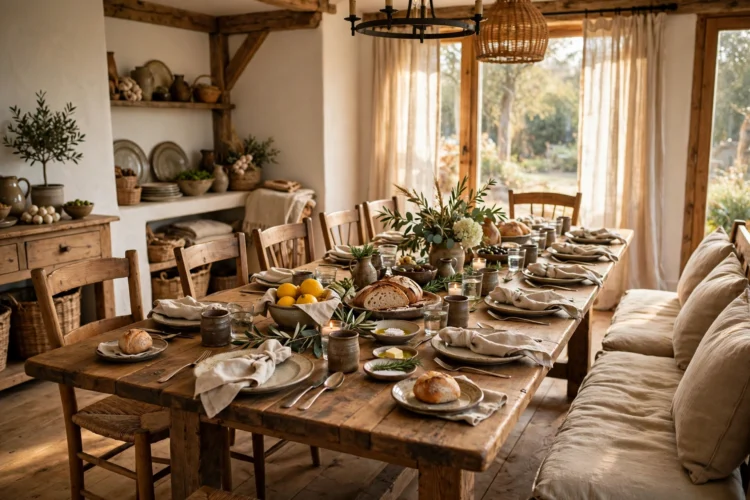
A farmhouse dining table is built for big family meals. These 10 trestle, harvest, and pedestal ideas cover wood tones, chairs, and seating for a crowd.
A farmhouse dining table is the piece of furniture that turns a meal into a gathering. The long top, the thick legs, and the worn wood all say the same thing: pull up a chair, stay a while, and pass the food. Farmhouse tables come in trestle, harvest, and pedestal shapes, in wood tones from pale whitewash to deep walnut, and each shape seats a crowd a little differently. The ten ideas below cover the shapes, the finishes, and the chair pairings that make a farmhouse table work for big family meals, holiday dinners, and the everyday chaos of a busy household. Pick the shape that fits your room, then choose the wood and the chairs to match.
A trestle farmhouse table stands on two end supports joined by a long stretcher bar, and that shape is why it seats a crowd so well. The legs sit at the ends, not the corners, so chairs slide in along the whole length of the table without bumping a leg. A trestle farmhouse table in a 8-foot length seats eight comfortably, ten if the kids squeeze in, and the stretcher bar doubles as a footrest. The trestle shape suits long, narrow dining rooms, because the table reads as one long line instead of a bulky block. Look for a top at least an inch and a half thick, with a stretcher bar low enough to rest your feet on but high enough to clear chair legs. Pair it with a bench on one side and chairs on the other, and the table seats a full family without anyone feeling fenced in.
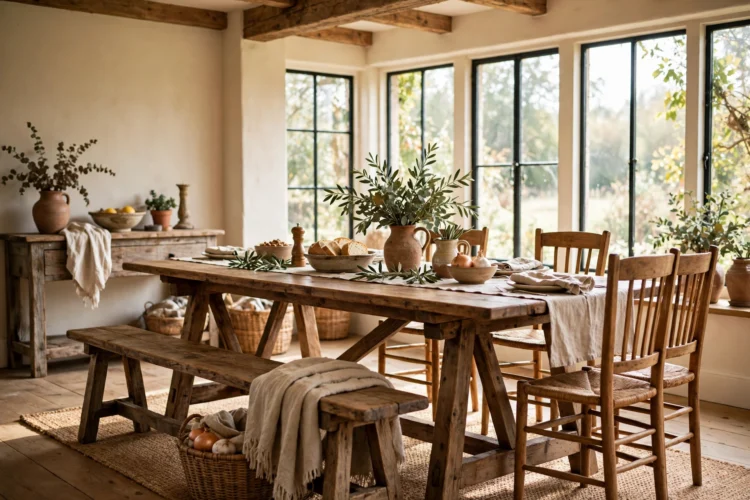
A harvest farmhouse table is a long, narrow table with a thick top and simple turned legs, the kind of table that once sat in a farm kitchen and fed the harvest crew. The harvest shape is usually 36 to 40 inches wide, which keeps everyone close enough to talk across the table, and 7 to 9 feet long, which seats eight to ten. A harvest farmhouse dining table works best in a room with space at both ends, because the end seats are the best in the house and the table needs room for chairs to pull out. The narrow width is a gift in a tight room: the table seats a crowd without eating the walkway. Choose a top with visible grain and a few knots, because the harvest style is about honest wood, not a perfect finish. These butcher block countertop ideas use the same warm wood language, and they pair well with a harvest table in an open kitchen.
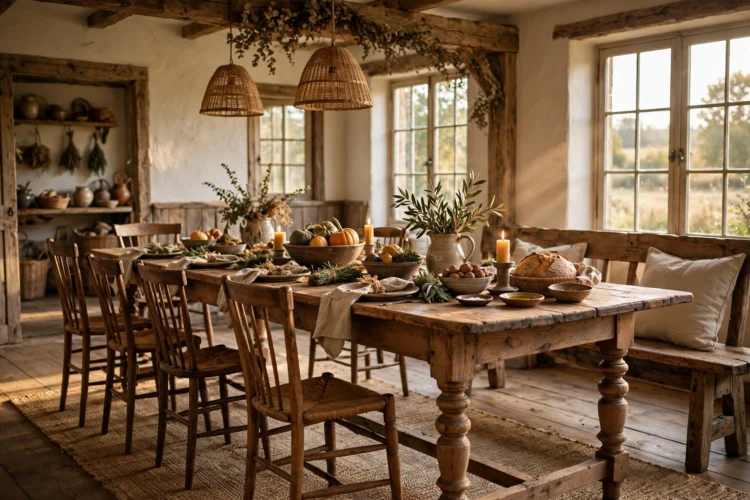
A pedestal farmhouse table stands on one or two central columns, and it trades the long trestle shape for a table that seats people on every side. Two pedestals under a long top give the table the farmhouse look with the legroom of a modern design, because chairs slide in anywhere along the sides. A single pedestal suits a square or round farmhouse table for six, while a double pedestal suits a long table for eight or ten. The pedestal base needs to be heavy, so check the weight and the footprint before you buy: a light base under a heavy wood top tips when someone leans on the edge. The pedestal shape also makes the table easier to clean around, because there are no corner legs to vacuum behind, and it lets a bench slide fully under the table when the meal is over.
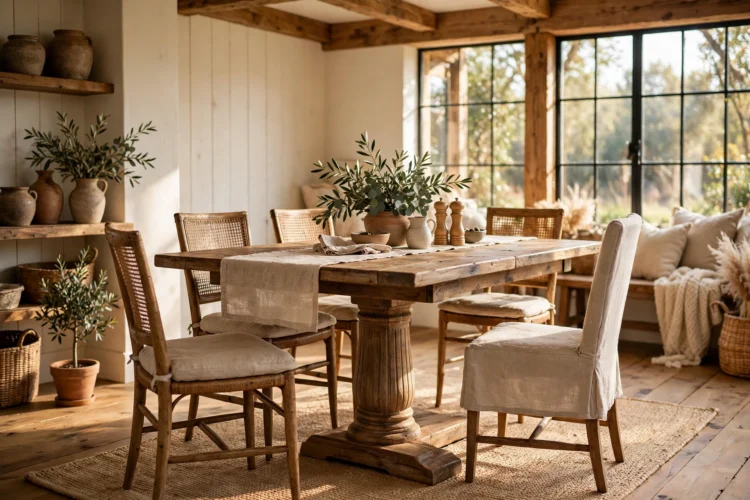
A farmhouse table in reclaimed wood carries the story of the barn or the factory it came from, and no two tops look the same. The wood shows nail holes, saw marks, and color shifts that a new top cannot fake, and the table becomes the talking point of the room. Farmhouse table wood tones range from pale gray driftwood to deep brown walnut, and reclaimed wood usually sits in the middle, warm and varied. Ask where the wood came from and how it was finished: a good reclaimed top is sealed so it wipes clean, because a dining table that stains at the first spill is a decoration, not a table. Pair reclaimed wood with simple black metal chairs or a linen bench, and let the top do the talking. These wood kitchen cabinet ideas show how the same warm tones work across a room, so the table and the kitchen feel like they belong together.
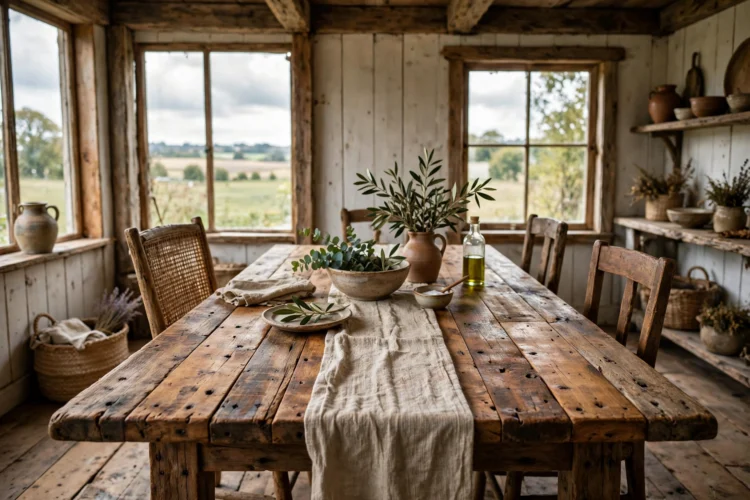
A whitewashed farmhouse table keeps the farmhouse shape and lightens the mood, which suits bright rooms, coastal houses, and anyone who finds dark wood too heavy. The whitewash lets the grain show through a pale finish, so the table reads as wood, not paint, and it pairs with white chairs, linen cushions, and a light rug without washing out. Whitewash needs a hard seal, because a dining table takes spills, and a soft finish stains fast. If the room needs a little more texture to keep the pale palette from feeling flat, these beadboard backsplash ideas show how the same cottage texture works on a wall.
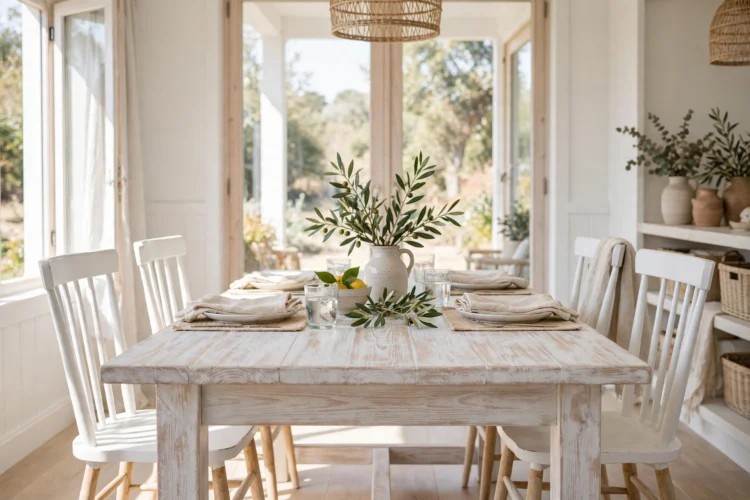
A bench on one side of a farmhouse table seats more people in less space than chairs, and it slides under the table when the meal is over. A bench suits kids, because they can slide in and out without pulling a chair, and it suits big gatherings, because a bench seats three where two chairs would fit. Build or buy the bench at 18 inches high, the same as a chair, and about 12 to 14 inches deep, so it is comfortable for a full meal and not just a perch. The bench should match the table in wood and finish, or contrast in a simple black, so the pair reads as a set. Keep a cushion on the bench for long dinners, and store the cushion in the bench itself if it has a hinged seat. The bench also gives the room a casual feel, which is the whole point of a farmhouse table: nobody stands on ceremony, and everyone finds a seat.
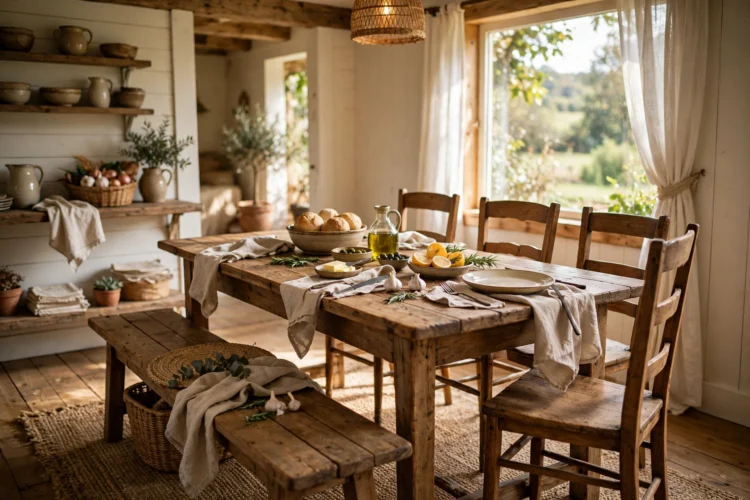
Mismatched chairs around a farmhouse table give the room a collected, lived-in feel, like the chairs arrived one at a time over the years. Pair a pair of upholstered host chairs at the ends with wooden side chairs along the sides, or mix a bench with chairs, and the table stops looking like a showroom set. Farmhouse dining chairs work in a mix when they share a seat height of 18 inches and a similar wood tone, so the mix looks deliberate instead of accidental. Paint the chairs one color and leave the table natural, or leave the chairs natural and paint the table, and the two sides of the room balance each other. The mix also solves a practical problem: a spare chair from another room only needs to match in height, not in style, so seating an extra guest on a busy night takes thirty seconds. Keep the chair widths under 20 inches so they all fit along the table without crowding.
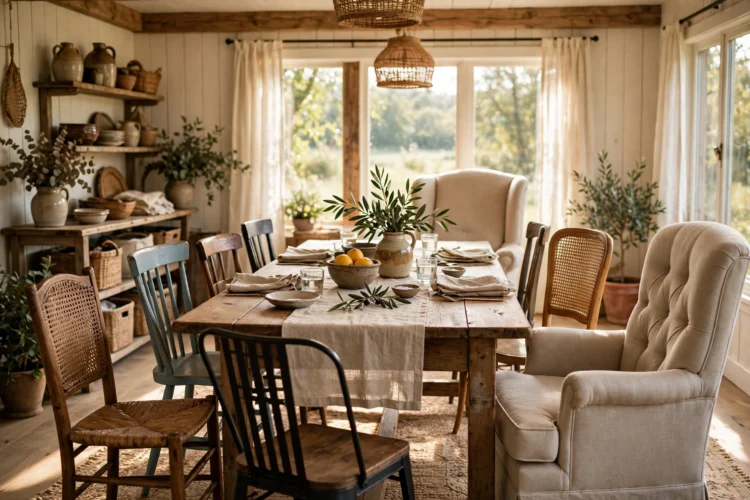
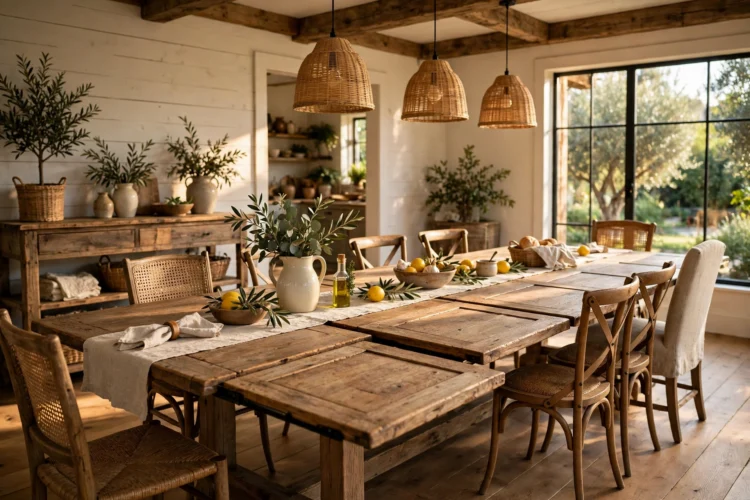
An extendable farmhouse table is a short table on weekdays and a long table on holidays, and it is the smartest buy for a household that hosts a few times a year. The leaves slide in from the ends or fold out from the middle, and the table grows from 6 feet to 8 or 9 feet without a second table. Check the mechanism before you buy: the leaves should slide smoothly and lock flat, or the seam wobbles under a plate. Store the leaves in the table itself if it has a compartment, or lean them behind a sideboard so they are easy to grab. The extendable table needs room at both ends when it is open, so measure the room with the leaves in, not just the table as it sits on a normal day. A farmhouse sink in the kitchen nearby makes the serving run short, and these farmhouse sink ideas show how the same farmhouse language carries from the dining room into the kitchen.
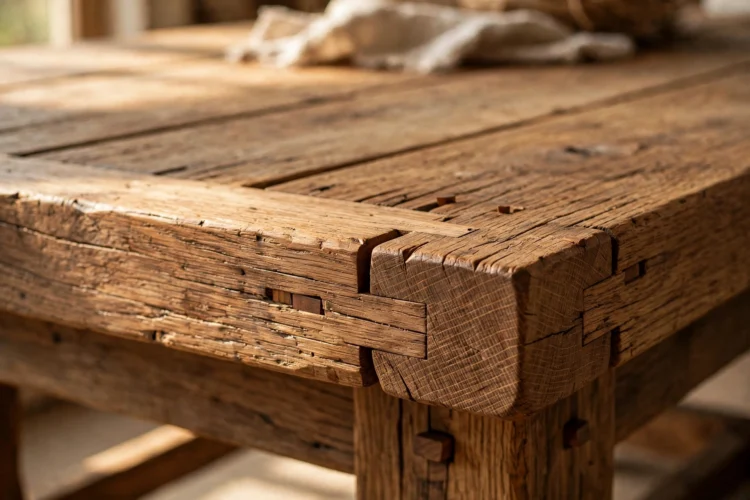
A breadboard end is a strip of wood joined across the end grain of the tabletop, and it is the detail that marks a real farmhouse table. The breadboard keeps the wide top flat as the wood expands and contracts with the seasons, and it gives the ends of the table a finished, crafted look. A table with breadboard ends usually has a thicker top, at least an inch and a half, and the ends show the joinery instead of hiding it. This detail suits a table that will be used hard, because the breadboard protects the end grain from chips and spills, and it suits a room where the table is the centerpiece, because the craftsmanship is visible from every seat. Look for a breadboard joined with pegs or a tongue and groove, not just glued on, because the real joint moves with the wood and the fake one cracks.
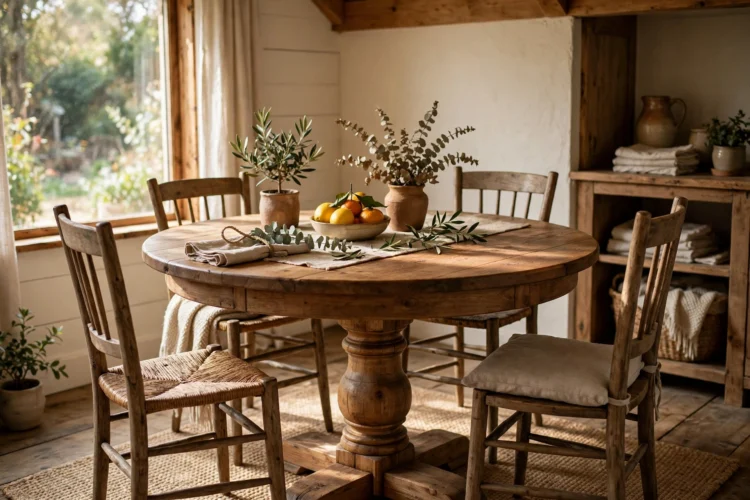
A round farmhouse table brings the farmhouse look to a small room that cannot fit a long table. The round top, usually 48 to 60 inches across, seats six to eight with no head of the table, and the pedestal base keeps the legroom open on every side. A round farmhouse table suits a breakfast nook, a small dining room, or a kitchen corner, and it pairs with a mix of chairs and a small bench curved to the wall. The round shape changes the mood of a gathering: everyone faces the center, conversation flows around the circle, and nobody sits at the far end shouting down the table. Choose a thick top with a visible grain and a turned pedestal, and the round table carries the same farmhouse warmth as its long cousins in half the floor space.
Start with the shape that fits the room and the crowd you actually feed. A trestle table seats the most people in a long room, a harvest table fits a narrow one, and a round table suits a small one. Get the shape right, choose a wood tone you love, and the chairs almost pick themselves. The best farmhouse table is the one that is full on a Sunday and still earns its floor space on a Tuesday.