Physical Address
304 North Cardinal St.
Dorchester Center, MA 02124
Physical Address
304 North Cardinal St.
Dorchester Center, MA 02124

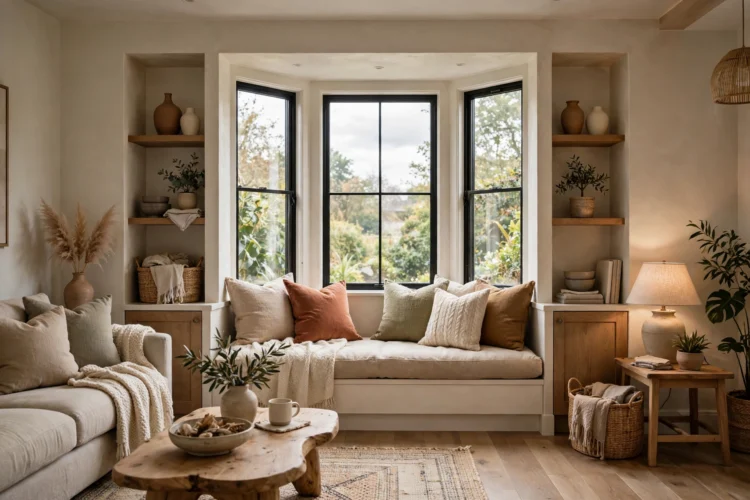
A bay window alcove is the most promising seat in many living rooms, and it only needs the right bench, cushions, and curtain treatment to earn that title every day.
Bay window living room ideas turn an angled alcove into the room’s best seat. The bay already gives you light from three directions, a wider view than a flat window, and a natural nook shape that invites sitting. What it needs is a bench or chairs sized to the angles, cushions that fit without gaps, and curtains that follow the glass instead of fighting it. Done well, the bay becomes the spot everyone claims first, for morning coffee, reading, and long conversations.
Measure the bay before buying anything, including each angled panel, the depth from the window to the room, and the sill height. Those numbers decide whether a built-in bench fits, whether a freestanding chair leaves a gap, and how deep cushions can be without blocking the glass. Note where radiators, outlets, and window handles sit, since a bench that covers them will cause trouble later. A simple sketch with all three panel widths will save a return trip and help a carpenter or cushion maker quote the job accurately.
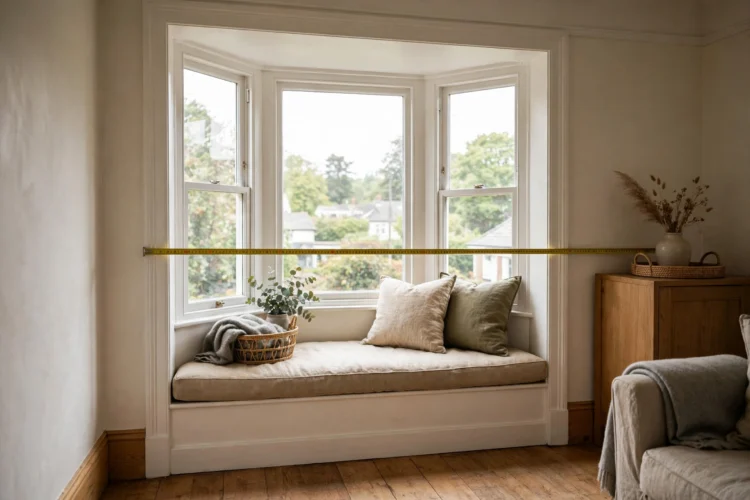
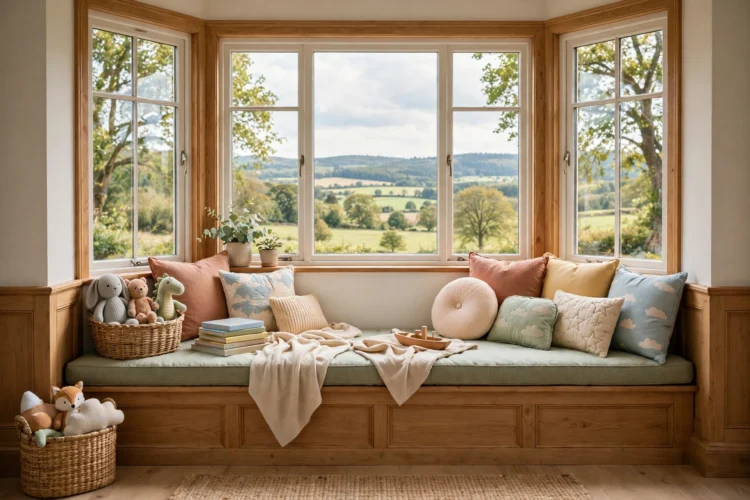
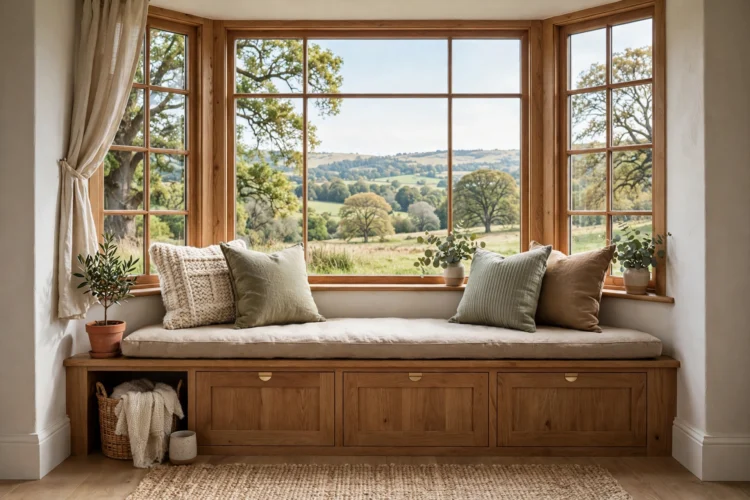
A banquette bench built into the bay gives the room its most used seat. A bench height close to a standard chair, with a cushion a few inches thick, lets adults and children sit comfortably, and storage drawers or lift-up lids under the bench hide blankets, games, and books. Add a small table in front of the bench for meals or puzzles, or leave the space open so the bench works as a lounge seat. Banquette cushions cut to the bay angles look far better than rectangular cushions pushed into corners, so order custom covers if the angles are sharp.
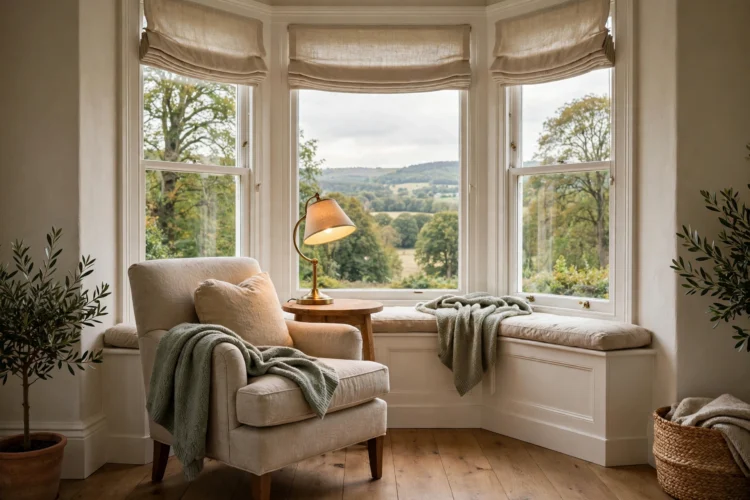
If a bench feels like too much building, a reading chair nook uses the bay just as well. Place one deep chair angled toward the center panel, add a floor lamp behind it, and a small side table for a cup and a book. A second chair makes the bay a pair’s spot, but keep the chairs light enough to move for cleaning the glass. Reading nooks suit rooms that already have a main sofa elsewhere, since the bay becomes a quiet second zone. For chair-first rooms, reading nook living room ideas show how one chair and good light can anchor a corner.
Cushions make or break a bay seat. Measure each section separately, allow for the thickness of the cushion, and choose a firm foam core wrapped in a washable cover so the seat holds its shape. A single long cushion looks cleaner than many small ones, but two or three sections are easier to remove for washing. Back cushions or bolster pillows along the angled panels stop sitters from leaning against cold glass, and a contrasting piping edge will make custom cushions look finished rather than improvised.

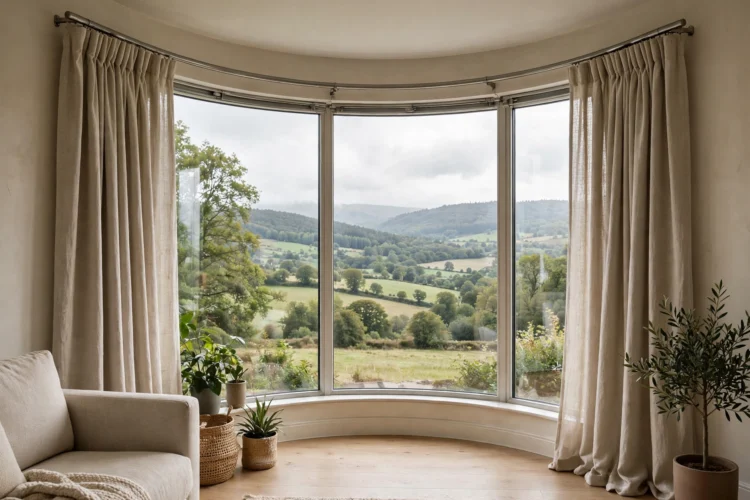
Curtains for a bay need a track or rod that follows the angles, and that hardware choice matters more than the fabric. A flexible bay track bends around each angle and lets curtains glide, while individual rods per panel work when each window is dressed separately. Hang curtains high and wide where the wall allows so the bay feels taller, and choose a fabric that filters light without blocking the view in daytime. Sheers inside the bay plus heavier curtains at the outer edges give privacy at night and soft light by day. Curtain planning pairs well with bay window curtain ideas for angled glass treatments.
Storage under a bay bench is useful, but storage that rises above sill height will block light and shrink the room. Keep built-ins low, use open shelves only on the side walls of the bay, and choose baskets that slide under the bench for soft items. A slim bookcase on the wall beside the bay, rather than inside it, gives books a home without crowding the glass. If toys or blankets live in the bay, a single lidded basket keeps the seat clear for sitting at a moment’s notice.
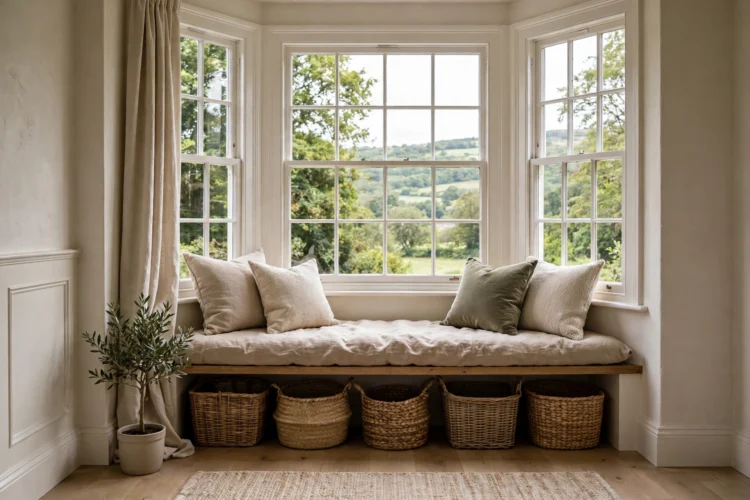
A bay near the kitchen or dining area can host a small table and become a breakfast spot, a homework station, or a work-from-home desk with a view. A round table fits the bay shape better than a rectangular one, and chairs that tuck under the table keep walkways clear. Keep the table small enough that people can pass behind seated guests, and add a pendant or wall light for evenings when daylight fades. This dual use makes the bay earn its floor space in homes where a separate dining nook would not fit.
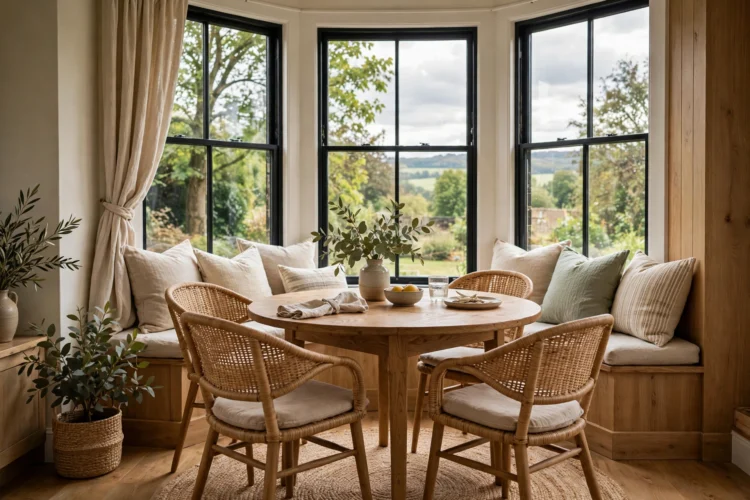
A bay seat that works in summer needs a plan for winter, when glass feels cold and daylight shortens. Add a thick cushion, a warm throw, and a lamp that can stay on through dark afternoons, and check window seals before cold weather so drafts do not chase sitters away. In summer, sheer curtains and a light cushion cover keep the seat cool, while a plant on the sill adds life without blocking the view. Swap only the top layers with the seasons, and the bay will stay the room’s favorite seat. For more window-led rooms, see bright window living room ideas and cozy window seat ideas that keep light at the center of the layout.

A bay seat that only works by daylight wastes half its potential, so plan lighting for the evening from the start. A small pendant hung in the center of the bay, wall lights on the side panels, or a floor lamp just outside the bay all keep the seat inviting after dark without blocking the glass. Choose warm bulbs and a dimmer where possible, so the bay can glow softly for reading or shine brighter for games and homework. Bay window curtain treatments also affect evening light, since sheers closed at night diffuse lamplight and give privacy without heavy drapes.
Keep cords and lamp bases clear of the bench cushions and walkways, and avoid a lamp that shines directly into the eyes of someone sitting in the bay. A light source behind the sitter, such as a wall light above shoulder height, works best for reading. With evening light planned, the bay stays the favorite seat long after sunset.
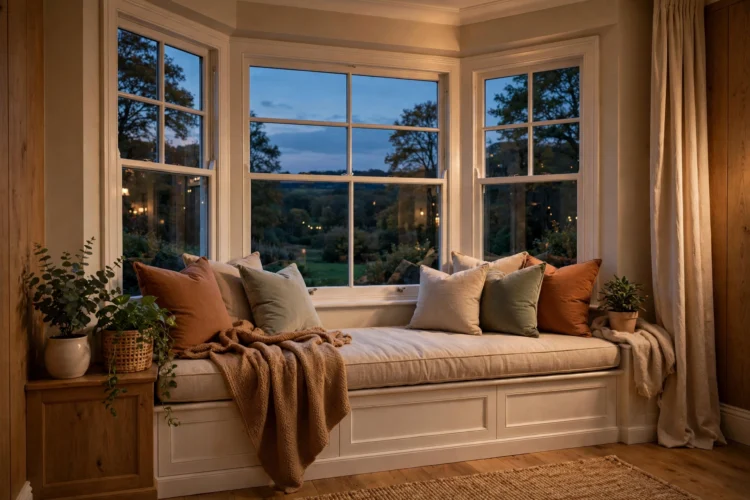
A bay window banquette seating area becomes a family favorite when it can handle daily life. Choose washable cushion covers, a firm foam core that springs back after jumping, and a rug or mat under the bench for muddy feet and paws. A bay window reading nook for children works well with a low basket of picture books beside the bench and a cushion in a forgiving color that hides small marks. Keep fragile decor off the sill, since the bay is exactly where children and pets will climb to look outside.
Set a simple habit for the bay, such as shoes off on the bench and toys back in the basket at night, so the seat stays ready for adults too. Check the window locks and keep cords from blinds out of reach of small children. A bay built for real family use will be sat on far more than a bay kept only for show, and that daily use is what makes it worth the effort.