Physical Address
304 North Cardinal St.
Dorchester Center, MA 02124
Physical Address
304 North Cardinal St.
Dorchester Center, MA 02124

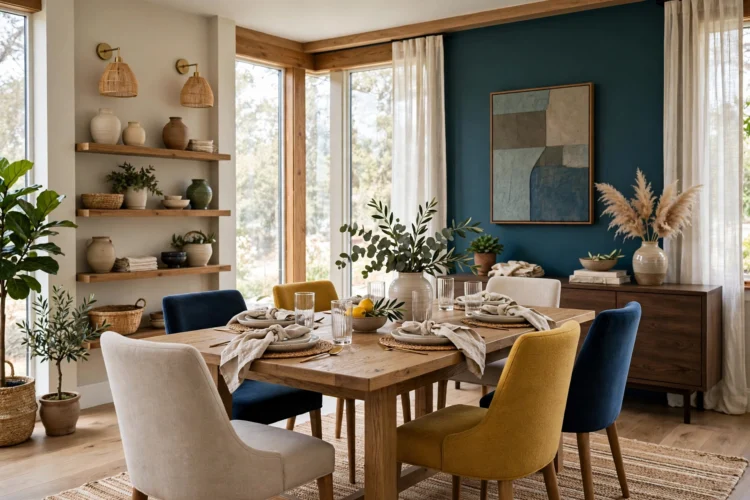
Dining room paint colors have to work at night, by candlelight, with food on the table. These ten shades run from soft neutrals to bold after-dark color, with trim pairings for each.
Dining room paint colors do a job no other room asks for: they have to look good at night, by candlelight, with food on the table. A color that looks fresh at noon can turn cold or murky at 7 pm, so the test happens after dark, under the pendant light you actually use. These ten shades run from soft neutrals to bold dining after dark color, and each one comes with a trim pairing that keeps the room balanced. Pick the mood first, then the color.
The best dining room colors share one trait: they warm up under artificial light instead of turning gray. Warm whites, soft taupes, muted greens, and deep blues all gain depth when the pendant light comes on, while cool grays and stark whites can flatten out. Test every color at night with the curtains closed and the pendant on, using a large test patch of at least a meter square. Paint the patch on the wall behind the table, where you will see it during every meal. A color that looks good at noon and at night is a keeper. A color that only works in one light is a mistake waiting for the first dinner party. The same test-first habit applies to any paint project, and these paint techniques that add depth to flat walls show how finish and application change what a color does.
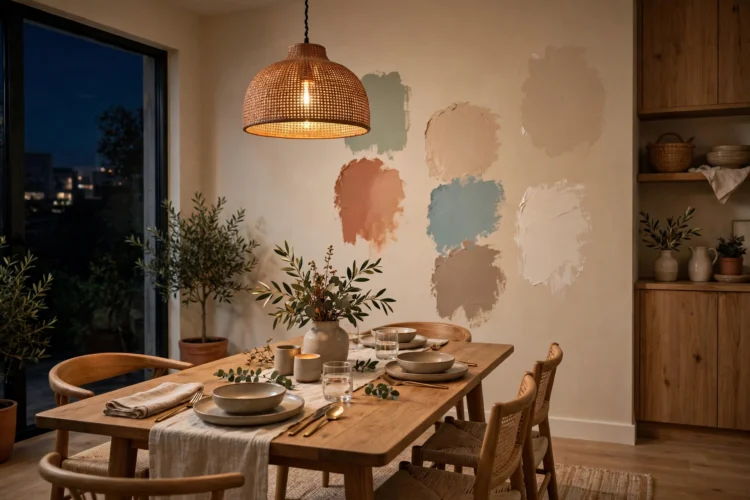
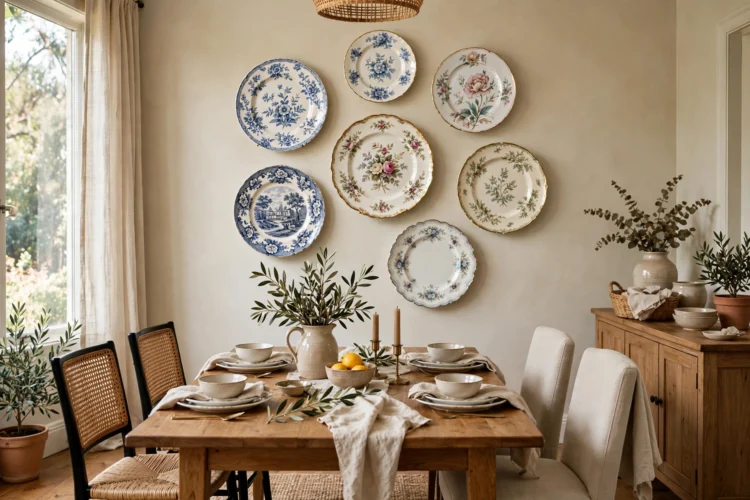
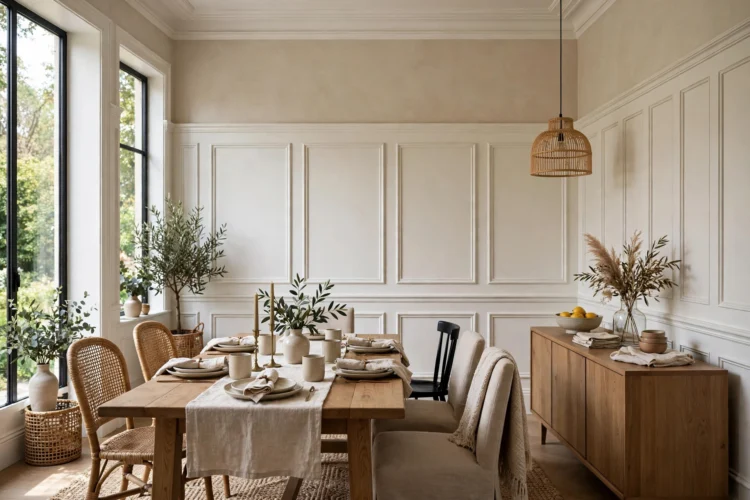
Warm white is the safest dining room color, and it earns that title. A white with a yellow or pink undertone, rather than a blue one, keeps the room soft at night and flatters both wood furniture and skin tones. Pair it with a bright white trim for a crisp edge, or with a pale wood trim for a softer, Scandinavian feel. Warm white suits every dining room style, from farmhouse to modern, and it never fights the art or the table setting. The risk is blandness, so add texture through linen, wood, and woven shades rather than through color. If the room feels flat, deepen the trim color by one shade instead of repainting the walls. Warm white is also the easiest color to live with long term, since it accepts any future furniture change.
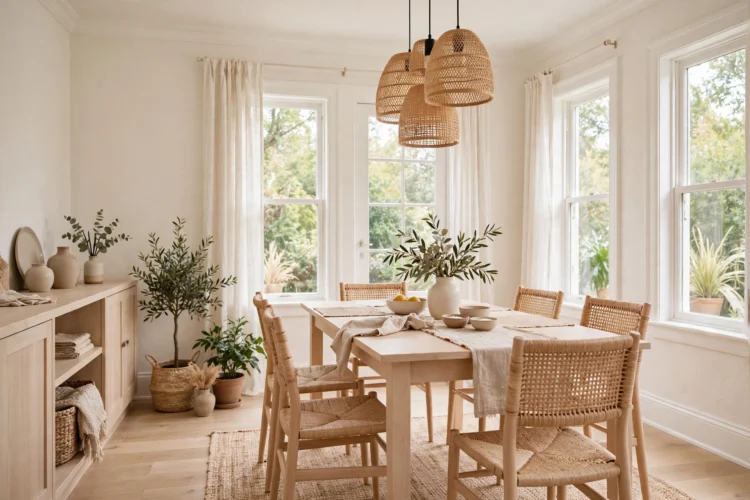
Greige, the mix of gray and beige, is the neutral for people who find white too plain and gray too cold. It shifts with the light, reading warm in the evening and cooler in daylight, which suits a dining room used at all hours. Pair greige walls with white trim and pale wood furniture for a calm room, or with black chairs and brass light fittings for a sharper look. Test greige carefully, since the undertone decides everything: a pink greige feels warm and rosy, while a green greige feels earthy and quiet. Paint the test patch large and check it at night, since the undertone shows most under warm light. Greige also hides scuffs better than white, which matters on the wall behind a busy table.
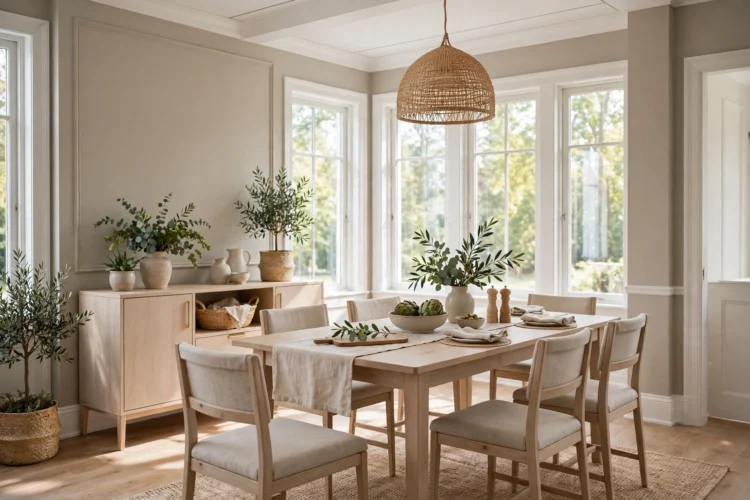
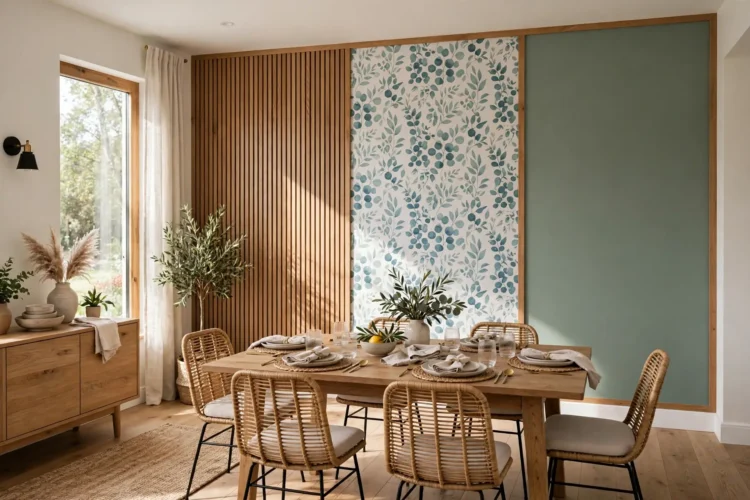
Sage green brings the garden indoors without turning the dining room into a theme. The muted, gray green tone looks good with oak, walnut, and linen, and it flatters food, since green is the color of fresh herbs and salads. Pair sage walls with cream trim and a pale wood table for a soft, natural room, or with dark wood and brass for a more formal feel. Sage suits dining rooms that open onto a garden, since the wall color and the view outside echo each other. The color also works on a single accent wall behind the table, with warm white on the other three walls. Keep the lighting warm, around 2700K, so the green stays soft instead of turning cold. Sage is forgiving to live with, and it rarely dates.
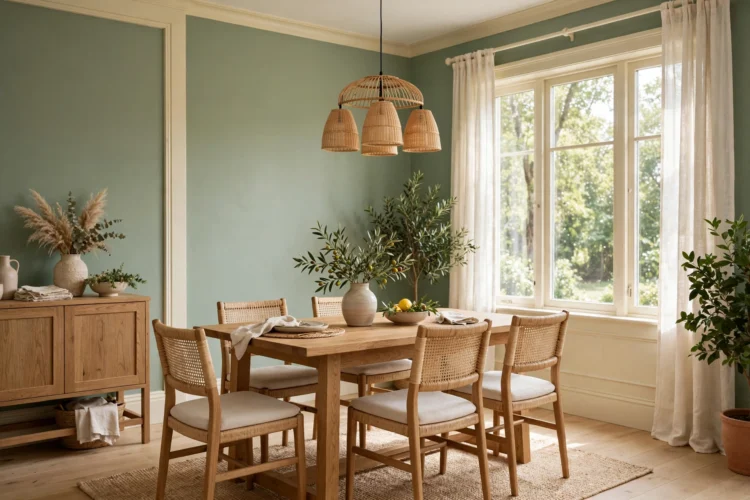
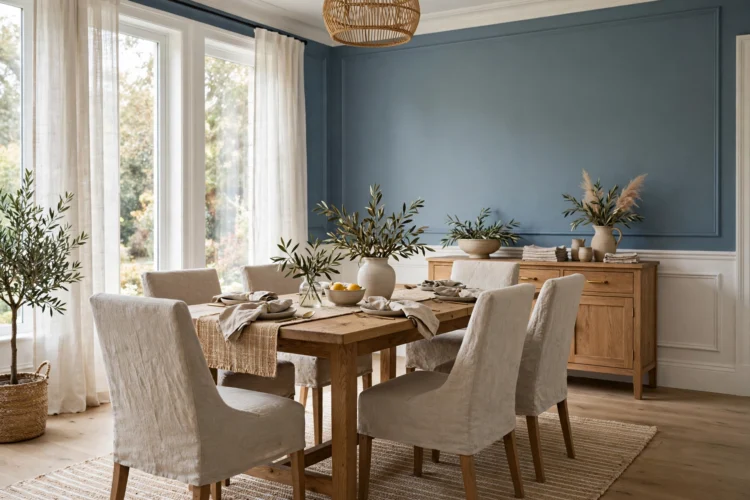
Dusty blue, a soft blue with a gray undertone, gives a dining room a relaxed, coastal feel without the beach theme. It pairs beautifully with white trim, pale wood, and linen, and it looks good with both silver and brass fittings. The color reads calm in daylight and slightly deeper at night, which suits long, slow dinners. Dusty blue works on all four walls in a small dining room, since it recedes visually and makes the room feel larger. In a larger room, use it on the wall behind the table and warm white elsewhere. Avoid bright, saturated blues in a dining room, since they can feel cold under artificial light. Dusty blue is the blue that behaves after dark.
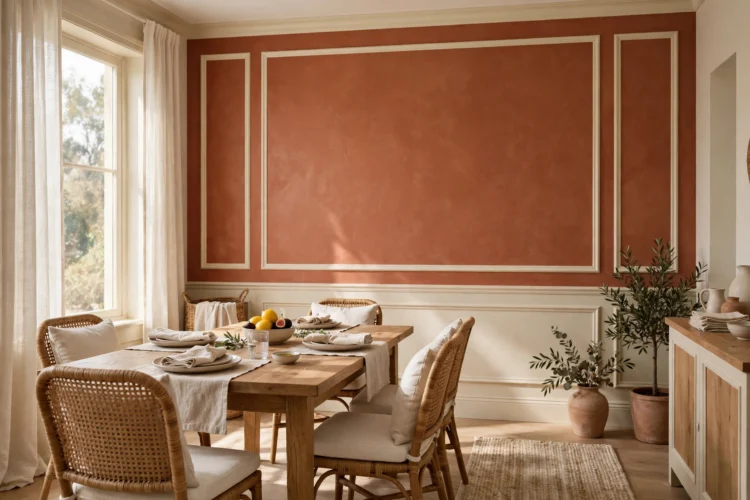
Terracotta, the warm clay tone of baked earth, is one of the oldest dining room colors, and it still works because warm tones suit appetite and conversation. A muted terracotta, not a bright orange, glows under a pendant light and pairs well with cream trim, dark wood, and handmade ceramics. Use it on one wall behind the table for a warm backdrop, or on all four walls in a small, cozy dining room where the enveloping feel is the point. Terracotta suits Mediterranean, rustic, and boho dining rooms, and it flatters the warm tones in food, from bread to roasted vegetables. Keep the ceiling white and the trim pale so the room stays bright overhead. A terracotta wall with a linen tablecloth and a wooden table is a room that invites people to stay.
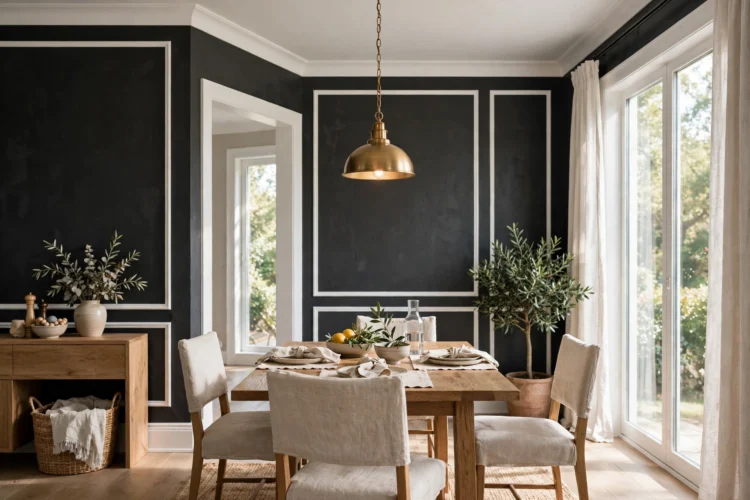
Charcoal is the bold choice for a dining room that comes alive at night. A deep, warm charcoal, not a blue black, turns the walls into a backdrop that makes the table, the food, and the candlelight stand out. Pair it with bright white trim and a pale table top so the room keeps its contrast, or with brass fittings and dark wood for a moody, club like feel. Charcoal suits a formal dining room and a room with a strong pendant light, since the dark walls need good light to avoid feeling like a cave. Paint one wall charcoal first and live with it for a week before committing to all four. The color also hides scuffs and marks well, which is a practical bonus behind a busy table. For the rest of the house, the same bold approach works on interior door paint colors that make an impact.
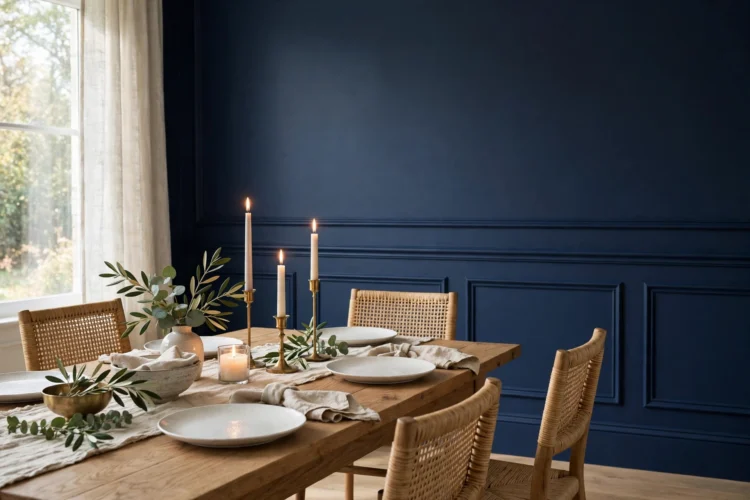
Navy is the classic formal dining room color, and it earns its reputation at night. A deep navy wall behind the table makes candlelight glow and white plates pop, and it pairs with brass, gold, and warm wood without a fight. Use navy on one wall with warm white elsewhere for a room that feels formal but not heavy, or on all four walls with a bright white ceiling for a dramatic dining room that still feels balanced. Navy suits traditional and coastal dining rooms alike, and it works with both a crystal chandelier and a simple linen pendant. The color shows dust and fingerprints more than a pale wall, so keep a damp cloth handy and use a washable finish. Navy also makes a small dining room feel intentional rather than cramped, since the dark walls recede.
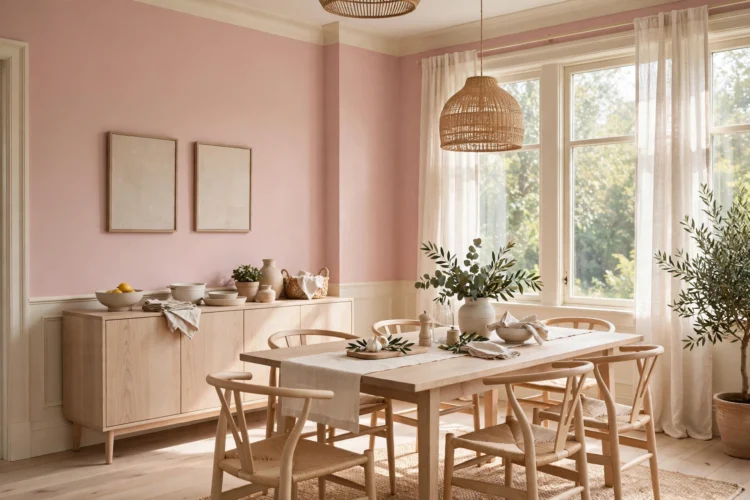
Blush, a pale warm pink, is the unexpected dining room color, and it works because it flatters skin tones and candlelight better than almost any other shade. A muted blush, not a bright pink, reads as warm neutral on the wall, and it pairs with cream trim, pale wood, and brass fittings. Blush suits a dining room that doubles as a morning room, since it looks fresh in daylight and soft at night. Use it on all four walls for a gentle enveloping feel, or on the wall behind the table with warm white elsewhere. Keep the furniture simple, since the color already gives the room its personality. Blush also suits a formal dining room, where it softens the stiffness of a dark table and a chandelier. The same warm, flattering logic shows up in these bathroom paint color ideas for a fresh, clean look.
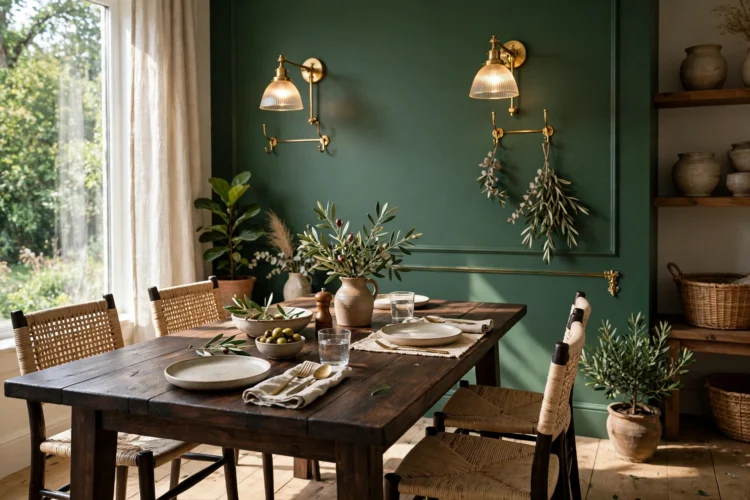
Forest green gives a dining room a rich, grounded feel that suits long winter dinners and formal occasions. The deep green tone pairs with brass, dark wood, and cream trim, and it makes a room feel like a private club. Use it on the wall behind the table with warm white on the other walls, or on all four walls with a pale ceiling and a strong pendant light. Forest green suits a dining room with period details, such as wainscoting or crown molding, since the color emphasizes the architecture. It also works in a modern dining room with a simple oak table and black chairs, where the contrast between the dark wall and the pale wood does the decorating. Test the color at night, since green can shift under warm light, and choose a green with a warm undertone to keep it from turning cold.
Trim is the frame around the wall color, and the pairing decides whether the room looks finished or accidental. The rule is simple: pale walls take a slightly brighter white trim for definition, while dark walls take a bright white trim for contrast. A warm white wall pairs with a crisp white trim, a sage wall pairs with a cream trim, and a charcoal or navy wall pairs with a bright white trim that keeps the room from closing in. Paint the trim in a semi gloss finish so it wipes clean and catches the light, while the walls stay matte or eggshell. Test the wall color and the trim color together on the same patch, since a trim that looks white in the shop can read yellow or gray next to the wall. Get the pairing right, and any color on this list will look deliberate. The same trim logic shapes the rooms in these formal dining room ideas that actually get used, where the architecture and the color work as one.